
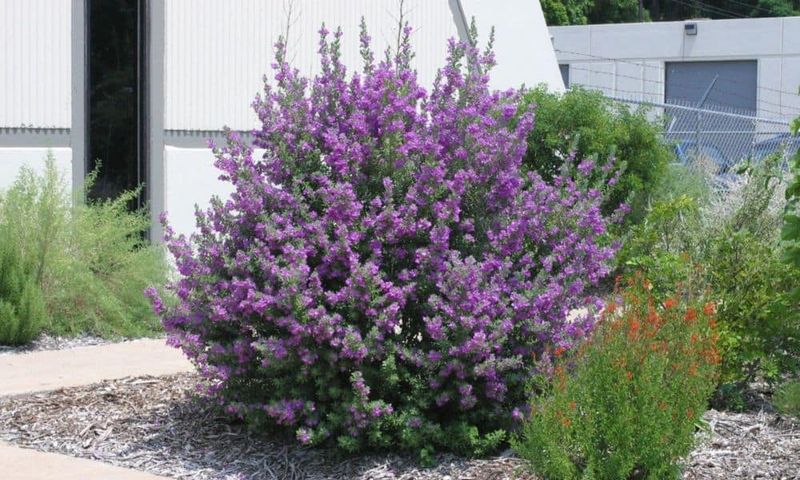
Texas sage is a silvery, heat-loving shrub that looks great beside a front walk. Some people say it also helps keep scorpions away from the door.
That claim has no solid proof behind it. Here is what the plant really does well, and what Texas A&M says actually lowers your scorpion risk.
Texas sage is a substantial shrub, not a narrow edging plant
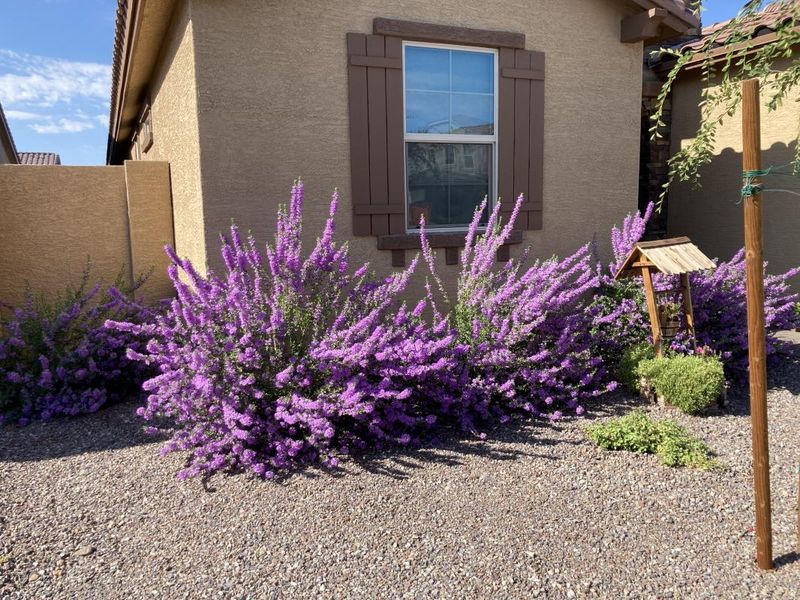
Texas sage, also called cenizo, goes by the botanical name Leucophyllum frutescens. It is a drought-tolerant native shrub, and Texas Tech’s plant profile lists it as generally 3 to 5 feet tall and wide.
That makes it a real shrub with some presence, not a tidy little border plant you can squeeze along the edge of a walkway.
Cenizo wants full sun and well-drained soil. Soggy beds, heavy clay that holds water, and overwatering can all harm it.
If your front entry sits in a low spot where water lingers, or an irrigation head sprays that bed every morning, this shrub will struggle there.
Its home turf matters too. The Native Plant Society of Texas describes its native range as concentrated in western and southern Texas, so growers in other parts of the state may need to give it extra care.
Even outside Texas, humidity and poor drainage can be trouble. UF/IFAS Extension notes it is not a universal fit for humid, poorly drained Florida landscapes.
So treat it as a plant to match to a site, not a default for every yard. Check how many hours of sun your entry gets, watch where water drains after a heavy rain, and measure the space.
If those line up, cenizo can bring tough, low-water structure to a Texas front entry.
Texas sage is not a proven scorpion deterrent
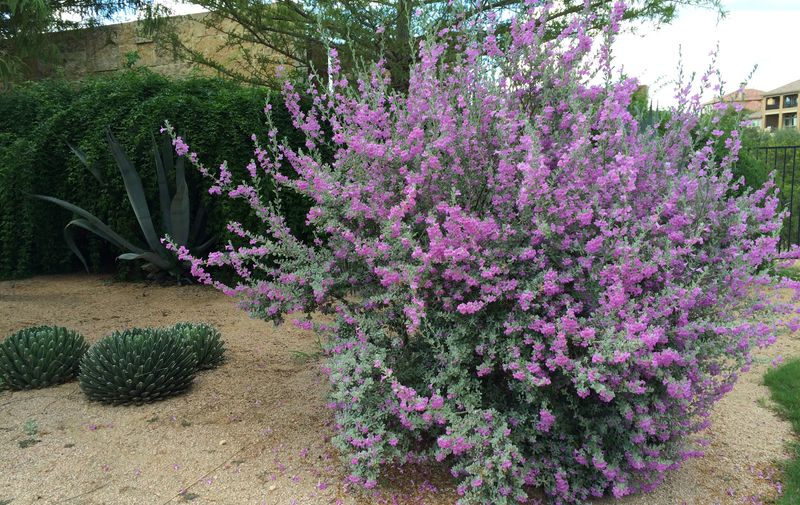
Let’s clear up the promise in many garden tips: no source we found shows that a living Texas sage shrub repels scorpions, keeps them moving on, or blocks their path into a house. Texas A&M’s scorpion fact sheet points homeowners toward cleaning up habitat and sealing entry points, not toward a particular plant.
The confusion may come from lab work on rosemary. A 2019 study in the Journal of Arachnology found striped bark scorpions spent more time on sand treated with mineral oil than on sand treated with rosemary oil.
The one compound tested on its own, 1,8-cineole, produced no preference.
That experiment used treated sand in a small arena. It did not test Texas sage, a living rosemary plant, or a planting along a walkway.
It tells us nothing about whether a shrub beside your door changes where scorpions go.
Think of cenizo as an ornamental choice. It earns its spot with silvery leaves, bursts of purple bloom, and heat tolerance.
If you plant it, enjoy it for those reasons, and put your pest-control effort where it is backed up.
Scorpions can shelter near homes and enter through openings
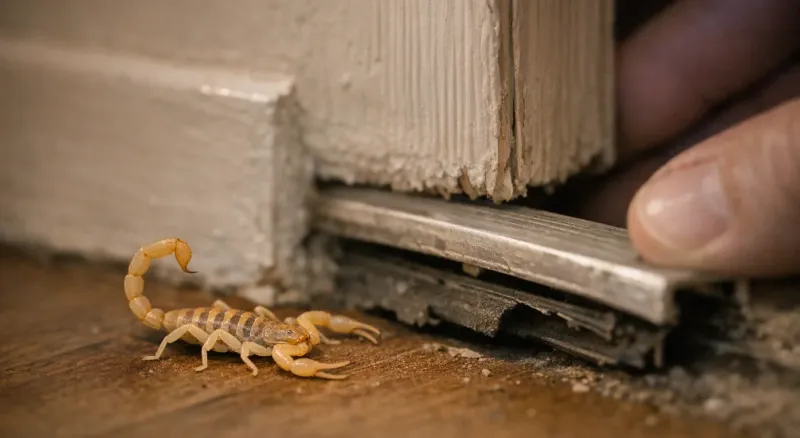
Scorpions are built for hiding. According to Texas A&M AgriLife Extension, they tuck under objects and into cracks, and they are mostly active at night.
Some Texas species are not limited to the ground, either. They climb walls and can get into attics.
Heat plays a role. A Texas A&M news report describes scorpions moving indoors during hot, dry weather, and the extension fact sheet notes that hot attics can push them down into living areas.
What about fall? You will hear that scorpions rush indoors every autumn, but that is not firmly established.
Clemson Extension reports that homeowners often meet them in spring and fall, yet says the reason is unclear. Texas A&M does not describe a reliable fall migration into Texas homes.
The practical takeaway is simple. Since timing is uncertain, do your exclusion work before you see one, not after a particular month arrives.
Any gap a scorpion can slip through, and any pile it can hide in, is worth fixing year-round.
Give cenizo room without bringing cover up to the house
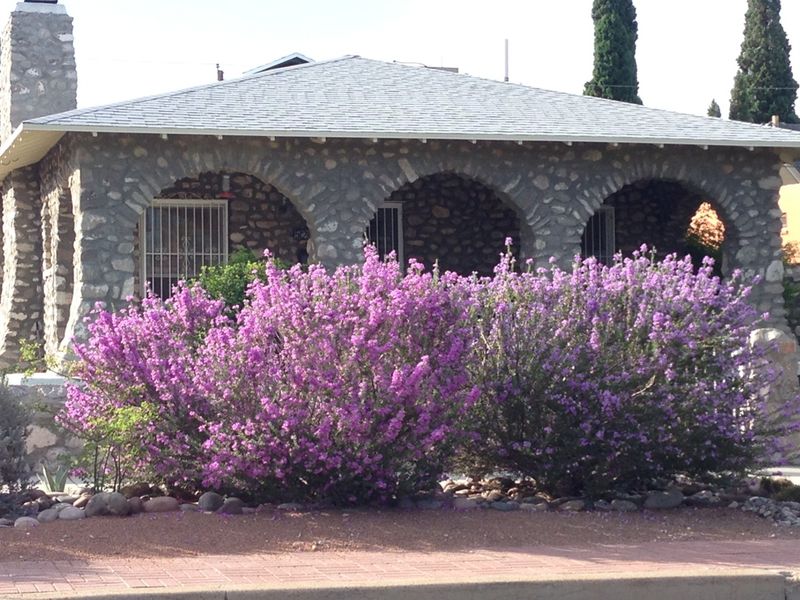
If you choose cenizo for the front entry, plan around the size it will be in a few years, not the size of the nursery pot. Texas Tech puts mature plants at roughly 3 to 5 feet tall and wide.
A shrub that size will crowd a narrow strip by the walk and force constant shearing.
Pick a spot with full sun and soil that drains. Raised beds or a gentle mound can help in places where water collects, and keeping the planting away from lawn sprinklers will spare it from too much moisture.
Placement relative to the house matters for a second reason. Texas A&M advises keeping shrubs and branches from touching the structure.
Foliage that rests on a wall gives hiding spots and a possible way up, so leave open space between plant and siding. We are not giving a set distance here, so use your plant’s real mature spread as your guide.
The goal is a shrub that looks good and stays in its own space. Plant it as scenery, not as a barrier, and keep the wall clear.
Clear nearby hiding places and seal entry points
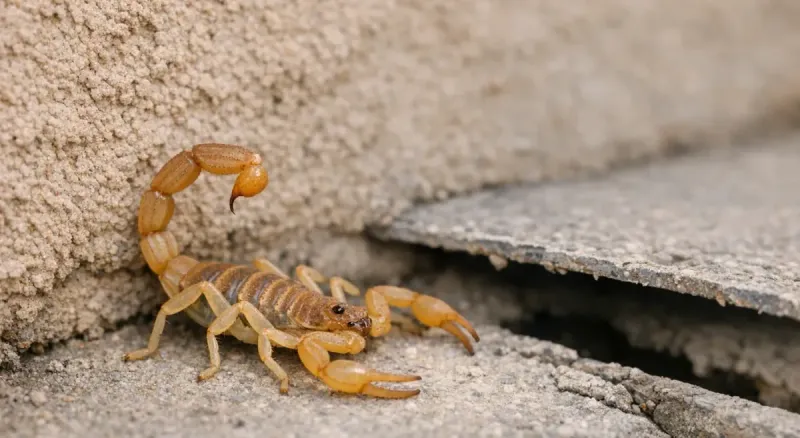
Start outside with the stuff scorpions like to hide under. Texas A&M’s guidance calls for removing boards, stones, bricks, logs, and other debris near the structure.
Move woodpiles and stacked materials well off the foundation, and check what is lying beside the front steps.
Next, keep grass short and trim shrubs and tree branches so they do not touch the building. This removes cover and takes away bridges to walls and the roofline.
Cenizo can stay in the landscape, as long as it sits apart from the house.
Then work on the house itself. Keep door and window weather-stripping in good shape, repair torn screens, and seal cracks, pipe penetrations, and weep holes.
Walk the perimeter with a flashlight at dusk and look for gaps under doors and around where lines enter the wall.
Pesticides are a separate topic. If you use a product, follow the label exactly, and remember that spraying does not replace blocking the openings.
The Texas A&M news report on scorpions heading indoors in hot, dry weather is a good reminder to finish this work before the worst heat.
Choose Texas sage for the yard, and exclusion for scorpions
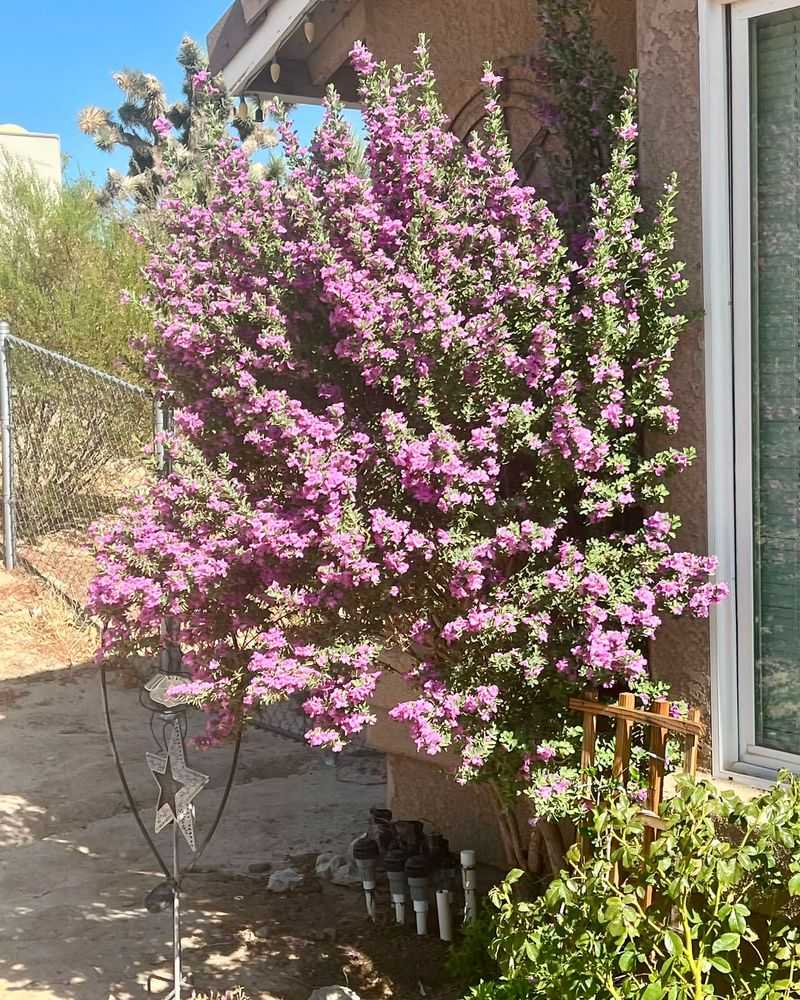
Plant cenizo if your entry has full sun, drainage, and room for a 3 to 5 foot shrub, as Texas Tech describes. Just do not count on it to turn scorpions away.
The steps Texas A&M recommends are clearing shelter and sealing openings, and even those cannot promise a scorpion-free home.
A good shrub makes the walk look better. A sealed door makes the house harder to enter.