
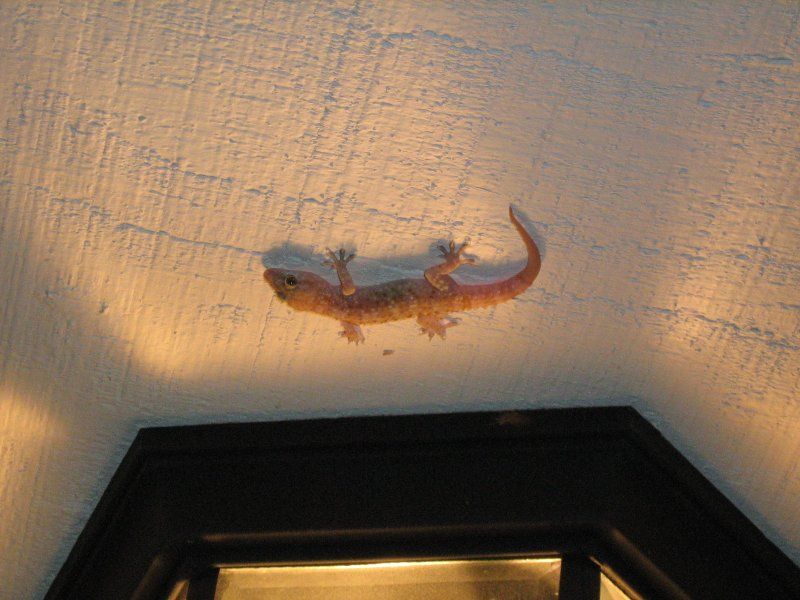
You flip on the porch light after dark and there it is again, a small gecko clinging to the wall. It may seem like a sign that something is going on in your yard.
The truth is simpler, and knowing it can help you decide what, if anything, to change as fall nights cool across Central Texas.
A porch light can become a nighttime hunting station
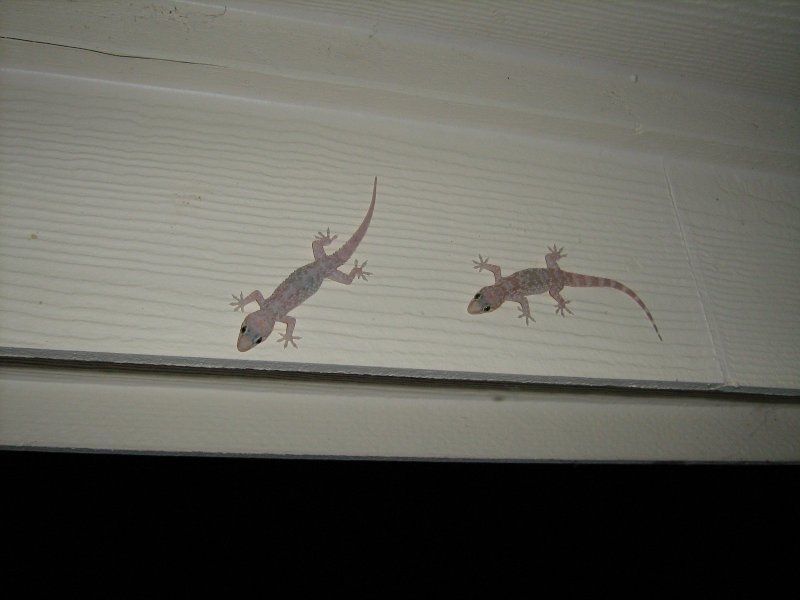
Picture the porch from a gecko’s point of view. The light draws moths, beetles, and other flying insects, and the wall beside it offers a flat surface for stalking.
According to Texas A&M AgriLife Extension, house geckos commonly hide in cracks and crevices around buildings and wait near lights for insects to arrive.
That makes a repeat visitor easy to explain. A lit, sheltered porch is a convenient place to eat, and a gecko that finds a good spot tends to come back.
Think of it as a diner that happens to be open every night.
What the sighting does not tell you is how many insects live in the rest of your yard. A gecko gathered at one light is taking advantage of the bugs around that light.
It is not proof of an infestation, and it says little about your flower beds, lawn, or trees.
You may also hear that geckos are attracted to light. That is handy shorthand, but it is not a settled explanation.
In an experiment on Japanese geckos, researchers found no clear light preference. They suggested other cues in lit places might explain the visits.
That study did not involve Texas house geckos, so it does not overturn the Extension account. It simply reminds us that the bugs, the shelter, and the warm wall may matter as much as the glow itself.
A porch sighting rarely identifies the species
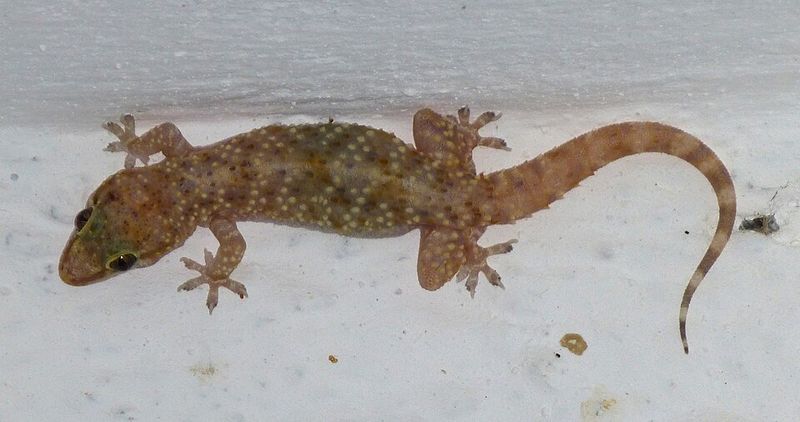
A quick glimpse at night rarely settles which gecko you have. Texas A&M lists two introduced house geckos in Texas, the Mediterranean house gecko and the common house gecko, and both are found around homes and other buildings.
Without a clear photo or an expert look, the safest label is a likely house gecko.
Details can offer cautious clues. Pale, pinkish or tan bodies with big eyes and sticky toe pads fit the house gecko pattern, and the Extension fact sheet describes features that help separate the two.
Lighting, angle, and distance can easily hide those details, so treat them as context rather than proof.
The Texas Invasive Species Institute also notes that Mediterranean and Indo-Pacific geckos can be confused with each other, which is another reason to stay flexible.
Introduced does not automatically mean harmful, and it does not mean harmless either. The same institute says the effects of Mediterranean house geckos on native species are unknown, though it mentions concern about competition for resources.
So there is no measured damage to point to, and no basis for calling them a free pass.
Cooler fall nights may change the pattern, not end it
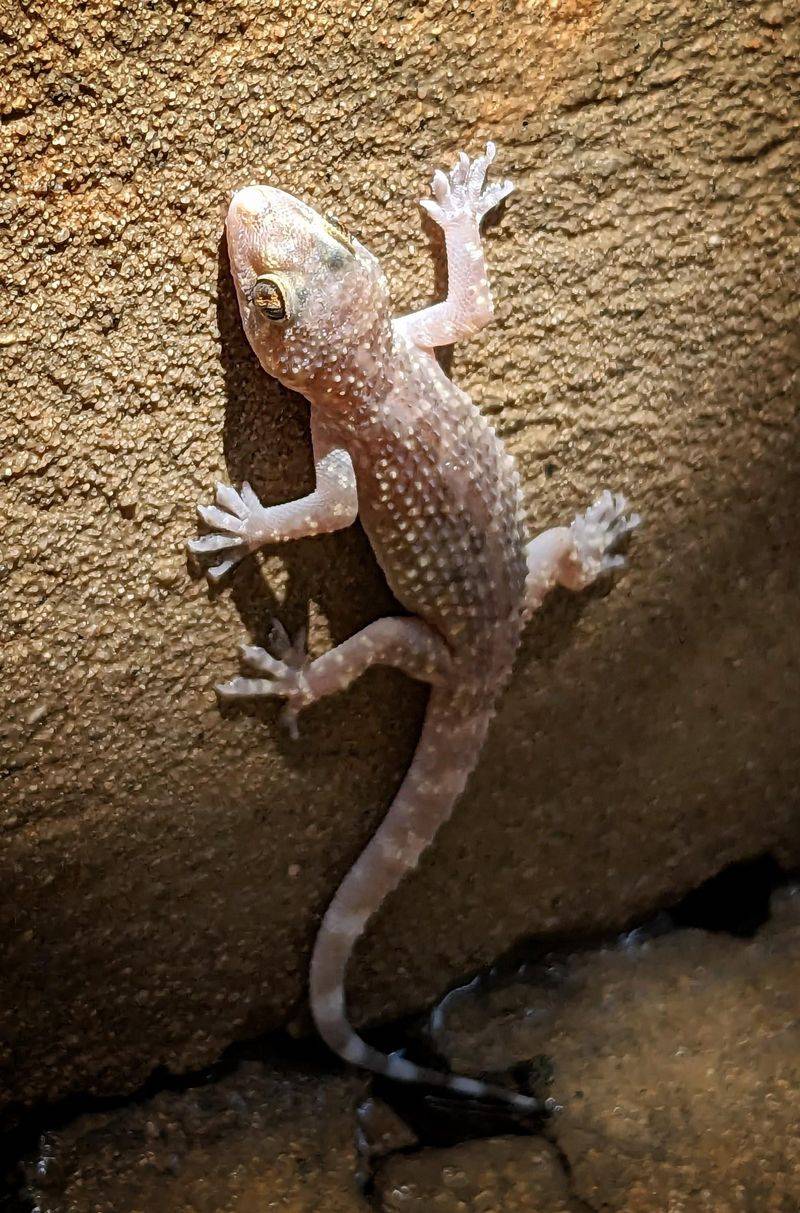
Many homeowners expect geckos to vanish the first time the air turns crisp. Nothing in the research says they do.
Cooler nights may mean you see fewer of them, or see them less often, but there is no firm date or temperature when the porch show ends.
A study of Mediterranean house geckos in Nacogdoches, Texas, described them as active most of the year, apart from a short winter dormancy. That is a helpful picture for East Texas, though it was not measured on your porch.
Farther north, a study in Edmond, Oklahoma, found Mediterranean geckos outdoors even in winter, though sightings dropped on colder nights. The authors suggested building heat might help support activity, but they said how much activity happens inside buildings is unknown.
So neither study gives a cutoff for Central Texas. If your gecko skips a chilly night, that fits the pattern.
If it shows up in November, that fits too. Without direct evidence, it is not possible to say whether a warm wall, house heat, or something else explains your own porch.
Ways to reduce unnecessary porch light
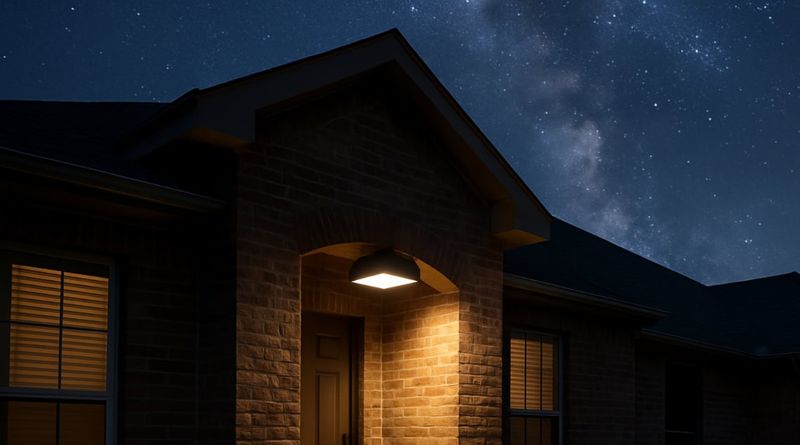
If you would rather have fewer insects and fewer geckos gathered at the door, start with the light itself. DarkSky International suggests using a timer or motion sensor, lowering brightness, and aiming a shielded fixture only where light is needed.
These are good lighting habits on their own, since they cut wasted light and energy. Whether they change how many geckos visit a particular porch is uncertain, so think of any drop in visits as a possible bonus.
Bulb color is another common question. In one experiment comparing household lights, LEDs drew fewer insects than several other tested light types.
However, warm-white and cool-white LEDs did not differ significantly in how many insects they attracted.
That means swapping to a warm-white LED is a reasonable upgrade but not an insect cure. Pairing a lower-output, shielded fixture with a timer is a practical way to light your steps without leaving a bright beacon on all night.
Seal gaps if geckos enter the house
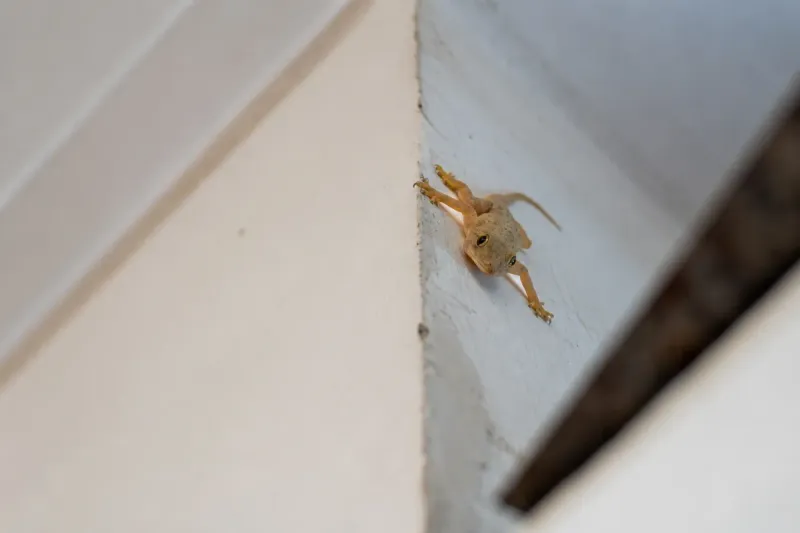
A gecko on the porch wall is one thing. One crossing your kitchen floor is another, and some people want that to stop.
Texas A&M recommends sealing cracks and gaps around doors, windows, soffits, and utility penetrations such as pipes and cables.
A slow walk around the house with a flashlight after dark can reveal weak spots. Look for worn door sweeps, gaps at window frames, and openings where lines enter the wall.
Caulk, weatherstripping, and mesh can close most of them.
If one gets inside, the Extension describes a simple fix: set a container over the gecko, slide a stiff sheet of paper underneath, and release it outside. Wash your hands afterward.
Pesticides are not the answer. Texas A&M says no pesticides are registered for gecko control, and cutting back insects may have only a minimal effect on gecko numbers.
General pest spraying around the porch can cost money and affect other wildlife without reliably changing who shows up at night.
Use simple hygiene after contact
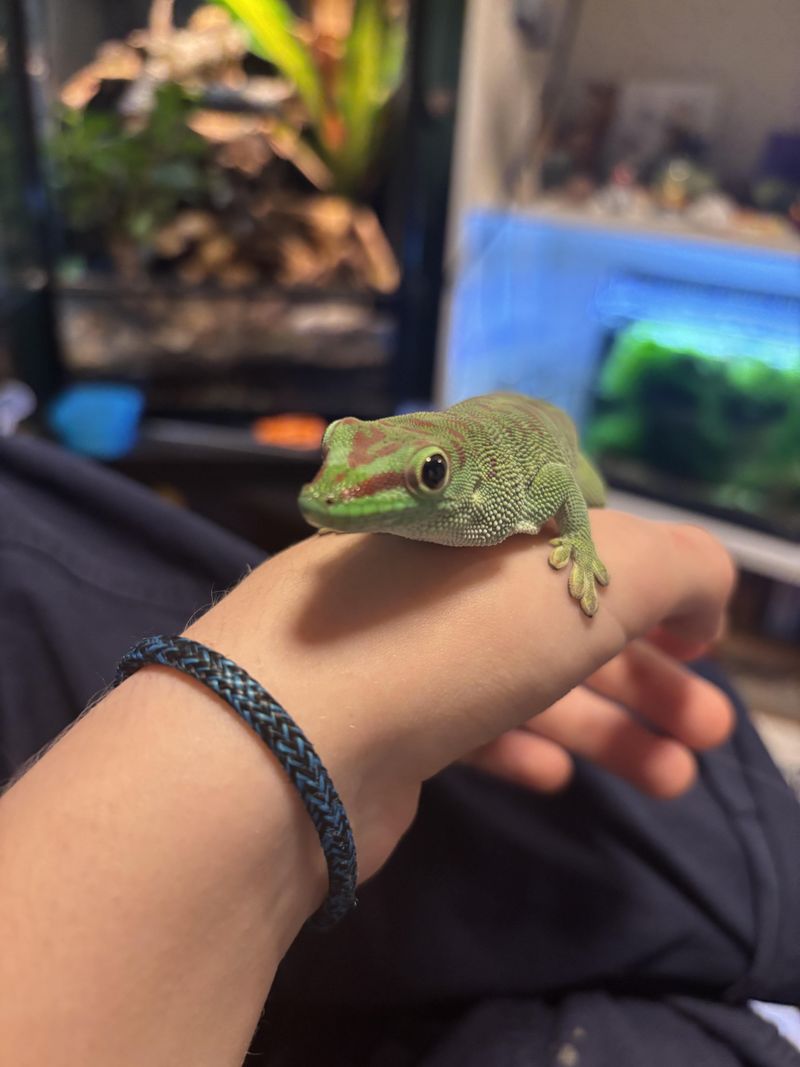
Geckos are not a health emergency, but a little care goes a long way. The CDC says geckos and other reptiles can carry Salmonella in their droppings even when they look healthy.
Skip handling them when you can. If you do touch one, or clean up droppings on the porch or inside, wash your hands with soap and water right afterward.
Keep an eye on small children who like to pick up anything that moves. Rinsing off tools or wiping down the spot where droppings landed is a sensible extra step, and it takes only a minute.
Read the porch, not the whole yard
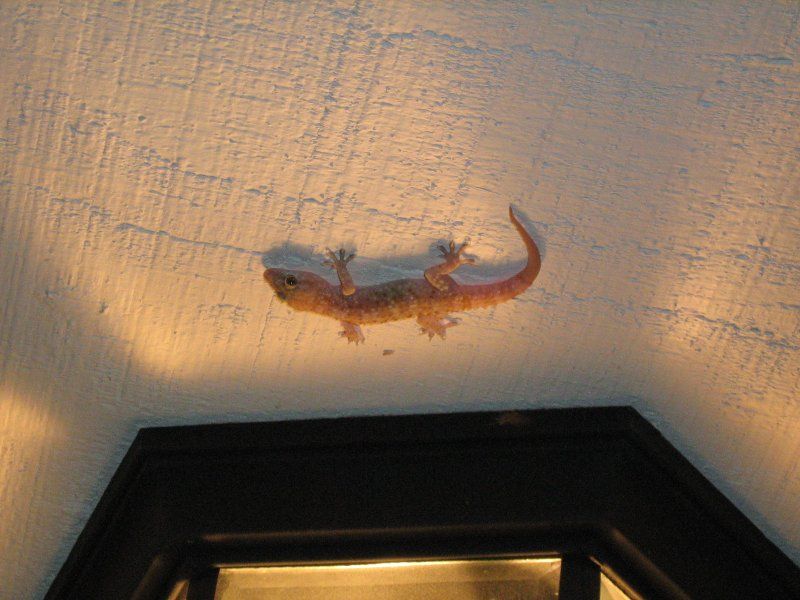
A gecko that keeps returning most likely means one lit, sheltered spot offers a steady meal, as Texas A&M describes. It does not mean your whole yard is overrun with bugs.
If the visits bother you, trimming unnecessary light, as DarkSky International suggests, or sealing entry gaps may help, though neither is a promise.
Until then, that small night shift worker is simply telling you what your porch has to offer.