
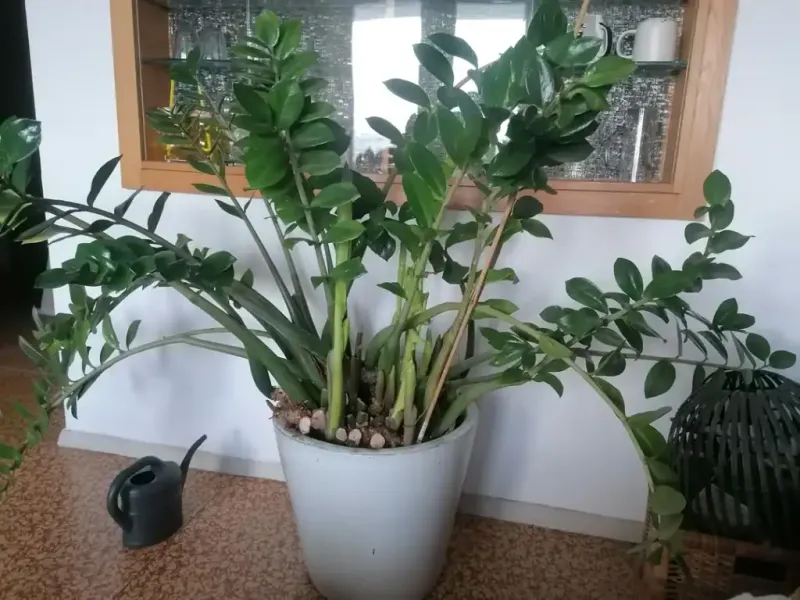
A ZZ plant with only a few stalks can make you wonder if you did something wrong. Usually, the plant is not failing at all.
It just grows slowly and may have very few places to send up new stalks. Here is what is going on under the soil, what you can change, and what honestly takes time.
A sparse ZZ plant is not automatically failing
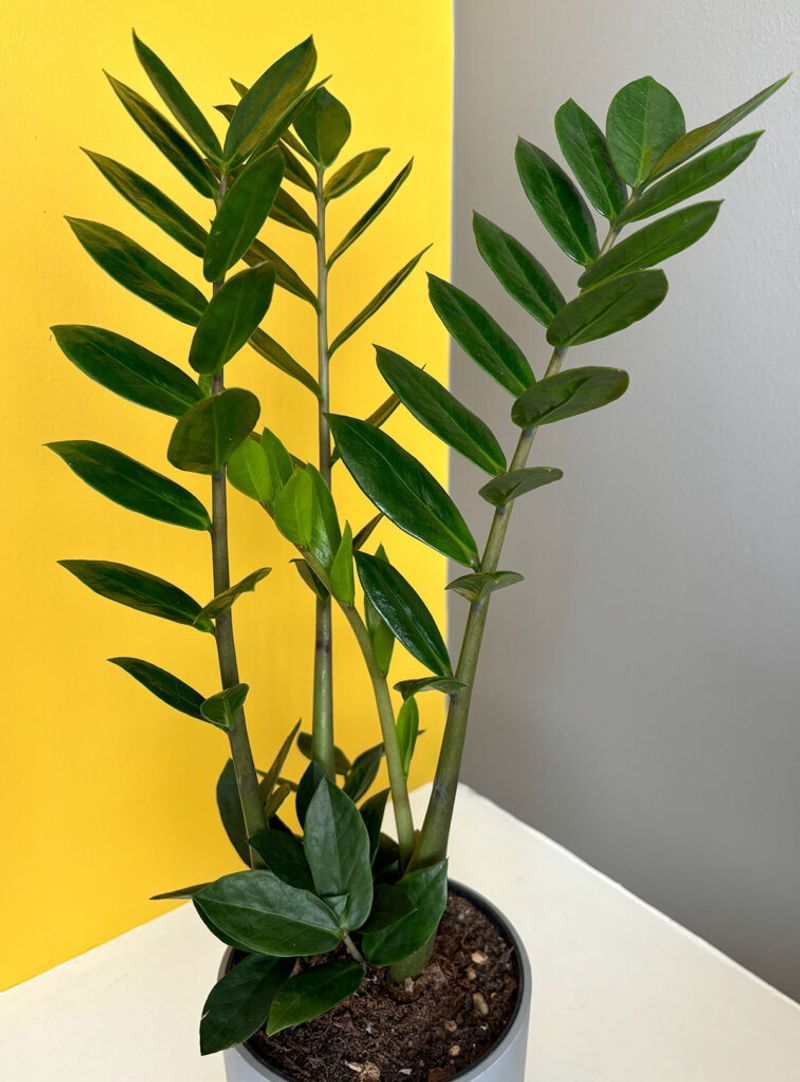
Plenty of ZZ plant owners look at a pot with a handful of stalks and assume something has gone wrong. Words like sparse and leggy only describe how the plant looks.
They do not tell you why it looks that way, and they do not prove the plant is sick or starved for light.
ZZ plants are slow growers, and a long quiet stretch between new shoots is normal. According to UF/IFAS Extension care guidance, the plant grows slowly even in favorable conditions.
Growth also tends to come in spurts, so months of nothing can be followed by a few new stalks, as Iowa State University Extension notes.
Before you worry, look for real warning signs. Mushy stalks, a sour smell from the soil, or leaves that yellow and drop in large numbers point to a care problem.
Firm, glossy, dark green stalks mean the plant is probably fine, just thin.
The steps ahead can support healthy growth and help the pot look fuller. None of them guarantee a dramatic makeover, and that honesty will save you from chasing quick fixes that do not work.
Rhizomes, not cut stalks, produce new shoots
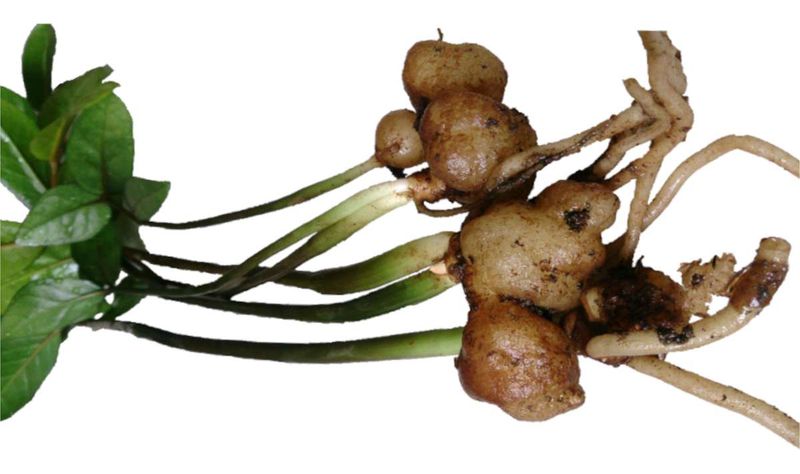
Dig down in a ZZ plant pot and you will find the real engine of the plant. Thick, bulb-like rhizomes sit underground, and every leafy stalk rises directly from one of them.
The plant is described as stemless, which is a big clue about how it fills out.
That means a pot with only a few stalks may simply have only a few growth points. Each rhizome sends up shoots on its own schedule, according to UF/IFAS Extension, and you cannot hurry that along with scissors.
Here is why cutting does not work the way it does on a pothos or a shrub. A stalk has no branching nodes to wake up after a cut.
Snipping one off just removes that stalk, and it will not sprout two new ones at the cut or push the rhizome to make more.
A handy test: if you want more stalks, ask where new ones can come from. The answer is always the rhizome, so any plan that works has to involve more rhizomes or healthier ones.
Bright, indirect light supports growth
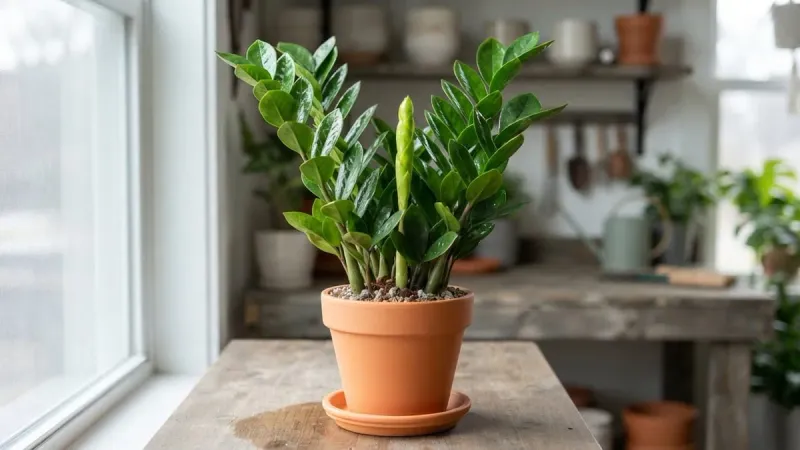
Few houseplants put up with a dim corner as well as a ZZ plant. Surviving in low light and growing well in it are different things, though.
If yours sits far from any window, a brighter spot may give it more energy to push out new stalks.
Aim for bright, indirect light, such as a spot near an east window or a few feet back from a sunnier one. Iowa State University Extension recommends this kind of light for good growth, and UF/IFAS Gardening Solutions warns that harsh direct sun can damage the foliage.
Move the plant gradually if you can. A sudden jump from a dim hallway to a hot, sunny sill can scorch leaves, so shift it closer to the window over a couple of weeks and watch for pale or crispy patches.
Keep expectations steady, too. A brighter location supports growth, but it will not turn a sparse plant into a full one overnight.
Think of it as removing a brake rather than stepping on the gas.
Dry soil and good drainage protect the plant
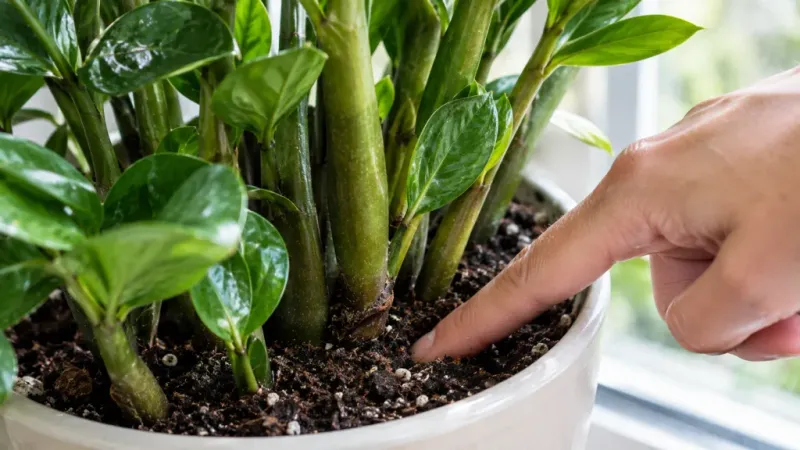
Because the rhizomes store water, a ZZ plant forgives a missed watering far more easily than a soggy one. Let the soil dry out between drinks, and use a well-drained mix rather than heavy, water-holding soil.
Pushing a finger a couple of inches down is a simple way to check.
Drainage matters just as much as timing. Choose a pot with holes, and empty any saucer so the roots are never left standing in water.
UF/IFAS Extension and its production guidelines for interior ZZ plants both stress good drainage because prolonged wetness can lead to root or rhizome rot.
Do not reach for the watering can hoping extra water will create extra shoots. It will not, and wet rhizomes are the fastest way to lose the plant you are trying to improve.
If a sparse plant also has soft, collapsing stalks, slide it out of the pot and look at the rhizomes. Firm and tan is good.
Mushy and dark means it is time to trim away the rotted parts and repot in fresh, fast-draining mix.
Division can make an arrangement look fuller sooner
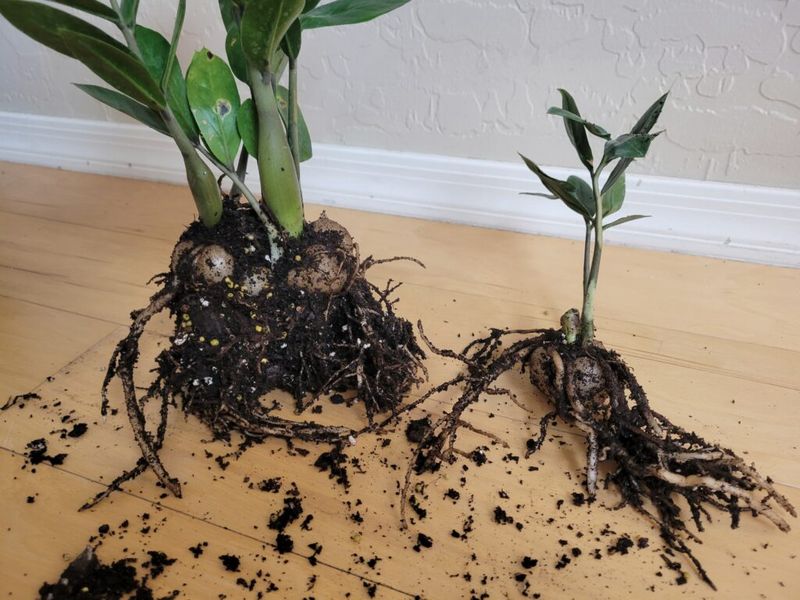
If you want a fuller look without waiting years, division is your best bet. You are not making the plant grow faster.
You are rearranging established pieces so the pot holds more stalks in a tighter, fuller group.
Slide the plant out and gently tease apart healthy rhizome sections, making sure each one has roots and at least one attached stalk. University of Illinois Extension describes this as the practical way to make new plants.
Then plant several sections together in one pot, setting them at the same depth they grew before.
Compared with leaf cuttings, division starts with larger, established pieces, which is why it gives a quicker change, as another Illinois Extension article explains. How full the pot looks will depend on how many sections you have and how you group them.
Safety comes first. ZZ plants are toxic if ingested, and the ASPCA lists them among plants that contain calcium oxalate crystals.
Wear gloves if you like, wash your hands afterward, and keep every scrap of cut material away from pets and children.
Pruning and heavy feeding will not force bushiness
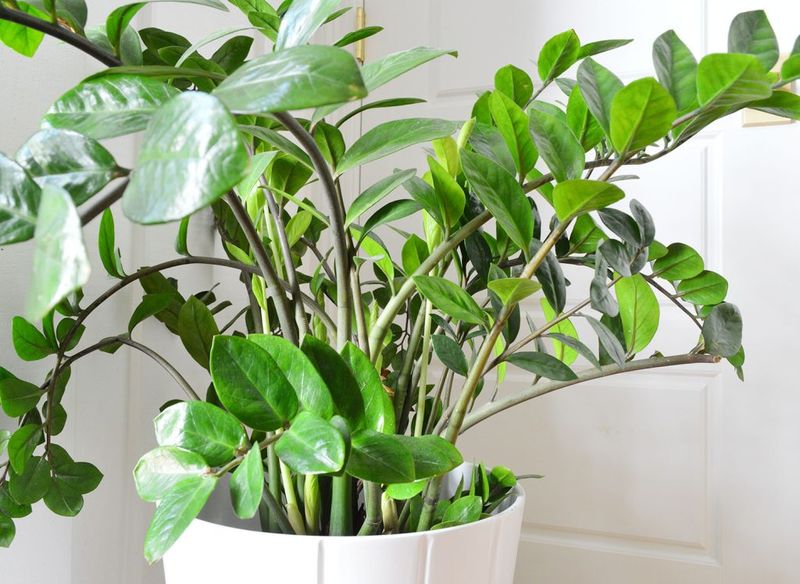
Two shortcuts show up in plant advice again and again: trim it and feed it. Both sound sensible, and neither reliably gives you a bushier ZZ plant.
Removing a stalk simply leaves you with one fewer stalk, since new growth comes from the rhizome, as UF/IFAS Extension describes.
Fertilizer is trickier because it does have a place. A light feeding can support a healthy plant, but nothing shows that frequent or heavy doses force extra shoots.
Too much can build up in the pot and stress the roots.
Even the experts differ on timing. UF/IFAS suggests a low-dose liquid fertilizer twice a year, while University of Illinois Extension gives a more frequent spring and summer schedule.
A sensible middle path is to feed lightly during the growing season, follow the directions on the product label, and never treat fertilizer as a fullness cure. Save pruning for stalks that are truly damaged or dead.
Allow time for new growth
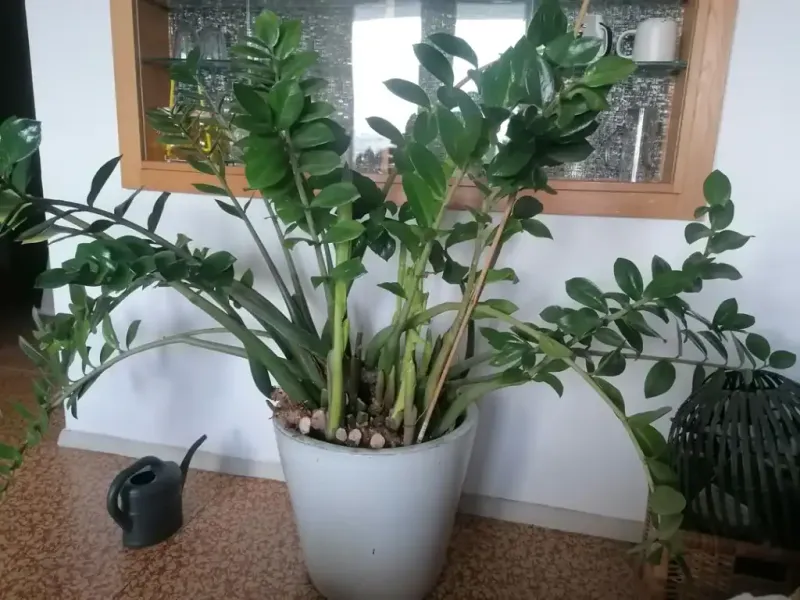
Two timelines are at work here. Arranging established divisions together can change how your pot looks in an afternoon.
Waiting for new shoots, or growing a plant from a single leaf, runs on a much slower clock.
Leaf propagation is the slowest of all. University of Illinois Extension notes that cuttings take a long time to become substantial plants, so they make a fun project but not a quick way to fill a pot.
Good light, careful watering, and a well-drained mix keep the plant healthy, yet UF/IFAS Extension still describes slow growth as the norm. A quiet stretch is not proof of failure, and Iowa State University Extension notes that growth can arrive in bursts.
So check the stalks, keep the soil on the dry side, and be patient. One day you may notice a pale green spear pushing up, and it will be worth the wait.