
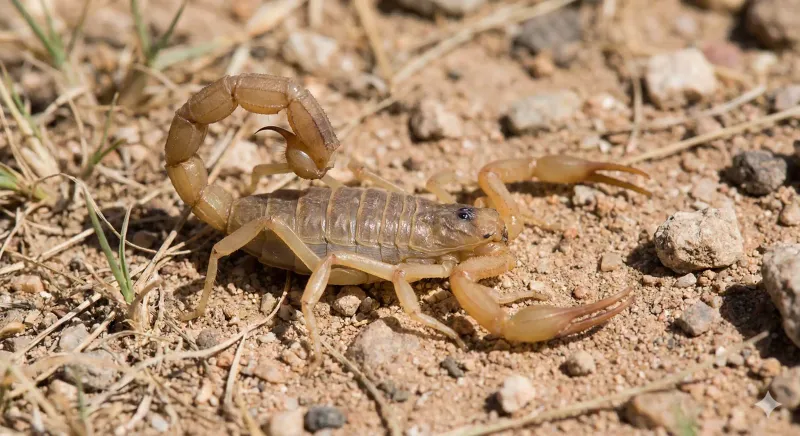
You flip on the patio light and spot a scorpion near the planter. Your mind jumps to the worst: is it inside, is it dangerous, are there more?
The truth is calmer and more useful than the rumors. Here is what a sighting can and cannot tell you, how to cut down on encounters, and what to do if someone gets stung.
A patio sighting signals a nearby encounter risk, not an infestation
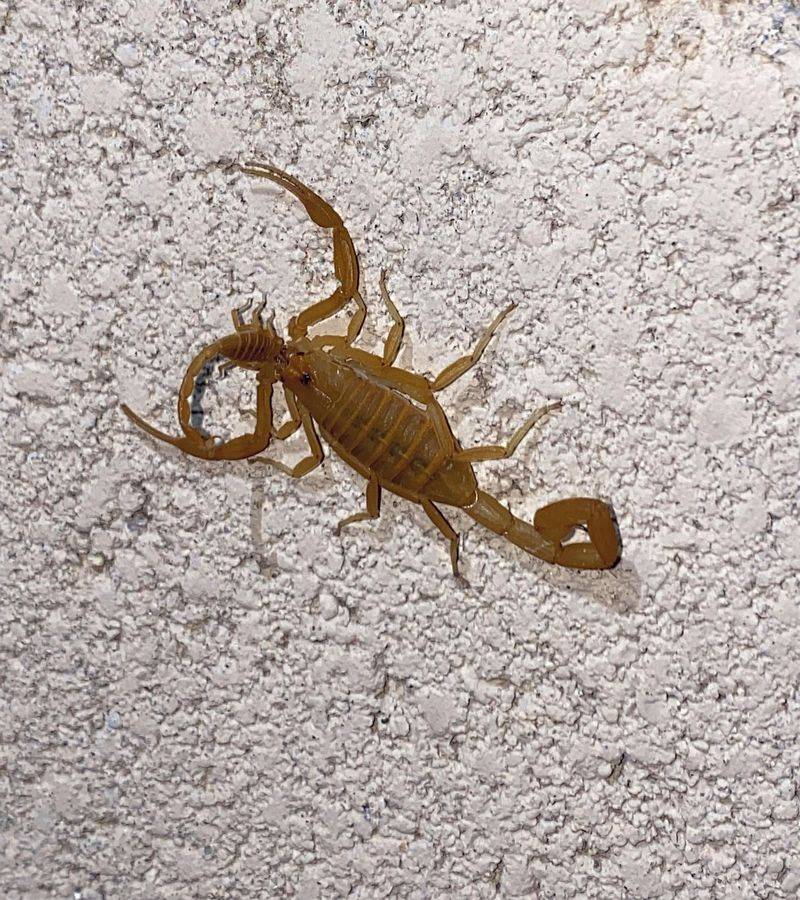
One scorpion on the patio tells you one thing: a scorpion was nearby. That is all.
It does not prove one got into the house, that the home is infested, or that the yard is messy or neglected.
Scorpions are nocturnal predators. According to UC Statewide IPM Program guidance, they hide under rocks, wood, and other debris during the day, and they can slip into buildings through gaps.
So a scorpion near your patio may simply have been using a sheltered spot or hunting for insects. No one sighting can tell you which.
Think of the sighting as a prompt to look around rather than a reason to panic. A quick walk along the foundation, the door thresholds, and the stack of pots or firewood can show you where a scorpion might hide or squeeze in.
Take sensible precautions on patio nights. Wear shoes outside, keep a flashlight handy, and give shoes and towels left outdoors a good shake before using them.
Those habits cost almost nothing and lower your odds of a surprise sting, whatever kind of scorpion it was.
Bark scorpions occur mainly in California’s southeast
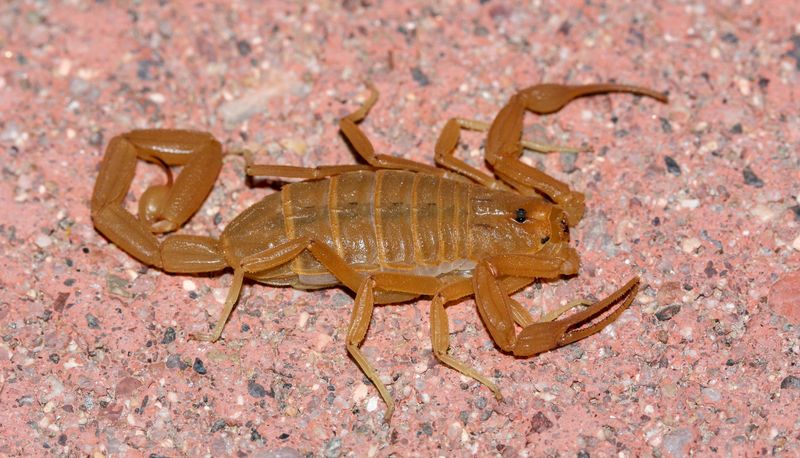
California is home to several kinds of scorpions, but the bark scorpion is not found everywhere. UC IPM places bark scorpions in the state’s extreme southeast, near Arizona.
A California public health reference describes their range along the Colorado River and an established urban population in parts of the Coachella Valley. It also reports small populations that were found and removed in a few other counties.
So they can turn up outside their main range, but that is the exception.
Because of that, a scorpion on a patio in Sacramento or the Bay Area should not automatically be called a bark scorpion. Even in the southeast, appearance alone is not a safe way to name a species.
Use the plain name, scorpion, unless an expert confirms more.
You may also hear that cooler fall nights push bark scorpions toward homes. That is not a proven California-wide rule.
University of Arizona Extension reports that Arizona bark scorpions are less active in the coolest months and lists extreme heat, flooded hiding places after irrigation or rain, and disturbed landscaping as movement triggers. That is regional guidance for Arizona, not California-specific evidence.
Shelter and prey can bring scorpions close to a home
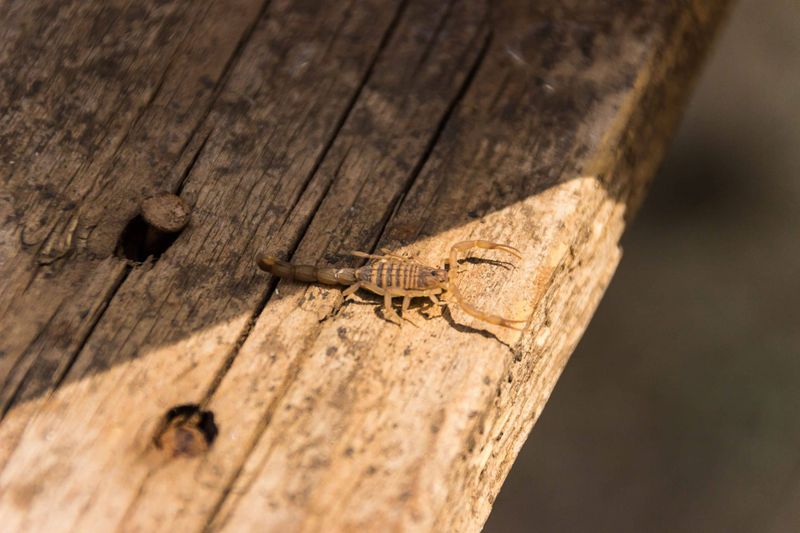
Picture a scorpion’s day. It stays tucked away while the sun is up, then comes out after dark to catch insects and other small prey.
Anything that offers cover and a snack can look appealing.
Rocks, boards, firewood, and piles of debris all create the tight, shaded spaces scorpions like. Insects gather around patios too, especially near lights.
Those are general habits, though, not an explanation for why one particular scorpion showed up on your Tuesday evening.
Gaps matter as well. As UC IPM notes, scorpions can get into buildings through small openings.
That is how an indoor sighting happens, but an outdoor sighting does not mean the same thing.
A useful test is to ask where you found it. A scorpion on a paver at night points to outdoor activity.
One in a closet, a bathtub, or a bed points to a way inside that deserves attention. Either way, the answer is to check the conditions near the patio, not to blame the yard.
Reduce hiding places and close entry points
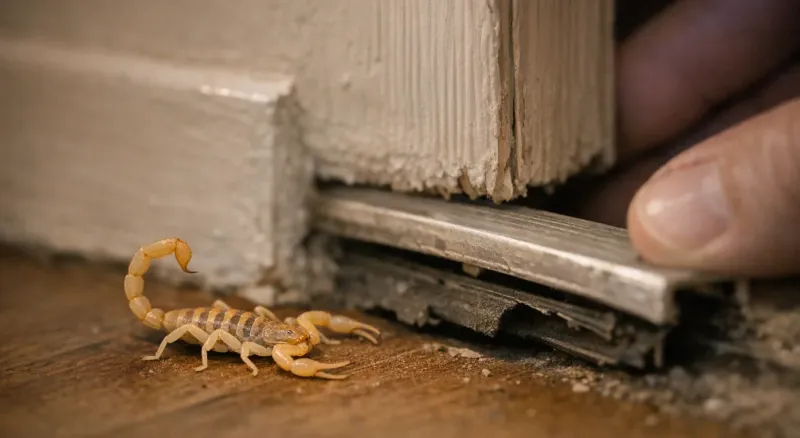
Start with the spots closest to the house. Clear stored debris, loose boards, stacked pots, and piles of rock away from the foundation.
Move firewood out and up off the ground if you can. Fewer hiding places means fewer reasons for a scorpion to settle near your door.
Next, close the gaps. Seal cracks in walls and around pipes, add weatherstripping to doors, and keep window and door screens tight and intact.
Small openings count, since scorpions can squeeze through narrow gaps.
Add a few personal habits. Wear shoes outdoors, put on gloves for yard work, and shake out shoes, clothing, and towels before you use them.
Check garden gloves and kids’ outdoor toys too.
UC IPM names changing the area around the home as the main control approach. It also cautions that pesticides can be unreliable on their own.
Spraying may feel like action, but it works best, if at all, alongside cleanup and sealing.
If you want to see what is working, check again after dark with a flashlight in a few weeks. A yard with fewer hideouts and a house with sealed gaps usually gives scorpions less to work with.
After a sting, call Poison Control and use simple first aid

If a scorpion stings you or someone in your family, call Poison Control at 1-800-222-1222. They can give advice for that specific person and situation, and the call is a good first move even if symptoms seem mild.
Then wash the area with soap and water and apply a cool compress for pain. Current American Heart Association and American Red Cross first aid guidelines say ice can help relieve local scorpion-sting pain.
Keep a cloth between ice and skin.
A cool compress is not a pressure bandage. Do not wrap the sting tightly or immobilize the limb.
Some older wording mentions pressure, but tight bandaging is not the advice to follow here.
Do not try to grab or trap the scorpion if it risks another sting. A phone photo from a safe distance is enough to describe it to Poison Control.
Children need extra care. A suspected bark-scorpion sting in a young child warrants prompt medical attention, so do not wait to see how it goes.
The University of Arizona Extension guide reflects this same caution for the youngest patients.
Call emergency services for serious whole-body symptoms
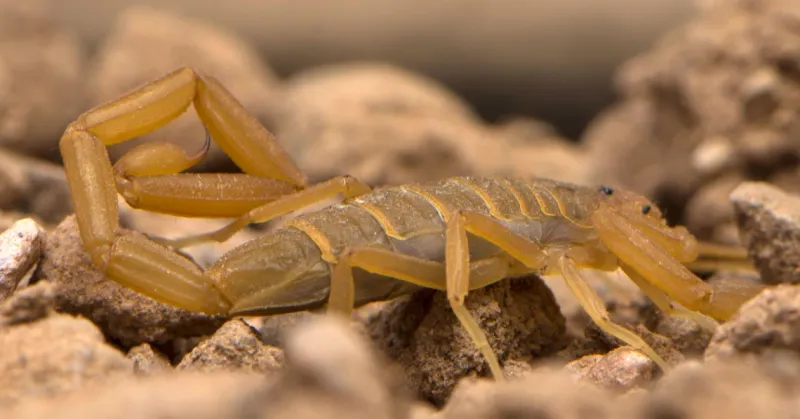
Local pain, tingling, or mild swelling at the sting site is one thing. Symptoms that spread through the body are another.
Call emergency services for difficulty breathing, muscle rigidity, dizziness, or confusion, and do not wait for them to pass.
Get medical care as well for severe or spreading pain, an open wound, or any other whole-body symptom. Poison Control at 1-800-222-1222 can help you judge what is happening while you arrange care, but serious symptoms call for emergency help first.
Keep the risk in proportion. Most scorpion stings in the U.S. are not life-threatening.
UC IPM notes that bark-scorpion stings can cause serious nerve or breathing symptoms, yet deaths are rare. Both parts are true, so the best plan is watching for symptoms rather than fearing the worst.
Young children and anyone who feels worse over time deserve the closest watch. Note when the sting happened and what symptoms appeared, since medical staff will ask.
A scorpion on the patio is a reason to tidy, seal, and shake out your shoes, not a verdict on your home. Readiness beats worry every time.