
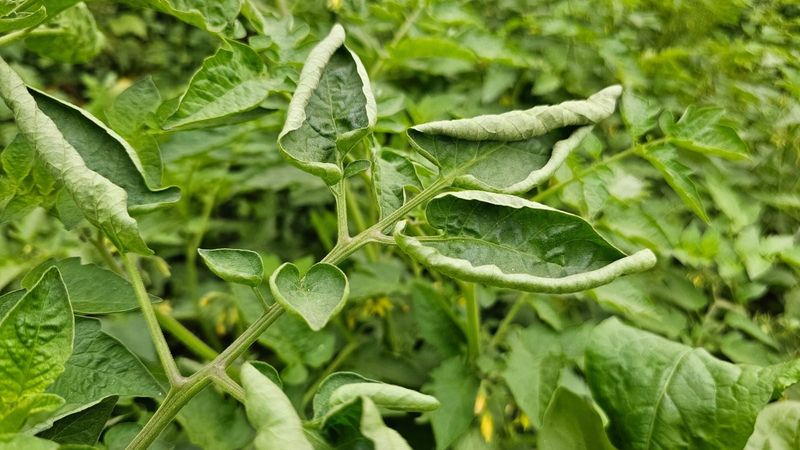
You walk out to the garden and spot tomato leaves rolled up like little tacos. It is easy to worry, and just as easy to grab the hose, fertilizer, or a spray bottle.
But curled leaves can mean several different things, and some of them are harmless. A few quick observations can tell you whether to adjust your care or look closer.
Curl is a clue, not a diagnosis
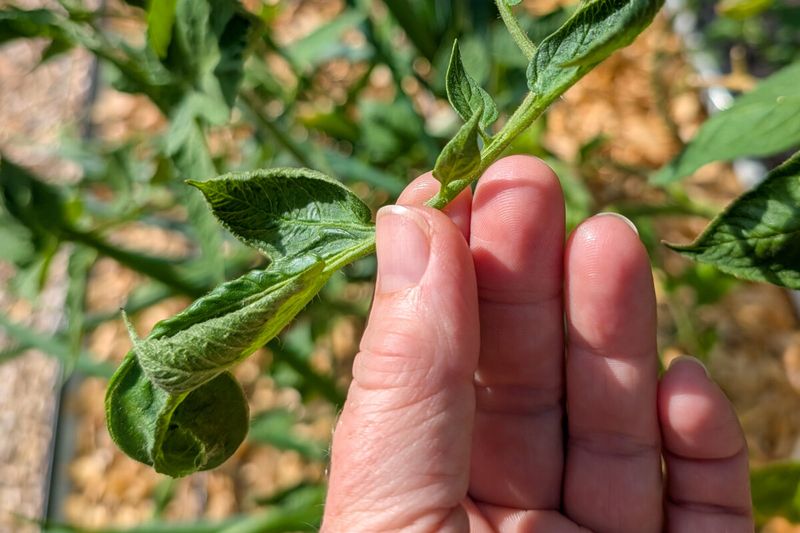
Rolled leaves get a lot of attention, yet curl alone does not prove a tomato plant is sick. Gardeners often see a pattern called physiological leaf roll, and University of Minnesota Extension notes that it often does not reduce growth or yield.
In some plants it may be the only obvious sign anything has changed.
Curl can also show up with herbicide injury, pest activity, or viral disease. That is why the leaf itself is only the starting point.
The shape of the curl matters, but so do the age of the leaves, how vigorous the plant looks, and what else is going on around it.
Think of this article as a way to narrow the possibilities. Curl does not predict that illness is coming, and no single treatment solves every cause.
Before reaching for water, fertilizer, or pesticide, take a few minutes to read the whole plant and its growing conditions. That habit saves effort and often saves a perfectly good tomato plant.
Start with the leaves that curl—and what changed
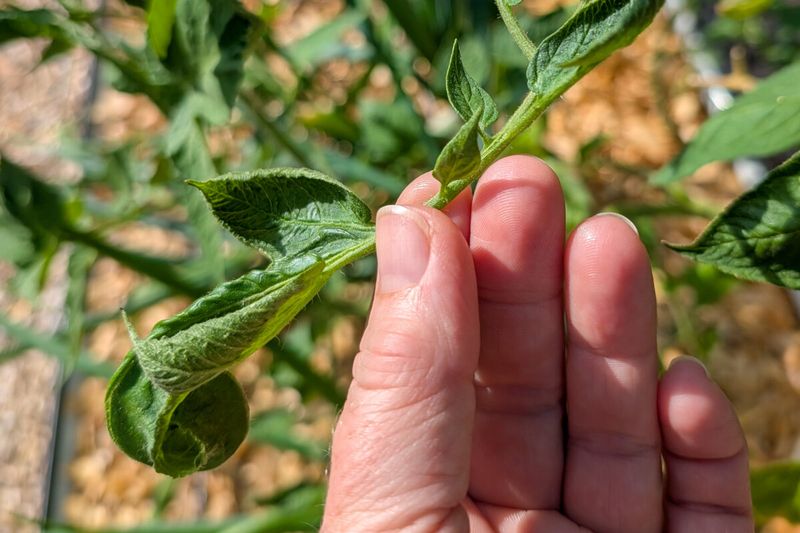
Slow down and play detective for a few minutes. Note whether the older, lower leaves are curling or whether the newest growth at the top is affected.
Then check the direction: are the leaves rolling up or curling down?
Next, look at the plant as a whole. Is it stunted, or is it growing strongly?
Scan for mottling, yellow leaf margins, purple veins, spots, twisted or distorted growth, insects, and odd-looking fruit. The University of Minnesota diagnostic guide uses many of these same clues to sort out curled tomato leaves.
Write down or snap photos of what you see, with dates. Changes over a week or two can tell you more than a single look.
Keep in mind that these observations narrow the list but may not name the cause, because symptoms overlap. A Utah State Extension advisory makes the same point about leaf curl having multiple possible sources.
Older leaves rolling upward often point to plant stress
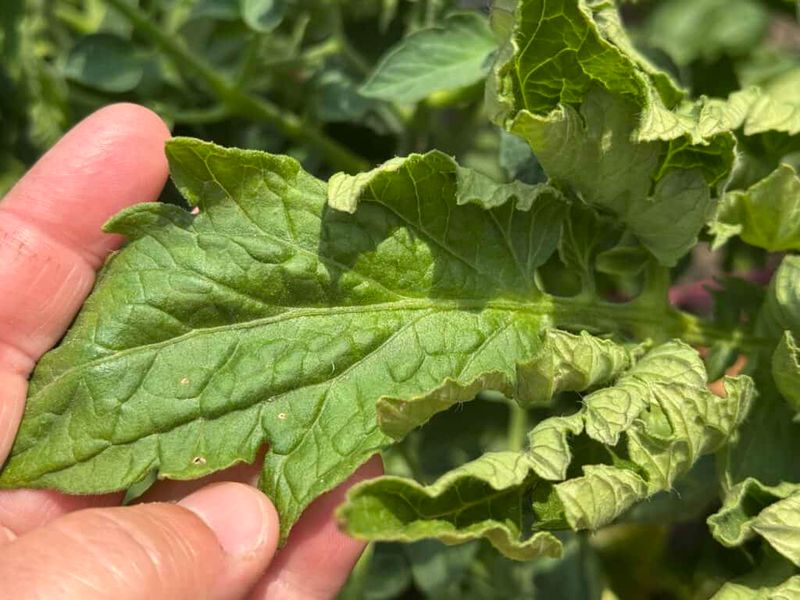
Picture a tomato plant with older, lower leaves rolled upward, feeling firm or leathery, while the rest of the plant keeps growing well. That is the classic look of physiological leaf roll.
Hot, dry spells can play a part, but so can excess moisture or nitrogen, rapid growth, root damage, and heavy pruning, and no single factor is certain.
The Utah State advisory notes that both too much and too little water may be linked to leaf roll. So skip the automatic extra watering.
Push a finger a few inches into the soil first, especially in containers or after a Florida or Texas downpour.
If the soil is dry, water thoroughly at the root zone. Minnesota Extension tomato guidance favors reasonably steady moisture.
Amounts vary with soil, rainfall, heat, and pots versus beds. Hold off on extra nitrogen and heavy pruning, and remember that many cases need no treatment at all.
Distorted new growth calls for an exposure check
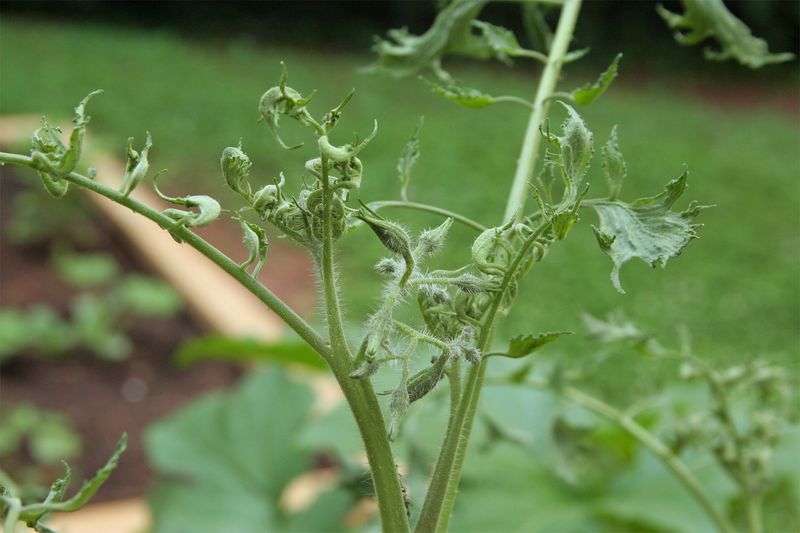
When the newest leaves look twisted, cupped, or oddly stretched, the story shifts. Herbicide injury becomes one possibility worth checking.
It is not proof, though, and the University of Minnesota guide lists it alongside other causes.
Ask a few practical questions. Did a neighbor, utility crew, or lawn service spray nearby?
Did you recently add mulch, grass clippings, manure, or compost that could carry herbicide residue? That history can be as useful as the leaf itself.
This pattern differs from typical leaf roll on older leaves of a vigorous plant. It also overlaps with viral symptoms, and Texas A&M AgriLife guidance notes that herbicide damage can resemble virus symptoms.
Before treating anything, contact your local Extension office or a diagnostic lab. Extra water or fertilizer will not reverse herbicide damage.
Check for insects before considering pest control
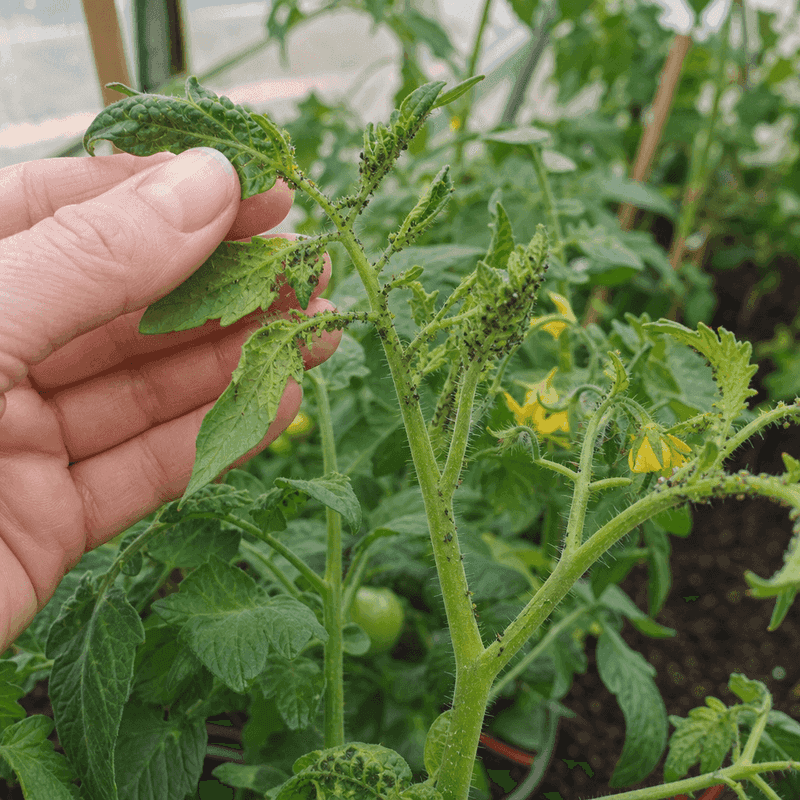
Flip a few curled leaves and look closely at the undersides and stem tips. Aphids tend to cluster on foliage, and in large numbers they can cause curling, stunting, and wilting, according to the University of Minnesota diagnostic guide.
Finding a few of them does not close the case. Small or moderate numbers may cause no visible symptoms, so their presence alone does not show they caused the curl.
The same goes for whiteflies, which are worth identifying but not worth blaming automatically.
Let the evidence guide you. If you see heavy colonies and the leaves match the damage, you can look into controls and follow the product label.
If you see only a few insects, spraying on a hunch may do little. Insecticides also cannot cure an established viral infection, as the Minnesota Extension virus page explains.
Stunting and discoloration make viral disease more concerning
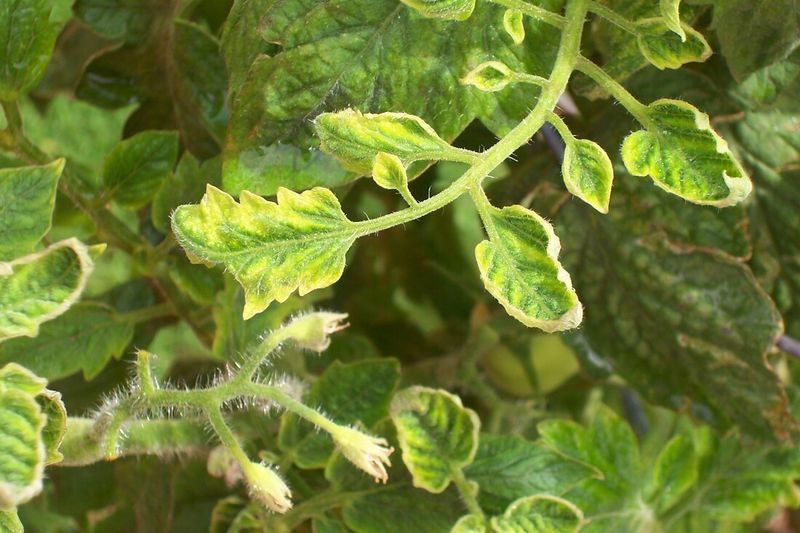
Curl that comes with progressive stunting, yellow or light-green mottling, smaller or misshapen leaves, yellow margins, or abnormal fruit deserves a harder look. Curl by itself does not establish infection.
Minnesota Extension notes that different tomato viruses produce different patterns.
In Florida and Texas, tomato yellow leaf curl virus (TYLCV) is a regionally relevant possibility, not the default explanation for every Southern garden. UF/IFAS describes upward cupping, yellow margins, and stunting, notes that silverleaf whiteflies transmit it, and says symptoms are not unique to TYLCV.
Texas A&M AgriLife calls it a common cause of virus-related twisting in Texas.
Beet curly top, a separate disease, is documented especially in the western U.S., according to Utah State Extension. Because symptoms overlap, confirm suspected virus through your Extension office or a lab such as the Texas Plant Disease Diagnostic Laboratory.
Only when TYLCV is confirmed does Texas A&M guidance advise removing and disposing of the plant.
Choose the next step from the pattern, not the curl alone
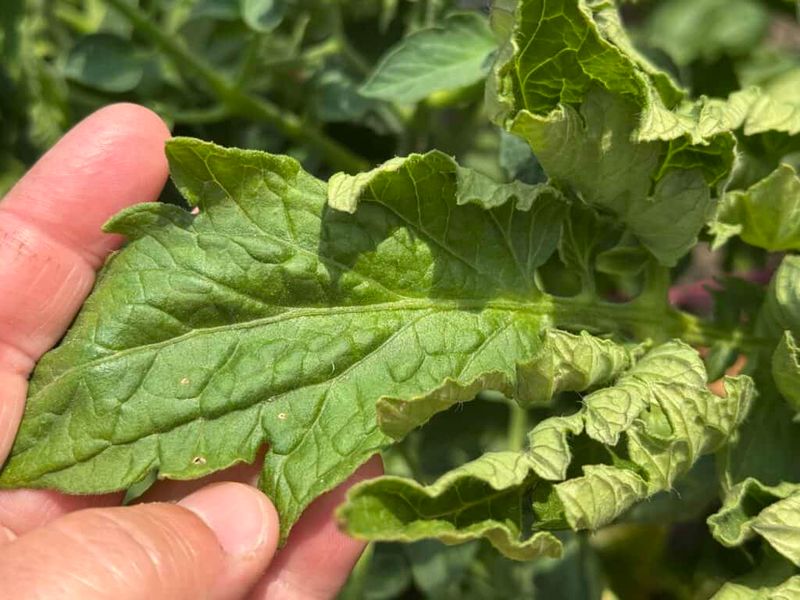
Here is a simple path to follow. If older leaves curl upward and the plant is vigorous, review moisture and recent care, such as pruning and fertilizer.
If new growth is distorted, check for possible herbicide exposure from nearby spraying, mulch, or compost.
If you find insects, identify them before acting, and remember a few aphids do not prove cause. If curl progresses with stunting, mottling, or yellow margins, contact local Extension or a diagnostic lab.
The UF/IFAS guidance recommends laboratory diagnosis when TYLCV is suspected, and the Minnesota diagnostic guide is handy for comparing symptoms.
Observation comes before intervention, and no single quick fix fits every cause. Correcting an identifiable stress may help with leaf roll, while water and fertilizer will not undo herbicide injury or cure a virus.
A curled leaf is a question the plant is asking you to look into.