
A good-looking front walkway should not need a sprinkler running every morning. Florida has plants that bring tidy shapes, bright flowers, and soft texture to sunny entry beds with little extra water once established.
The trick is choosing plants for your part of the state and giving them enough room to grow. These nine picks can help you build a polished entrance without turning watering into a daily chore.
1. Muhly Grass
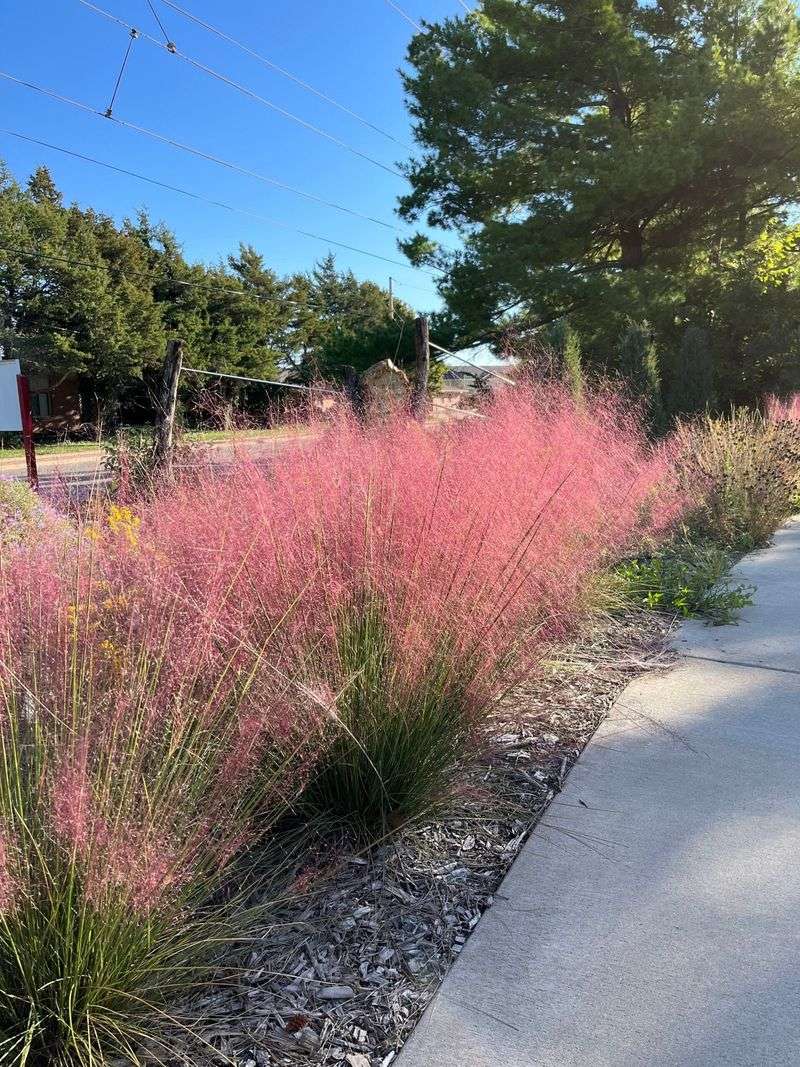
A cloud of pink flowers can make an ordinary concrete path look like a designed garden. Muhly grass, Muhlenbergia capillaris, delivers that effect in fall, while its fine green leaves keep the planting attractive during the rest of the year.
This Florida native generally grows about 2 to 3 feet tall, with flower stalks reaching higher. Use three or five plants in a loose group beside a broad walkway rather than squeezing single plants into a narrow strip.
Full sun brings the strongest flowering, and sandy, well-drained soil suits it well. Space plants roughly 3 feet apart and leave enough distance from the pavement for mature foliage to arch without blocking foot traffic.
Water new plants through establishment, then provide supplemental water during prolonged drought if needed. Avoid heavy fertilizer and constantly wet beds, which can spoil the upright shape.
In late winter, before fresh growth starts, trim old foliage if the clumps look tired. Pair muhly with a low groundcover for a simple two-layer planting that looks intentional without demanding weekly shaping.
2. Coontie
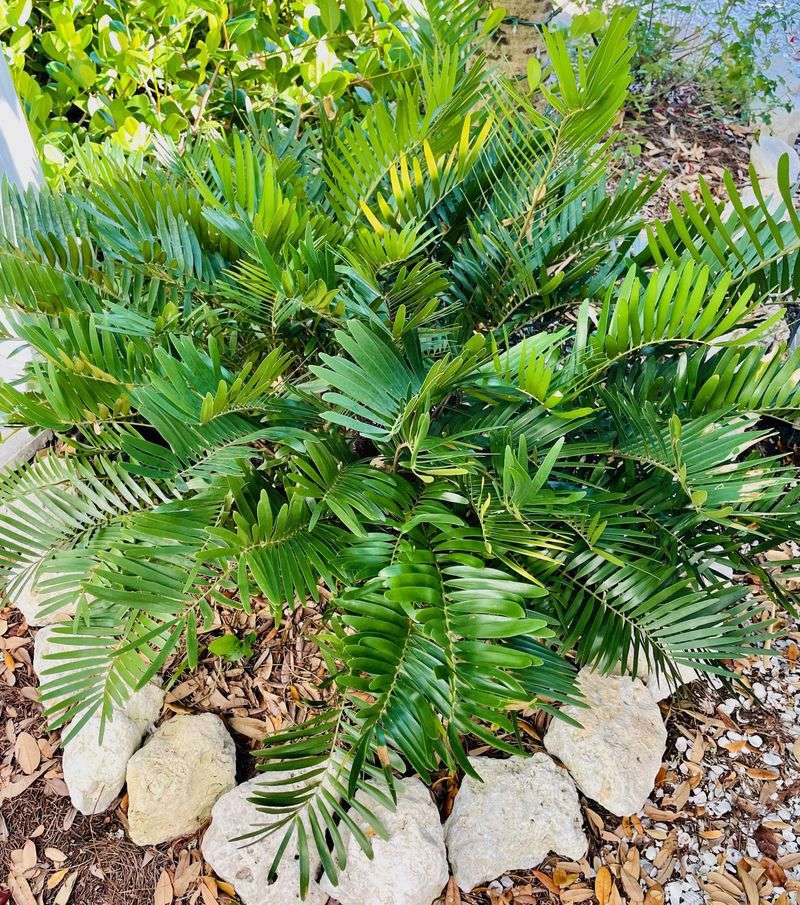
For an entrance that stays neat even when nothing is blooming, choose a plant with a strong shape. Coontie, Zamia integrifolia, has glossy, featherlike leaves that form compact clumps and bring a calm, finished look to walkway beds.
This native cycad usually stays around 2 to 3 feet tall, though mature width varies. Repeat it along a path or use matching groups near the front steps, allowing room for each clump to spread without covering the paving.
Coontie handles sun or partial shade and needs well-drained soil. Once established, it tolerates dry periods well, making it useful under open tree canopies where thirsty bedding flowers often struggle.
Growth is slow, so buying a reasonably full plant gives a quicker visual payoff. Remove damaged leaves at their base rather than shearing the whole plant into an artificial shape.
Coontie supports the native atala butterfly where that butterfly occurs, especially in South Florida. All parts are poisonous if eaten, so keep it away from pets or children likely to chew plants, and never treat its seeds as edible decorations.
3. Dwarf Yaupon Holly
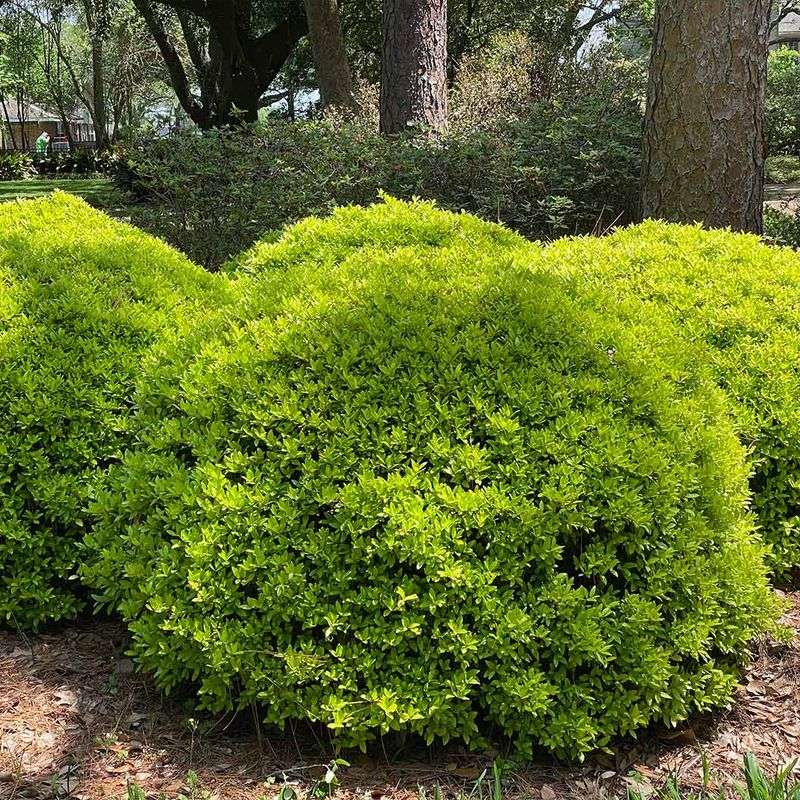
Some walkways need a clean green frame more than another burst of flowers. A dwarf yaupon holly provides that structure, keeping the entrance organized even when nearby perennials are between bloom cycles.
Compact selections of Ilex vomitoria work especially well in North and Central Florida. Cultivars differ in mature size, so check the tag instead of assuming every plant labeled dwarf will stay knee-high.
For most small entry beds, choose a selection listed around 2 to 4 feet tall and wide. Space shrubs according to that mature width, and set them far enough from the path that they will not require constant clipping.
Sun to partial shade is suitable, and established plants tolerate drought well. Water during establishment, but do not keep the root zone soaked simply because the nearby lawn is on an automatic irrigation schedule.
Let the shrubs keep their rounded outline, with occasional selective pruning as needed. Many commonly sold dwarf cultivars are male and do not produce berries, so buy a known female selection if fruit for birds is part of your plan.
4. Sunshine Mimosa
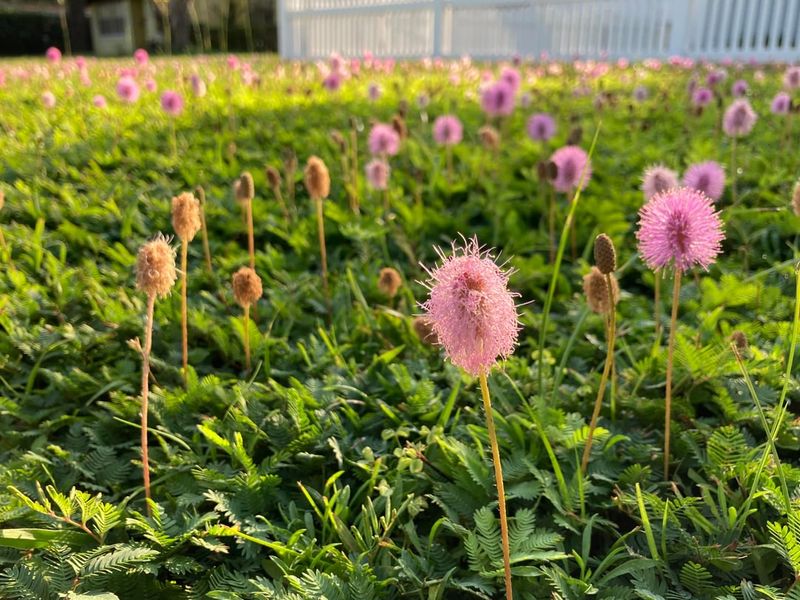
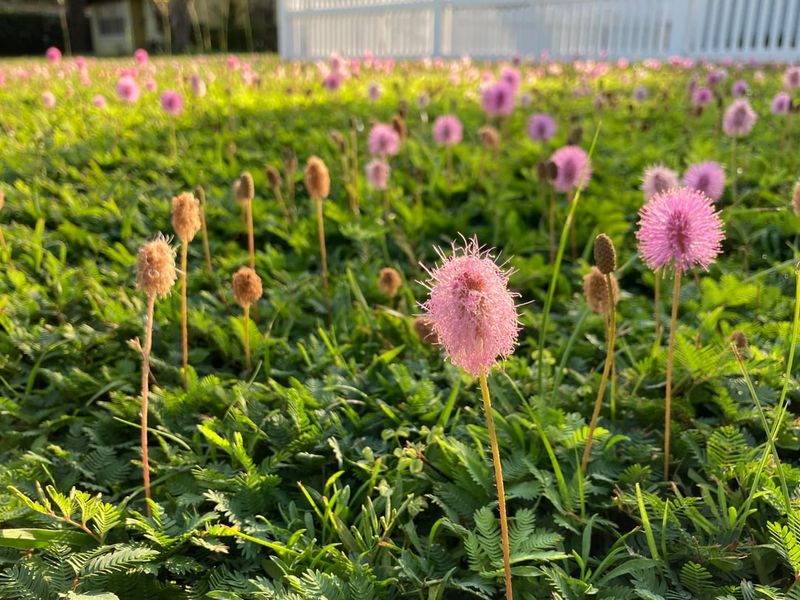
Pink powder-puff flowers give a sunny path a playful edge without adding a tall barrier. Sunshine mimosa, Mimosa strigillosa, spreads close to the ground, filling open space with fine leaves and small blooms.
This Florida native is useful where a broad bare strip makes the entrance look unfinished. Its foliage also folds when touched, a small detail that can make a walk to the front door more interesting.
Plant it in sun for best flowering, using well-drained soil and enough open ground for its runners. Once rooted, it handles dry conditions well, although an extended drought can reduce its fresh, green appearance.
The main maintenance job is keeping the spread within bounds. Edge it along pavement and check nearby beds, since runners can weave among smaller plants and travel farther than expected.
It tolerates occasional footsteps, but it is not a replacement for the walkway itself. Expect some seasonal thinning or winter browning in cooler parts of Florida, and use evergreen shrubs behind it if you want dependable structure throughout the year.
5. Dune Sunflower
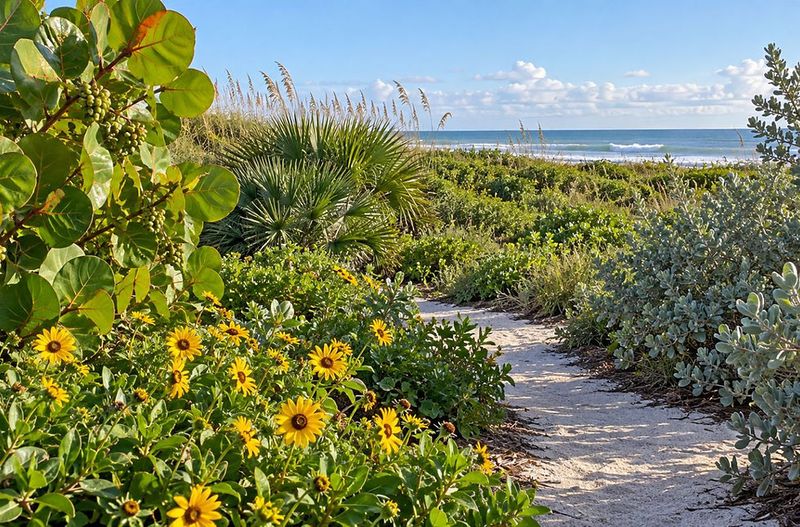
A sandy bed beside hot pavement can be a rough place for delicate flowers. Dune sunflower, Helianthus debilis, is built for bright, dry conditions and brings cheerful yellow blooms to a space that might otherwise stay bare.
Its loose, spreading habit works best in a generous bed rather than a skinny border. Depending on the selection and growing conditions, plants commonly reach about 1 to 2 feet tall and spread several feet wide.
Give it full sun and fast-draining soil. Coastal exposure is often a good fit, but a low spot that holds stormwater is not, even if the surface looks sandy between rains.
Ask a Florida native nursery for the species or subspecies suited to your region. Locally appropriate stock matters, especially near natural coastal areas where preserving regional plant genetics is a concern.
Trim wandering stems back from the walkway and replace tired plants when their appearance declines. The payoff is a broad ribbon of color that attracts pollinators, with little supplemental irrigation after establishment unless dry weather becomes unusually prolonged.
6. Blanket Flower
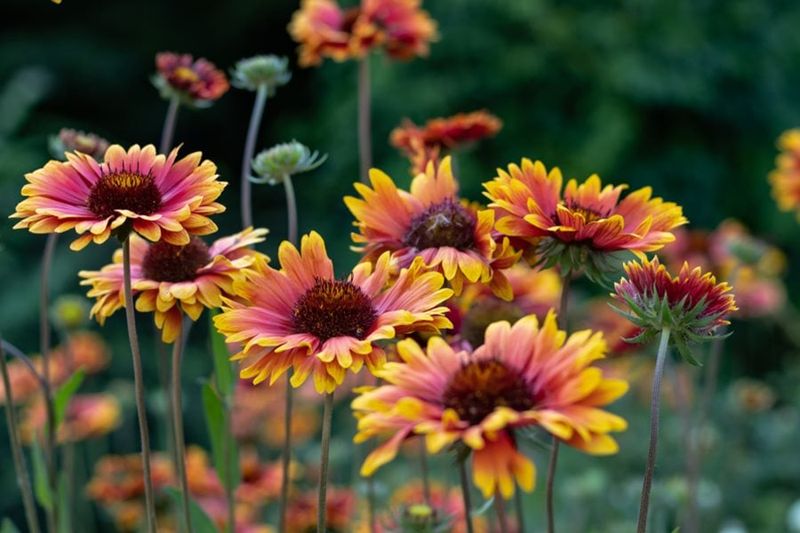
Red and yellow flowers can wake up an entrance that feels too plain. Blanket flower, Gaillardia pulchella, supplies that warm color without asking for the rich soil and steady watering many annual flowers need.
Use it as a colorful accent among plants that provide lasting structure. It commonly grows about 1 to 2 feet tall, making it a good middle layer between low groundcovers and compact shrubs.
Full sun and excellent drainage are the essentials. In Florida, wet roots and overly rich growing conditions can shorten its useful life, so avoid placing it beside a downspout or in a heavily irrigated lawn bed.
Water young plants until they establish, then allow the soil to dry between supplemental waterings. Removing spent blooms can keep the display looking cleaner, while leaving some seed heads may encourage replacement seedlings.
Think of blanket flower as a colorful, short-lived member of the planting rather than a permanent shrub. Often sold in Florida native plant mixes, it has a debated native status in the state, so do not assume every nursery label settles that question.
7. Native Blue Porterweed
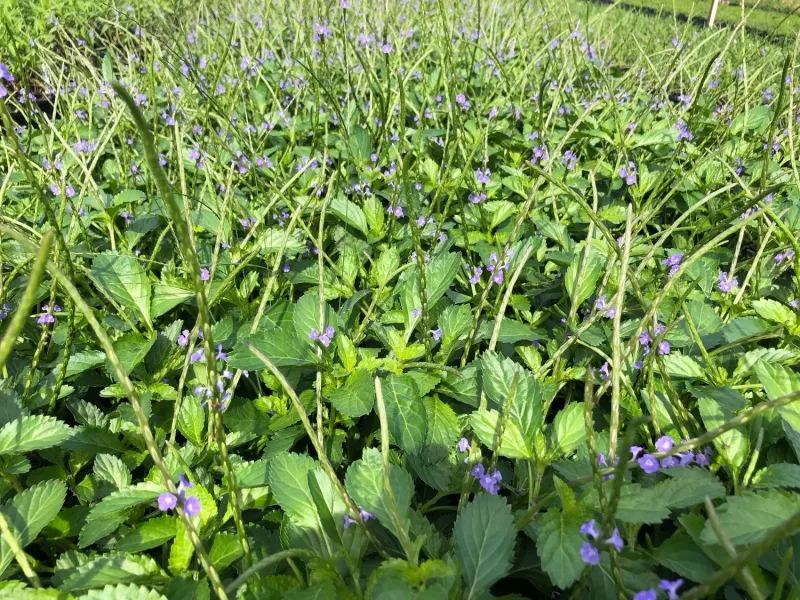
Butterflies can add movement to a front entrance without adding another garden chore. Native blue porterweed, Stachytarpheta jamaicensis, offers small blue flowers along thin spikes and a relaxed, spreading shape.
The true Florida native is lower-growing than several nonnative porterweeds sold under similar common names. Check the botanical label and buy from a knowledgeable nursery, because taller look-alikes are not interchangeable choices.
It is best suited to warm parts of Florida, particularly South Florida. Cold weather can damage it farther north, so do not count on it as the year-round backbone of a freeze-prone entry bed.
Choose a sunny, well-drained location and leave room for its low branches to spread. Established plants tolerate drought, though flowering and leaf quality can suffer during a long rainless stretch.
Use it behind the immediate walkway edge, where its flower spikes can remain intact without brushing every passerby. Light pruning helps manage its outline, but frequent shearing removes the very stems that carry the blooms and attract butterfly visitors.
8. Silver Buttonwood
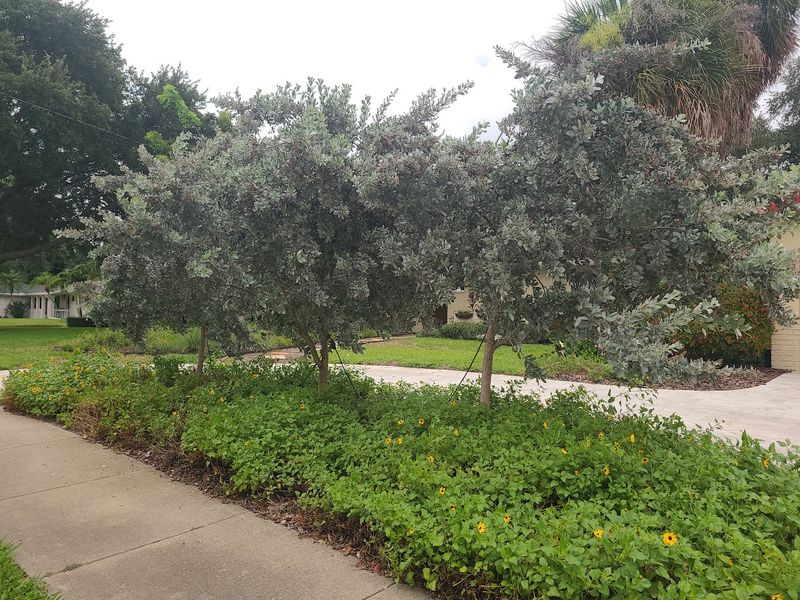
Silver foliage gives an entry bed contrast even when there is not a flower in sight. The silver-leaved form of buttonwood, Conocarpus erectus, looks especially striking beside green groundcovers, warm-colored paving, and pale Florida homes.
This is a South Florida choice, not a dependable statewide recommendation. It tolerates coastal conditions and drought after establishment, but freezing weather can cause serious damage.
Size is the bigger planning issue: silver buttonwood can become a substantial shrub or tree. Use it in a broad bed beside the walkway, not in a narrow strip where keeping it small would require endless pruning.
Give it full sun for good foliage color and choose well-drained ground. Water new plantings regularly while roots spread, then reduce irrigation rather than maintaining a permanently damp bed.
A single specimen can serve as the planting’s visual anchor, with lower plants around it. Prune selectively to guide its shape, and keep branches clear of doors, house walls, and pedestrian space; its polished effect comes from the foliage, not from forcing an oversized plant into a tiny footprint.
9. Saw Palmetto
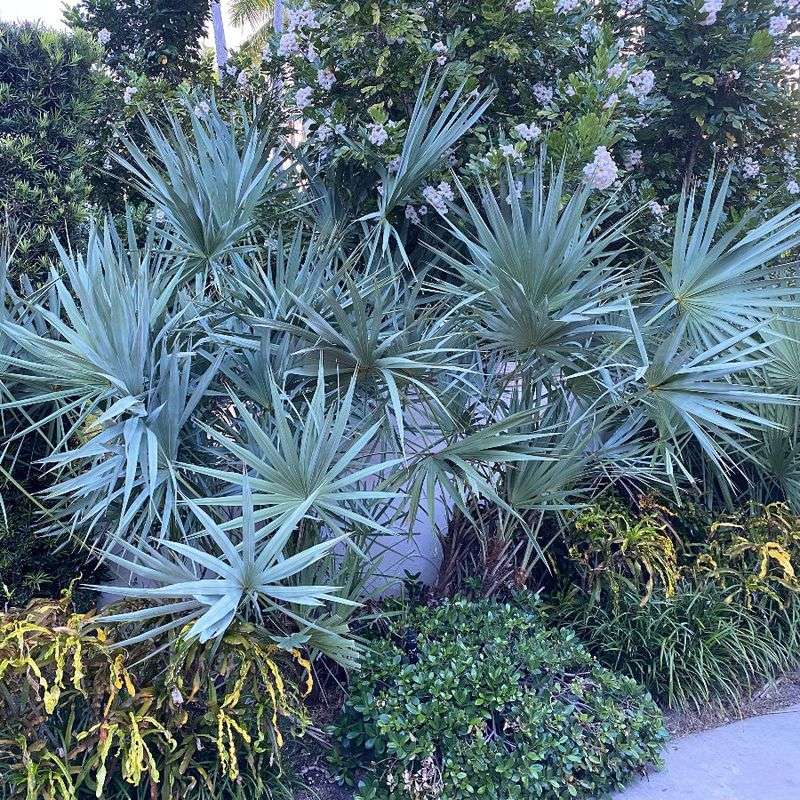
A bold fan-shaped leaf can do the work of several fussy decorations. Saw palmetto, Serenoa repens, brings a distinctly Florida look to an entrance, especially when you choose a silver-leaved form.
This native palm is highly drought tolerant once established and suits sunny, sandy sites. Its slow growth can make it seem small at the nursery, but mature plants often occupy a much wider area than buyers expect.
Choose a compact selection when available and confirm its expected dimensions before planting. Place it well back from the walkway because the leaf stalks have sharp teeth that should never brush against legs or hands.
Its strongest role is as an accent in a roomy outer bed, with softer, lower plants closer to the paving. It is not a good choice for a tight entrance, a narrow side path, or a spot that regularly floods.
Remove dead fronds when needed, wearing sturdy gloves, but avoid unnecessary trimming of healthy leaves. Give young plants establishment water; after that, rainfall may cover most of their needs, with occasional help during severe drought.