
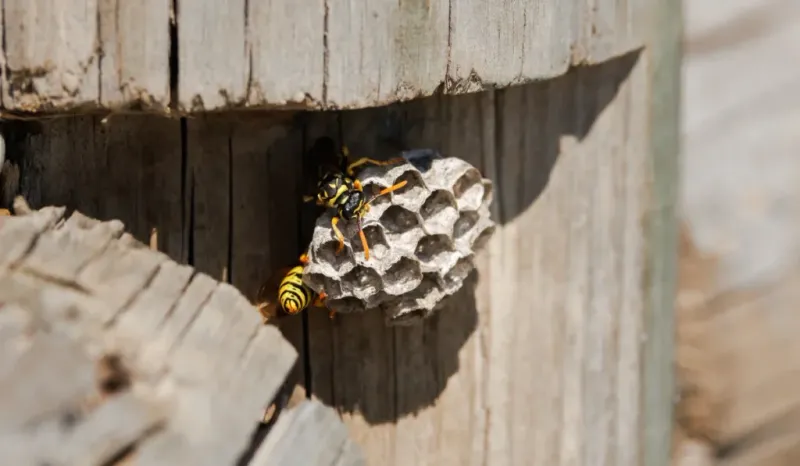
You step onto the porch with your coffee and spot a gray, papery nest tucked under the ceiling. Or maybe a few wasps keep buzzing around your picnic table.
Those two sightings can mean very different things. Knowing which one you have helps you stay safe and keeps helpful insects in your yard.
A sheltered porch spot can explain a nest
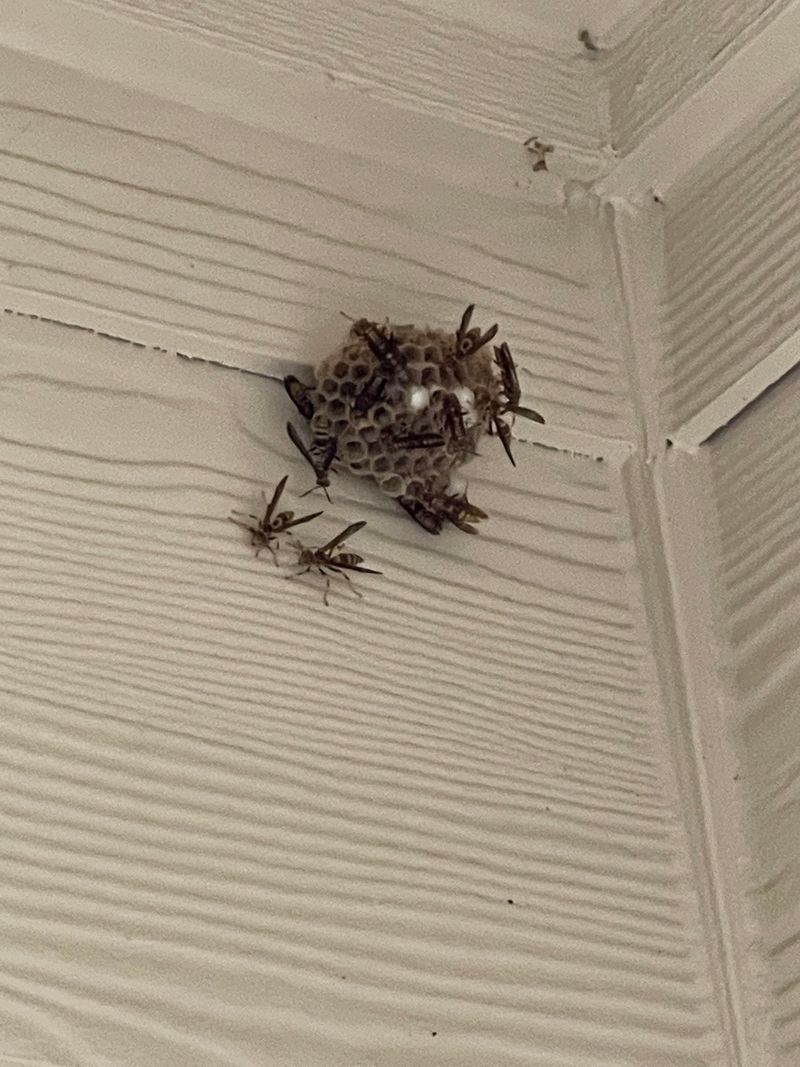
Look up before you look at the snack table. Paper wasps commonly attach small, open nests under eaves, overhangs, awnings, window sills, and deck railings, according to NC State Extension.
Those spots give a wasp two things she needs: a surface to attach to and a roof over the nest.
That is why a nest on your porch ceiling is often better explained by the location than by anything you left out. A queen starting a colony in spring is shopping for a protected, sturdy place to build.
A covered porch in Raleigh, Asheville, or Wilmington can look like a good deal to her.
This idea fits paper wasps and the nest types the source describes. It does not mean every wasp species picks porches for the same reason.
Some nest underground, and some build inside cavities, so a porch is only one of several choices.
The takeaway is simple. A nest tells you the spot suited a nester.
It does not, by itself, tell you that your food, trash, or garden lured the colony there.
What kind of wasp—and what kind of nest—are you seeing?
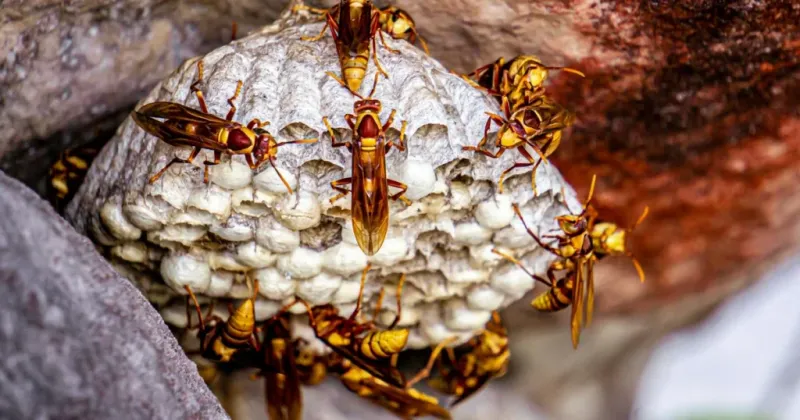
Shape and location are your best clues. Paper wasps build small, exposed combs shaped a bit like an umbrella and hung from a short stalk.
You can see the cells right on the open face of the nest.
Yellowjackets usually go another way. They more often nest underground or in cavities, though they can use spaces in buildings.
A steady stream of wasps going in and out of a hole in the ground or a gap in siding points that direction.
Bald-faced hornets are actually a type of wasp. They build enclosed gray paper nests, and NC State Extension notes they can use building overhangs or porches.
An enclosed, rounded nest with one opening is a different situation from an open comb.
Why bother sorting this out? Advice for an exposed paper wasp comb does not necessarily fit a yellowjacket in a wall void or an enclosed hornet nest.
Identification affects both risk and the best response.
Use binoculars or a phone zoom from across the porch. Never walk up to a nest to get a closer look.
Food can draw visitors without drawing a colony
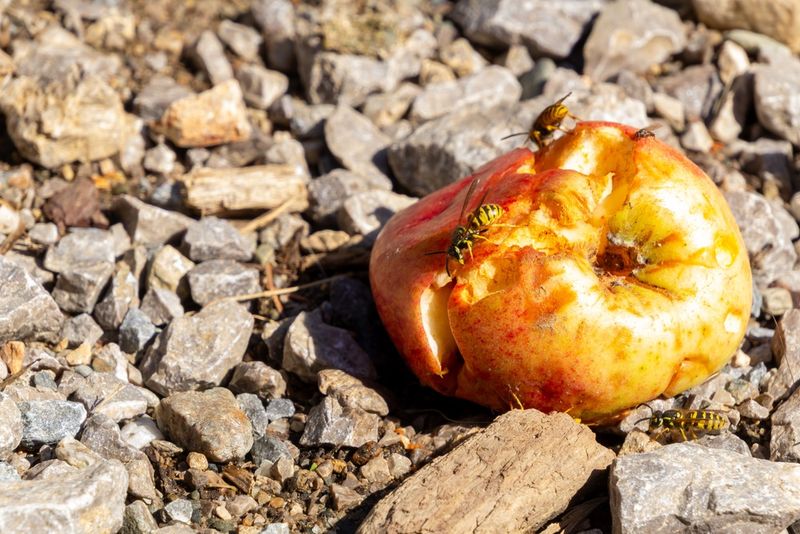
Here is where a lot of confusion starts. Exposed food, spilled drinks, open trash, fallen or rotting fruit, and water can pull foraging wasps onto your porch.
NC State Extension points to food and food waste as common draws for yellowjackets.
But a wasp on your sweet tea is just a visitor. Foragers may come from a nest far away, as Penn State Extension cautions.
Seeing them near your plate does not show there is a nest on or near your porch.
You can cut down on visits with a few easy habits. Cover food, wipe up spills, close trash lids tightly, and pick up fallen figs, pears, or apples from beneath trees.
Be realistic about what that buys you. These steps can reduce foraging, but they will not necessarily stop a wasp from building a nest under your porch roof.
Two different problems, two different fixes.
Wasps can benefit the yard, too
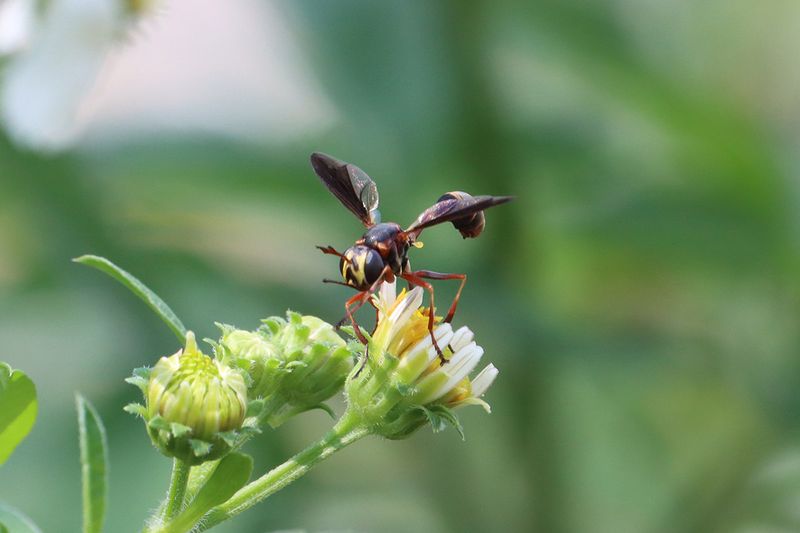
A wasp hauling a caterpillar off your tomato plant is doing you a favor. Paper wasps and yellowjackets prey on other insects, including garden pests, and NC State Extension lists that role among their benefits.
Some adults also visit flowers for nectar, so they take part in the garden food web in more than one way.
That means a nest does not automatically need to come down. If it sits well away from doors, steps, and places where people walk or sit, leaving it alone is a reasonable choice.
Distance is the deciding factor. A nest on a shed corner at the back of the lot is a very different case from one above the front door, where family and visitors pass daily.
Colonies can defend their nest, and stings are a real risk when people get close.
Weigh the pest control the colony provides against how often anyone will be near it. Ask yourself who walks there, how often, and whether anyone has a sting allergy.
When a nest creates a hazard, keep your distance
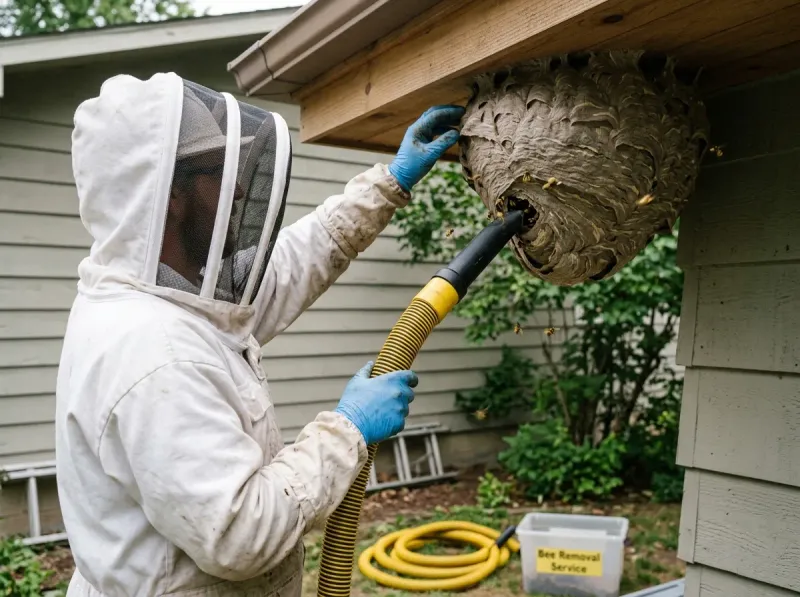
If a nest is in a bad spot, start by keeping people away from it. Rerouting guests to another door and keeping kids and pets clear costs nothing and avoids provoking the colony.
Removal can make sense when the nest creates a likely sting hazard, such as one right over an entry. Nests in wall voids or other places you cannot reach safely call for a pest professional.
Penn State Extension treats cavity nests as poor candidates for casual DIY treatment.
If you do use a pesticide, follow every direction on the label. Never use fire, and never pour gasoline into a nest.
NC State Extension warns against both because they are dangerous to you and your home.
Spraying yourself is not a one-size answer. Colony size, species, location, and allergies all matter.
Finally, know the emergency sign. Anaphylaxis after a sting can be life-threatening, and CDC guidance calls for immediate emergency care.
Call 911 for trouble breathing, swelling of the face or throat, or dizziness after a sting.
An empty nest does not rule out a new one next season
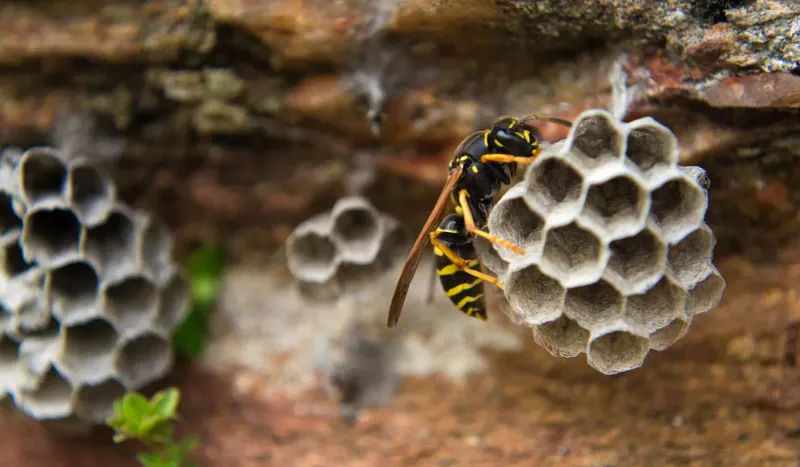
Come late fall, that nest will likely go quiet. Most social wasp colonies last a single season, and NC State Extension says paper wasp nests are abandoned and not reused the next year.
That is useful, but it has limits. A new queen can still choose the same porch in a later season, since the spot may suit her just as it suited the last one.
Nobody can promise it will happen, and nobody can promise it won’t.
Keep the paper wasp claim where it belongs. It does not stretch to every wasp species, so do not assume a hornet or yellowjackets nest follows the same rules.
A practical habit helps. Once the colony is gone and the weather cools, knock down the old nest with care and check the eaves each spring.
Catching a tiny starter nest early gives you far more options than meeting a full colony in August.
Read the clue before choosing a response
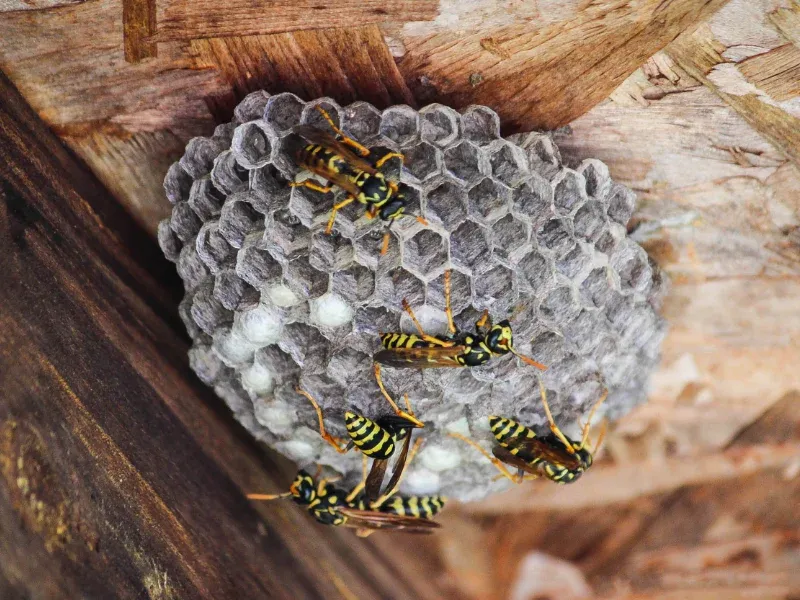
Start with one question: is this a nest or just visitors? A nest is a structure you can find and avoid.
Visitors at your table may live far away, so cover the food and see if they thin out.
If there is a nest, work out what kind it is from a safe distance. NC State Extension and Penn State Extension are good places to check before you act.
Then match your response to the real risk. Your porch has not sent a message, but it has given you a clue worth reading.