
Walk down a Florida street, and you may see the same broad tree crowns shading house after house. Those familiar choices often reflect more than habit: homeowners want cooler rooms, useful shade, and trees that can handle local conditions.
But a tree that works in one neighborhood may struggle just a few miles away. Here are eight reasons certain shade trees keep showing up, plus what to check before planting one yourself.
1. Broad Crowns That Shade More of the House
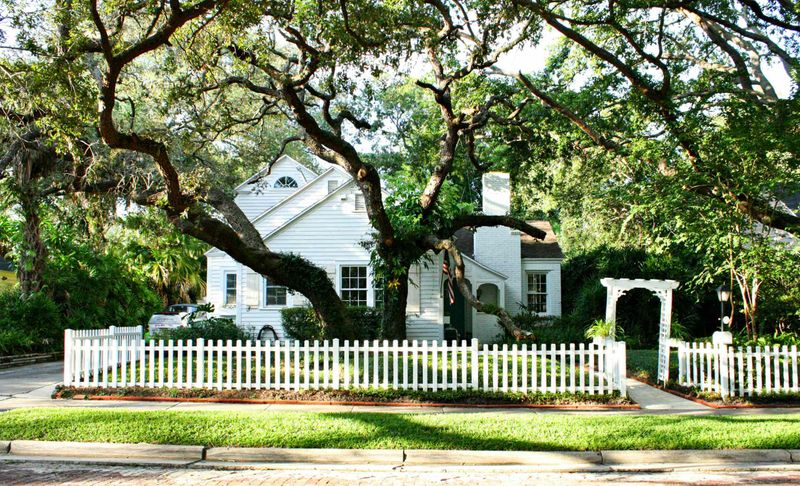
A patch of shade on the grass is pleasant, but shade across a sun-baked wall does more useful work. Florida homeowners often favor broad-crowned trees because their branches can cover windows, outdoor seating, and parts of the house as they mature.
Southern live oak, Quercus virginiana, is a familiar example. Its wide canopy helps explain why it appears repeatedly in roomy yards and older neighborhoods, where large trees have space to spread.
Placement matters as much as the species. A tree west of the house can block strong afternoon sun, while one on the east side can soften morning exposure; the actual benefit depends on the house, season, and canopy.
Before buying, measure the available growing space and check the tree’s mature width. Keep large trees clear of overhead wires, septic systems, and places where roots or branches would create conflicts.
For a small lot, a smaller tree placed well is usually more useful than a giant squeezed beside the foundation. Choose for the shade you need, not simply the biggest canopy at the nursery.
2. Trees That Match Local Soil and Weather
Florida can change from dry sand to soggy ground within a short drive. That is one reason successful neighborhood trees tend to repeat locally, rather than forming a single statewide planting list.
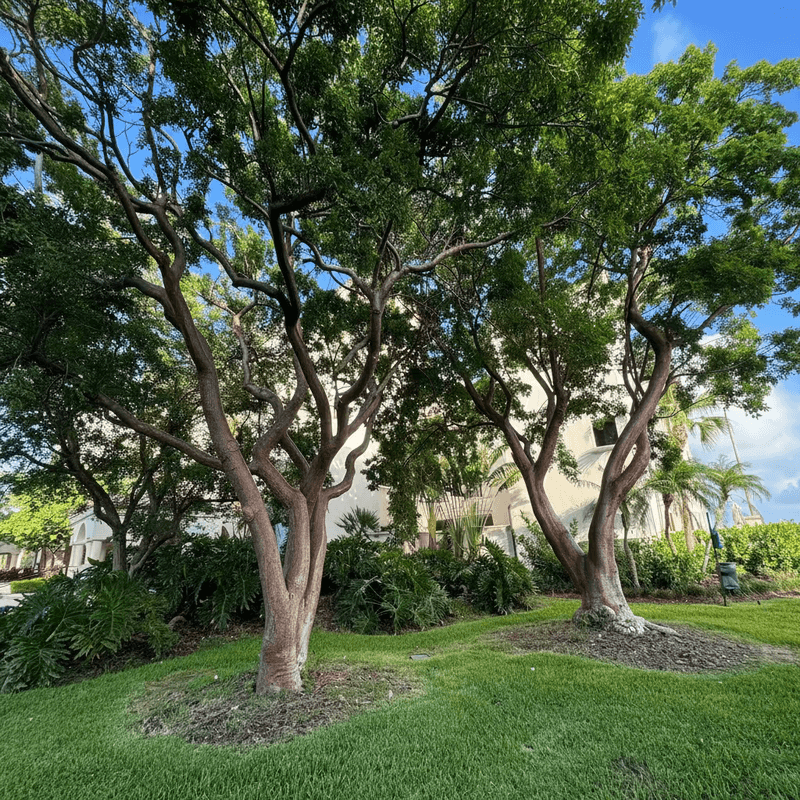
Gumbo limbo, Bursera simaruba, is a good example in frost-free South Florida. Its spreading crown and tolerance of suitable coastal conditions make it useful there, but cold limits its value farther north.
Live oak adapts to many well-drained sites, while red maple, Acer rubrum, is better suited to locations with dependable moisture. Southern magnolia, Magnolia grandiflora, generally performs best where roots have adequate moisture without prolonged waterlogging.
Look at your yard after heavy rain, then again during a dry stretch. Standing water, quick drainage, salt exposure, and irrigation coverage all affect which tree belongs there.
Your county UF/IFAS Extension office can help narrow the options to your actual conditions. Neighbors’ healthy mature trees provide useful clues, but check whether their soil, elevation, and watering match yours before copying their choice.
3. Familiar Choices With Better Wind Resistance
After a hurricane, the trees still standing get noticed. Florida residents have good reason to ask about wind resistance before committing to a shade tree that may eventually tower over their roof.
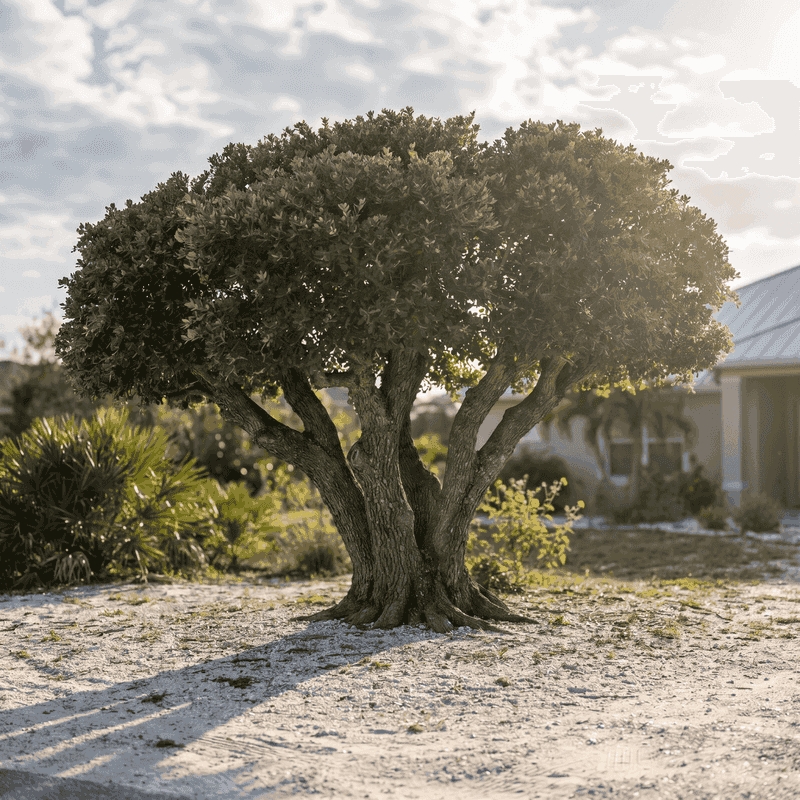
UF/IFAS research has identified species with relatively strong wind resistance under studied conditions, including live oak and, in suitable South Florida locations, gumbo limbo. That helps explain why familiar choices remain attractive in storm-prone communities.
No species is hurricane-proof, however. Root damage, cramped planting spaces, decay, poor branch structure, and saturated ground can turn an otherwise suitable tree into a hazard.
Start with healthy nursery stock and arrange structural pruning while the tree is young. A qualified arborist can guide branch development and inspect older trees for defects that are easy to miss from the ground.
Avoid topping trees or removing large amounts of foliage just before storm season. Those practices can create wounds and weak future growth rather than lasting protection.
The practical goal is a suitable species with room for roots and sound care. A familiar name alone does not guarantee a safe tree.
4. Nurseries Keep Reliable Sellers in Stock
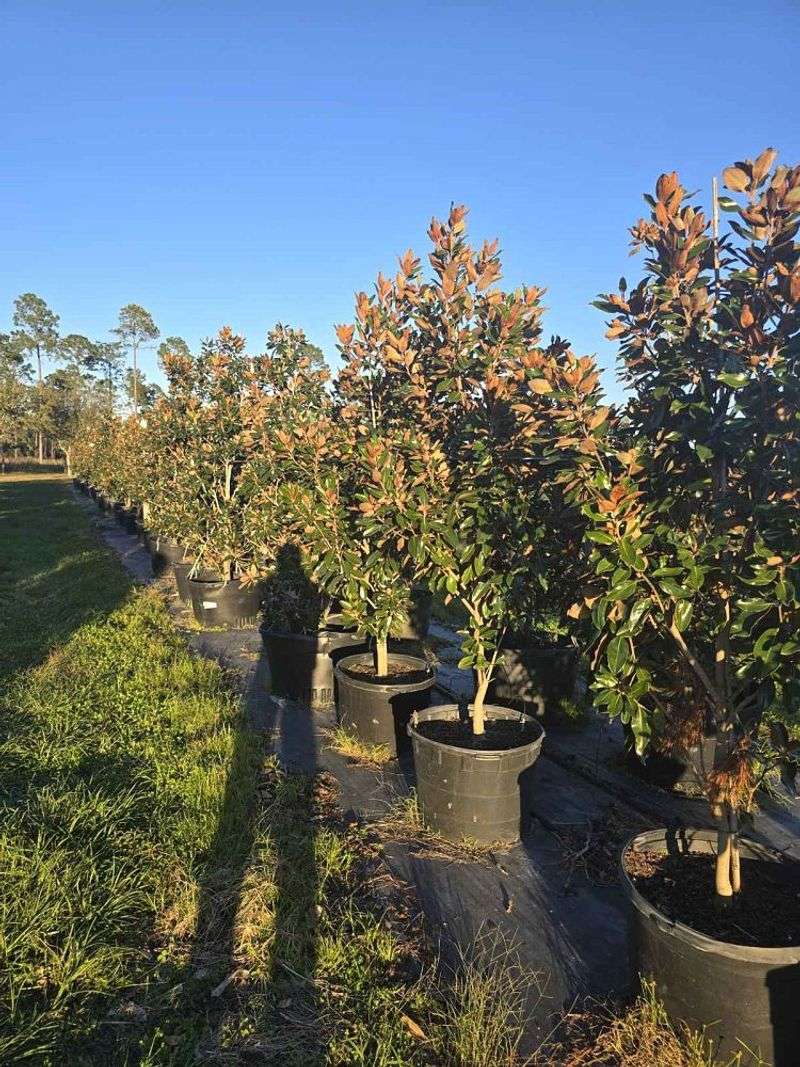
The tree available this weekend often wins over the tree that requires a special order. Nursery supply helps shape neighborhood landscapes, especially when homeowners want to finish a project quickly.
Growers and garden centers tend to carry trees customers recognize and landscapers regularly request. Familiar options such as live oak and Southern magnolia can therefore appear again and again, even when other suitable species deserve consideration.
Availability also makes replacement easier. A contractor working on several nearby properties may use the same readily sourced tree because it fits the plans and can be delivered on schedule.
Still, a full sales yard is not proof that every tree fits your property. Ask about mature size, local soil needs, cold tolerance, and whether the tree is appropriate near pavement.
Inspect the plant itself, too. Look for a healthy trunk, sensible branch structure, and a root system without severe circling or crowding.
If your first choice is unavailable, ask the nursery or Extension office for alternatives rather than accepting a poor fit. Waiting for the right tree can prevent years of pruning and repair costs.
5. Neighborhood Rules Narrow the Options
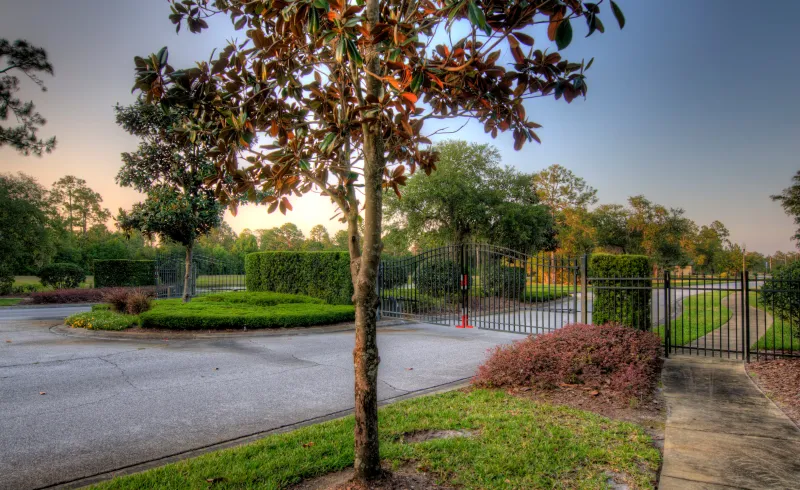
Sometimes the repeated tree choice starts on a landscape plan, not at the garden center. Homeowners associations, developers, and local governments may set planting standards that produce a consistent look along a street.
An approved list can help prevent unsuitable trees beneath power lines or beside narrow sidewalks. It may also encourage canopy coverage, native species, or a particular appearance throughout a development.
The trade-off is that homeowners may see the same few selections used across many lots. Some communities allow more choices than residents realize, so it is worth requesting the current written rules before shopping.
Check whether approval is needed for planting, removing, or replacing a tree. Also confirm easements, utility locations, and any local tree protections that apply to your property.
If the standard choice will outgrow your space, ask about an approved alternative rather than planting first and arguing later. A smaller suitable tree can be a better neighbor to sidewalks, driveways, and roofs.
Consistency can look attractive, but good neighborhood planning should still account for different yard sizes and growing conditions.
6. Year-Round Shade and Familiar Curb Appeal
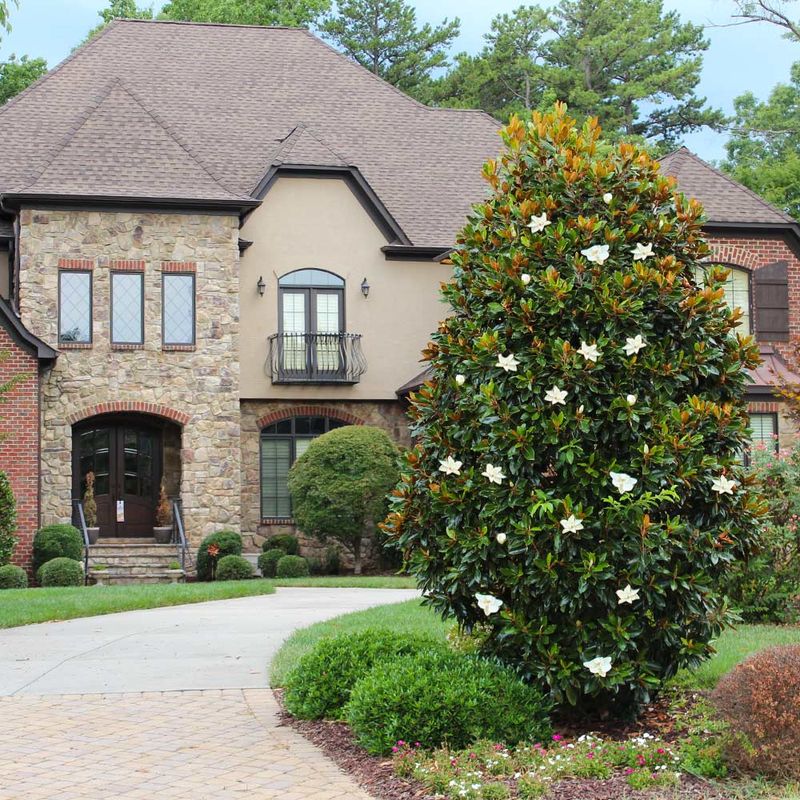
A glossy green canopy can make a house look settled long before the front beds fill in. Evergreen shade trees appeal to Florida homeowners who want both cooling and a landscape that looks full through much of the year.
Southern magnolia offers dense foliage, large white flowers, and a strong visual presence. Live oak also keeps a leafy appearance through much of the year, although it sheds old leaves as new growth develops.
That familiar look encourages repeat planting. When a mature tree makes a nearby home feel welcoming, it is easy to picture the same result in your own yard.
Evergreen does not mean litter-free, though. Magnolia drops tough leaves and seed structures, while live oak produces seasonal leaves, flowers, and acorns.
Place these trees where a mulched bed can catch some of that material instead of expecting a spotless patio beneath the branches. Dense shade can also make lawn grass difficult to maintain.
In North Florida, consider whether winter sunlight matters to your home before choosing dense year-round cover. A deciduous tree may suit some exposures better.
7. Proven Performance Feels Less Risky
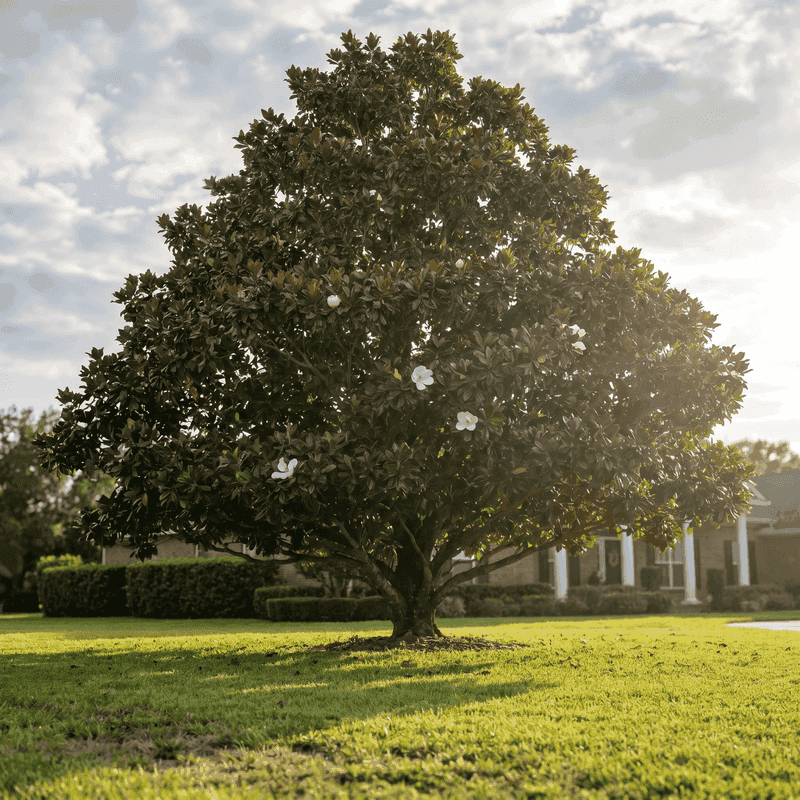
Buying a tree means making a decision that may last decades. Faced with that commitment, many homeowners prefer a species they have already watched grow successfully nearby.
A healthy older tree offers something a plant tag cannot: a local preview of its shape, shade, litter, and space needs. That visible track record makes familiar trees feel like a safer investment.
Ask nearby owners what maintenance their tree requires and whether roots, falling material, or branches cause problems. Their answers can reveal drawbacks that are not obvious during a quick drive past.
Be cautious about copying rapid growth alone. Some commonly planted trees, including laurel oak, can develop concerns related to decay and shorter useful landscape life compared with live oak.
Nor does an established tree’s survival mean a newly planted one can skip watering. Young trees need regular root-ball moisture, with watering adjusted for rainfall, soil drainage, and establishment stage.
Use neighborhood examples as evidence, not a final verdict. Match those observations with UF/IFAS guidance and your own yard’s limits before making the purchase.
8. Native Trees Add Wildlife Value
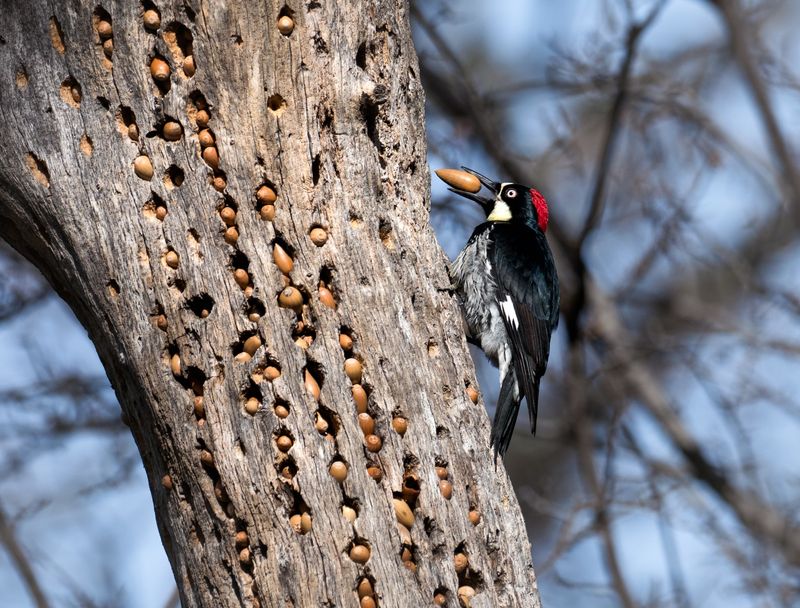
Cooling the porch is only part of what a good shade tree can do. Native trees also provide food, shelter, and nesting space, giving homeowners another reason to choose familiar Florida species.
Native oaks support many insects, including caterpillars that birds use to feed their young. Their acorns feed wildlife, while their branches create cover above the yard.
Other regionally suitable natives offer different benefits. Gumbo limbo provides fruit used by birds in South Florida, and native maples can contribute shelter and food within appropriate landscapes.
Wildlife value works best when paired with sensible placement. Keep large trees away from cramped foundation beds, and use mulch or shade-tolerant native plants where grass struggles beneath the canopy.
There is also a reason not to copy every neighbor exactly: diversity spreads risk. A street dominated by one species may suffer more widespread losses if a damaging pest or disease arrives.
If your block already has many live oaks, ask Extension about a different suitable native. The best choice can cool your home, support wildlife, and add variety without sacrificing dependable performance.