
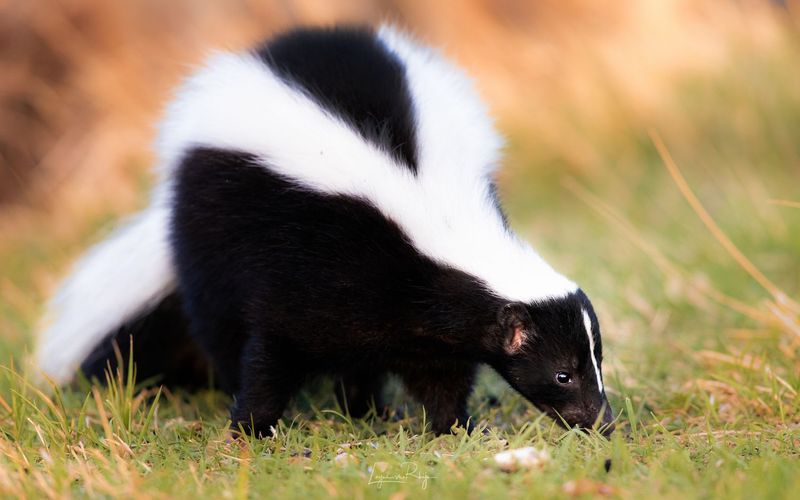
Wake up to a lawn dotted with small pits and torn-up turf, and a skunk is a likely suspect. These nighttime visitors may be hunting for food under the grass, but the damage alone does not tell the whole story.
Knowing what a skunk might be after helps you protect your lawn without harming wildlife or getting sprayed. Here is how to read the clues, check your lawn, and give the animal room to move on.
A California striped skunk is closer to house-cat size
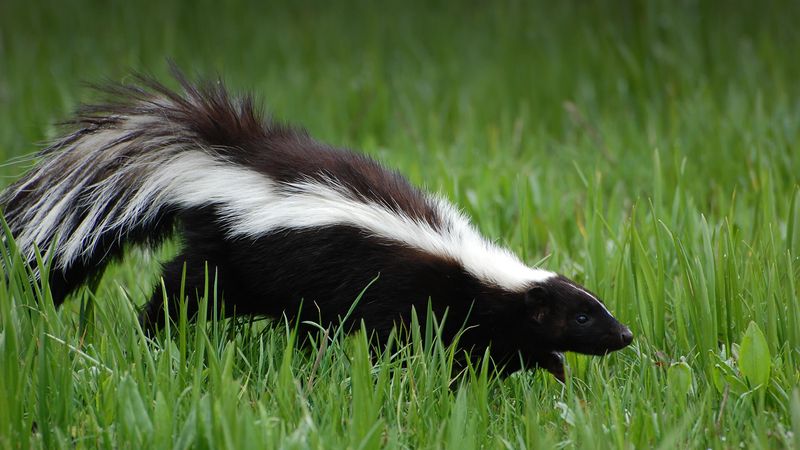
Picture an adult house cat, and you have the right size for a striped skunk. The raccoon-sized image many people carry around is a bit of an exaggeration, according to UC Statewide IPM Program, which describes the animal as about the size of an adult house cat.
The striped skunk is the species most commonly found around California homes. Its black coat, white stripe down the back, and bushy tail make it easy to recognize, even in dim light from a porch or street lamp.
Skunks are mainly active at dawn, dusk, and night, which is why most people only see the evidence the next morning. They can also be out in the daytime, so a daytime sighting is not automatically a sign of trouble.
That brings up the practical question for anyone who maintains their own lawn: what would bring a skunk to your grass in the first place? The answer starts with what is happening under the surface, and it is not always what you would guess.
Lawn digging can point to food, but it is not a diagnosis
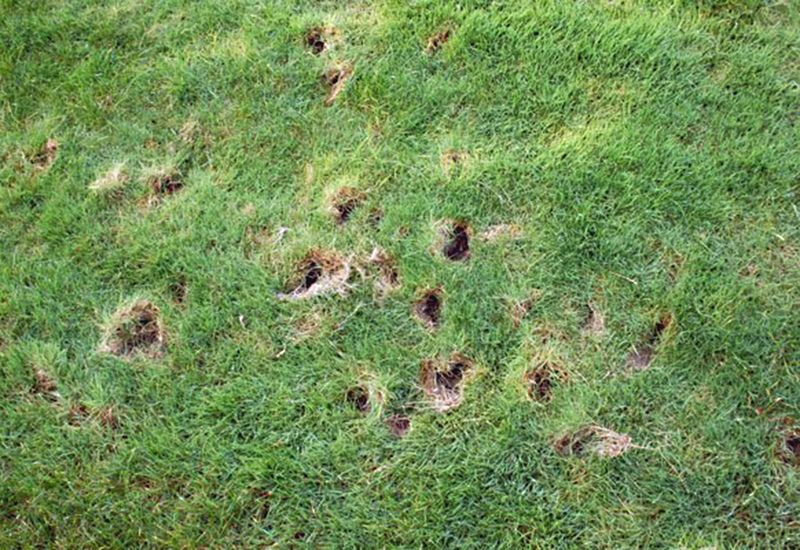
Small pits scattered across the turf, or patches of sod peeled back like a rug, are classic skunk handiwork. According to UC IPM, skunks dig small holes and sometimes roll back sod while searching for insects.
Grubs, the plump larvae of beetles, are one possible target. But skunks have a varied menu that also includes earthworms, rodents, fruit, and other foods, so a dug-up lawn only hints that something edible may be living below.
Think of the damage as a clue, not a verdict. Raccoons, crows, and other animals can also tear up turf, and UC notes that digging by vertebrates is not a foolproof indicator of insect pests.
That matters because the tempting response is to grab a grub killer right away. If the skunk was actually after earthworms or a gopher tunnel, the product would do nothing for the digging and could harm helpful soil life.
A better first move is to treat the pits as a reason to investigate. Fill or tamp down the holes, press loose sod back into place, and then take a closer look at what is going on beneath the grass before spending money or applying anything.
Check beneath the thatch before treating the lawn
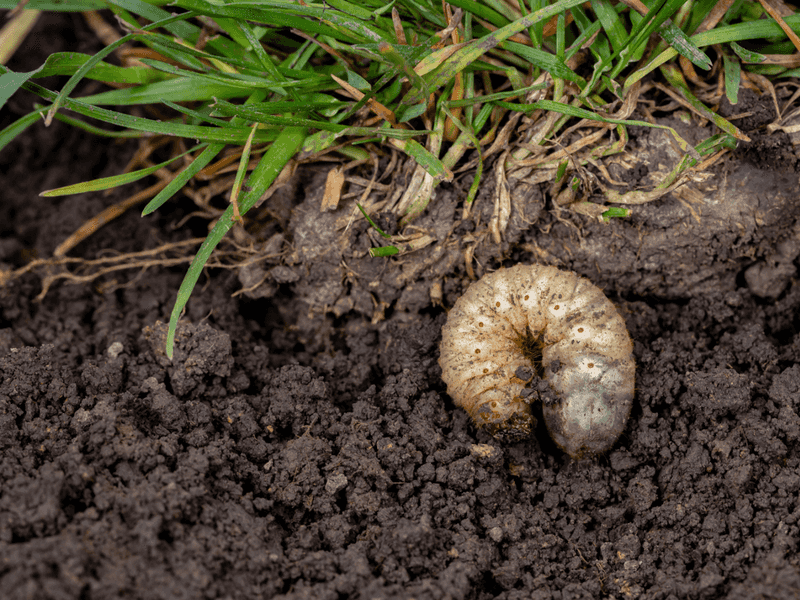
You can find out what is living in your lawn with a trowel and a few minutes. Cut into the turf, peel it back, and look beneath the thatch and in the soil around the grass roots.
White grubs look like C-shaped, six-legged larvae with pale bodies and tan heads, as described in UC’s lawn insects quick guide.
Check several spots, including both damaged areas and healthy-looking grass. Replace the turf afterward and water it in so the patch can recover.
If you find none, that is useful news. Brown or thinning grass has many possible causes, and UC points out that watering problems, disease, and chemical injury can look a lot like insect damage.
Irrigation that misses a corner of the lawn is a common culprit in dry California summers.
A skunk’s digging does not settle the question either, since the animal may have been after something else entirely. Only what you find in the soil can do that.
Confirm the cause first, then choose a response that fits. Sometimes the fix is adjusting sprinklers, not applying a product.
Grub thresholds guide treatment, not skunk behavior
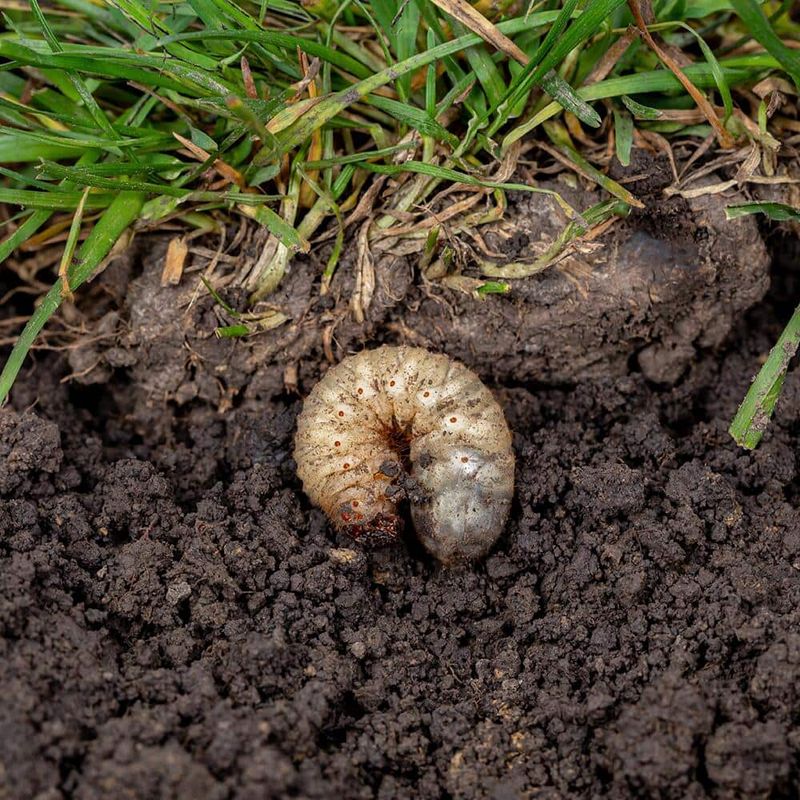
Once you find grubs, the next question is how many. UC’s California turf guidelines suggest six white grubs per square foot as a threshold for curative insecticide treatment.
UC’s homeowner quick guide says treatment is not needed at five or fewer per square foot.
Those numbers are about protecting grass from white grub damage. They are not a measure of when a skunk will show up, and they do not mean skunks ignore lawns with fewer grubs.
Thresholds and the best timing also vary by pest, turf type, and conditions, so they are not a universal rule.
For that reason, a skunk visit alone does not justify spraying. Calendar-based or blanket applications treat the whole yard whether or not damaging numbers are present.
UC advises confirming damaging pest levels first and warns that insecticides can harm beneficial organisms and affect water quality, as covered in its lawn insects guidance. In California, where runoff can reach storm drains and creeks, that concern is real.
If your count is under the threshold, you can usually skip treatment and keep watching the lawn. If it is above, talk with your local UC Master Gardener program or a nursery professional about options and timing for your specific grass.
Reduce easy food and shelter without declaring war on wildlife
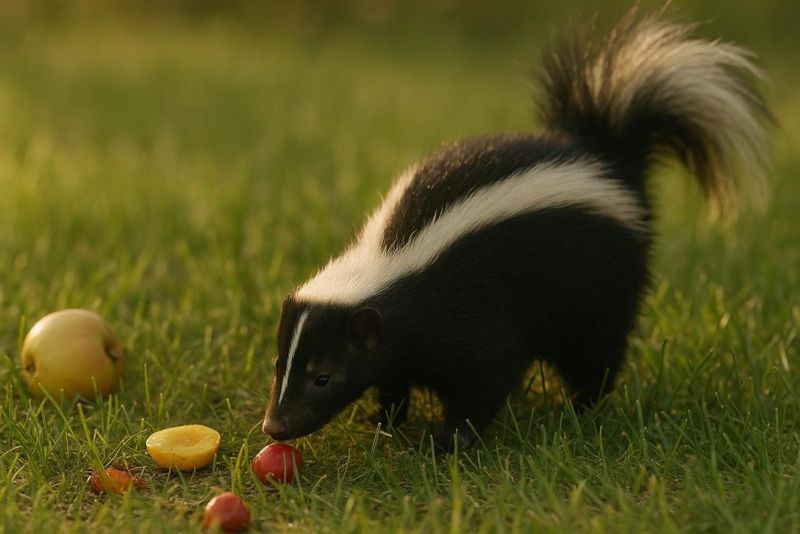
A few small habits can make your yard less of a buffet. UC IPM suggests removing fallen fruit, cleaning up spilled birdseed, securing garbage, and bringing pet food indoors at night.
Reducing convenient shelter, such as piles of debris or open gaps under structures, helps too.
If you confirm a damaging grub population, managing it may deter further digging in theory. That is not the same as a guarantee, and a skunk may keep foraging for other prey.
Treat grub control as a lawn-health decision first.
It also helps to keep the bigger picture in mind. The California Department of Fish and Wildlife notes that skunks provide ecosystem services, including insect and rodent control.
At the same time, skunks can damage property and eat bird eggs, so the goal is balance, not welcome mats. Poison is not an option: UC says there are no registered toxicants for skunks, and amateur trapping carries its own risks for you, your pets, and the animal.
Aim for a yard that offers fewer easy meals and fewer cozy hideouts. A skunk that finds little reward in your property will usually move on by itself.
Give the skunk space, especially when it signals distress
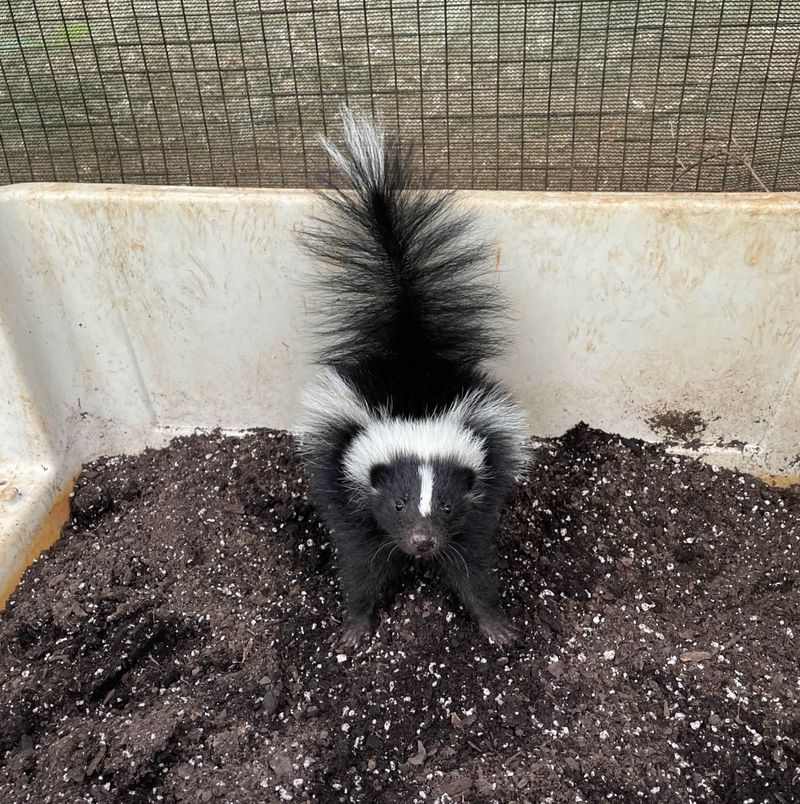
If you meet a skunk in the yard, the safest plan is simple: stay back and let it leave. Do not approach it, corner it, or try to scare it off.
Blocking its exit is how most spray incidents begin.
Skunks give warnings first. UC IPM describes rapid stamping of the forepaws, hissing, and arching the tail.
If you see any of these, back away slowly and calmly, and give the animal a clear path out of the yard.
Bring pets inside before you do anything else. Dogs are the most common victims of spray, and they can also get bitten.
Keep your pets’ rabies vaccinations current and keep them away from wildlife. According to CDC guidance, anyone bitten or possibly exposed to rabies should contact a health professional or local health department.
Never handle a skunk, and be especially careful with one that seems sick or acts oddly. Coexisting means watching from a distance, not sharing space.
Seal a den only after its occupants have left
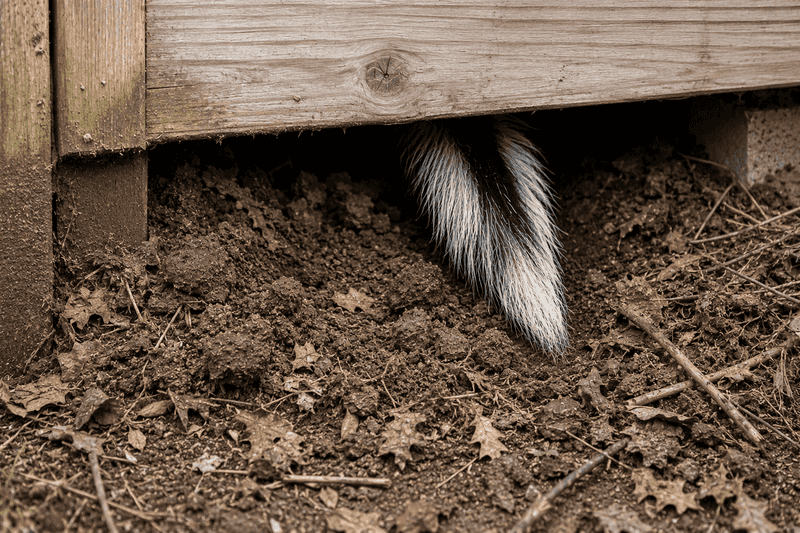
Sometimes the skunk is not just visiting but living under your porch, shed, or deck. Before closing any opening, make sure the animal has left, and especially that no young remain inside.
Sealing a den with occupants trapped can lead to suffering and a bigger problem for you.
UC IPM covers this in its skunk guidelines. Relocation is not a casual do-it-yourself fix either, since UC says California relocation requires written permission from the California Department of Fish and Wildlife.
Once the den is confirmed empty, close the gap so nothing moves back in.
The practical path stays the same from lawn to foundation: inspect before treating, reduce attractants, and keep a safe distance. A skunk that finds nothing worth the trouble is a neighbor that moves on without a fuss.