
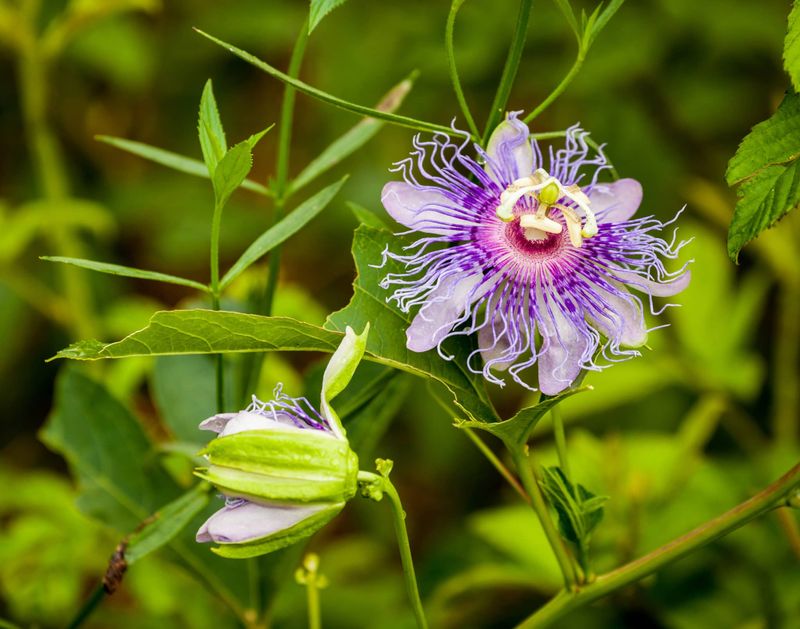
Plain wooden and chain-link fences can look stark by midsummer. Maypop, a native North Carolina vine with wild-looking purple flowers, can soften them with leafy, climbing growth.
It is not a magic cover-up, and it has a few quirks every yard owner should know before planting. Here is what to expect, from how it climbs to how it spreads.
Maypop is a native option for North Carolina fences
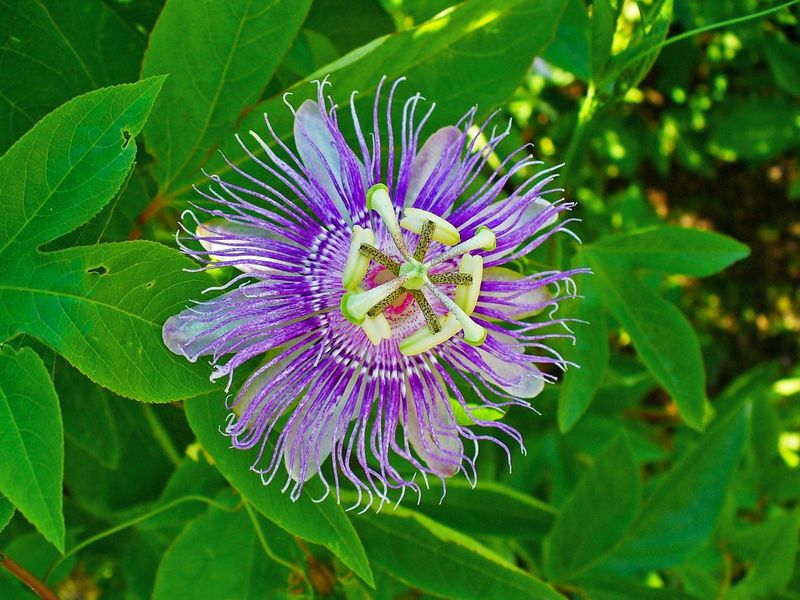
Maypop, also called purple passionflower (Passiflora incarnata), is a vine that North Carolina gardeners can find growing wild along roadsides and field edges. NC State Extension’s Plant Toolbox lists it as growing in the Coastal Plain, Piedmont, and Mountains.
It is native across the state, though it is less common in the northern mountains and some far-eastern counties, according to the Vascular Plants of North Carolina database.
Plenty of people already know this plant, so think of it as one good native choice rather than a hidden secret. What sets it apart is the flower.
Each bloom has a frilly crown of purple and white threads that looks almost tropical, which is a surprise on an ordinary backyard fence.
Picture a plain fence in July with green, lobed leaves woven along the boards and exotic-looking blooms scattered through them. That is the appeal.
Keep in mind that this is a seasonal look. The vine does not stay green all year, so it works best as a warm-season softener rather than a permanent privacy wall.
The next sections cover how fast to expect growth, where to plant it, and how to keep it in bounds.
Vigorous growth does not guarantee a covered fence by fall
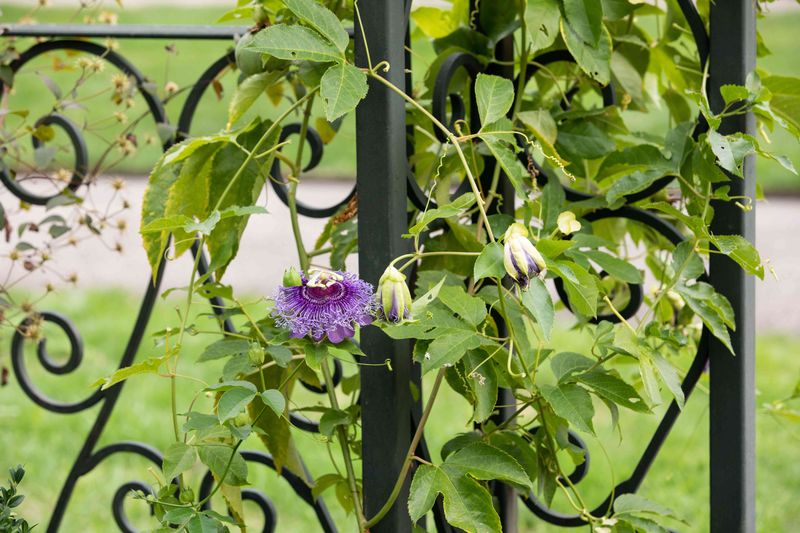
Maypop climbs by tendrils, the thin curling threads that grab onto wire, slats, and trellis strings. NC State Extension describes it as a fast-growing vine suited to fences, trellises, and arbors.
That is good news for anyone with a bare fence.
Fast growth is not the same as a promise of full coverage by fall, though. The listed mature size of 12 to 24 feet describes a established plant, not what a new vine will do in its first season.
A small nursery plant set out in midsummer will cover far less than a larger one planted in spring.
An older North Carolina Native Plant Society article from 1979 mentions about 10 feet of growth in a season. Treat that as a general observation, not a forecast for your yard.
Several things shape your result: the size and age of the plant, when you plant it, how long and tall the fence is, how much sun and water the spot gets, and what you count as covered. A 6-foot section may fill in nicely, while a long privacy fence may stay patchy for a year or two.
Plan for gradual improvement and enjoy the progress.
Give the tendrils support and choose a suitable site
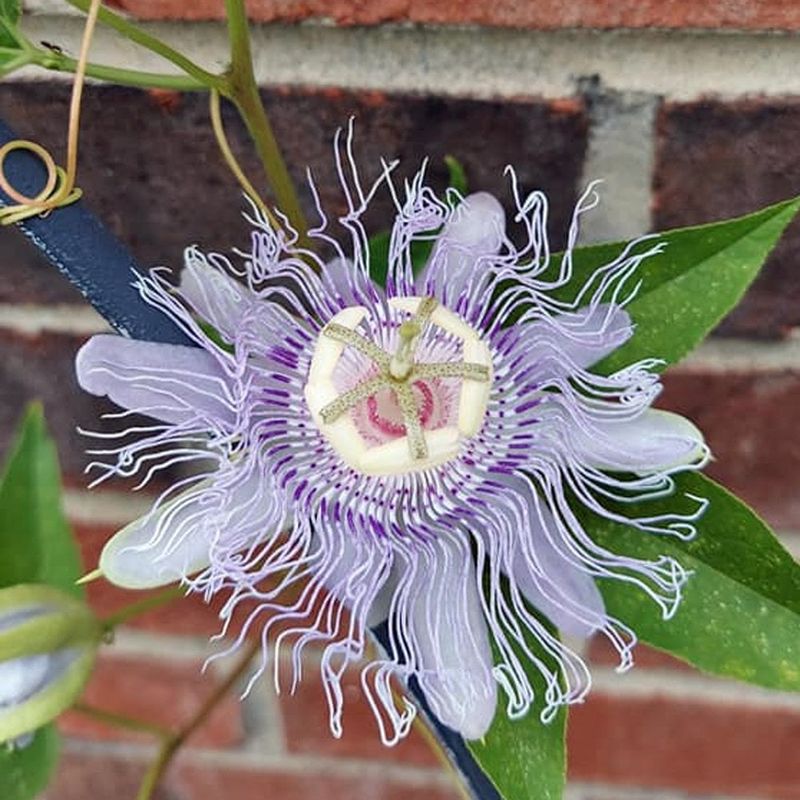
Tendrils need something thin to grip. A solid, flat board fence gives them little to hold, so a fence with open gaps, wires, or an attached trellis works much better.
NC State Extension recommends providing a fence or trellis for the tendrils to climb, along with a site in full sun to partial shade.
Look at your fence at different times of day. A spot with good morning and afternoon light is a natural match.
If your fence sits in dappled shade under a tree, maypop may still grow there, but expect the vine to reach toward brighter areas.
Soil matters too. Maypop prefers well-drained ground, so a low corner where water pools after rain is a poor choice.
Raised ground or a gently sloped bed can help in heavy clay, which is common in much of the Piedmont.
Walk the fence line and check three things: Can tendrils reach something to grab? Does the spot get plenty of light?
Does the soil drain after a heavy rain? If the answers are yes, you have a good match.
If not, adjust the support or pick a different section of fence before you plant.
Root suckers can carry the vine beyond its intended area
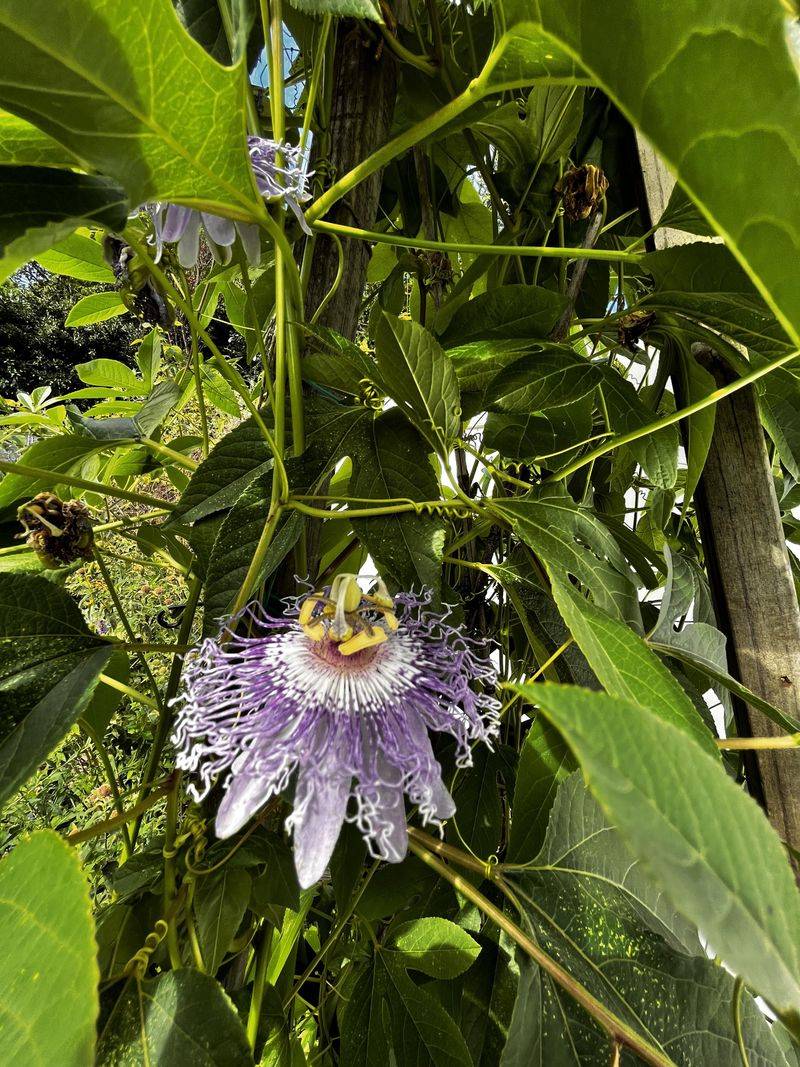
Native does not mean polite. NC State Extension notes that maypop can spread across large areas by root suckers, which are new shoots that rise from underground roots.
A vine planted at one end of a fence may send up stems in a nearby bed or lawn.
Give it room. Avoid planting where unexpected shoots would crowd out small perennials or shrubs.
A spot beside a lawn can make cleanup simple, since mowing or pulling the stray shoots are reasonable ways to manage them. These are practical ideas, not a set containment system from the source, so keep an eye out and adjust as you learn how your vine behaves.
Check the ground a few feet from the fence each month during the growing season. Young shoots are easy to remove when small.
Waiting until they are established makes the job harder.
One more safety point: NC State Extension flags maypop as highly flammable and advises against planting it within a home’s defensible space. If your fence is close to the house, especially in a wildfire-prone area, choose a fence farther from the structure or consider another plant.
Flowers and wildlife value come with seasonal limits
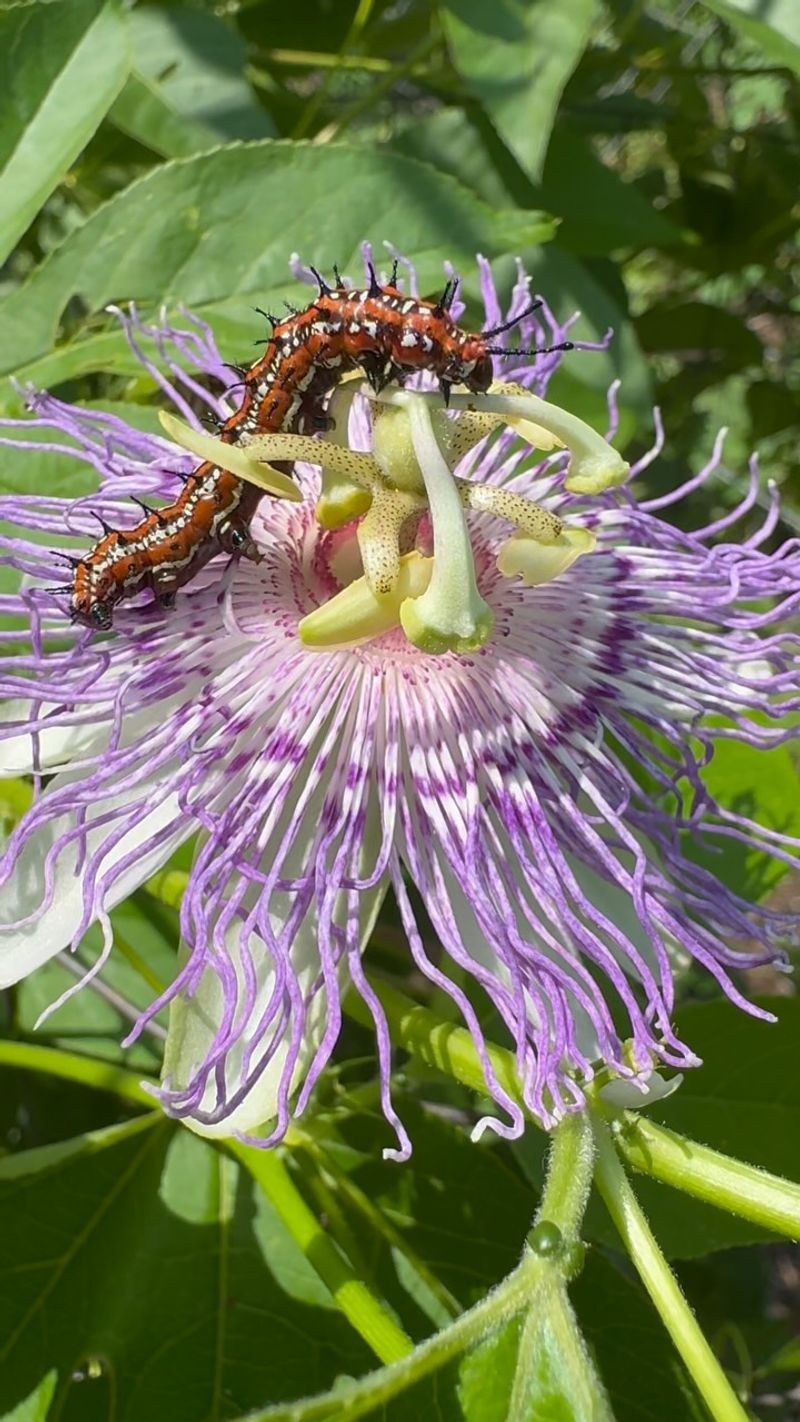
Few native vines match the flowers. Maypop blooms in spring and summer, and its fruits appear from July to October.
Pollinators visit the blooms, and the plant serves as a host for several butterflies, according to NC State Extension’s passion vine listing. If you like watching butterflies, you may see caterpillars chewing leaves.
That is part of the deal when you grow a host plant.
The fruit is the other treat. NC State Extension says ripe fruits are edible.
Stick to ripe fruit only. The same source lists the leaves and stems as poisonous, so do not eat them, and never taste anything you cannot identify with confidence.
Now the trade-off. In colder winters, the foliage can die back to the ground.
From late fall until the new growth returns in spring, your fence may look bare again. If you need privacy in January, maypop will not provide it.
Many gardeners find that fair. A fence that looks lively and flowery for the warm months, then rests in winter, can still be a good bargain, especially when the vine feeds wildlife along the way.
Consider maypop for seasonal screening, not a guaranteed wall
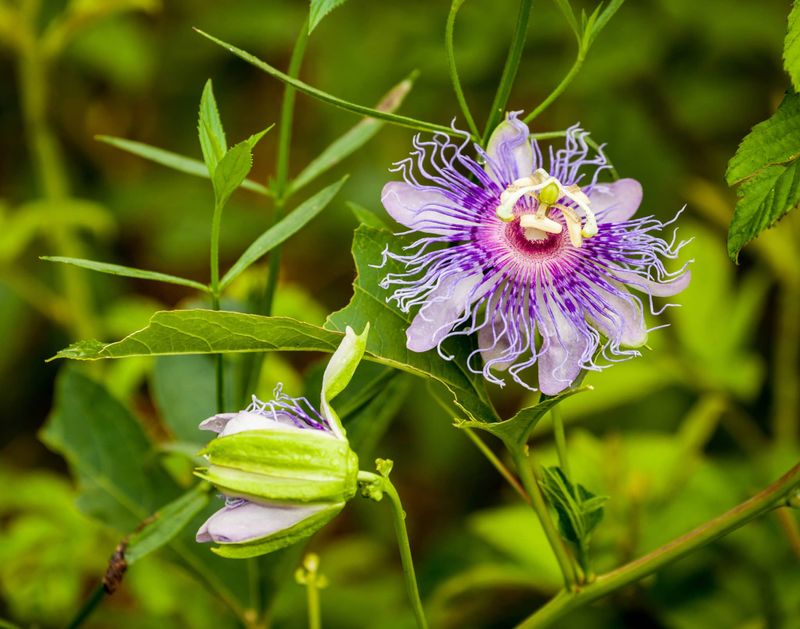
Maypop suits a homeowner who wants a native, tendril-climbing vine and can live with variable establishment time, some spread, and a bare winter fence. It rewards patience with flowers, fruit, and butterflies.
Match the site and support to the plant: open wire or trellis for the tendrils, sun, and well-drained soil. Leave room to handle shoots outside the fence line, and keep it away from the house.
A fence is only as bare as you let it stay, and maypop is one lively way to change that.