
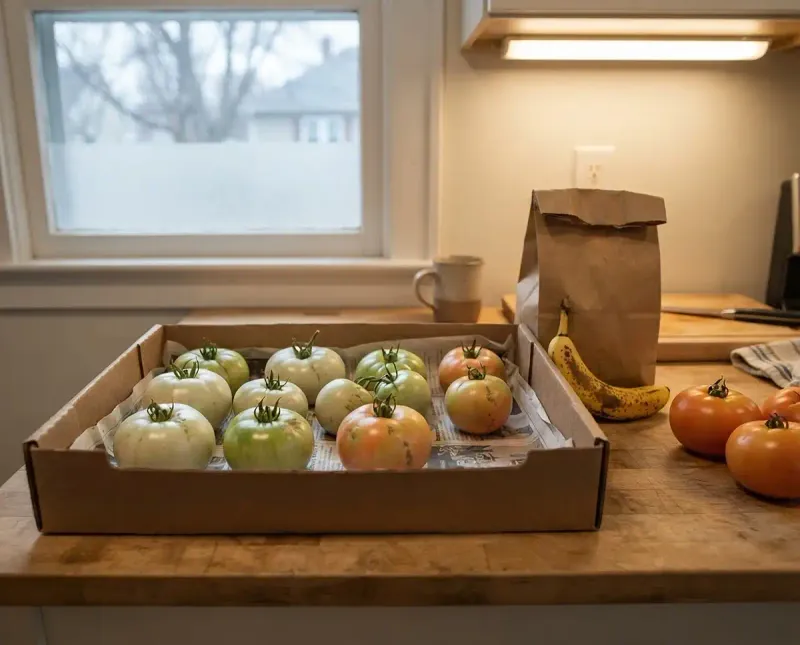
Those last tomatoes hanging on the vine in mid-October can feel like a gamble when cold nights start showing up in the forecast. Many of them can finish ripening on your counter if you pick the right ones at the right time.
A few simple habits make the difference between a basket of ripe fruit and a basket of disappointment. Here is how to save the tomatoes that have a real chance.
Let the local forecast—not the calendar—set harvest day
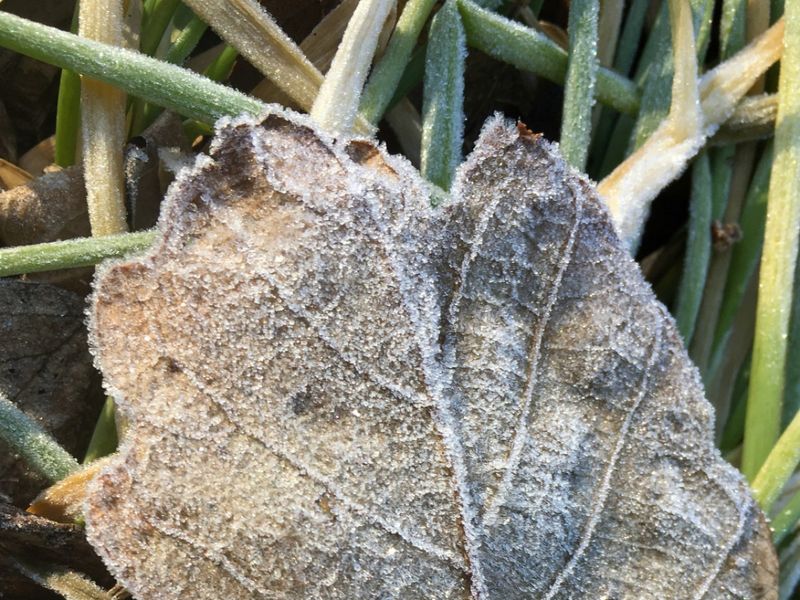
Tomatoes are frost-sensitive, so a cold snap can end the season for the plants almost overnight. That is why Colorado State Extension guidance tells gardeners to harvest fruit before frost arrives rather than waiting to see what happens.
October is a handy reminder to start looking ahead, but it is not a deadline that fits every yard. Frost timing varies a lot from place to place, and UGA Extension’s Georgia frost-date material shows big differences even within one state.
A gardener in South Florida may not see frost at all, while someone in the Texas Panhandle may get it weeks earlier than folks near the Gulf.
So make the forecast your habit. Check the local outlook every few days once nights begin cooling, and watch for any mention of frost or freeze.
When it shows up, even as a possibility, that is your cue to head out with a basket and pick what you want to save.
Which green tomatoes have the best chance of ripening?
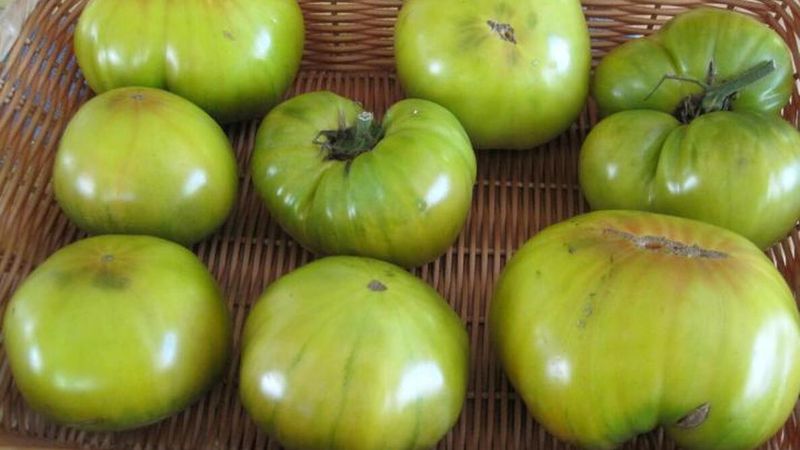
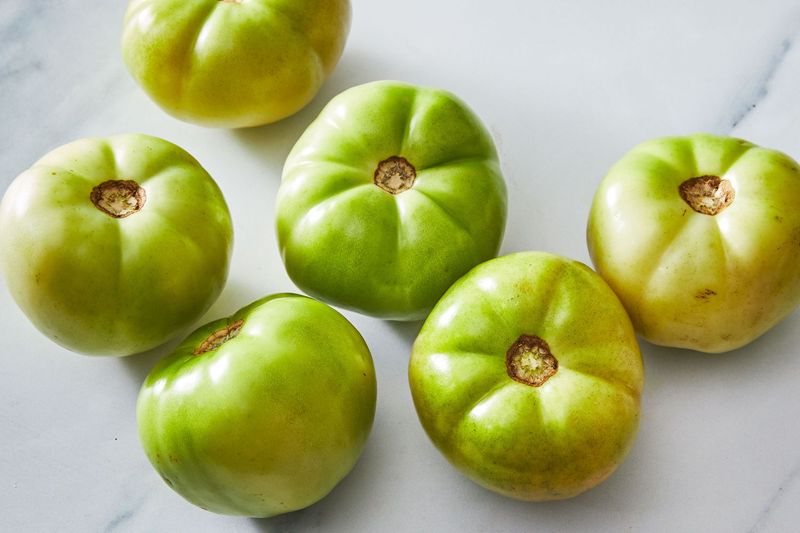
Size and shine tell you a lot. Full-sized fruit with glossy skin is the best bet, and Colorado State Extension notes that mature-green tomatoes can finish ripening indoors.
Fruit that has just begun to lighten or blush is even better, because it has already started ripening.
Another possible clue is a pale, star-shaped area at the blossom end, which Colorado State Extension describes as a sign of maturity. Maturity is not always easy to judge from the outside, though, so treat these as helpful hints rather than proof.
Small, dull-green tomatoes are a different story. They are immature and may not ripen satisfactorily, so do not count on them.
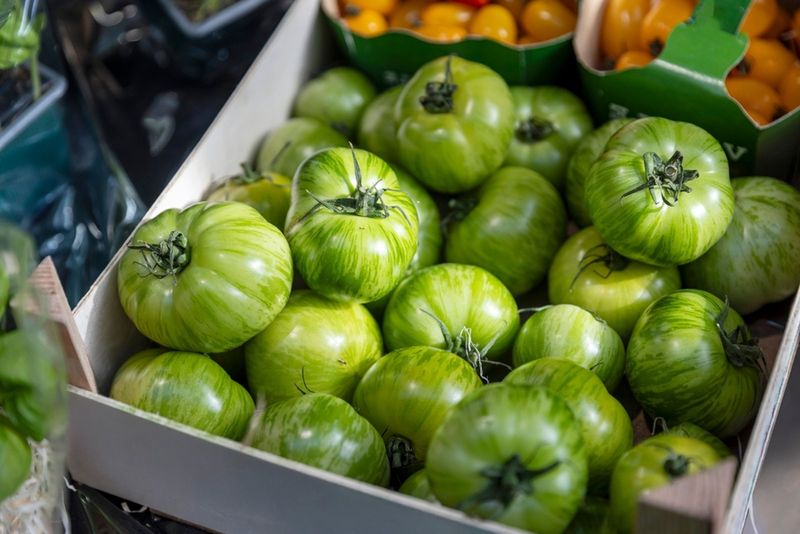
Also keep in mind that fruit ripens to its variety’s mature color. University of Delaware Extension describes how color change signals ripening, so an orange, yellow, pink, purple, or green-striped variety will not turn red.
For a closer look at harvest readiness, Penn State Extension offers more detail.
Harvest sound fruit before frost reaches the vines
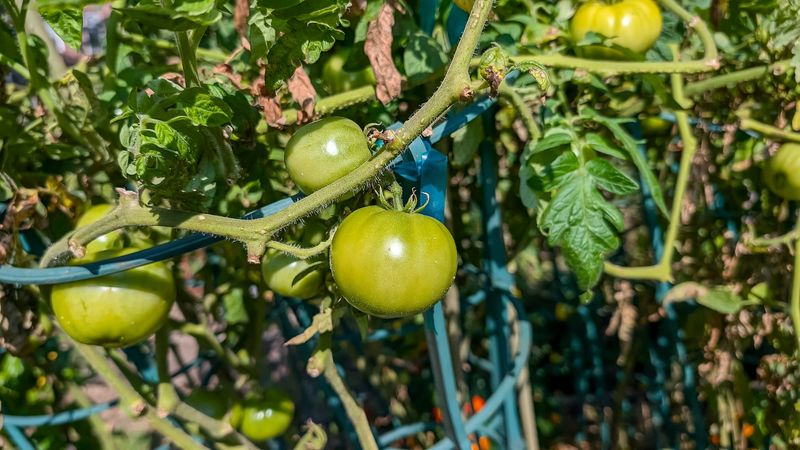
Once the forecast points toward frost, pick the suitable fruit while the vines are still standing. As Colorado State Extension explains, tomatoes are damaged by frost, so fruit left outside is at risk.
Handle each tomato gently. Bruises can turn into soft spots later, so lift fruit into a shallow basket instead of tossing it into a bucket.
A tray or box with a soft liner works well too.
Now sort as you go. Set aside any tomato that is bruised, cracked, diseased, or otherwise damaged.
Those fruits are poor candidates for indoor ripening and can spoil quickly, sometimes taking healthy neighbors with them. For background on frost and crop planning, see University of Minnesota Extension’s planning tools.
A quick example: if a tomato has a cracked shoulder with a brown spot, use it right away in the kitchen if the rest is firm, or discard it. Keep your best, cleanest fruit for storage.
Dry the tomatoes and give them room to breathe
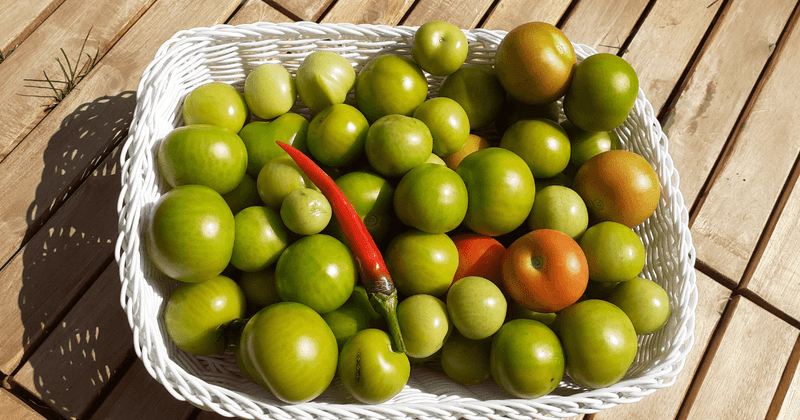
Back inside, remove any stems carefully so they do not poke neighboring fruit. Then wash the tomatoes to clear off soil and garden debris.
Colorado State Extension recommends this prep before storing.
Drying is the step people rush. Let every tomato air dry completely, because lingering moisture encourages rot.
Next, spread the fruit in a single layer, or in shallow layers, with space for air to move around it. Crowding traps moisture and makes it harder to spot trouble.
Colorado State Extension and University of Minnesota Extension both back ventilated storage.
Check the tomatoes every day or two. Pull out any that have ripened, and remove spoiled ones right away.
A soft spot, wrinkled skin, or mold is your sign to act. A shallow cardboard box with newspaper works nicely for a small batch.
Room temperature matters more than a sunny windowsill
Aim for a room around 65 to 70 degrees F. Colorado State Extension describes room-temperature storage as the way to go, and cooler spots slow the process down.
Be careful with cold. Penn State Extension and University of Illinois Extension caution against storing green tomatoes below about 50 degrees F, which can hurt flavor and normal ripening.
A chilly garage in a cold snap is a good example of a spot to skip.
The sunny windowsill is a popular idea, but light is not needed. University of Minnesota Extension and Penn State Extension note that direct sun is unnecessary, and a hot window can even overheat fruit.
Skip the refrigerator for unripe fruit too. Cold slows ripening and can reduce quality.
Save the fridge for tomatoes that are already ripe and need a little extra time.
Treat bags and ripe-fruit companions as options, not guarantees
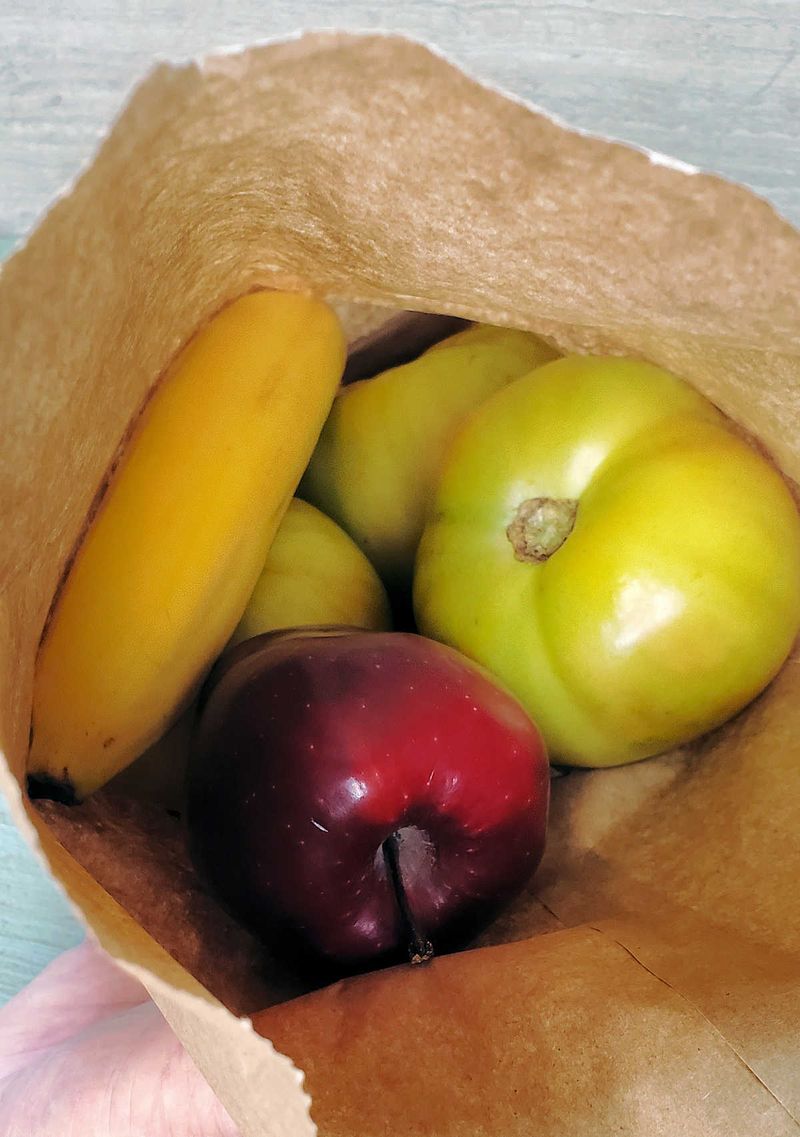
You will hear plenty of tricks for speeding things up. A paper bag with ventilation holes is one option mentioned in Colorado State Extension guidance, but it is not required and it does not guarantee faster ripening.
If you try a bag, keep air moving and check it often. A sealed, damp bag can invite rot, so vent it and open it every day or two.
Ripening speed still depends mostly on how mature the fruit was and how warm the room is, as University of Minnesota Extension suggests.
A ripe tomato or banana in the container gives off ethylene, a natural gas that may nudge ripening along. Colorado State Extension’s GardenNotes covers this idea.
It cannot make immature fruit mature, though.
Think of these as small extras. Sound, mature fruit in suitable storage does most of the work.
Set realistic expectations for indoor ripening
Think of the whole plan as a short checklist. Watch the local forecast, pick full-sized or color-changing fruit, handle it gently, and keep it dry in a ventilated spot at room temperature.
Colorado State Extension lays out this approach.
Timing varies. Some fruit may ripen in days, while other tomatoes may take weeks, depending on maturity and temperature.
Penn State Extension gives different timelines for different conditions, so avoid counting on a set number of days.
Immature fruit may never ripen well, and mature-green tomatoes may not taste like those ripened on a healthy vine, a point Penn State Extension raises. Fruit that already shows color usually gives the better eating.
Tomatoes will also reach their variety’s color, which may not be red.
For fresh eating, you are set. If you consider canning, skip damaged fruit and tomatoes from frost-killed vines, and follow a tested recipe with the recommended acidification.
Even a modest rescue means one more sandwich with a homegrown slice.