
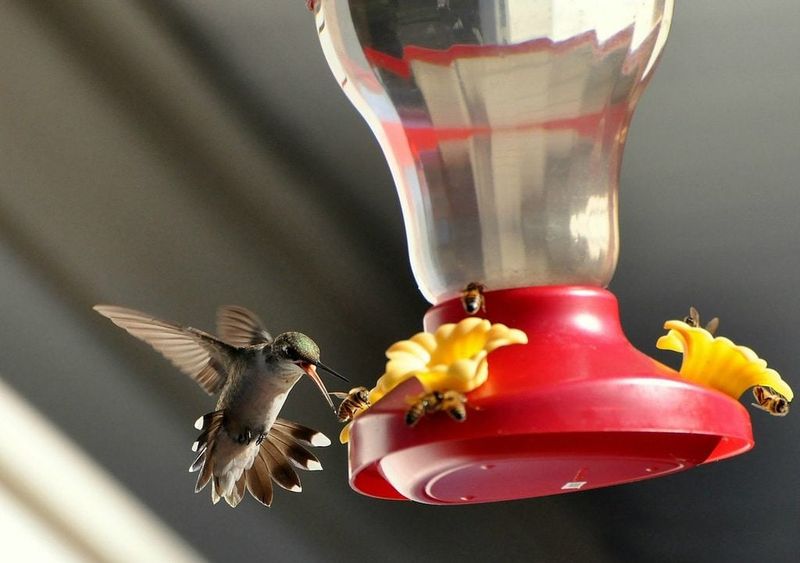
A feeder that was busy all summer can suddenly look quiet, and tiny insects crawling on it may be part of the story. Ants and wasps can make a feeder less welcome to hummingbirds, but they do not explain every empty perch.
Fall is a busy time for hummingbirds in the South, so a few simple fixes can keep your feeder easy to use while birds pass through.
Why insects can change a hummingbird’s feeder routine
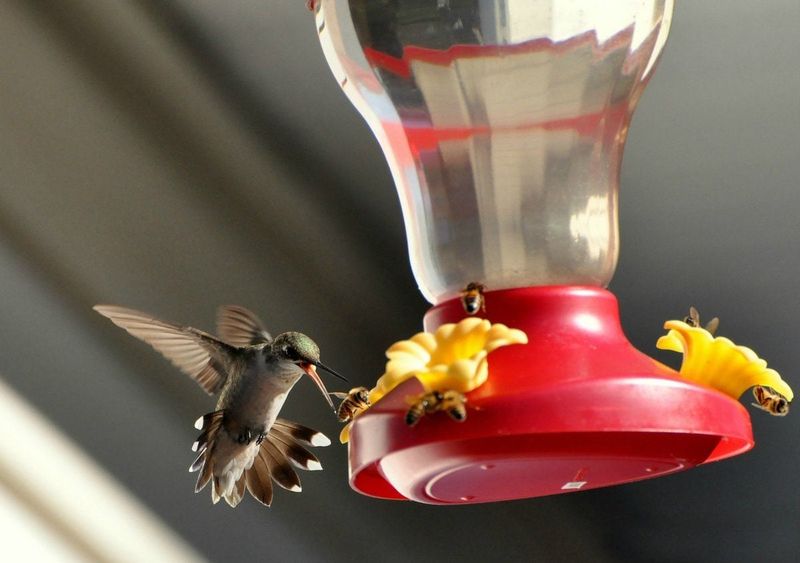
Insects on a feeder can make it less appealing or harder to use, but spotting a few does not prove they caused every missed visit. Birds skip feeders for plenty of reasons, including weather, flower blooms nearby, and where they are in their travels.
Here is what the research shows. In a study of ruby-throated hummingbirds, the birds avoided feeders when three vespine wasp species were present.
They also switched between available feeders more often. That finding covers those birds and those wasps, not every hummingbird or every stinging insect.
Ants have their own story. In a separate chemical-cue study, hummingbirds avoided feeders carrying scents from certain ants, yet they did not react to the honeybee cue that was tested.
So not every ant near a feeder will scare birds off.
Both results describe feeder-level behavior. Neither shows that insects send birds out of your yard or interrupt migration, which makes feeder access the part you can actually improve.
Block ants along the feeder line
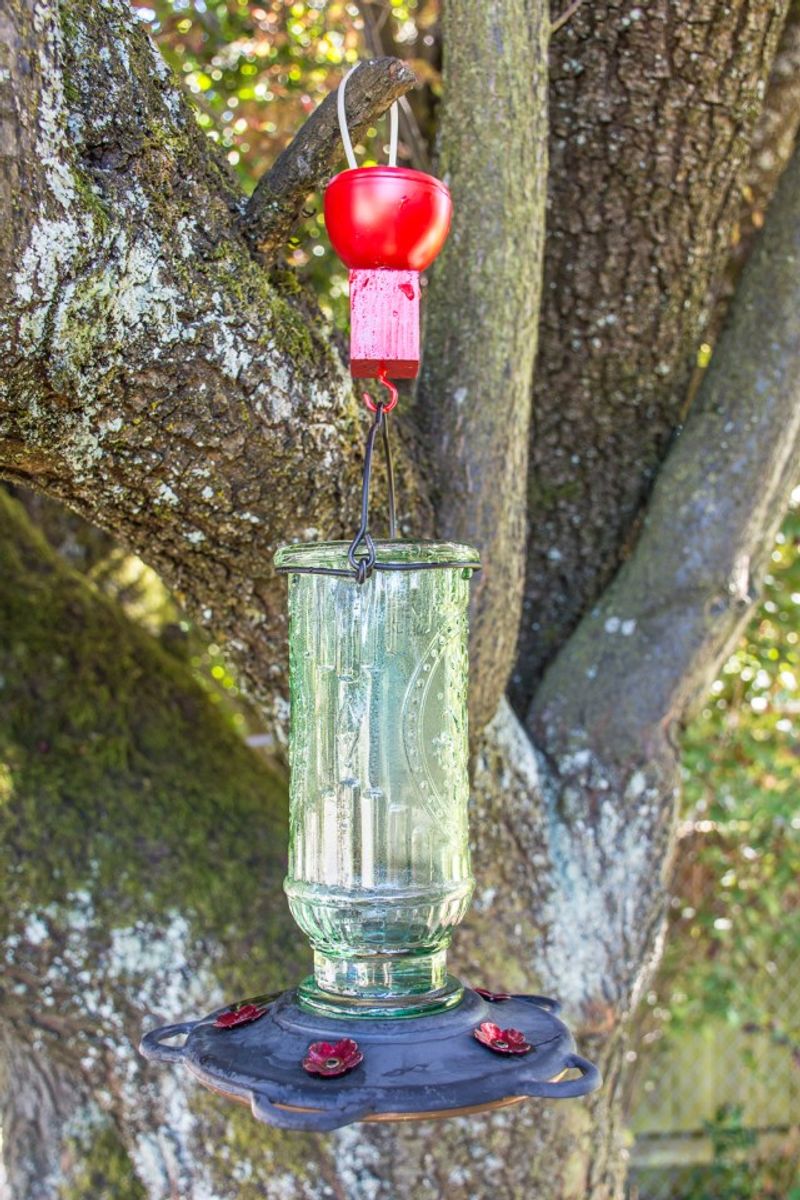
Ants are patient climbers, and a hanging line or wire is an easy highway to the sweet nectar. Once they find it, a trail can build fast.
A water-filled ant moat is a simple way to cut that route. As Cornell’s bird-feeding guidance describes, the moat hangs between the hook and the feeder, and the water acts as a barrier ants will not cross.
Check it often, since heat evaporates the water quickly and rain or dust can fill it with debris.
Sticky nectar on the outside gives ants a reason to keep trying. Texas Parks and Wildlife recommends moats and rinsing nectar residue off the feeder exterior and ports.
These steps can reduce ant traffic, though they are not guaranteed cures. If ants still appear, look for a second route, such as a branch or wall touching the feeder.
Limit wasp access with feeder design and cleanup
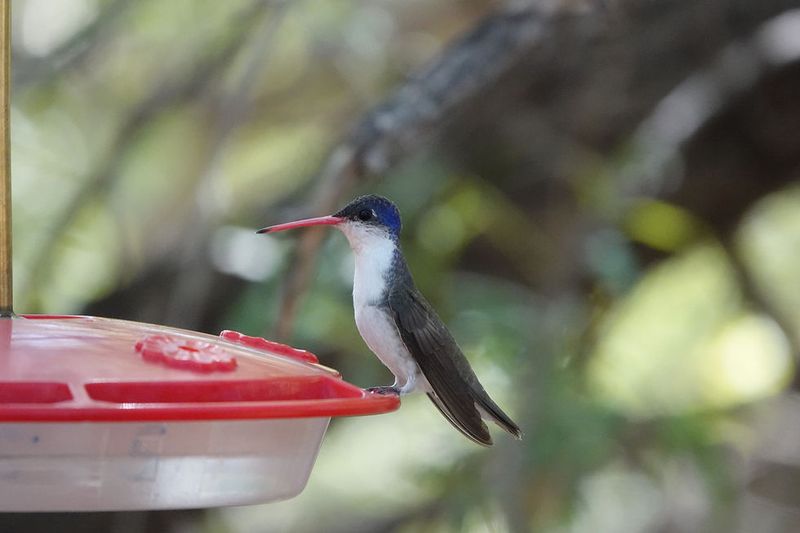
Feeder shape matters more than most people expect. Models with bee guards, or saucer-style feeders that keep nectar below the ports, put the sugar out of reach of short-tongued insects, as Audubon’s pest advice explains.
Next, hunt for drips. Iowa State Extension notes that spilled nectar can attract insects, and guards will not help with sugar film on the outside.
Replace worn gaskets, tighten the base, and wipe the ports and body whenever you refill.
Reaching for bug spray might be tempting, but hardware, placement, and cleanliness are the better first steps. The EPA suggests limiting pesticide use to reduce harm to wildlife, and notes most insecticides are toxic to bees.
Skip homemade oils and sticky coatings near the feeder too, since they are not universally safe for birds. Keep any pest-control material well away from nectar and from places birds touch.
Mix nectar simply and safely
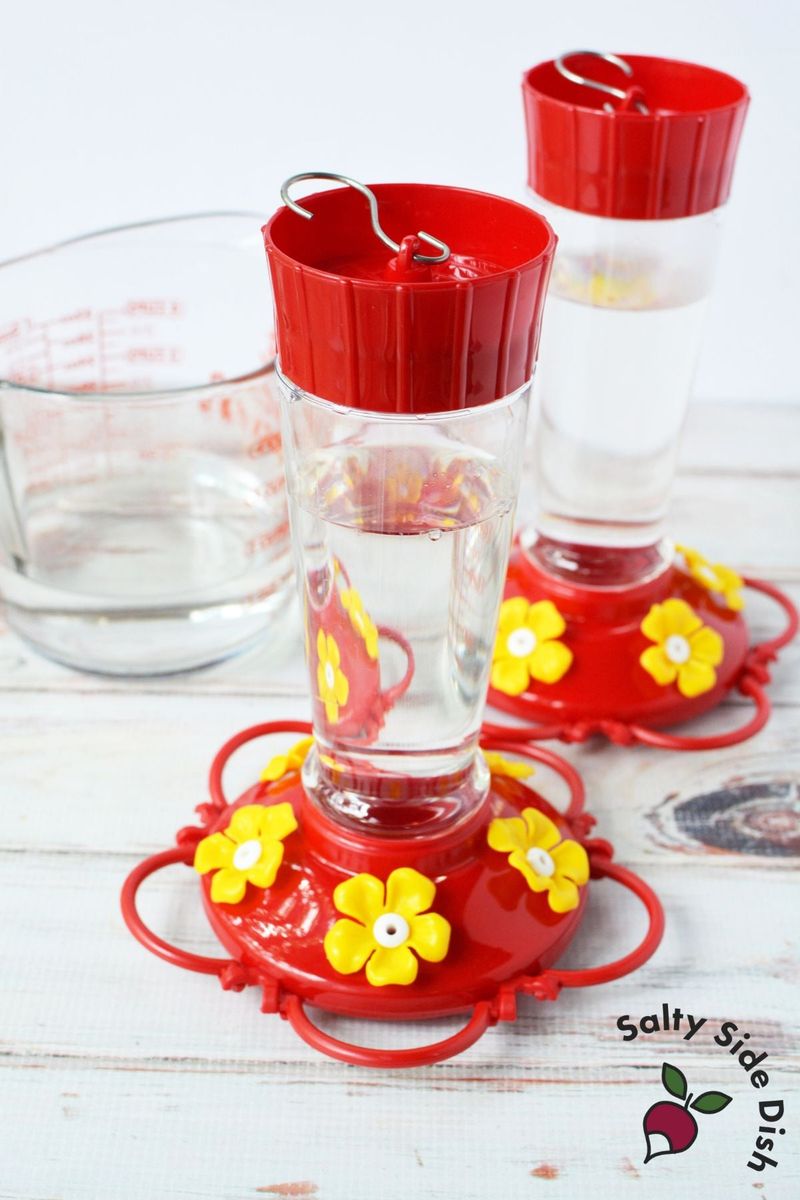
The recipe is short: one part plain white sugar to four parts water. Stir until the sugar dissolves, let it cool, and fill the feeder.
Both Texas Parks and Wildlife and University of Missouri Extension point to this ratio.
Leave out the red dye, since the feeder’s colored parts already catch a hummingbird’s eye. Honey is also off the list, and so are artificial sweeteners.
Plain white sugar is the only sweetener to use.
Remember that your feeder is a bonus, not the whole menu. Hummingbirds also sip flower nectar and snap up small insects and spiders, so a quiet feeder does not mean a hungry bird.
Clean more often when Southern weather is warm
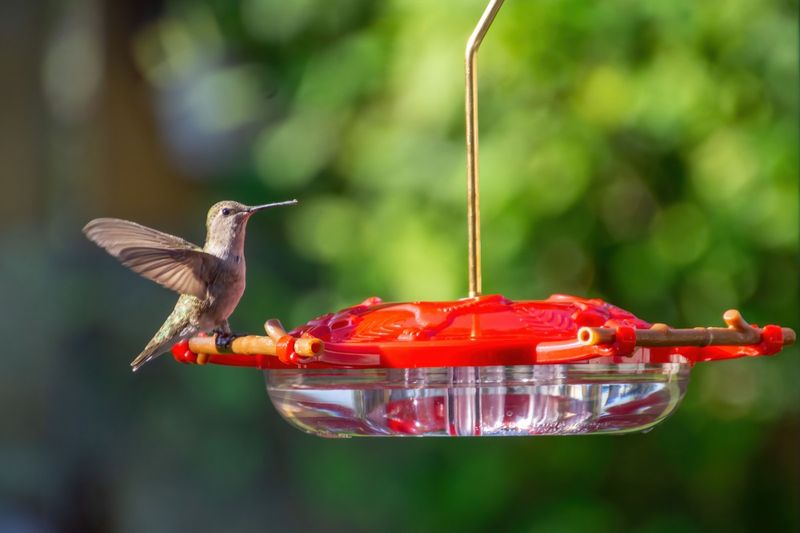
Hot afternoons can turn fresh nectar cloudy in a hurry. Direct sun speeds that along, so a feeder in full light needs more attention than one tucked under a tree.
For warm Southern weather, UF/IFAS guidance suggests changing the syrup and cleaning the feeder every four to five days. Think of that as a handy starting interval, not a rule for every yard.
If the nectar looks cloudy or shows mold, clean it sooner, even if the calendar says otherwise.
Shade helps where you can manage it. A spot under an eave or tree limb keeps the sugar water cooler, and UF/IFAS feeder advice also stresses thorough rinsing after cleaning so no soap or residue stays behind.
Clean ports and a dry exterior also give ants and wasps fewer reasons to visit.
Keep feeders available while birds are passing through
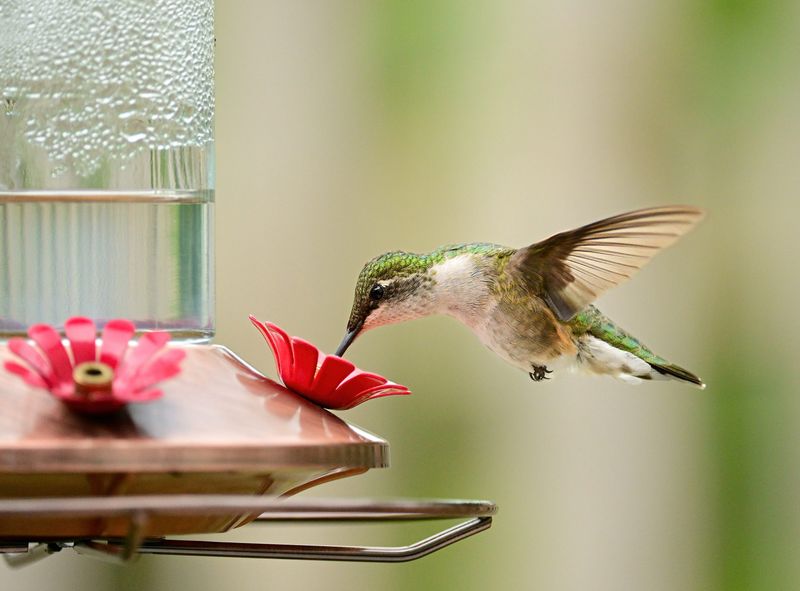
Fall timing in the South is not one-size-fits-all. In Texas, ruby-throats migrate in large numbers and gather along the coast before crossing the Gulf, according to Texas Parks and Wildlife.
Leaving a feeder up will not hold a bird back. The state agency’s migration FAQ says feeders do not stall migration and may help stragglers.
Birds follow daylight and instinct, not your sugar water.
Florida varies more by location. Audubon’s birding FAQ notes that hummingbird presence and timing differ across the state, and south Florida and the Gulf Coast can host wintering hummingbirds.
That is why no single removal date fits every reader.
A practical rule is to keep the feeder fresh and clean until you have gone a couple of weeks with no visitors. Since a feeder only supplements the flowers and insects the birds already use, as Missouri Extension notes, your yard is one stop on a long trip.
The best feeder in fall is the one that is clean and ready when a tired traveler shows up.