
Every California yard seems to have one: a sunny, baked hillside where the hose barely reaches and anything you plant gives up by July. The good news is that plenty of tough California natives actually prefer that kind of spot.
Once they settle in, they can hold soil, feed bees and birds, and get by on winter rain alone. Here are ten plants that can turn your problem slope into the best-looking, most wildlife-friendly corner of your property.
1. Cleveland Sage
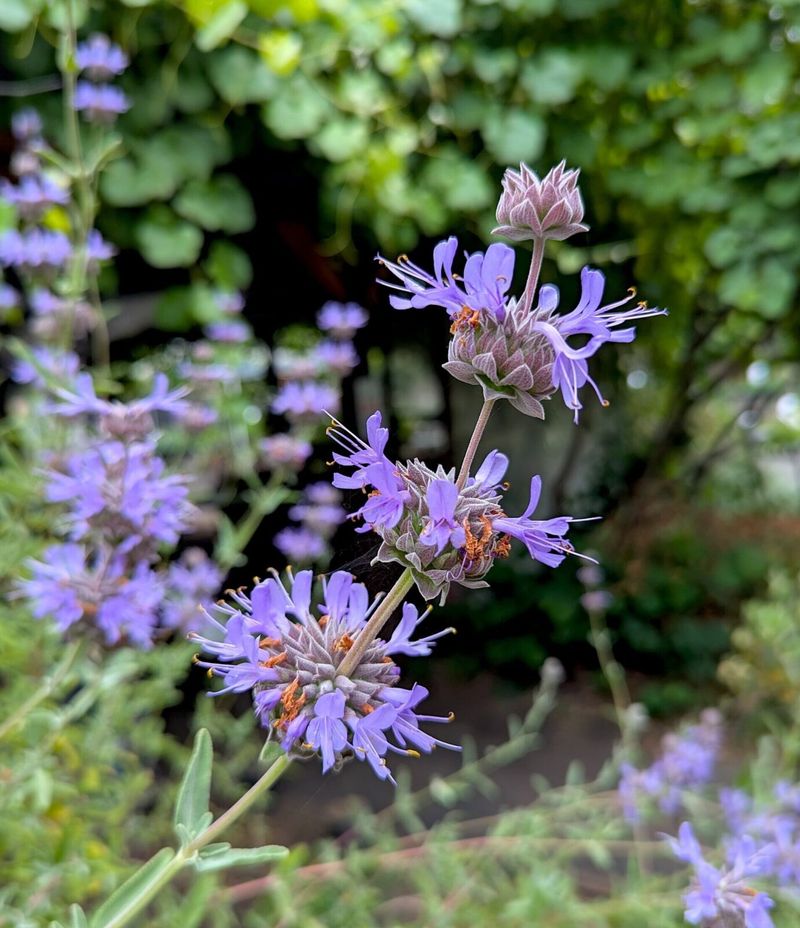
Brush past a Cleveland sage on a warm evening and the whole slope smells like a hiking trail in the San Diego backcountry. That scent is part of the charm, but the real payoff is toughness.
Native to the dry hills of Southern California and Baja, Salvia clevelandii can shrug off summer heat with little or no supplemental water once established.
From late spring into summer, stacked whorls of blue-violet flowers pull in native bees and hummingbirds. Plants usually reach 3 to 5 feet tall and wide, filling a bare slope fast.
Varieties like ‘Winnifred Gilman’ and ‘Allen Chickering’ are easy to find at native nurseries.
Give it fast-draining soil and full sun, then mostly leave it alone. Summer watering in heavy soil can actually shorten its life, so the far corner of your yard is exactly where it belongs.
2. California Buckwheat
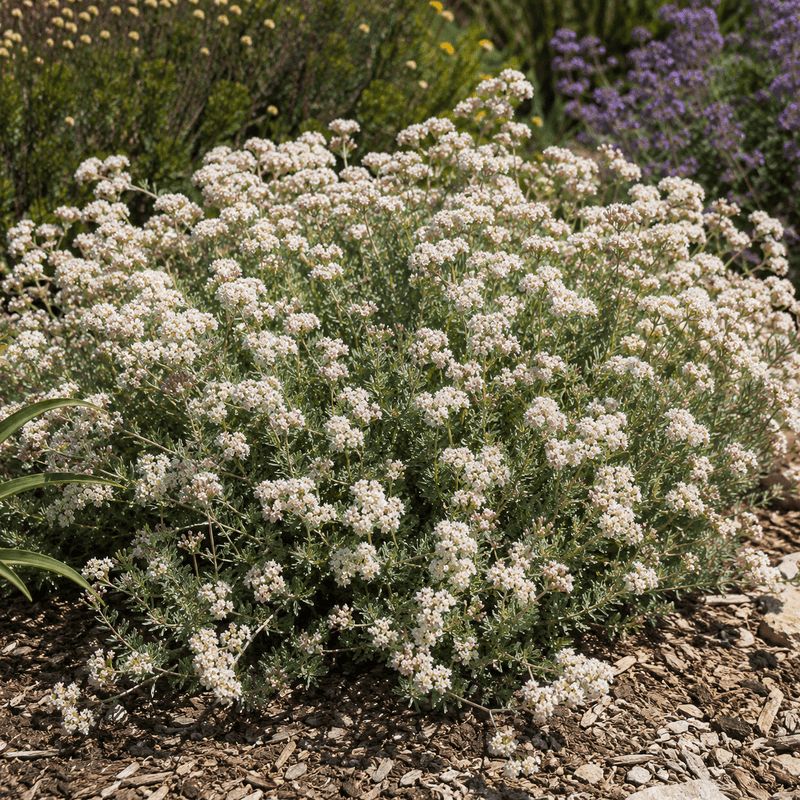
Ask a native bee what it wants for lunch in midsummer and the answer might well be buckwheat. Eriogonum fasciculatum blooms when many garden plants have quit, offering creamy pom-pom flowers that slowly age to cinnamon brown.
That long bloom window may help support butterflies, including several hairstreaks and blues that use buckwheats as host plants. Even the dried seed heads look handsome through fall, so there is no urgent need to deadhead.
The shrub stays low and mounding, roughly 2 to 3 feet tall, with fine needle-like leaves that resist drought. Plant it in fall so winter rains do the watering, and it can carry itself through dry seasons in most coastal and inland areas.
For a slope that should hum with life, few plants pull more weight.
3. Manzanita
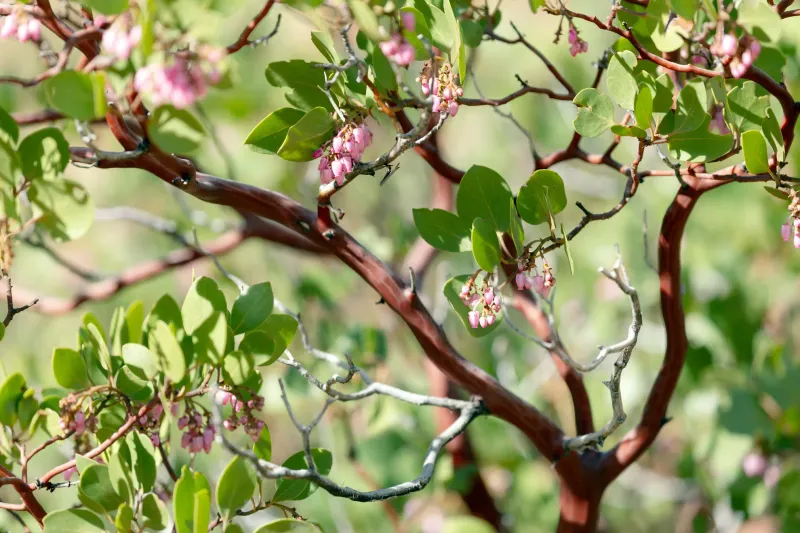
Smooth, wine-red bark that twists like sculpture. Tiny pink bells in late winter.
Berries the birds clean off by summer. Manzanita delivers year-round interest with almost no input from you.
California has dozens of native Arctostaphylos species, from groundcovers like ‘Emerald Carpet’ to small trees such as ‘Dr. Hurd’. On a dry slope, mid-size forms like ‘Howard McMinn’ or ‘Sunset’ tend to be forgiving choices for home gardeners.
The catch is patience. Manzanitas dislike summer water and rich soil, and overwatering is one of the most common ways homeowners lose them.
Water occasionally during the first dry season, then taper off.
Early-blooming flowers can be a valuable nectar source for hummingbirds and queen bumblebees waking up in January, a time when little else is open.
4. California Lilac
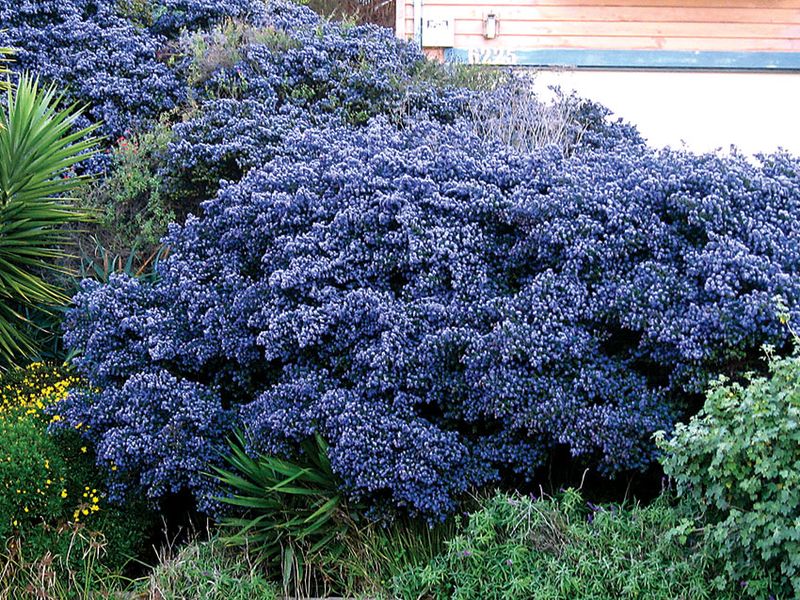
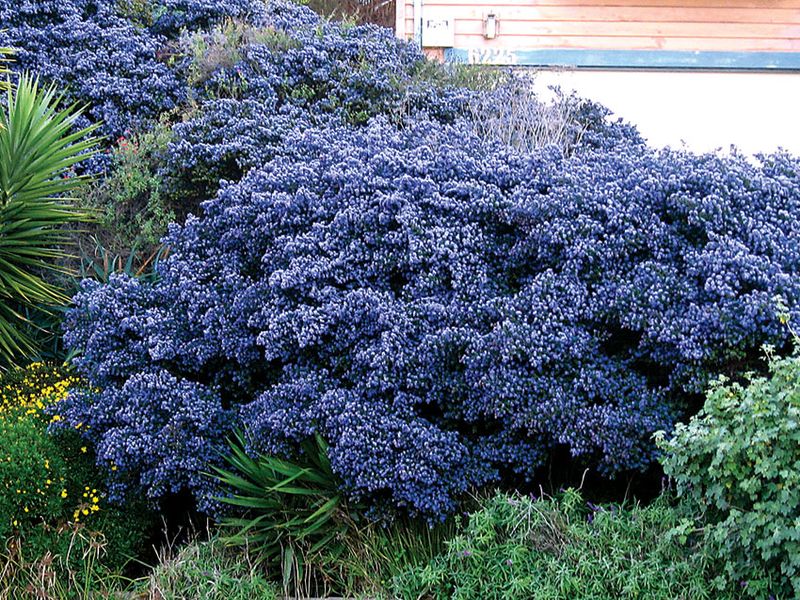
Spring on a ceanothus-covered hill looks almost unreal, like someone spilled blue paint down the slope. That electric color is why California lilac shows up in so many native gardens.
Ceanothus plants also fix nitrogen through their roots, which helps them grow in poor, rocky soil where other shrubs struggle. Groundcover types like ‘Yankee Point’ spread wide and can help hold loose soil on a bank.
Upright selections like ‘Ray Hartman’ add height and screening.
Fair warning: many ceanothus live 10 to 15 years rather than forever, and summer irrigation can shorten that span further. Think of them as fast, generous fillers while slower plants like manzanita mature.
Bees adore them, so expect a buzzing slope every spring.
5. Toyon
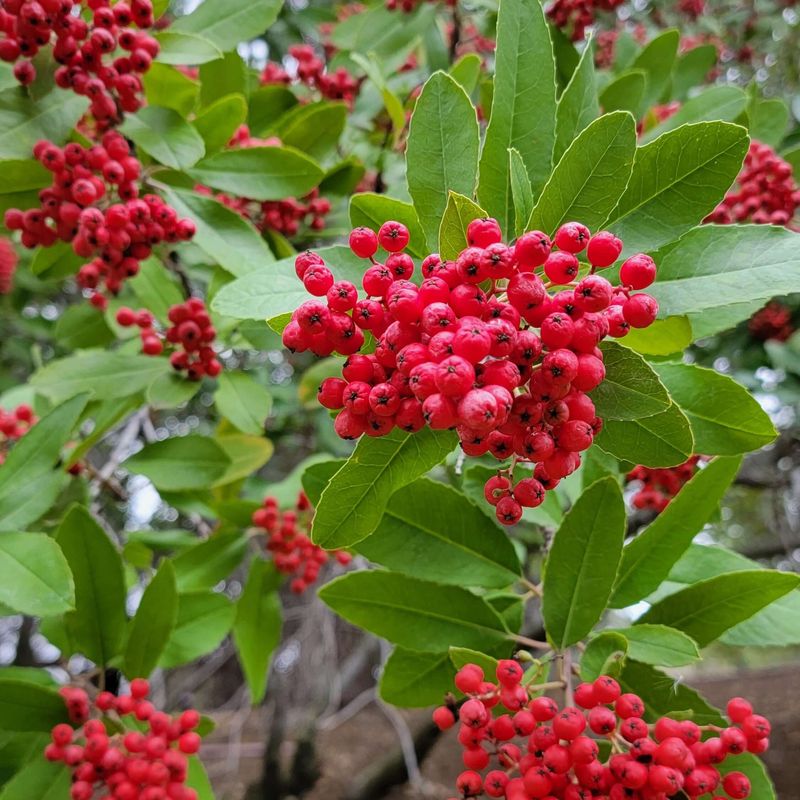
Hollywood is said to have taken its name from this shrub, sometimes called California holly. Whether or not the story is exact, toyon has deep roots in the state’s landscape.
On a slope, it works as a sturdy backbone plant. It can grow 8 to 15 feet tall, handles heat, clay, and drought, and serves as a privacy screen at the top of a bank.
White summer flowers draw pollinators, and winter brings heavy clusters of red berries.
Those berries turn your yard into a bird stop. Robins, cedar waxwings, and mockingbirds often strip a shrub in a matter of days once fruit ripens.
If you want proof your slope is feeding wildlife, toyon provides it in living color.
6. California Fuchsia
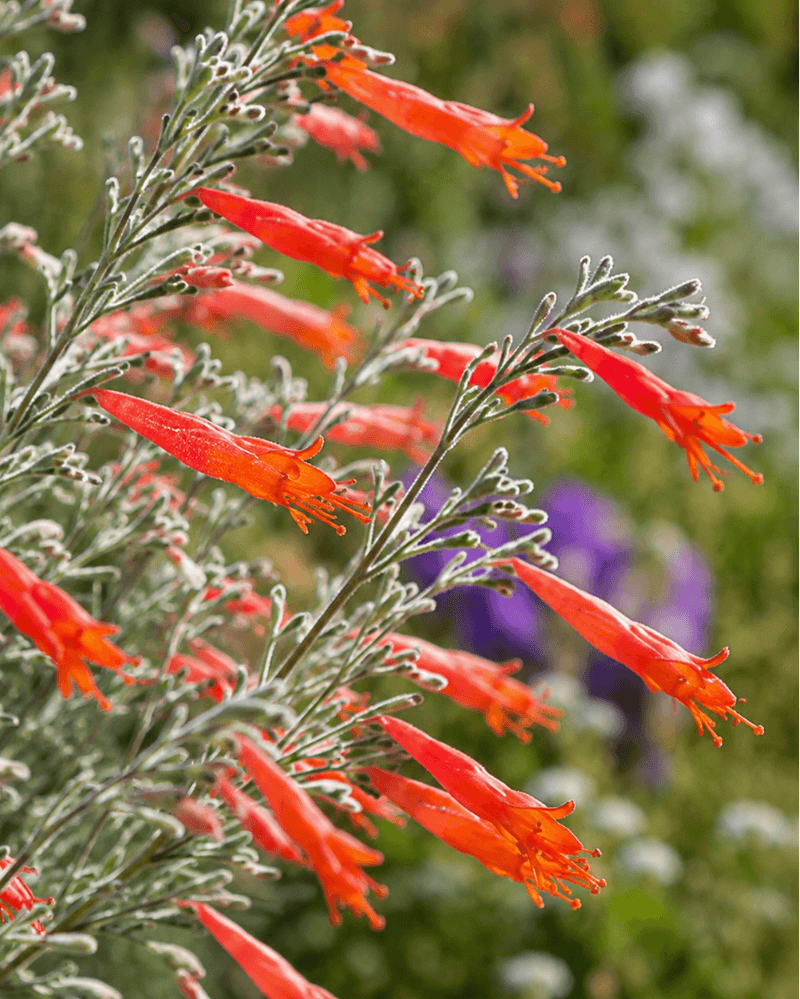
Late August is when most dry slopes look tired. Not if California fuchsia lives there.
Just as everything else browns out, Epilobium canum erupts in scarlet trumpets that hummingbirds treat like a fuel station during fall migration.
The silvery foliage reflects heat, and the plant spreads by underground runners, filling gaps between rocks and shrubs. Selections like ‘Everett’s Choice’ stay low, while others reach 2 feet.
Cut it back hard in late fall or winter and it returns fresh in spring. It handles near-total neglect once established, though it may spread more than you expect in looser soil.
On a slope, that eagerness is usually a bonus.
7. Deer Grass
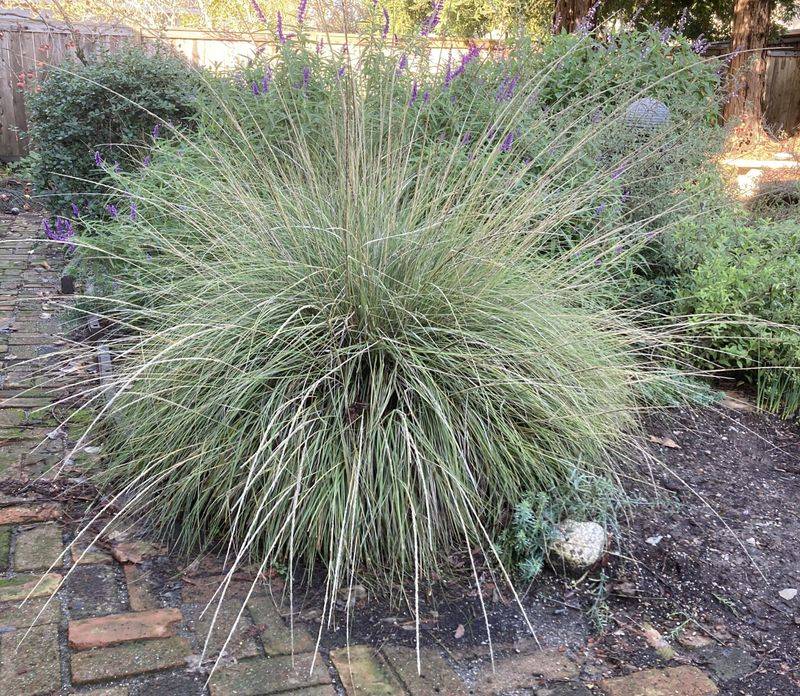
Picture big, fountain-like clumps of green and gold swaying on a windy bank. That’s deer grass, and it may be one of the best erosion helpers a homeowner can plant.
Muhlenbergia rigens forms dense clumps 3 to 4 feet tall with fibrous roots that can grip soil on steep ground. California Native peoples prized its flower stalks for basket weaving, a reminder of how long it has been part of the state’s story.
Plant several in a staggered pattern across the slope to slow runoff during winter storms. It tolerates drought, heat, and poor soil, and it looks good with minimal care.
A light comb-out or trim every couple of years keeps clumps tidy, and birds may forage for its seeds.
8. Woolly Blue Curls
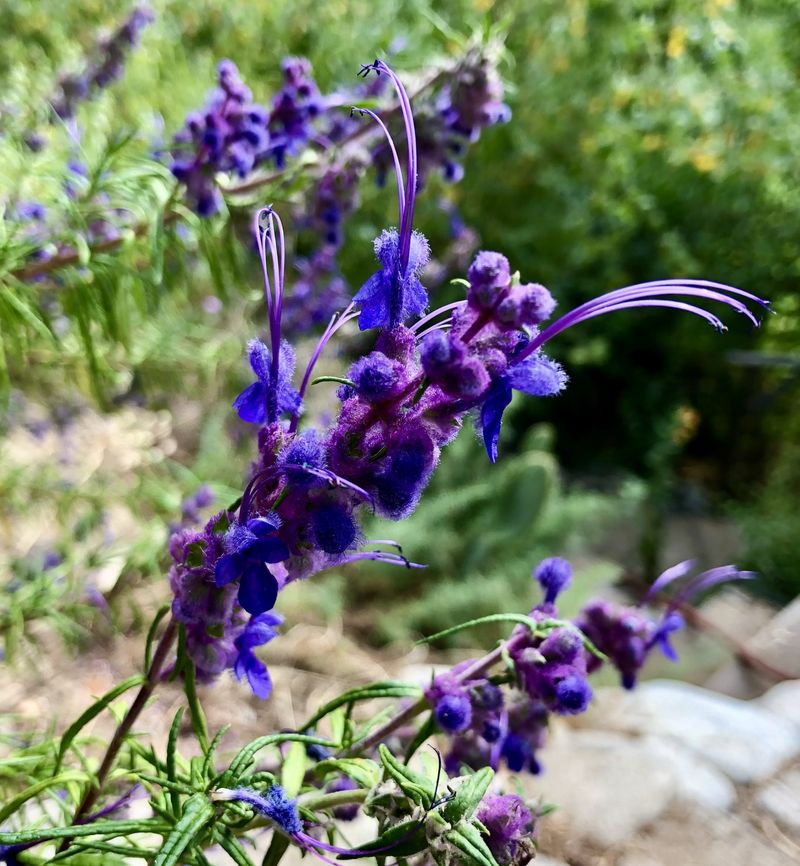
Some plants earn their place through toughness. Woolly blue curls earns it through sheer personality.
Fuzzy purple stems carry curled blue flowers with long arching stamens, and the leaves smell sweet and resinous on hot days.
Trichostema lanatum is a chaparral native with a reputation for being fussy in regular gardens, mostly because it hates summer water and rich soil. On a neglected, fast-draining slope, though, it can finally behave.
That makes your hose-free hillside the ideal home.
Hummingbirds and bees visit the long bloom season from spring into summer. Expect a shorter life than some shrubs, often a handful of years, so treat it as a showpiece and replant when needed.
9. Bush Monkeyflower
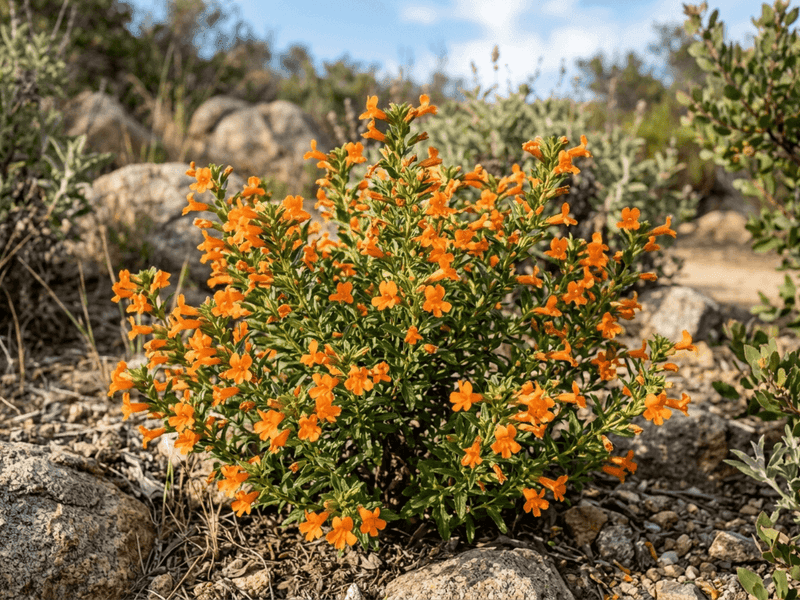
Bright orange flowers poking out of a rocky bank in April? There’s a good chance you’re looking at sticky monkeyflower.
Diplacus aurantiacus grows wild on dry hillsides from Oregon to Baja, and it brings that same wild cheer to a home slope.
Its sticky, glossy leaves help it hold moisture, and the plant can drop into summer dormancy when water runs short. Don’t panic if it looks scruffy in August.
Fall rains usually perk it back up.
Hummingbirds sip from the tubular flowers, and the plant is a larval host for the common buckeye and variable checkerspot butterflies. Hybrid colors range from cream to red, so you can mix shades for a patchwork effect.
10. Coyote Brush
Plain? Maybe.
Indispensable? Absolutely.
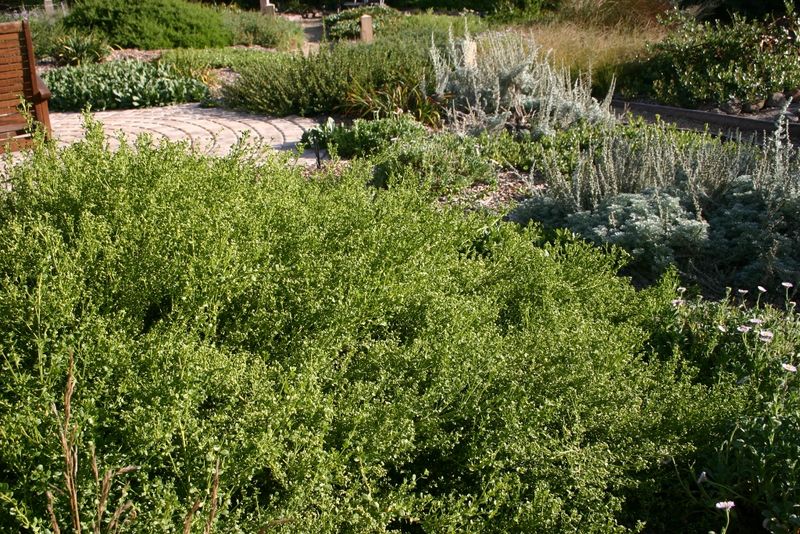
Coyote brush won’t win flower shows, but low forms like ‘Pigeon Point’ and ‘Twin Peaks’ can blanket a slope in dense green fast and hold soil while slower plants catch up.
Baccharis pilularis stays green with little water and blooms in fall, feeding a surprising number of insects when nectar is scarce. Those insects in turn feed birds and lizards, so a patch of coyote brush may quietly power a whole little food web.
If you live in a fire-prone area, keep plantings well spaced, prune out dead wood, and check your local defensible-space rules before planting near the house. Used thoughtfully on the outer slope, it’s a low-effort finishing touch for a water-wise, wildlife-friendly hillside.