
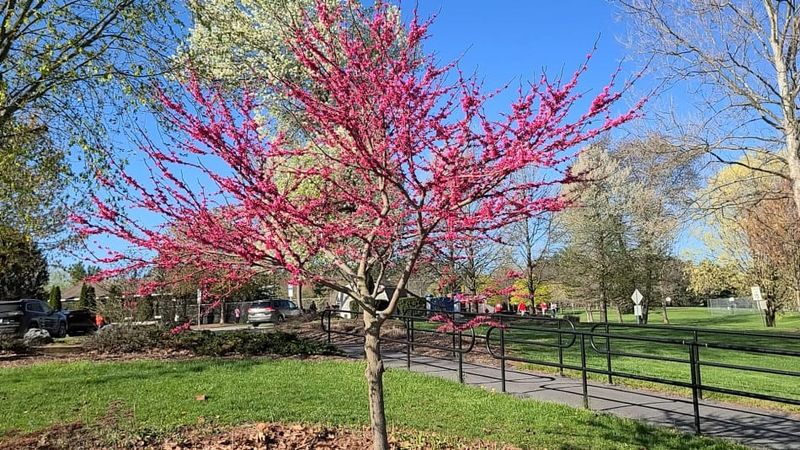
Picking a tree for the spot beside your driveway can feel like a gamble. Roots, shade, and slab cracks all seem to be tied together.
Texas redbud is a small native tree that many Central Texas gardeners ask about for tight spaces. Here is what it can offer, what it cannot promise, and how to plant it with care.
A small tree cannot guarantee an uncracked driveway
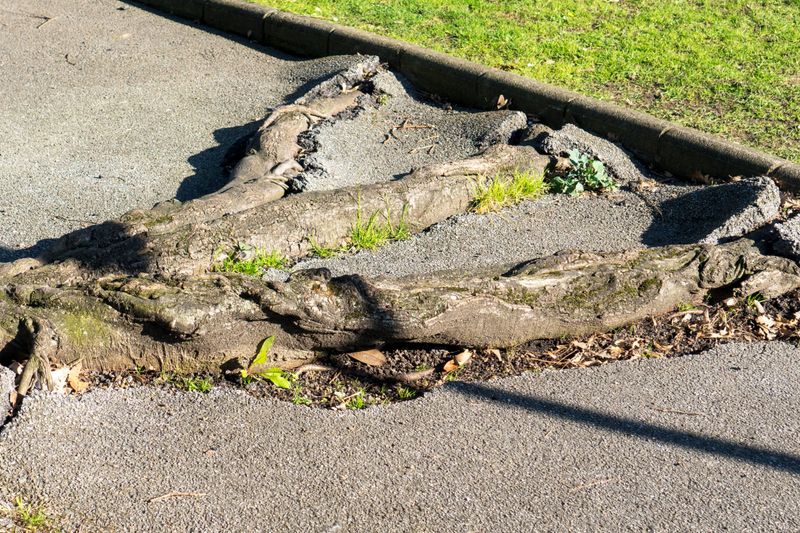
Plenty of Texas homeowners want shade near the driveway without paying for a heaved slab later. That goal makes sense, but no tree, and no planting distance, can promise crack-free concrete.
Roots can lift pavement. UF/IFAS notes that roots can raise sidewalks and curbs, but the research it summarizes found that sidewalks can crack whether trees are nearby or not.
Once a crack forms, roots may also move into it and make it worse.
So roots can worsen or take advantage of a weak slab, but they are not always the original cause. Thin concrete, poor base prep, settling soil, and heavy vehicles all play a part too.
What matters most is the match between the tree and the site. UF/IFAS advises matching a tree’s mature size to the soil space available, because cramped roots cause trouble for pavement and for the tree itself.
Four things shape your risk: how big the tree gets, how much rooting space it has, what the soil is like, and the shape your pavement is already in. A compact tree can make the fit easier, but it is a choice about space, not a guarantee.
The rest of this article helps you make that choice for your own yard.
What Texas redbud can—and cannot—offer
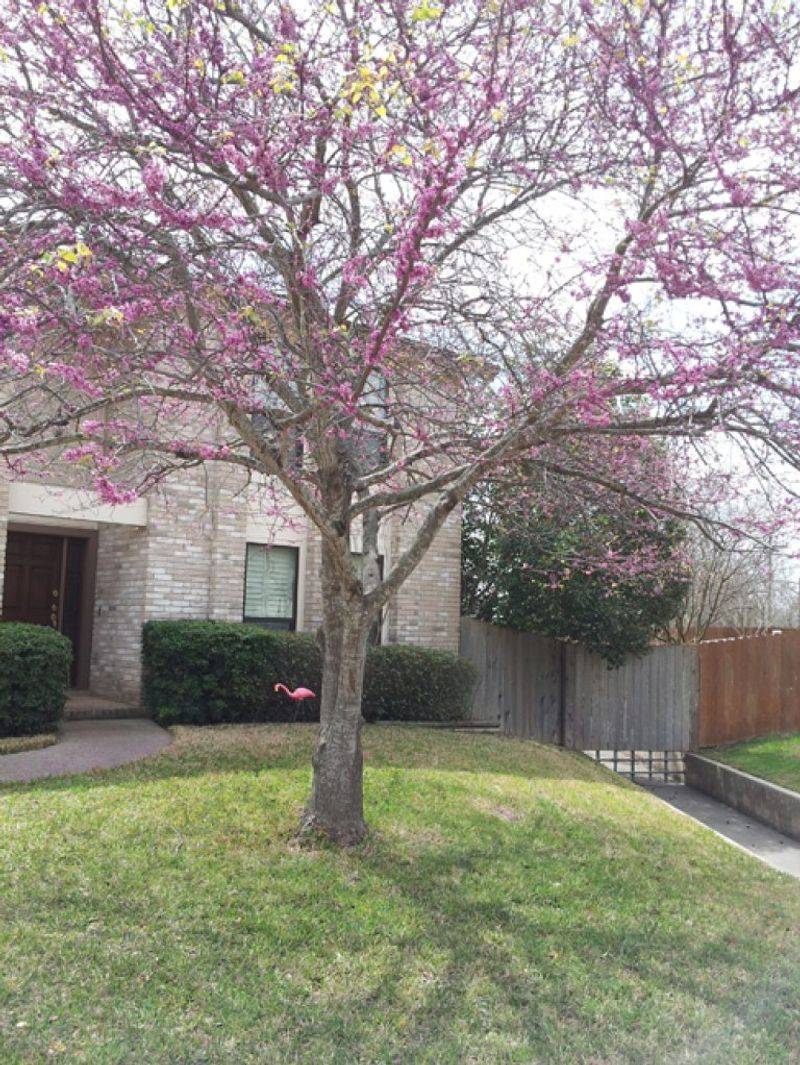
Texas redbud (Cercis canadensis var. texensis) is a native small tree known for pink-purple spring flowers. It is one example of a compact tree that may fit a modest space, and it is not a crack-prevention fix.
The Austin plant guide, which covers Texas redbud alongside Mexican redbud, lists a small tree or large shrub reaching about 10 to 15 feet tall and wide. It names the Edwards Plateau as the native area and says the plant needs well-drained soil.
That size is the main draw. A tree this small is simpler to fit beside a driveway than an oak or pecan, which need far more room above and below ground.
There is a trade-off, though. A smaller canopy gives less shade, and Texas redbud is deciduous, so it drops its leaves for part of the year.
Expect pleasant, partial shade rather than a cool roof over your car.
Also keep in mind that native to Texas does not mean right for every part of Texas. If your yard sits in heavy clay, a wet low spot, or a very different region, check local recommendations before buying.
Central Texas and Hill Country gardeners with well-drained soil are the best fit for this tree.
Roots need room beyond the trunk
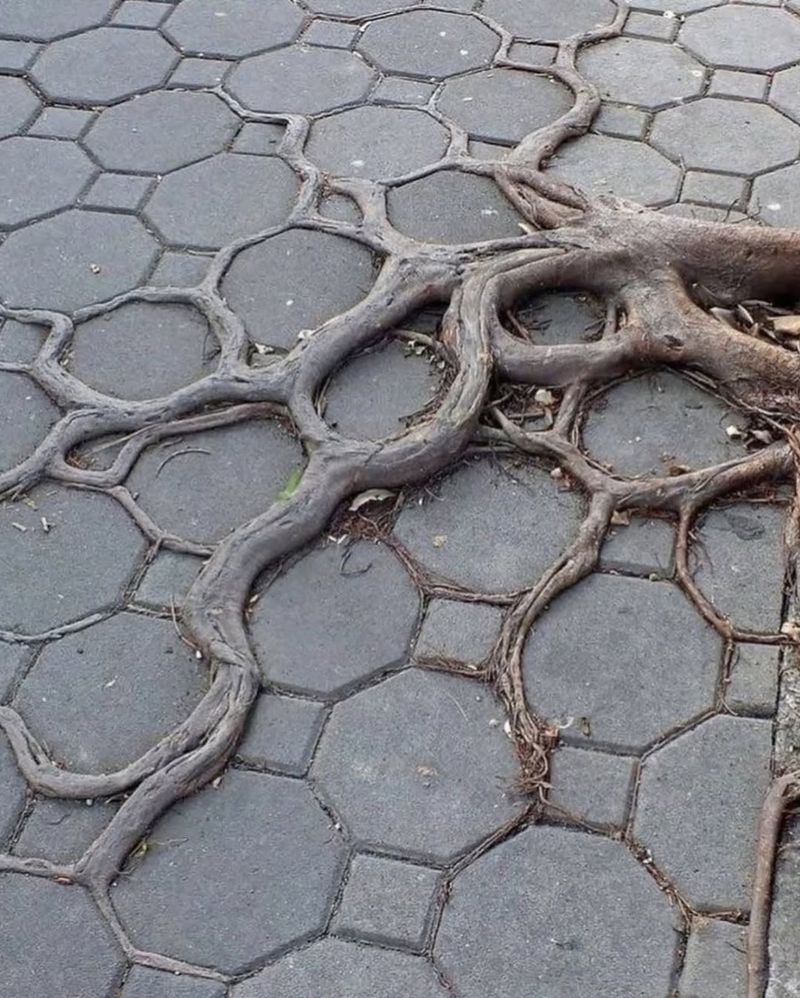
Roots are not villains. They are how a tree drinks and eats, and they just need space to do it.
Iowa State Extension explains that most of the roots that absorb water and nutrients sit in the upper 6 to 18 inches of soil.
That shallow zone is also where pavement edges, compacted fill, and mulch beds meet. Structural roots, the larger ones that anchor the tree, may reach well past the edge of the canopy.
So the spread you see above ground is not the limit of what is going on underground.
Iowa State gives general minimum guidance for trees under 30 feet tall: at least 50 to 150 square feet of rooting area, and 2 feet or more between the trunk and pavement or structures. Treat those as minimums from Iowa, not Texas rules and not a guarantee for any driveway.
In practice, more is better. Deeper, looser soil lets roots spread out and stay healthy instead of hunting along the slab edge for air and moisture.
A simple check helps: look at the strip between your driveway and the planting spot. If it is a narrow band of packed fill, the tree and the concrete will both have a harder time.
A wider bed with loosened native soil gives roots somewhere else to go.
Will its shade cool the driveway?
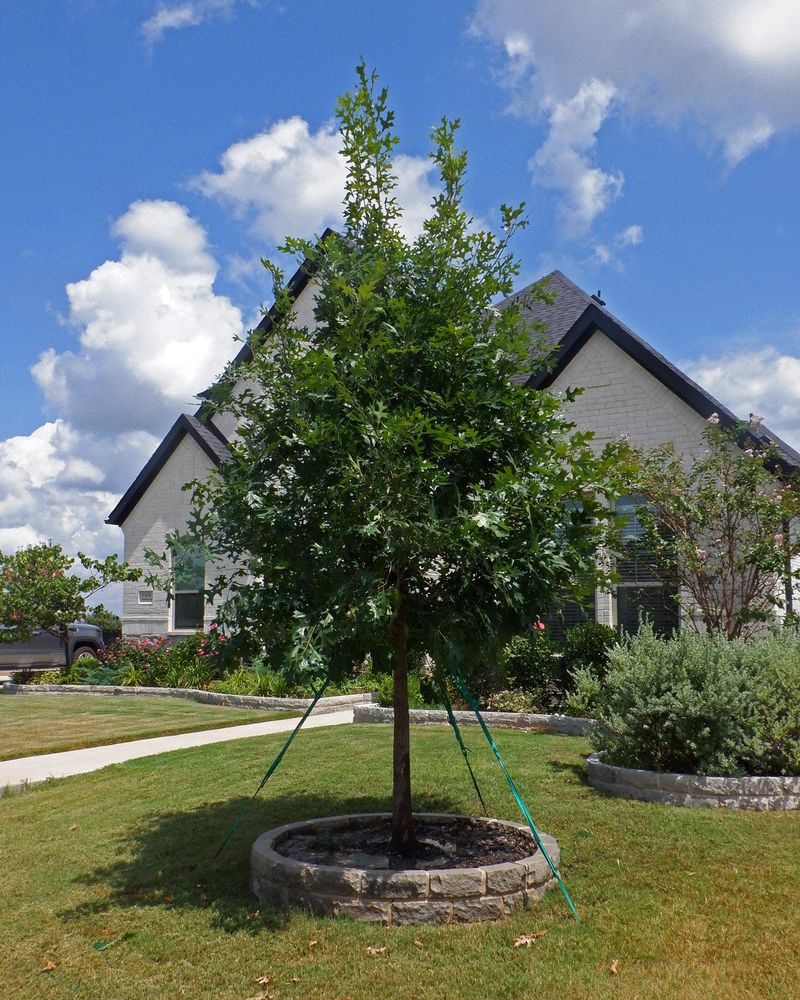
Shade can help pavement, but the proof has limits. A peer-reviewed study of street trees in Modesto, California linked greater tree shade to less distress in asphalt pavement.
That study looked at city streets and asphalt, with larger shade differences than one small tree can make. It does not show that a Texas redbud will noticeably cool a concrete driveway or stop it from cracking.
Now picture the tree itself. With a listed spread of about 10 to 15 feet, according to the Austin plant guide, it covers a patch, not a whole driveway.
A typical driveway is much longer than that.
It is also deciduous, so shade changes with the seasons. Placement matters: a tree on the west side may block some low afternoon sun, while one on the north side may give little help at all.
A useful test is to watch where the sun hits your driveway in late afternoon in July. Whatever small spot a mature redbud could cover from that angle is the realistic payoff.
Think of it as a pleasant shaded corner, maybe a cooler place to park a car for a few hours, and not as a fix for hot concrete.
Match the planting spot to the tree and the site
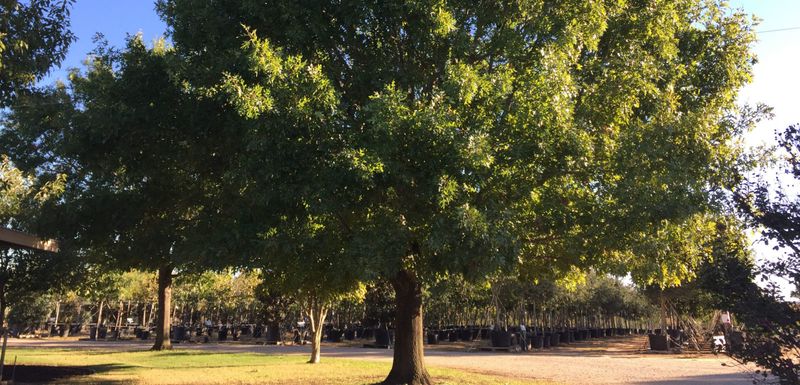
Before you dig, spend a weekend studying the spot. Start with the region: Texas redbud is tied to the Edwards Plateau in the Austin guide, and it needs well-drained soil.
Pour a bucket of water into a test hole and see whether it drains or sits.
Next, look at room. Mark the full mature width, about 10 to 15 feet, with stakes or a hose, and see what it touches: the driveway, the house, a fence, or a utility line.
Then think about soil under and beside the slab. UF/IFAS points out that soil under pavement is often compacted and poorly aerated.
Restricted rooting space can affect both the pavement and the tree’s stability, so a tree squeezed into a narrow strip is a poor bet.
No single distance works as a guarantee. A spot that suits a tree in deep loose soil may not suit one in a thin strip of builder fill.
Use the actual mature size and the actual site to decide.
If the strip is tight, drainage is poor, or you are outside the redbud’s region, consider moving the tree farther from the concrete or choosing a different locally recommended species. Your county extension office can help with that.
Plant for establishment, not a pavement guarantee
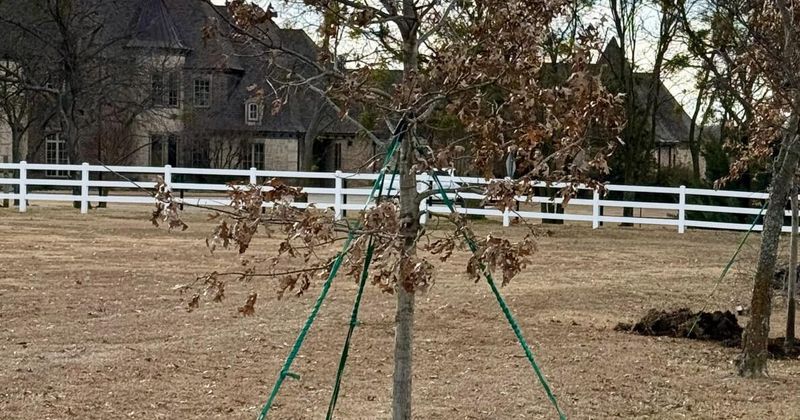
Start with a phone call. Contact 811 at least 48 hours before you dig, and wait until utilities are marked and the required time has passed.
The Texas Department of Insurance urges this step to avoid hitting buried lines.
Then follow the Texas A&M Forest Service planting guidance. Dig a hole at least twice as wide as the root ball, but no deeper than the root ball.
Set the tree so the root collar, where the trunk flares out, sits flush with or slightly above the surrounding grade. Backfill with the soil you dug out rather than a rich potting mix.
Spread mulch 2 to 3 inches deep, and keep it from touching the trunk. Water during establishment, giving the roots time to settle into native soil.
Good planting gives the tree a fair start, and a healthy tree is easier to live with. It does not remove pavement risk, though.
Do not plan to chop roots later if they show up near the slab, since UF/IFAS warns that cutting roots close to the trunk can weaken the tree’s support and lead to dangerous failure. If roots become a concern, ask a certified arborist before touching anything.
Choose the tree for the site, not the promise
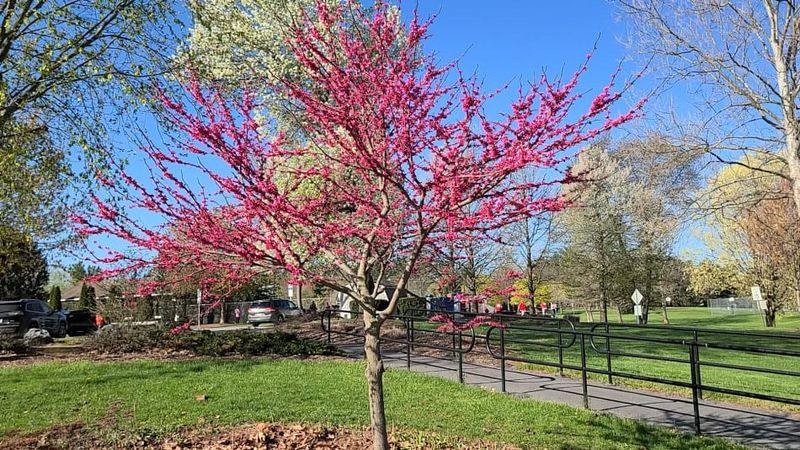
Texas redbud earns a look when your soil drains well, your region suits it, and the planting bed can hold a 10 to 15 foot tree. If drainage is poor or space is tight, choose another locally recommended tree or a different spot.
The Austin guide and UF/IFAS advice both point back to the site.
No species or distance guarantees crack-free concrete, and claims about gentle roots deserve a raised eyebrow. A tree is a good neighbor to a driveway only when it has room to grow.