
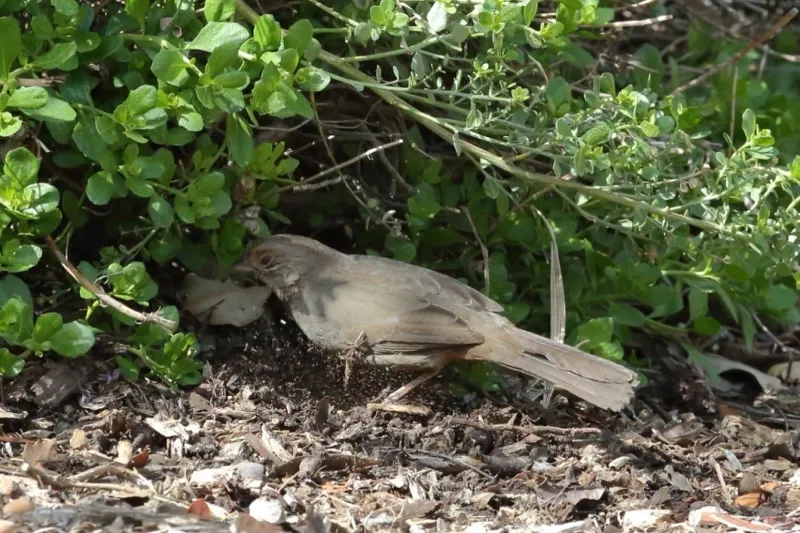
That brown bird hopping and scratching beneath your shrubs might be a California Towhee, one of the most overlooked native birds in the state. It spends much of its day on the ground, hunting for food in the leaves.
A few small changes to your yard may make it more suitable for this bird, while still keeping fire safety and garden care in view. Here is what you can do, and what no yard change can promise.
Towhees forage for food, not garden cleanup
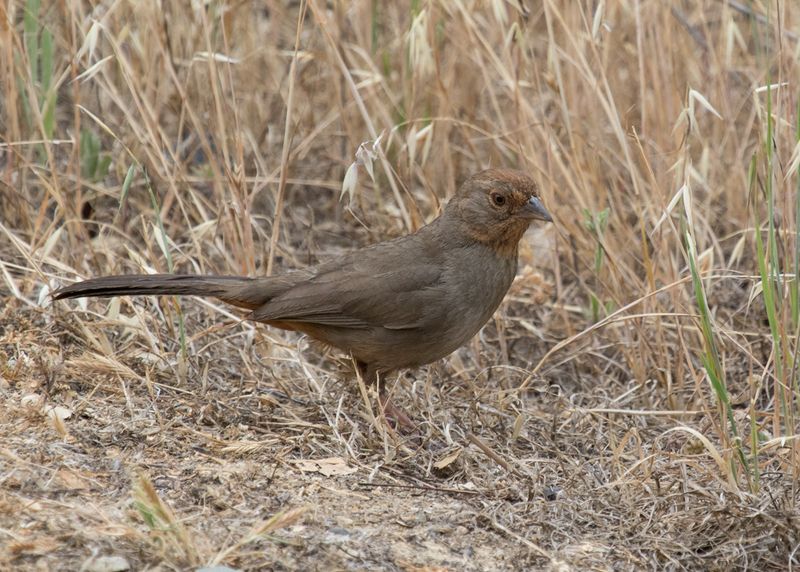
Watch a towhee for a few minutes and you will see a double-footed hop and scratch, flicking leaves aside to uncover food. According to Cornell Lab life history notes, these birds eat mostly seeds from grasses and herbs.
During breeding season their menu also includes insects such as beetles and grasshoppers, and they may take berries, acorns, spiders, millipedes, and snails.
That varied diet is why the title idea needs a reality check. Towhees eat seeds and insects, but nothing shows they will reliably thin out your weeds or cut down garden pests.
Think of them as a native bird you can make room for, not a cleanup crew you can hire.
Range matters too. Audubon’s field guide places this species along the Pacific coast, from southern Oregon down to Baja.
If you garden in Florida, Texas, or elsewhere outside that range, this bird is not a likely visitor, so look up your own local ground-foraging species instead.
Within California, a yard with shrubs and some open ground may suit them. Whether one shows up is still up to the bird.
Open ground beside shrubs gives them room to forage
Picture how a towhee works: it steps out from the shelter of a bush, feeds on open ground, and ducks back under cover. California’s wildlife habitat relationships account describes this pattern, with birds foraging on open ground next to brushy cover.
Shrubs and dense understory give them a place to retreat.
In a yard, that points to a simple arrangement. Leave a relatively open patch of soil or thin ground cover right beside a shrub or hedge, instead of covering every inch with thick plantings.
A strip under the drip line of a mature shrub is a natural place to start.
You do not need a major redesign. Even a small change, such as thinning a dense ground cover near one shrub, may give a bird easier access to the ground.
Cornell’s notes also say towhees use suburban yards, so ordinary neighborhoods can work.
No layout is guaranteed to draw a towhee. Treat the open patch as an invitation, and keep your expectations flexible.
Retain leaf litter where fire safety allows
Fallen leaves are more than mess. UC guidance on gardening for birds notes that spring leaf litter supports insect habitat and suggests delaying cleanup until summer when possible.
For a bird that scratches beneath leaves, a little litter fits its way of foraging.
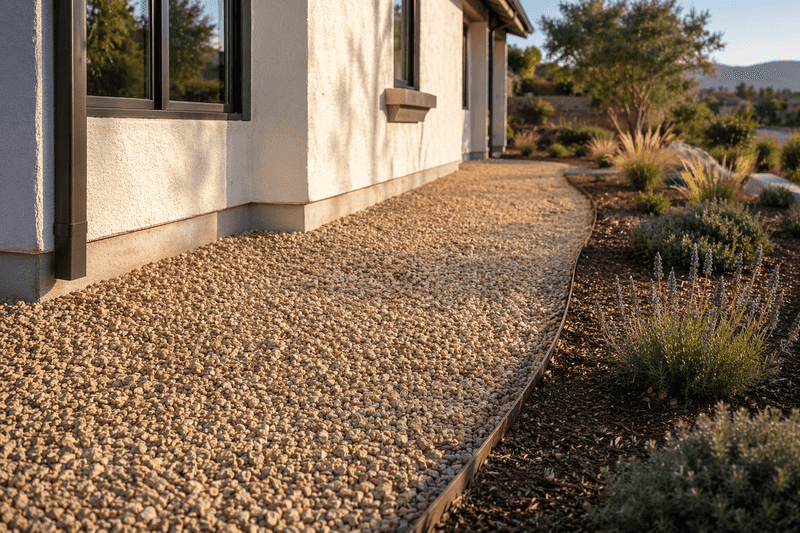
In California, though, “leave the leaves” cannot be a blanket rule. CAL FIRE’s defensible space guidance advises removing dead leaves and dry vegetation within the first five feet around your home.
It gives separate advice for litter and vegetation farther out.
So keep that first five feet clean, and save any retained litter for areas farther from the house, such as under a shrub in a back corner. Your own fire risk matters here, especially on hillsides or near wildland.
The state is also reviewing Zone 0 rules. The Board of Forestry’s defensible space zones page showed that rulemaking still under review when checked, so do not assume it is settled law.
Check current state and local fire requirements before you decide what stays.
No specific depth of litter is needed, and none guarantees a visit.
Native plants can add food and shelter
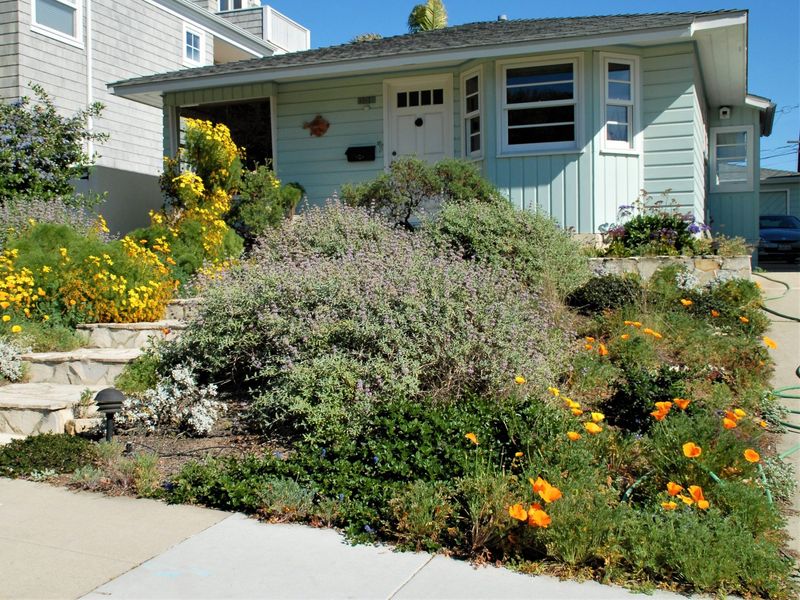
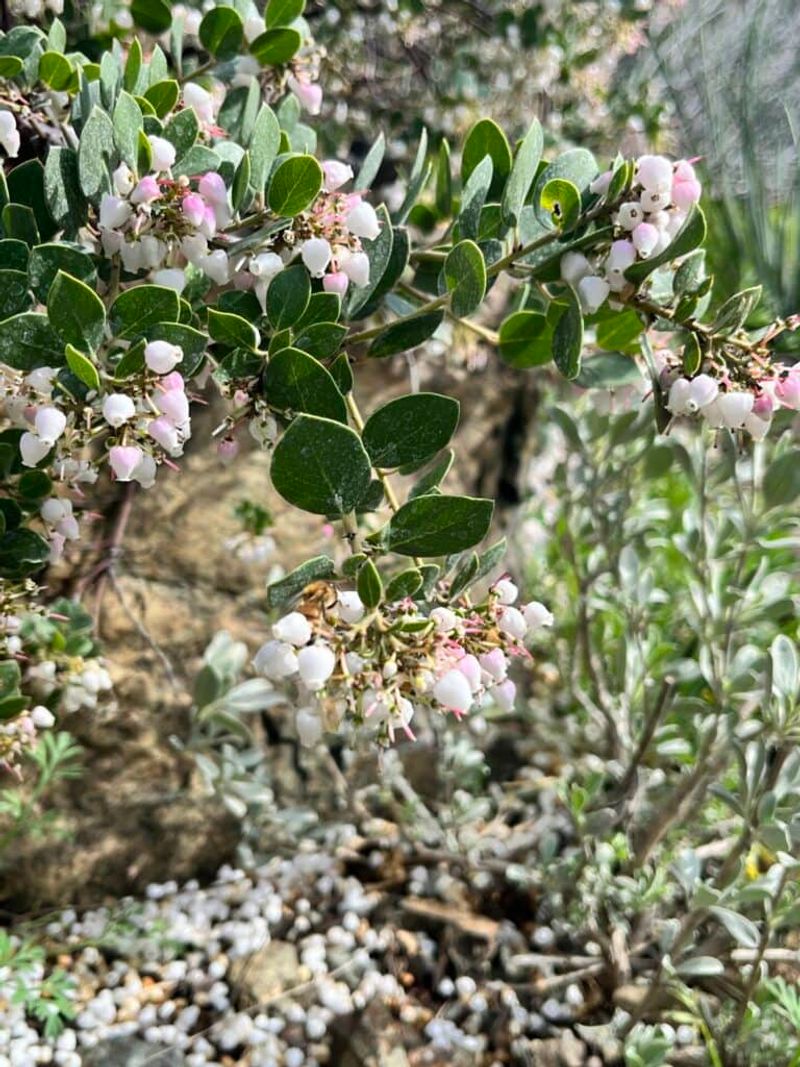
Plants build the backdrop for any bird habitat. UC ANR’s native plant guide for birds lists seed-producing California plants such as buckwheat, yarrow, native sages, coyote bush, Ceanothus, and deer grass.
These are general bird-garden choices, not plants proven to attract California Towhees specifically.
Layers help too. UC guidance on backyard bird habitat recommends layered vegetation and shrubs for shelter.
A mix of low shrubs and grasses gives birds places to feed and hide.
Local conditions come first. A coastal garden, an inland valley lot, and a dry foothill yard each call for different species, so check with a local native plant nursery or your county UC Master Gardener program.
Choose plants that suit your soil, water budget, and fire zone, and place taller or oilier shrubs away from the house.
Native plantings can make your yard more useful to many birds. Whether a towhee joins them remains its choice.
Ground-level seed is an option, not a requirement
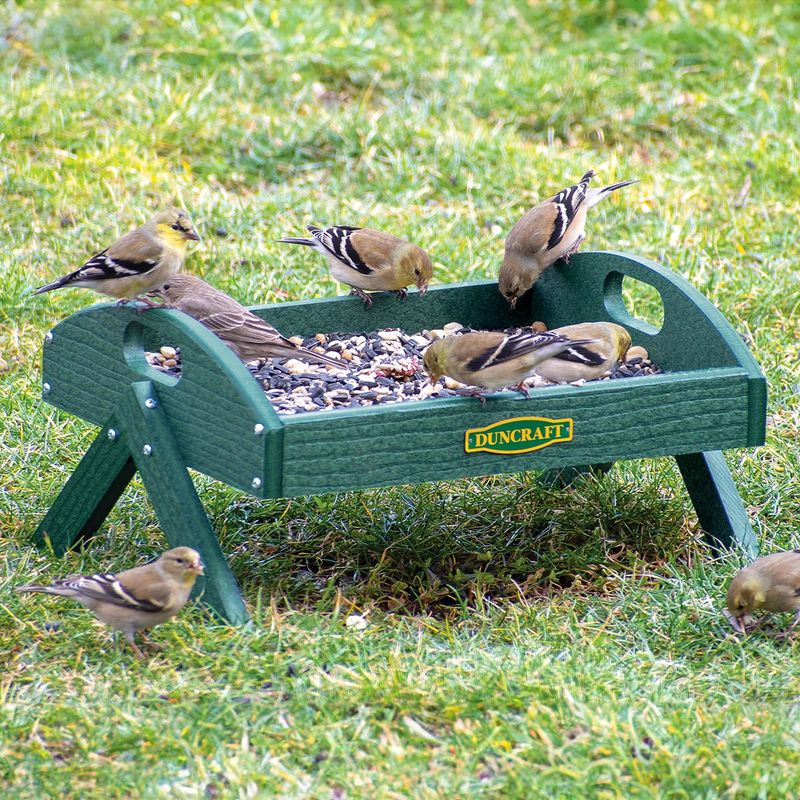
Feeding is optional, and plantings do plenty without it. If you want to offer seed, know how towhees behave.
Cornell’s overview says they are more likely to use seed scattered on the ground or in trays than hanging feeders.
Set a tray or a small scatter near shrub cover, in small amounts, so food does not pile up and spoil. Even then, there is no promise that a towhee will find it or return.
Cleanliness matters more than most people expect. Wild songbirds can spread disease at shared food and water, and a CDC outbreak investigation recommends cleaning and disinfecting feeders and birdbaths at least monthly.
Clean more often if they look dirty or sit in damp shade.
Brush out old seed, rinse trays, and let them dry before refilling. If you do not want the upkeep, skip the feeder and focus on habitat.
Limit pesticide exposure in foraging areas
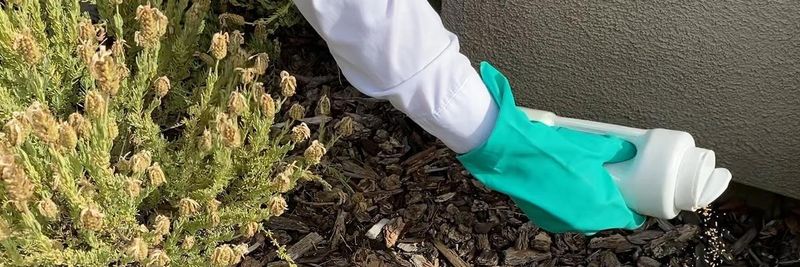
A bird that feeds on the ground meets whatever you spray on it. That is one reason to treat pesticides as a last step, not a routine.
The EPA’s tips for reducing pesticide impacts on wildlife advise using them only when needed, following the product label, and limiting treatment to the specific area that needs it.
In practice, that might mean spot-treating one troubled patch rather than spraying a whole bed. Read the label for where and how to apply, and keep products away from the open ground and shrub edges where birds feed.
Never use pesticides to “make” food for wildlife.
These steps lower the chance of harm to birds and other wildlife. They will not bring a towhee to your yard on their own.
They simply remove one risk from a space you are trying to make more welcoming.
Check shrubs before you prune
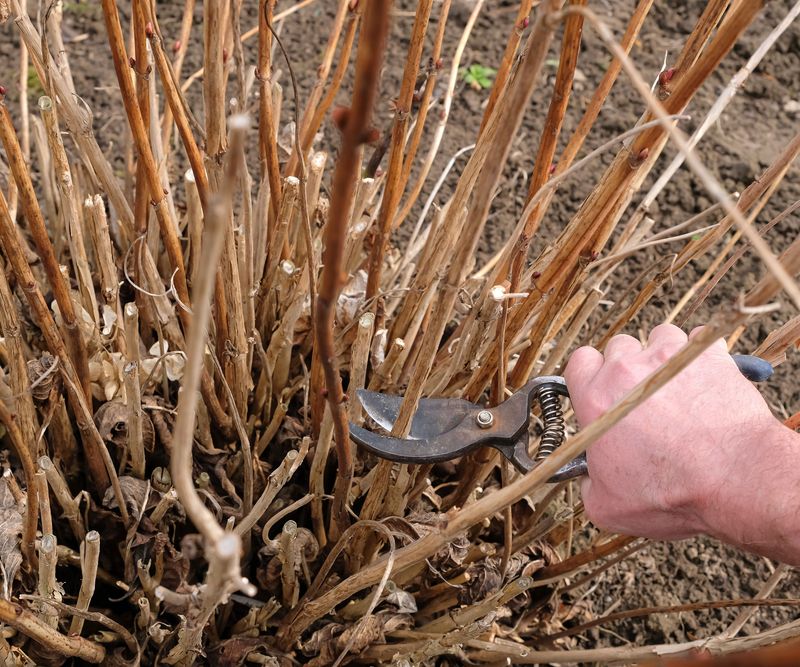
Towhees nest in shrubs, and a trimmed hedge can hide a nest you never saw. Before you cut, walk around the plant and look closely.
Part branches gently, watch for birds flying in and out, and listen for chirping.
California law matters here. The state Fish and Game Code prohibits needlessly destroying the nest or eggs of birds.
There is no single pruning blackout date in these sources, so the practical rule is to inspect first.
If you find an active nest, hold off on that section and trim somewhere else for now. You can come back once the nest is no longer in use.
Keep fire safety in mind as well. Needed clearance work near the home still matters, so plan ahead and check often rather than rushing a job.
Make the yard more welcoming, not a promised work crew
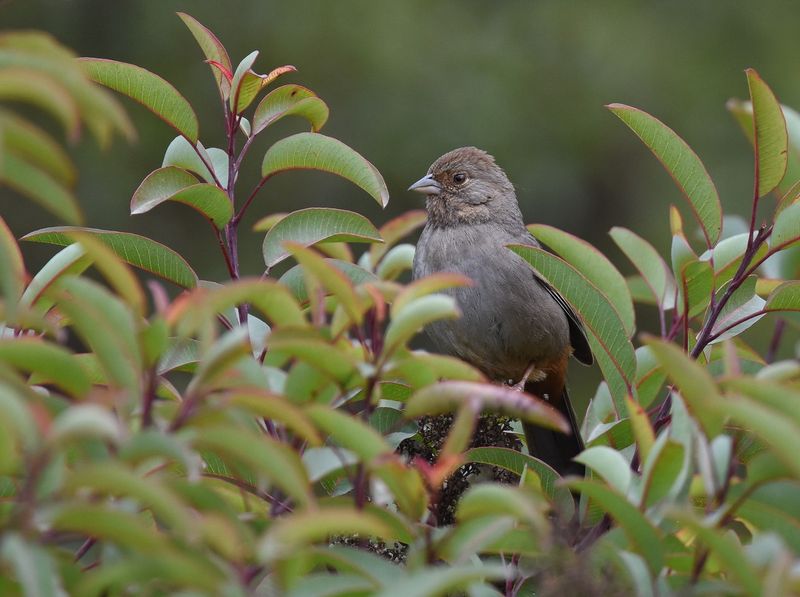
An open patch beside a shrub, a bit of leaf litter kept well away from the house, and careful habits with pesticides and pruning can make a yard friendlier to a California Towhee. That is the goal: habitat, not a guarantee of visits or dependable weed and pest control.
Some years the bird shows up, and some years it stays out of sight. Either way, you have built a more thoughtful yard.