
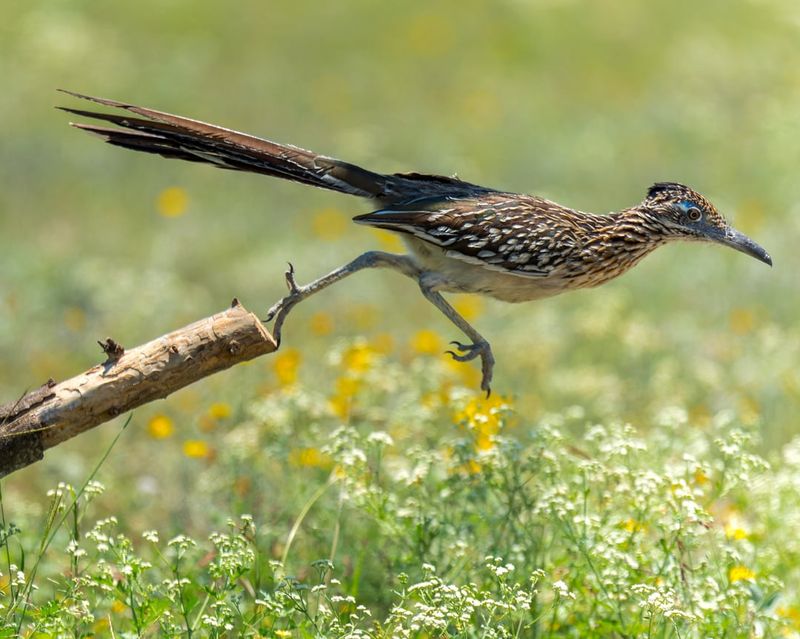
Many Texas homeowners notice one day that the roadrunner that used to dash across the lawn hasn’t shown up in a while. It is easy to wonder if a mowed, tidy yard is the reason.
The real answer is more reassuring, and a little more interesting. Here is what Texas habitat guidance says about lawns, cover, prey, and what to expect.
A short lawn is not the same as a habitat-poor yard
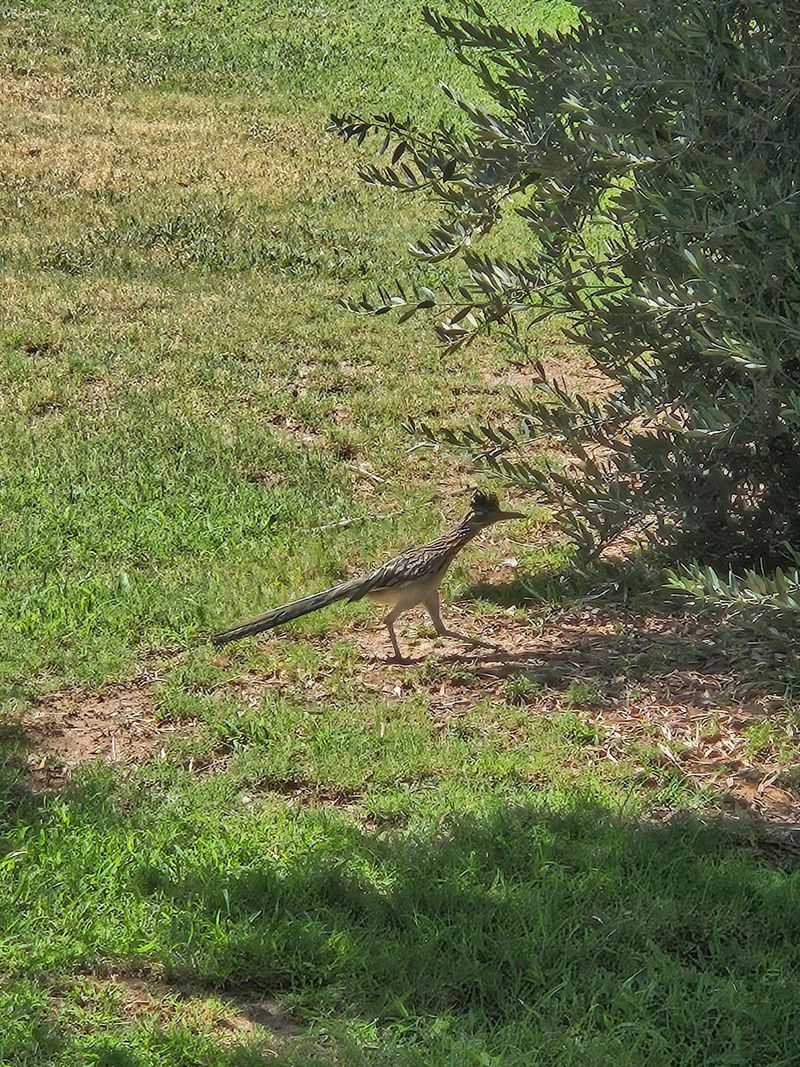
Good news first: a neat lawn does not automatically shut roadrunners out. The Texas Breeding Bird Atlas describes Greater Roadrunner habitat as open ground, which may be bare, sparse, or short lawn grass, paired with sturdy vegetation nearby for nesting or roosting.
That means mowing, edging, and keeping a clean lawn edge are not the problem on their own. A roadrunner hunting lizards, insects, and other small animals needs ground it can cross quickly and see across.
Short grass can fit that job well.
The picture changes when a yard is cleared of almost everything else. A property with lawn and little else, with no shrubs, small trees, or other sturdy cover, offers fewer places to nest or rest.
That is a different situation from a mowed lawn beside a hedge, a cluster of prickly pear, or a few mesquite or live oak trees.
So the useful question is not whether your yard looks tidy. It is whether the yard, or the blocks around it, still offers both open feeding space and cover close by.
If it does, you are likely doing fine. If your yard is mostly lawn with almost no vegetation, adding a few pockets of shrubs is a sensible habitat step for many kinds of wildlife, even though no one can promise it will change roadrunner visits.
Why might a roadrunner vanish from sight?
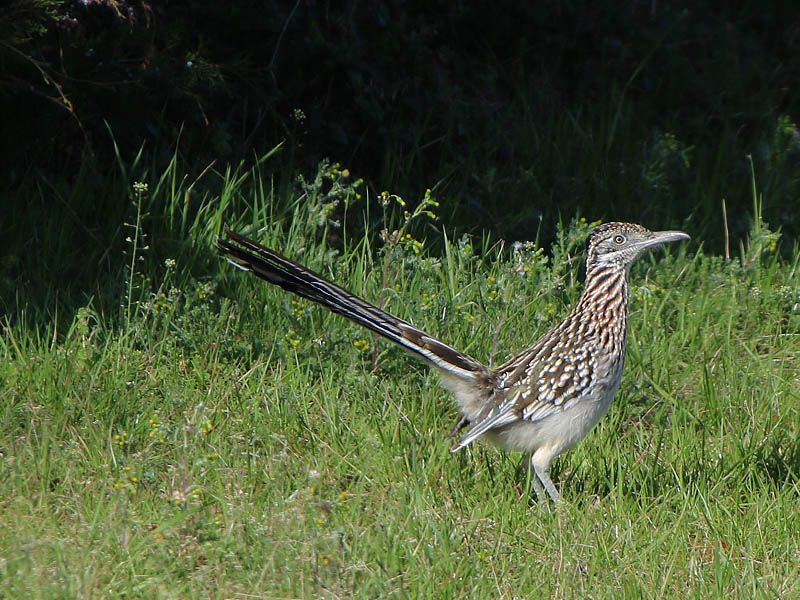
Picture how far one bird actually travels. In a north-central Texas telemetry study, researchers reported median home ranges of about 80 to 90 hectares.
That is hundreds of average yards, so a single property is only a small stop on a much larger route.
Because of that, a roadrunner may skip your block for a season and be using a field, a creek corridor, or a neighbor’s brushy corner instead. Its absence from your lawn does not point to anything you did.
Not seeing a bird is also weak evidence about the neighborhood’s bird numbers. Roadrunners are quick, wary, and easy to miss.
A neighborhood with fewer sightings may simply have fewer people looking at the right time of day.
Research from Arizona offers a helpful comparison, though it is not Texas data. An urban Tucson study found few sightings in the city center and more around the urban edge, and the authors cautioned that public sightings reflect where people look and report.
A practical next step: keep a simple notes page on your phone for a month and jot down any roadrunner sightings, tracks, or calls. That gives you a clearer picture than memory alone.
Clearing cover can remove more than visual clutter
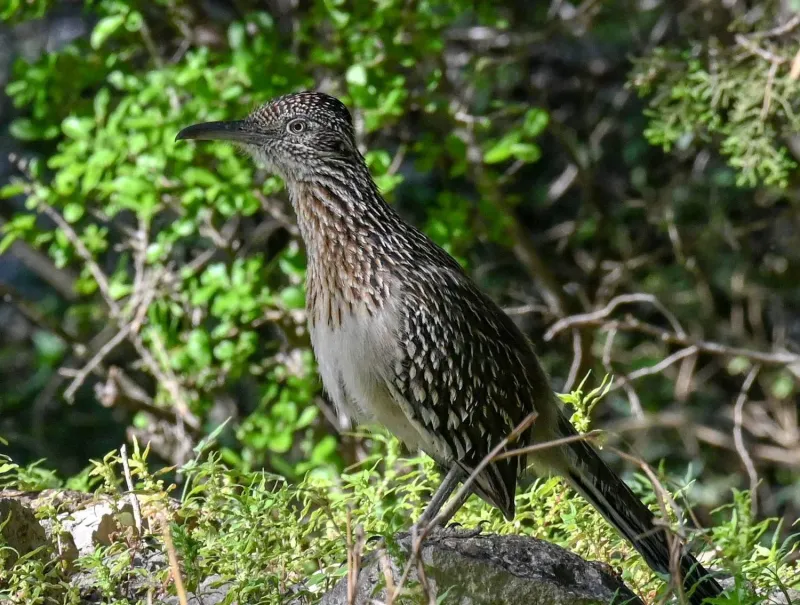
Some yard changes do matter. If nearly every shrub and small tree comes out, a roadrunner loses the sturdy vegetation that Texas habitat guidance links with nesting and roosting.
A lawn with no cover nearby may still be crossed, but it offers little to settle into.
Food is the other half. Roadrunners eat insects, spiders, lizards, small snakes, and other small animals, according to Cornell Lab life history notes.
A yard that has been heavily treated for insects, or stripped of the ground-level hiding spots small animals use, may hold less to eat.
None of this proves that landscaping caused a bird to leave your neighborhood. It simply shows how a yard could become less useful when cover and prey are both thin.
Habitat works as a combination. A bare yard that looks spotless is not automatically poor, and a messy yard is not automatically good.
Very dense brush and thick-understory woodland are described as places where roadrunners are rare, so more growth is not always better.
A quick check: walk your yard and note where there is a low shrub, a small tree, or a rocky or brushy corner. If you find none within a short distance of your lawn, that gap is the first thing worth thinking about.
A patchwork gives roadrunners room to hunt and shelter
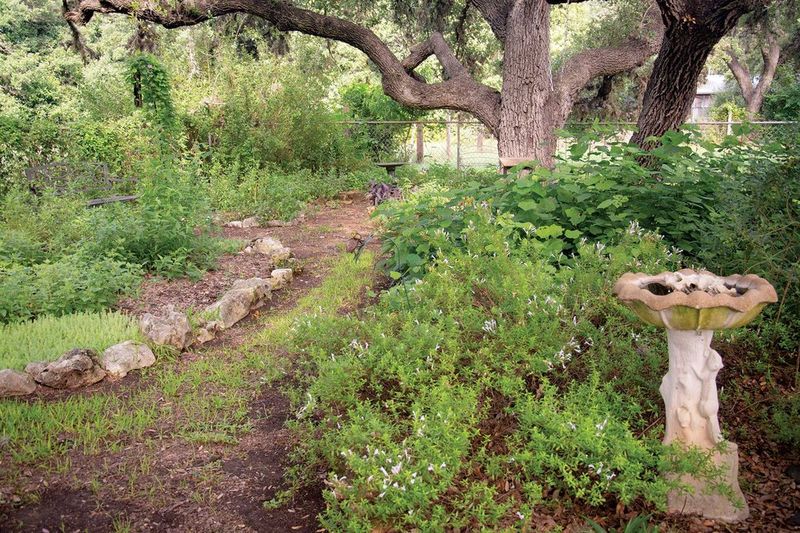
Think of your yard as a patchwork rather than an all-or-nothing choice. Keep some open ground or short vegetation where a bird can run and watch for prey, then add scattered shrubs, small trees, or other sturdy cover within reach.
That mix mirrors the habitat described by the Texas Breeding Bird Atlas.
You do not need to stop mowing or let the whole yard grow thick. Roadrunners are reported as rare in dense brush, so a uniformly overgrown lot is not the goal.
Neither is a uniformly cleared one.
Native plants are a sound way to build the cover side. Texas Parks and Wildlife Department habitat resources recommend native plants as food and shelter for wildlife in general.
Choose species suited to your part of Texas, whether that is Hill Country limestone, Blackland clay, or coastal sand.
Start small. Group a few shrubs at a fence corner or along a side border instead of scattering single plants through the lawn.
Leave a mowed strip between the cover and open areas so the bird can see across.
Keep expectations honest. These plantings help many kinds of wildlife, including insects and lizards.
They are habitat choices, not a guarantee that a roadrunner will visit.
Protect prey while keeping pest control responsible
You can keep pest control and still go easy on the insects and small animals that make up a roadrunner’s menu. The U.S.
EPA advises using pesticides only when needed, following label directions, and treating just the affected area. Pesticides can harm wildlife directly or through contaminated food and water.
That fits with what roadrunners eat. Cornell Lab lists insects and other animals in their diet, so fewer blanket treatments can leave more prey around.
In practice, that means spot-treating the chinch bug patch instead of spraying the whole lawn, and skipping calendar-based routine applications when there is no problem. Always read and follow the product label, and do not skip safety directions.
Texas Partners in Flight also encourages reducing pesticide use as a personal action for birds, which you can read about in this TPWD action list.
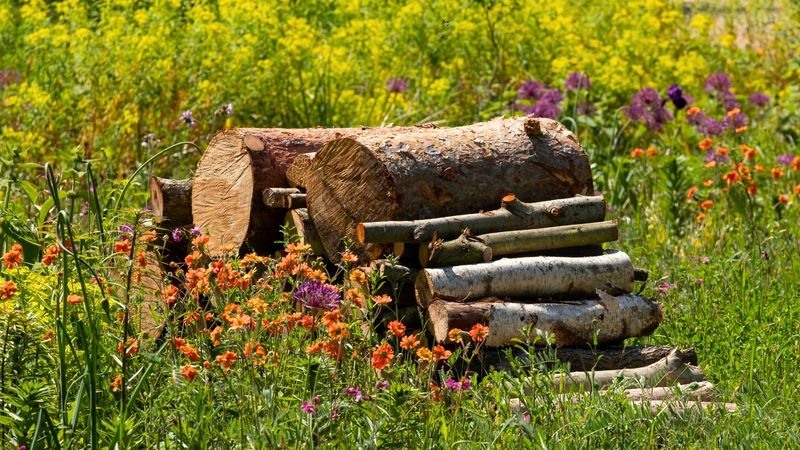
Cover for small wildlife can help too. TPWD habitat project guidance notes that brush piles provide shelter.
A modest brush pile or rock feature in a back corner is a general habitat option for lizards and other small creatures, not a proven roadrunner lure.
Better habitat cannot promise a roadrunner’s return
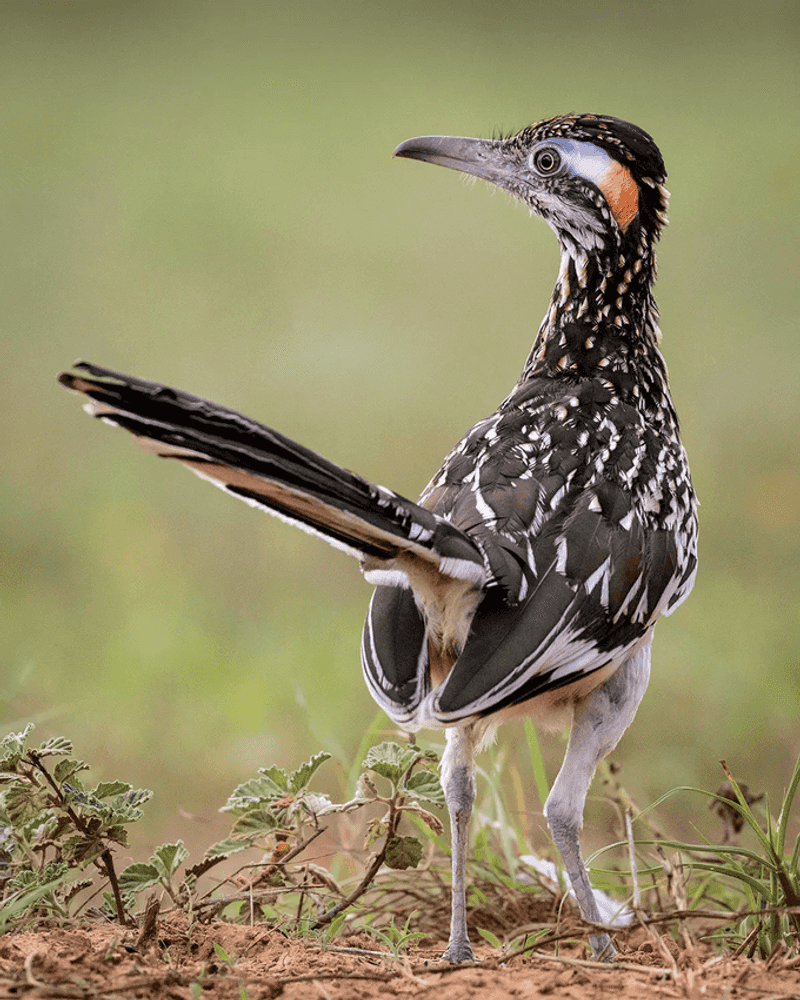
Good habitat work is worth doing even if the bird never appears. TPWD Wildscapes design tips recommend water as a general wildlife feature, but the sources reviewed do not show that a birdbath, feeder, or particular plant brings roadrunners back.
Roadrunners are also predators. Cornell Lab notes they may take small birds, eggs, or chicks, which can include birds near feeders or nest boxes.
A visit is not an unqualified win for every yard bird.
For roadrunner-specific ideas from the Southwest, Tucson Audubon’s yard guidance suggests varied ground structure and avoiding insecticides.
Treat any sighting as a bonus. A yard with open ground, sturdy cover, and plenty of insects is a good yard either way.