
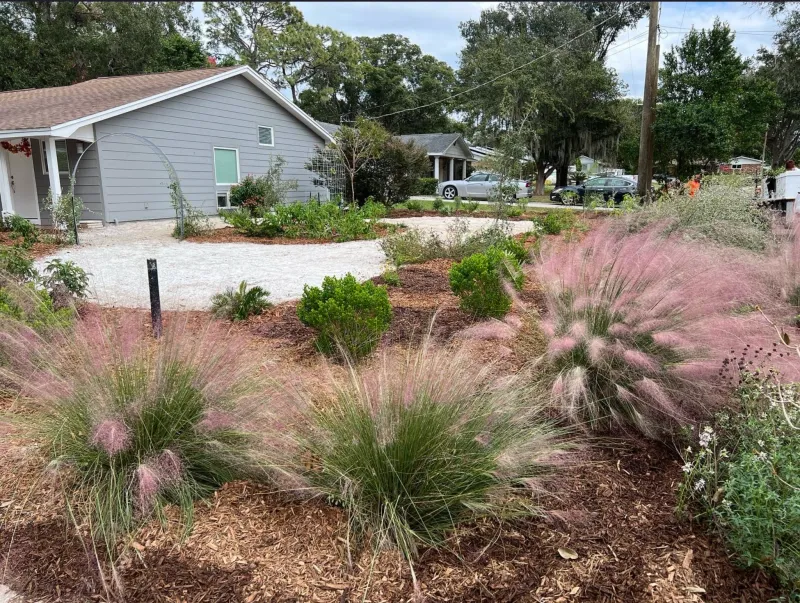
Pull up to a Florida neighborhood and you might see one lawn that looks like a golf course and another full of grasses, shrubs, and blooming wildflowers. Many homeowners wonder if their HOA will let them plant the second kind.
A popular claim says HOAs have given up the fight and money is the reason. The truth is more useful, because it shows what Florida law actually protects and how to plan a yard that holds up.
What the available evidence can—and cannot—say about HOA practices
The title makes a big claim, but the sources we reviewed do not establish whether Florida HOAs broadly changed their practices in 2026. They also do not show that money caused a statewide shift.
That does not prove nothing changed. It just means the evidence is not there to say either way.
Here is what the sources do show. Florida law already protects Florida-friendly landscaping from HOA rules that ban it.
The current version of that rule is Florida Statutes section 720.3075(4)(b). The 2026 in the statute’s web address is just the year of the published edition, so it is no sign that the protection started then.
The protection has been around for years, and UF/IFAS explains it in a Q&A on the 2009 Florida-friendly landscaping legislation. So a better question than “why did HOAs back down?” is this: what does the law cover, and how do you plan a yard that fits it?
The next sections answer that. You will see how the law defines the protected category, how to choose plants, what to send your HOA, and what a recent court case teaches about risk.
The law protects Florida-friendly landscaping, not every native yard
Section 720.3075(4)(b) says HOA documents may not prohibit, or be enforced to prohibit, an owner from implementing Florida-friendly landscaping on their property. You can read the wording in the 2026 statute.
The same section also says HOA requirements cannot conflict with specified water-resource laws, orders, permits, or rules.
Notice the exact phrase: Florida-friendly landscaping. It is not “native plants,” and it is not “a natural-looking yard.” The category is defined by qualities and practices in Florida Statutes section 373.185.
Those include conserving water, protecting the environment, fitting local conditions, and being drought tolerant.
That means a native label alone does not settle anything. A yard packed with natives that need constant watering in the wrong spot may not fit the definition.
A wild, unplanned look does not prove it meets the program’s principles either.
Think of the law as protecting a set of smart practices, not a particular plant list or design style. If your plan shows how the yard saves water, suits the site, and protects the environment, you are speaking the statute’s language.
That is a stronger starting point than saying “but they are all natives.”
A Florida-friendly yard can include suitable non-native plants
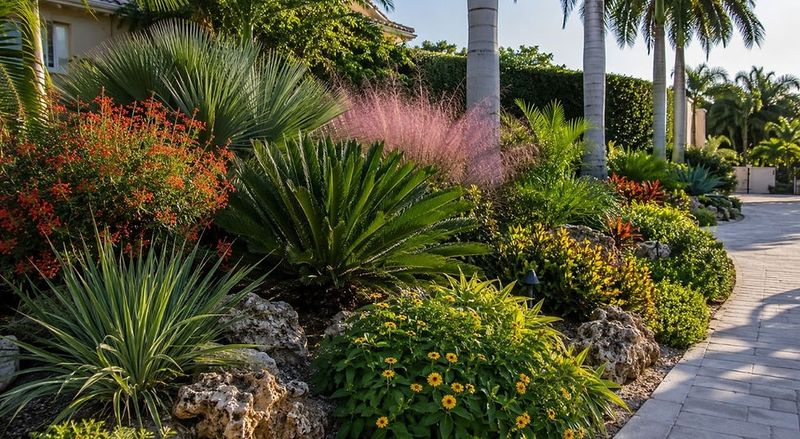
Native plants get most of the attention, but the program is wider than that. UF/IFAS explains in its guidance on non-native Florida-friendly plants that natives are encouraged, but suitable, non-invasive non-natives can also belong.
It also makes clear that a Florida native is not automatically right for every yard.
Picture a moisture-loving native planted in dry, sandy soil on a hot, sunny lot. It will struggle and need extra water, which defeats the point.
Meanwhile, a well-behaved non-native that likes those conditions might do better with less help.
So choose with a simple lens. Check how much sun the spot gets, what the soil is like, and how wet or dry it stays after storms.
Then match plants to those conditions, the classic right plant, right place idea.
The UF/IFAS Florida-Friendly Landscaping plant guide is a good place to start your list. Skip any species identified as invasive in Florida, even if a nursery sells it.
The words native and Florida-friendly are not interchangeable labels, so treat each plant on its own merits.
What should you submit before changing a visible yard?
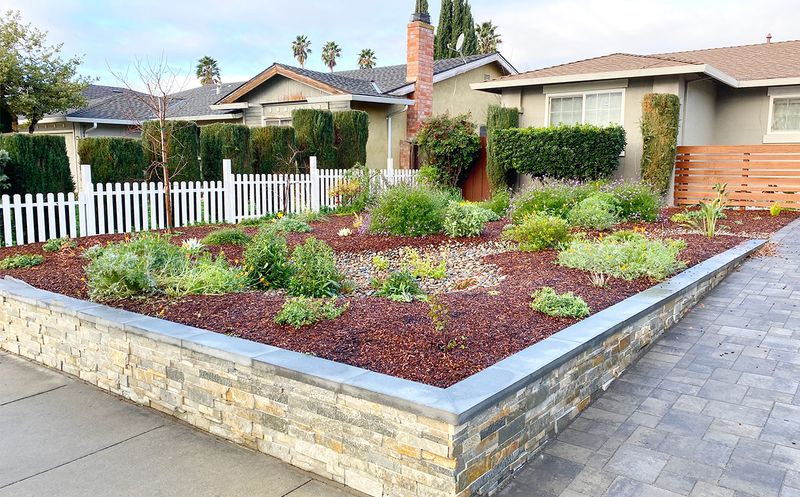
Start with your paperwork. Read the declaration and any landscape rules, then look for the review procedure, including who approves changes and what a request must include.
Doing this before you dig can save you a long argument later.
Next, prepare a clear plan. Show the plants you chose, where each one goes, and how the design fits your site’s soil, light, and moisture.
Photos of the current yard and a simple sketch help reviewers see what you mean.
UF/IFAS guidance in its Q&A on Florida-friendly landscaping legislation says review boards may specify options when the governing documents allow it, as long as the choices suit site conditions and reflect right plant, right place. That is different from a blanket right to reject Florida-friendly landscaping, which the statute prohibits.
The statute does not automatically erase review steps or appearance standards. How it applies to your covenants is a legal question.
UF/IFAS can offer education, but it does not resolve HOA legal disputes. If you are already in a dispute, talk with a qualified Florida attorney about your specific facts.
Water savings are a possible benefit, not proof of HOA motives
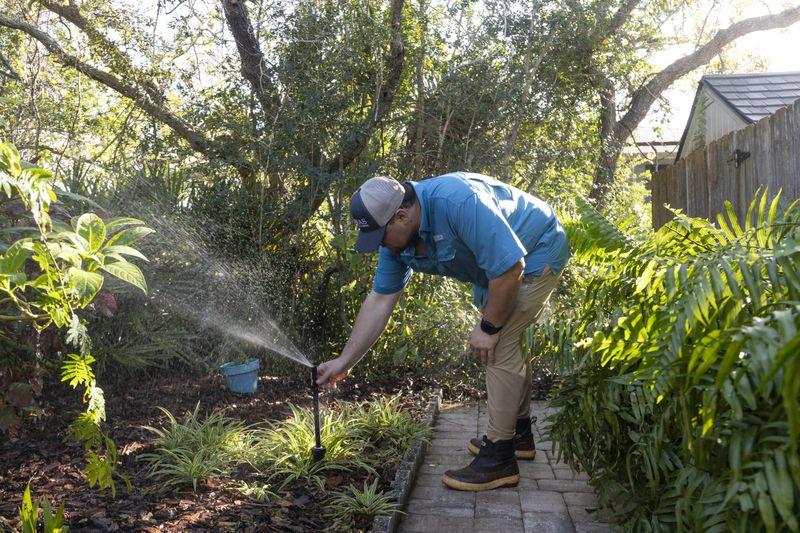
Money does enter the picture for homeowners, mainly through irrigation. UF/IFAS estimates potential water savings for particular Florida-friendly practices, compared with stated baseline irrigation assumptions.
The numbers depend on which practice you use and what you are comparing it to.
Those estimates are not necessarily additive. Doing three practices does not mean you can stack three savings figures together.
Results also vary from yard to yard.
Keep the cost picture honest. Water savings are only one piece.
Installing new plants, fixing soil, adding irrigation changes, and ongoing upkeep all cost money too, and a native yard is not maintenance-free.
Finally, keep this separate from HOA behavior. Possible savings for you say nothing about why any board makes a decision, and the sources do not show that money drove a statewide change.
Treat water savings as a modest, possible benefit of good practices, not a promise.
A recent court case shows why blanket assurances are risky

A 2025 appellate case shows how messy these disputes can get. In Mooney v.
Color Le Palais of Boynton Beach Homeowners Association, the homeowners had covered most of their front lawn with mulch and planted more than 135 plants. The HOA sought to enforce its restrictive covenants.
The appeal asked a narrow question: whether the HOA had to prove irreparable harm and lack of an adequate legal remedy to get an injunction enforcing covenants. The homeowners complied during the litigation.
The trial court then awarded the HOA $40,029.33 in fees and costs.
Here is the key limit. The appellate opinion did not decide whether the yard qualified as Florida-friendly landscaping under section 720.3075.
So the case is not proof that native yards are unlawful, and it is not proof of any HOA trend.
The HOA alleged that wind-blown mulch reached neighboring areas and blocked storm drains. Those are the HOA’s allegations, not general findings about native yards.
Still, they are a practical reminder to design for runoff, erosion, and storms, and to avoid a bare or loosely contained mulch conversion. Get case-specific legal advice before you assume the statute settles your situation.
Start with the rules, the site, and a documented plan

Before you plant, read your community’s rules and review steps. Pick plants that fit your property’s sun, soil, and moisture, using UF/IFAS plant guidance as your filter.
Then put it all into a clear plan and send it in.
Remember that native status alone does not settle whether a yard is Florida-friendly, and the law does not answer every review question. Neither the sources nor this article prove a statewide HOA retreat or a money-driven reason for one.
A yard that is well matched to its site and well documented gives everyone less to argue about.