
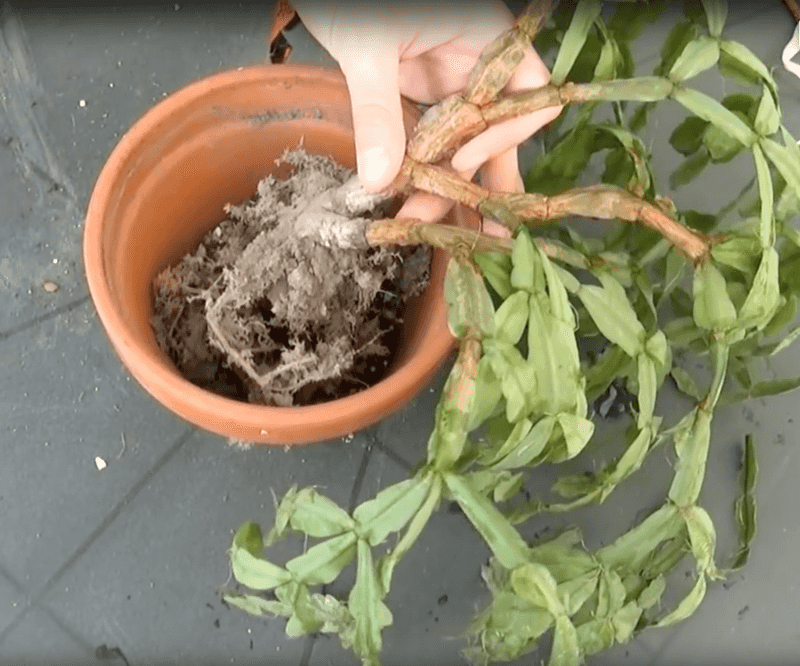
A Christmas cactus that suddenly looks floppy can make you worry about the buds you were hoping to see this year. Limp stems are a signal that the plant is stressed, but they do not tell you why.
The good news is that a few simple checks can point you in the right direction. Start with the potting mix, and let what you find guide your next move.
What does a limp segment actually tell you?
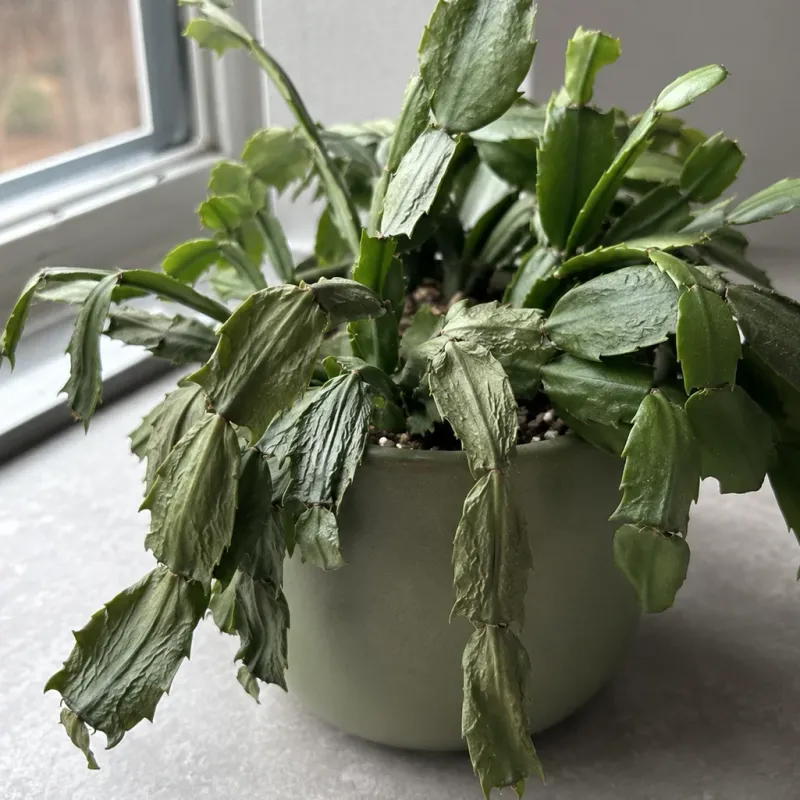
Soft, drooping segments tell you the plant is under stress, and that is all they tell you. UC Agriculture and Natural Resources guidance notes that limp growth can come from watering problems on either end, so a dry pot and a soggy pot can look surprisingly alike from a few feet away.
That means the droop alone cannot say whether the plant is thirsty, waterlogged, or dealing with something in the roots. Guessing and then adding water or holding it back can make a stressed plant worse.
A wilted plant sitting in wet soil is the pattern that makes root trouble a stronger possibility, as University of Minnesota Extension points out.
So before you water, move the pot, or reach for a trowel, put a finger into the mix. What you feel there sorts the problem into one of two paths, and the next two sections walk through each one.
Root checks come later, and only if the clues call for them.
When the mix is dry, water thoroughly and let it drain
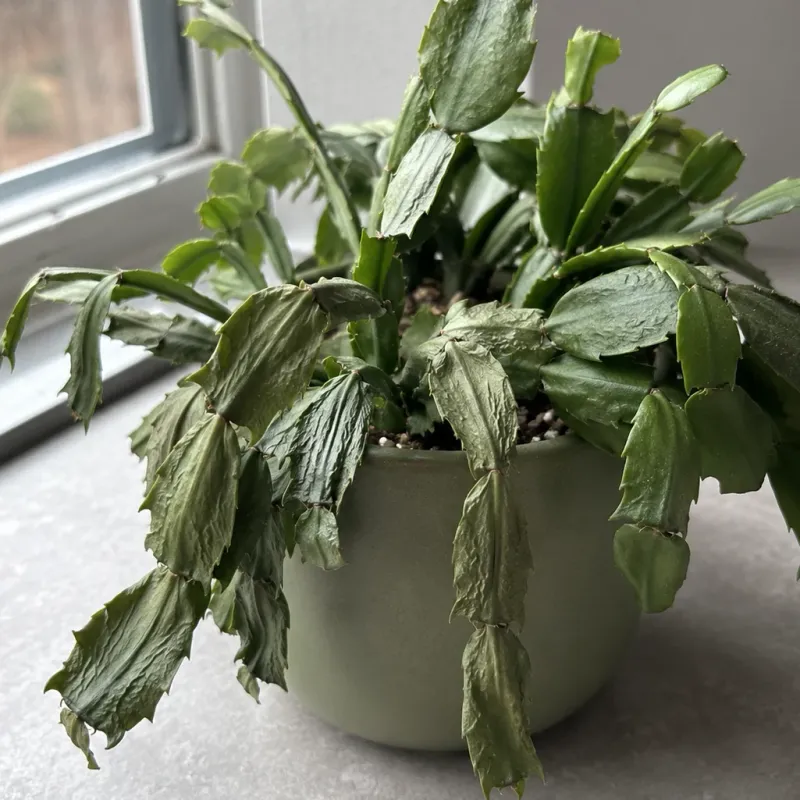
Push a finger about an inch below the surface of the mix. UF/IFAS guidance suggests watering once it has dried to about that depth, aiming for mix that is moist rather than wet.
If it is dry, give the pot a thorough drink until water runs out of the drainage holes, then let the excess drain away completely. Small, frequent sips tend to wet only the top layer and leave the lower mix dry.
Holiday cacti are not desert cacti, so they appreciate more moisture than many people expect, but they should never stand in water.
Skip the fixed schedule, such as watering every two weeks. As University of New Hampshire Extension explains, how fast the mix dries depends on the pot, the mix, the light, and the temperature in your home.
Checking the mix each time is more reliable than any calendar.
Once watered, give the plant time. Segments may firm up within a day or two if thirst was the cause, though that is not guaranteed.
Wet soil changes the next step
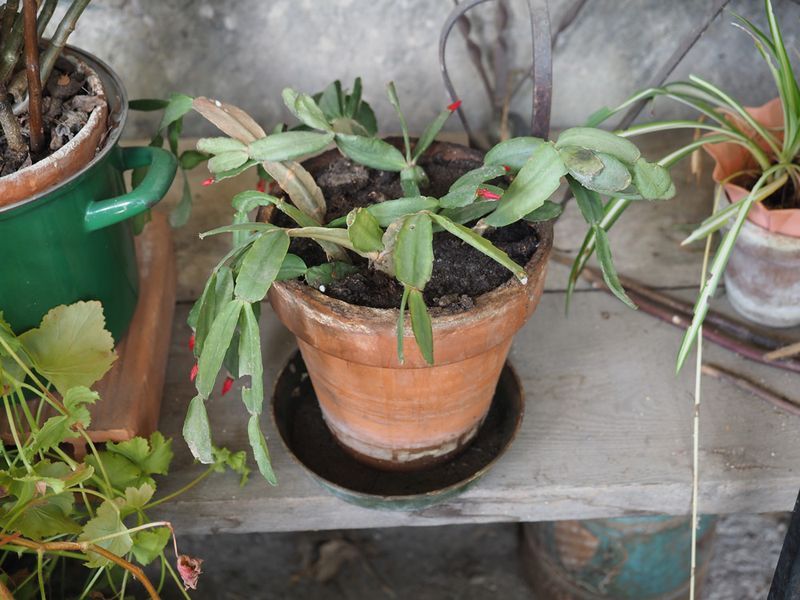
Feeling damp mix beneath a droopy plant means the watering can stays on the shelf. Adding more water to mix that is already wet only keeps the roots without air, so let it dry down on its own while you watch the plant.
Next, check that the pot drains freely. Look for open drainage holes, tip the pot gently to see whether water escapes, and empty any water sitting in the saucer or decorative outer pot.
The UF/IFAS advice on preparing a Christmas cactus calls for emptying that excess so the roots are not sitting in it.
A plant that wilts in wet soil deserves attention. University of Minnesota Extension flags this as a possible sign of root rot.
A possible sign is not proof, though, since the mix may simply be slow to dry. Give it some days, keep checking the mix, and note whether the segments improve or keep sinking.
When is a root check warranted?
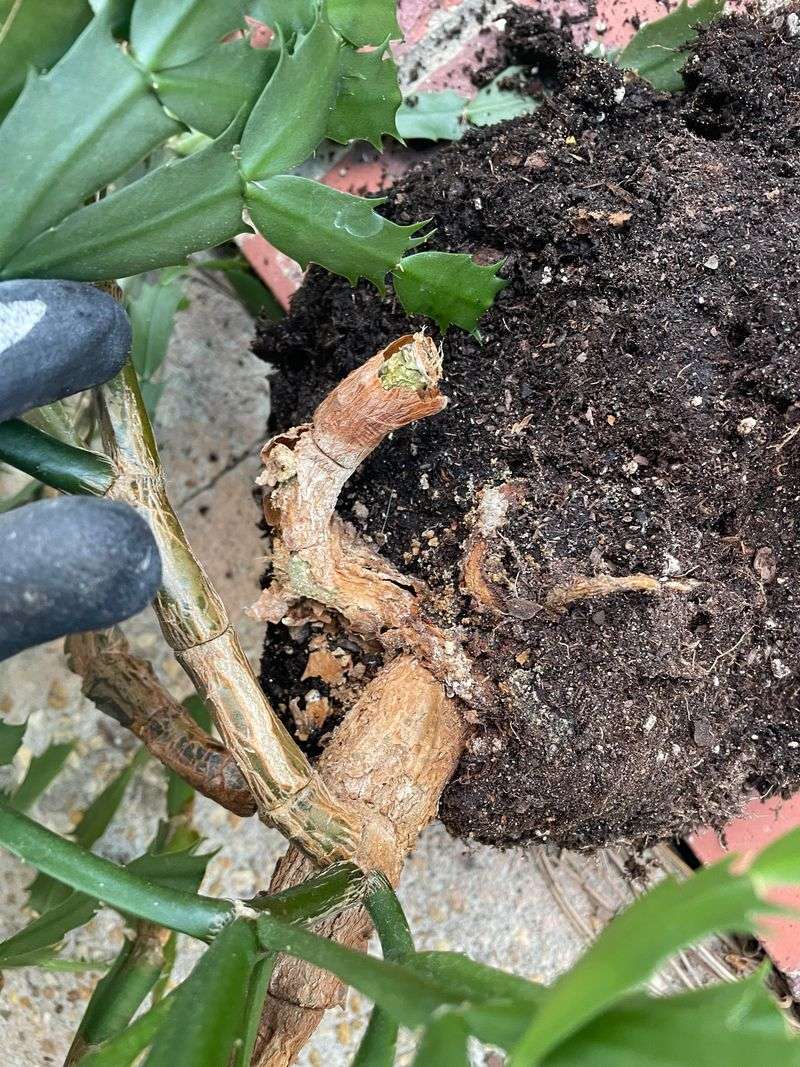
A root check makes sense when the clues stack up: the mix stays wet for a long time, the pot drains poorly, or the plant keeps declining even after you have corrected the watering. In those cases, looking at the roots can help separate simple moisture stress from real damage.
Wet, poorly drained mix can favor stem and root rots, and the Pacific Northwest Plant Disease Management Handbook lists several different pathogens behind them. That is one reason a limp stem alone cannot name the culprit.
Treat the inspection as a look, not an automatic repotting. Iowa State University Extension notes that holiday cacti can do well a little pot-bound, so repotting is not the first response to every wilt.
Healthy roots are generally firm, while damaged ones may look dark or feel mushy. What you find helps you decide what to do next, and the plant may or may not recover depending on how much damage there is.
October conditions can support bud formation
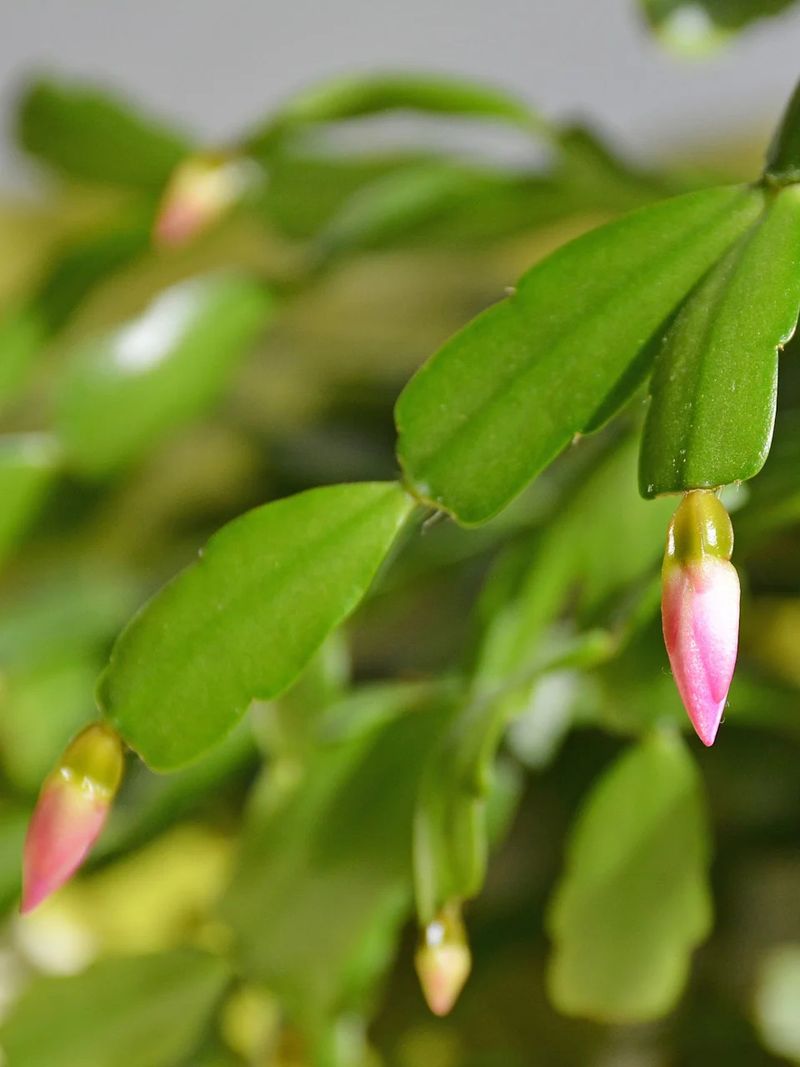
Buds depend on more than a healthy root system. University of Minnesota Extension describes holiday cacti as responding to shorter days and cooler nights, and a cool, bright spot with uninterrupted darkness overnight can support bud formation at home.
Exact numbers vary. The Cornell Cooperative Extension sheet describes bud setting under particular night temperatures and darkness, but cultivars and homes differ, so treat any schedule as a rough guide rather than a promise.
Keep limp segments separate from bud drop in your mind. A floppy stem is one symptom, and falling buds are another.
Buds can drop from watering problems, drafts, or sudden changes in temperature or humidity. Once buds appear, try not to move the plant around, and keep it away from heating vents and cold window gaps.
Let the plant’s condition guide the next step
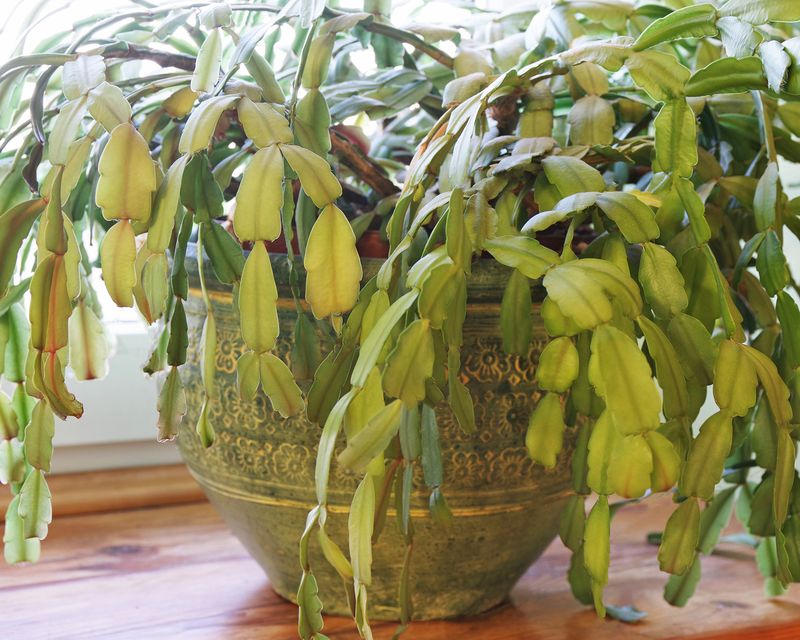
Check the mix first, water thoroughly if it is dry, and hold off if it is wet while you confirm good drainage. If the plant keeps declining in persistently wet mix, a root check is the next step.
As UC guidance shows, the droop itself never names the cause.
Steady light and temperature give buds a fair chance, though no routine guarantees blooms. A calm, observant gardener usually spots trouble sooner than a busy one.