
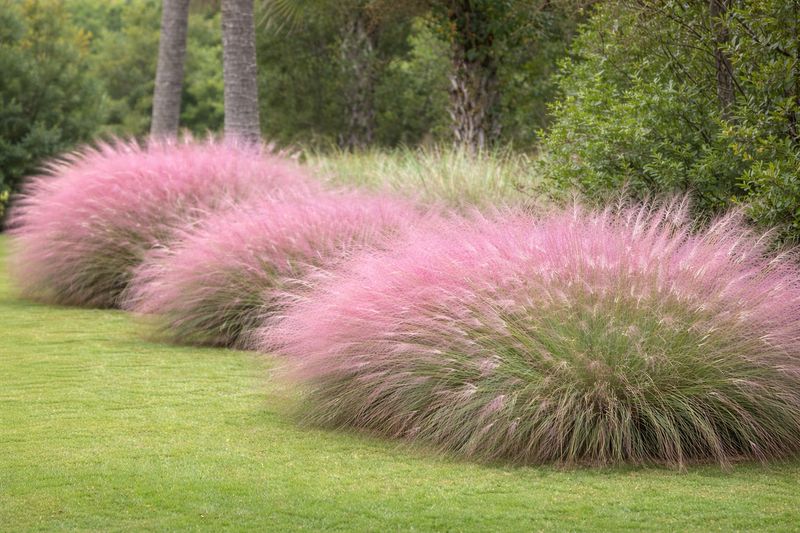
Muhly grass looks like a tidy green clump for much of the year. Then fall arrives, and some plants send up airy plumes that glow pink to purple in the sun.
This Florida native is easy to grow and rewards a little planning. Here is how to site it, care for it, and enjoy the show when it comes.
Why does a green clump produce a fall color show?
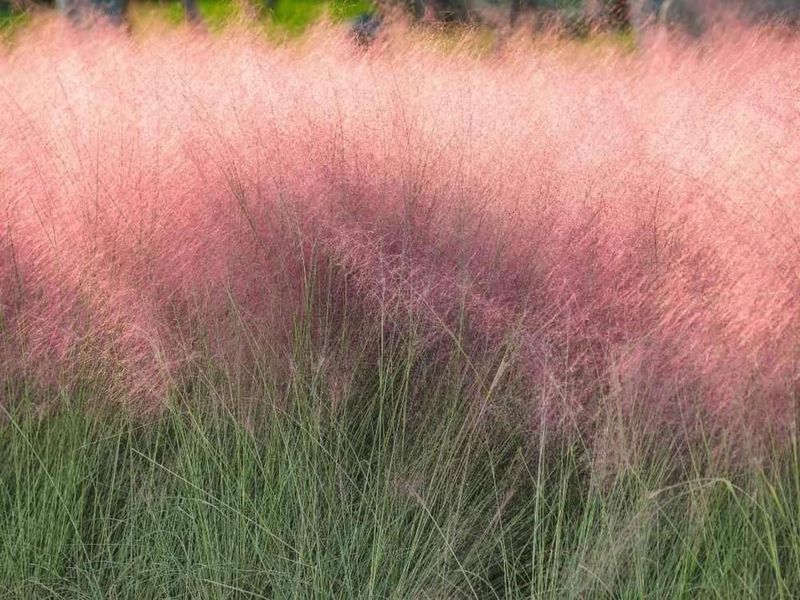
Picture a fine-textured green clump that sits quietly in the landscape for much of the year. Then the flower stalks rise, and the whole plant looks wrapped in a pink mist.
That mist is the bloom, not the leaves.
The foliage does not suddenly change color. UF/IFAS describes Muhlenbergia capillaris as a Florida native with green leaves and pink fall flowers.
The thousands of tiny flower plumes sit above the clump and create the cloud effect. When the plumes fade, the green clump stays on as part of the landscape.
October is a believable time to catch the display, but it is not a promise for every yard. A Panhandle Extension account points to late September and early October.
A North Central Florida guide gives a much wider window of August through November.
So your neighbor’s plants may bloom a bit earlier or later than yours. Weather, region, and the individual plant all play a part.
If your clump is still green in mid-October, check back in a few weeks before you worry.
Pink is also a handy nickname rather than a fixed color. UF/IFAS notes blooms can range from pink to purple, and a white-flowering form is available too.
A Florida native with a clumping habit
Gardeners will find this plant listed as Muhlenbergia capillaris. Knowing the scientific name helps when you shop, since several ornamental grasses get sold with similar-sounding common names.
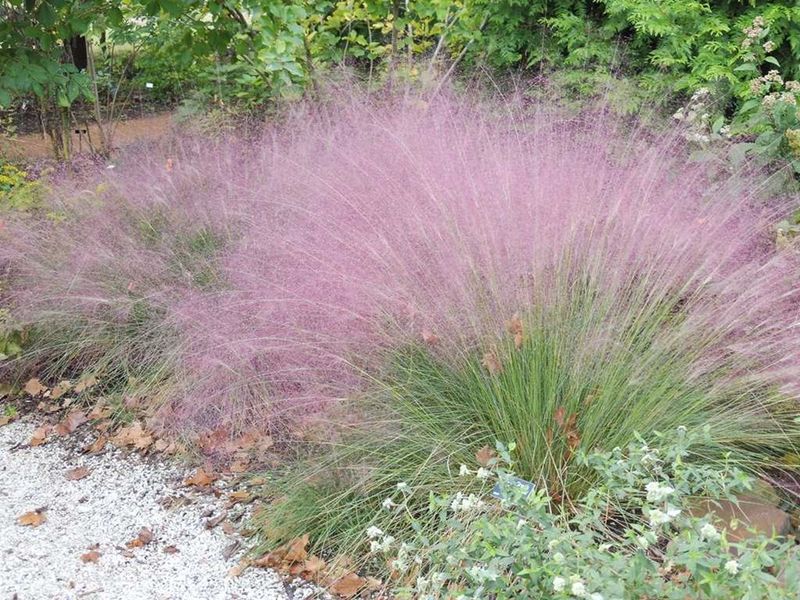
It is native to Florida and grows as a clump, not a spreading mat. The blades are thin and arch gently, so the plant forms a soft mound.
That tidy shape makes it easy to place in a border or a mass planting.
The UF/IFAS fact sheet describes a typical plant as about 3 to 4 feet tall and wide. The UF/IFAS plant profile gives a broader range, with heights of 3 to 5 feet and a spread of 2 to 3 feet.
Those numbers are a guide, not a guarantee. Soil, sunlight, and the particular cultivar can all change how big a clump gets.
When you plan a bed, picture a plant on the larger end of the range.
Once you can recognize the plant and its likely size, the next step is choosing where it will live.
Choose full sun for the display
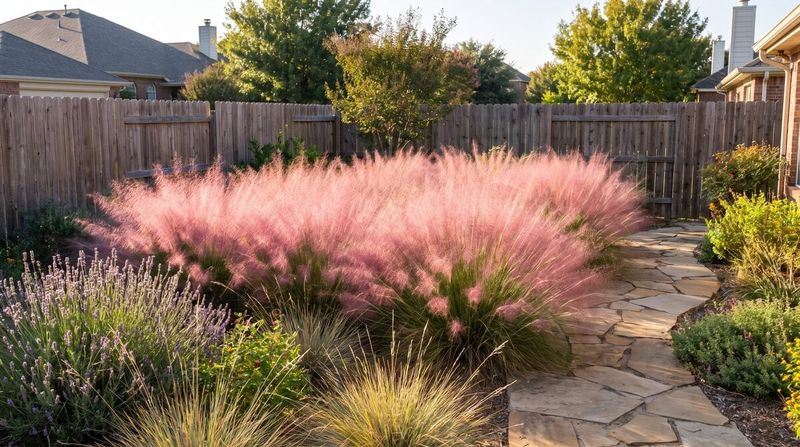
Sunlight is the first thing to get right. UF/IFAS recommends full sun for muhly grass, and that is the choice that gives flowering the best chance.
Walk your yard on a clear day and watch where the shade falls. A spot that stays bright from mid-morning through the afternoon is a strong candidate.
Open beds along driveways, mailboxes, and fence lines often fit.
Be careful with sites that look sunny now but change later. A young oak or a new fence can shade a bed within a few years.
Corners near taller shrubs can also lose light as those plants fill in.
Shade does not usually kill muhly grass, but a plant that gets less light may bloom less. No one can tell you how many plumes a clump will produce or how deep the color will be.
Sun simply puts the plant in its best position to perform.
The UF/IFAS fact sheet lists the plant for sunny landscapes, which fits its role as a low-fuss native. Pick the brightest open spot you have, and save the shady corners for plants that prefer them.
Space plants for the look you want
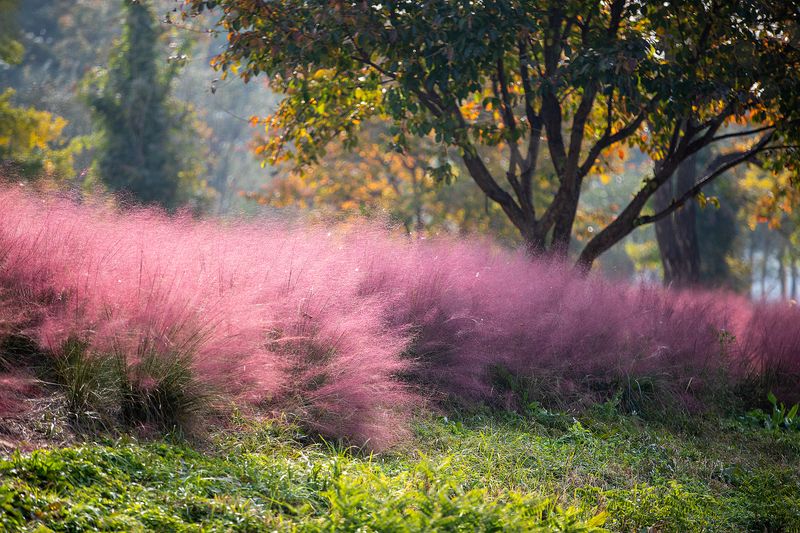
A single clump makes a pretty accent. A group of them makes a landscape moment.
Planted in drifts, the plumes merge into one broad pink haze that neighbors can see from the street.
For that fuller look, UF/IFAS lists spacing of 24 to 36 inches. At that distance, mature clumps will touch and blend together.
Wider spacing is another option. Sarasota County Extension suggests centers of at least four feet.
That gives each plant breathing room, so you see its full rounded shape.
Neither number is a rule. Think about which look you want.
Tight spacing gives a quicker, denser sweep of color, while wide spacing shows off each clump and leaves space for companion plants.
Also think about the mature size from the plant profile. A grass that reaches four feet wide will crowd a narrow strip beside a walkway.
Measure the bed, then work backward to decide how many plants fit comfortably.
Small plants look sparse on day one. Resist the urge to squeeze them in tighter than the bed can handle later.
Water regularly while plants establish
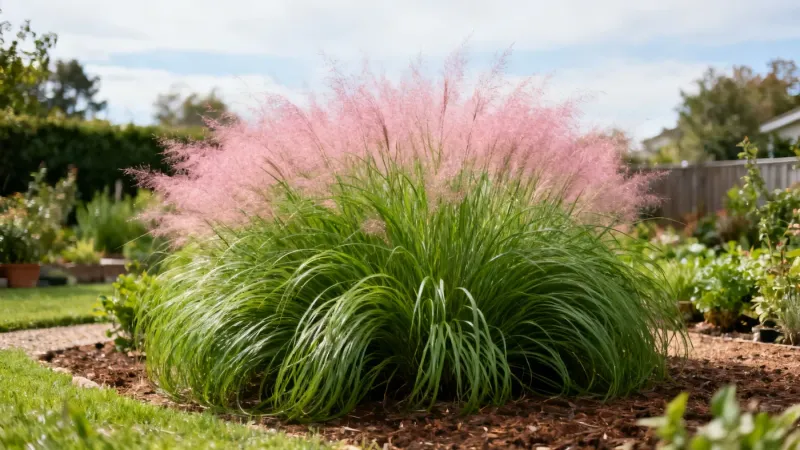
New plants need a steady hand. UF/IFAS advises regular watering until the roots settle into the surrounding soil.
Check the root zone often during the first weeks, especially in sandy ground that dries fast.
There is no magic schedule here, because rain, season, and soil all change the need. Water when the soil around the young plant is drying out, and ease off as new growth shows it has taken hold.
Once established, muhly grass is drought tolerant and usually needs little extra irrigation. UF/IFAS ornamental grass guidance notes that a long, extremely dry stretch may still call for a drink.
Wilting or rolled, dull blades are a clue to water.
The plant is adaptable about soil. A Pasco County Extension article describes it growing in a range of soils, including Florida sand, and tolerating both drought and flooding.
Flood tolerance does not mean it wants standing water. Well-drained soil is also a suitable planting condition, so you do not need to create a soggy spot.
A normal, free-draining bed works well.
Prune in late winter, not in fall
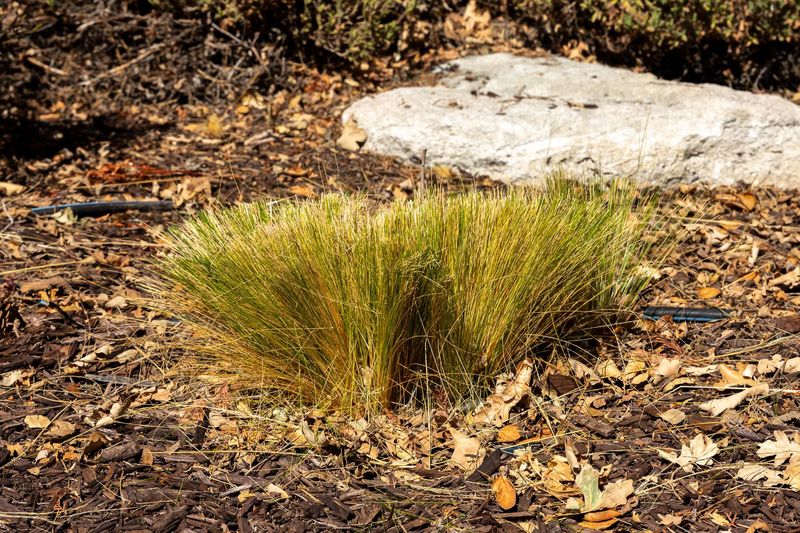
When the plumes fade, the urge to tidy up can be strong. Hold off on a hard cut.
UF/IFAS guidance on ornamental grasses warns against severe fall pruning of evergreen grasses such as muhly, because removing all the green foliage can reduce vigor.
The better window is late winter or early spring, before new shoots appear. Florida is a long state, so timing shifts.
UF/IFAS gives February through March for North and Central Florida and January through February for South Florida.
When the time comes, cut the clump back so fresh growth can emerge clean. Look at the base first.
If you see new green shoots starting, you are late, and you should trim higher to avoid cutting them.
Feeding is the other chore people overdo. UF/IFAS says extra nutrients beyond basic soil recommendations are generally unnecessary for healthy growth or flowering.
Too much fertilizer can produce weak, floppy foliage and flower stems. If your clump is flopping over, ask whether it has been fed heavily before adding anything more.
Skip the fertilizer bag as a shortcut to color. Good light and patience work better.
Plan for the plant, not a fixed bloom date
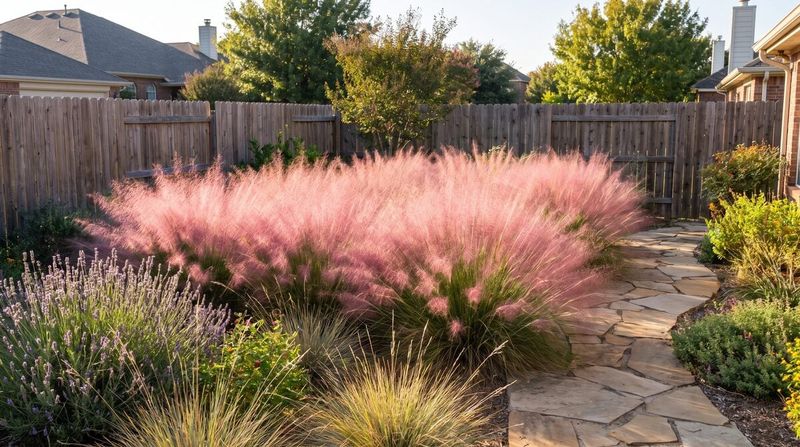
Start with a sunny spot, leave room for the clump to mature, and water through establishment. Then wait for the late-winter or early-spring pruning window.
Fall is the bloom season, but local timing varies, so do not expect every plant to peak in October.
The pink cloud arrives on the plant’s schedule, and it is worth the wait.