
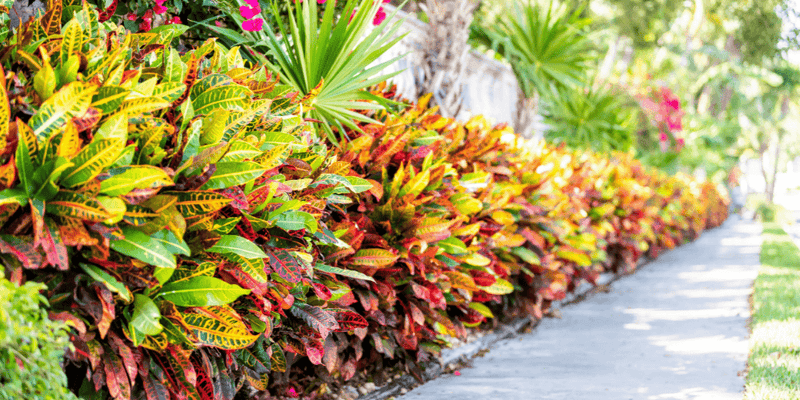
A few well-placed plants can make a plain Florida yard look like the entrance to a beautiful resort. Bold leaves, graceful palms, and rich colors add polish without a full landscape makeover.
The trick is choosing plants that fit your light, space, and local winter weather. These 11 picks offer different ways to create that upscale look, from a striking front-door planter to a layered garden bed.
1. Christmas Palm
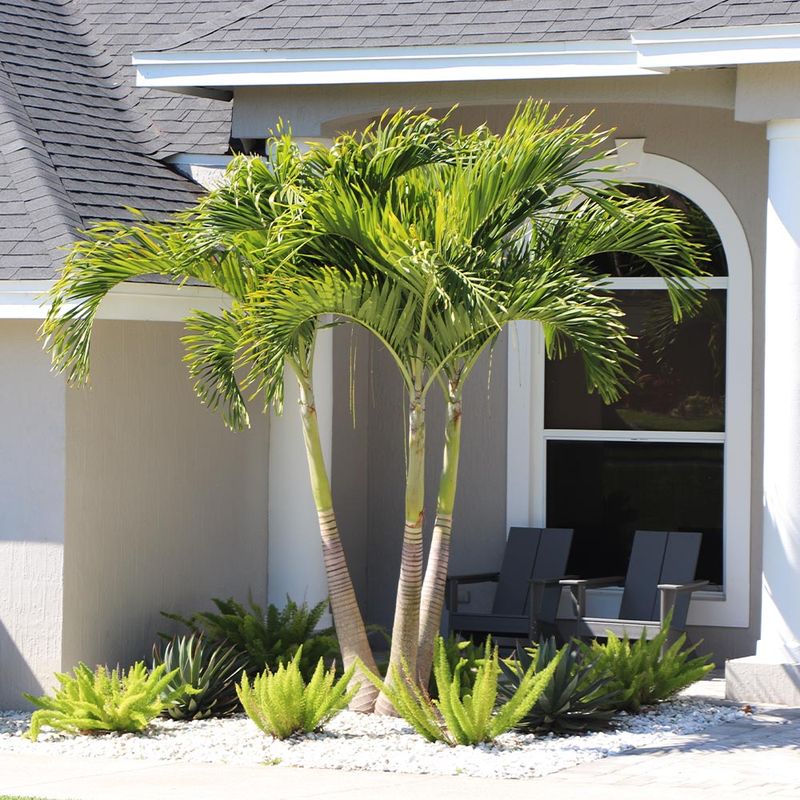
A tidy palm beside a pale stucco house can make the whole entrance feel more polished. Christmas palm, Adonidia merrillii, delivers that resort-style shape without the massive trunk and broad spread of some larger palms.
Its smooth trunk and neat crown work especially well near a courtyard or along a wide front walk. Mature plants often reach roughly 15 to 25 feet, so allow room above and around them rather than squeezing one under an eave.
Keep this choice mainly for frost-free South Florida locations. In colder parts of the state, a container specimen needs a realistic plan for winter protection, and it can eventually become too large to move easily.
Provide sun, well-drained soil, and regular water while roots establish. Established palms still need attention during dry spells, and any fertilizer should follow local rules and UF/IFAS palm nutrition guidance.
Use one as a focal point instead of crowding several into a small bed. Christmas palms are susceptible to lethal yellowing, so ask your county Extension office about local disease concerns before buying.
2. Orange Bird of Paradise
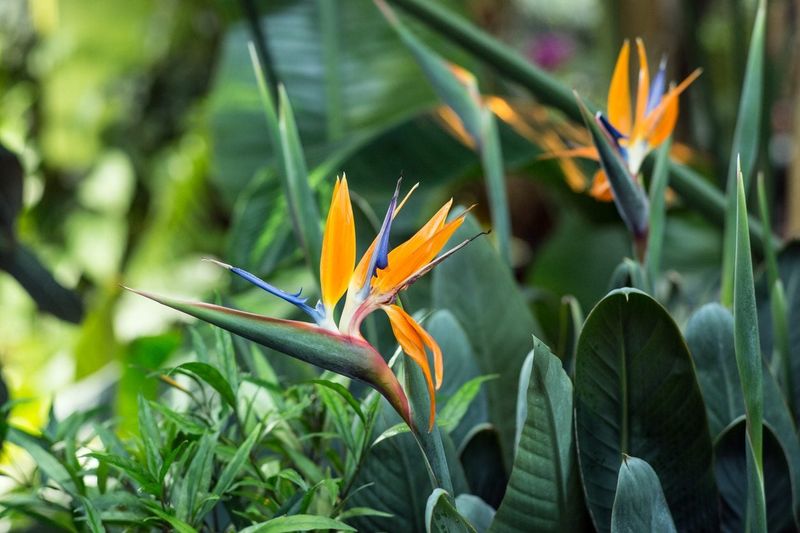
One bright orange bloom can give a patio the feel of a boutique hotel. Orange bird of paradise, Strelitzia reginae, pairs sculptural flowers with upright, paddle-shaped leaves that stay attractive between bloom cycles.
Choose this species rather than the much larger white bird of paradise when space is limited. A mature clump commonly grows about 4 to 6 feet tall, making it useful beside a low wall or at the corner of a sunny seating area.
Full sun generally encourages stronger flowering, though some afternoon shade can help in especially hot settings. Plant in well-drained soil and water deeply during establishment, allowing the surface to dry somewhat between waterings.
Central and South Florida gardeners can use it in suitable protected locations, but freezes may damage leaves and flowers. North Florida gardeners are better served by a movable container with a bright winter shelter.
Skip frequent shearing, which ruins the clean outline. Remove spent flower stalks and damaged leaves near the base, then let the clump supply its own bold shape.
3. Croton
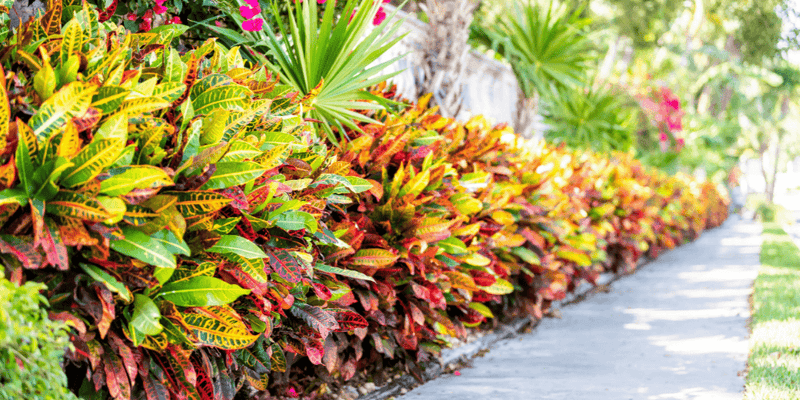
Forget waiting for flowers to carry the color. Croton, Codiaeum variegatum, turns ordinary foliage into a mix of gold, copper, red, and green that can brighten an entrance all year in warm locations.
The design trick is restraint. Choose one variety, such as the broad-leaved Petra, and repeat it in two matching pots or a small group rather than mixing every leaf pattern at the nursery.
South Florida offers the most dependable outdoor conditions. In Central Florida, use a warm, sheltered spot and expect cold damage during freezes; farther north, treat croton as a container plant that moves indoors before chilly weather.
Give it bright light, with exposure adjusted to the cultivar and its nursery conditions. A plant raised under shade cloth can scorch if moved straight into strong afternoon sun, so increase sun exposure gradually.
Keep the soil well drained and evenly moist, not constantly wet. Wear gloves when pruning because the sap can irritate skin, and place plants away from pets or children likely to chew leaves.
4. Lady Palm
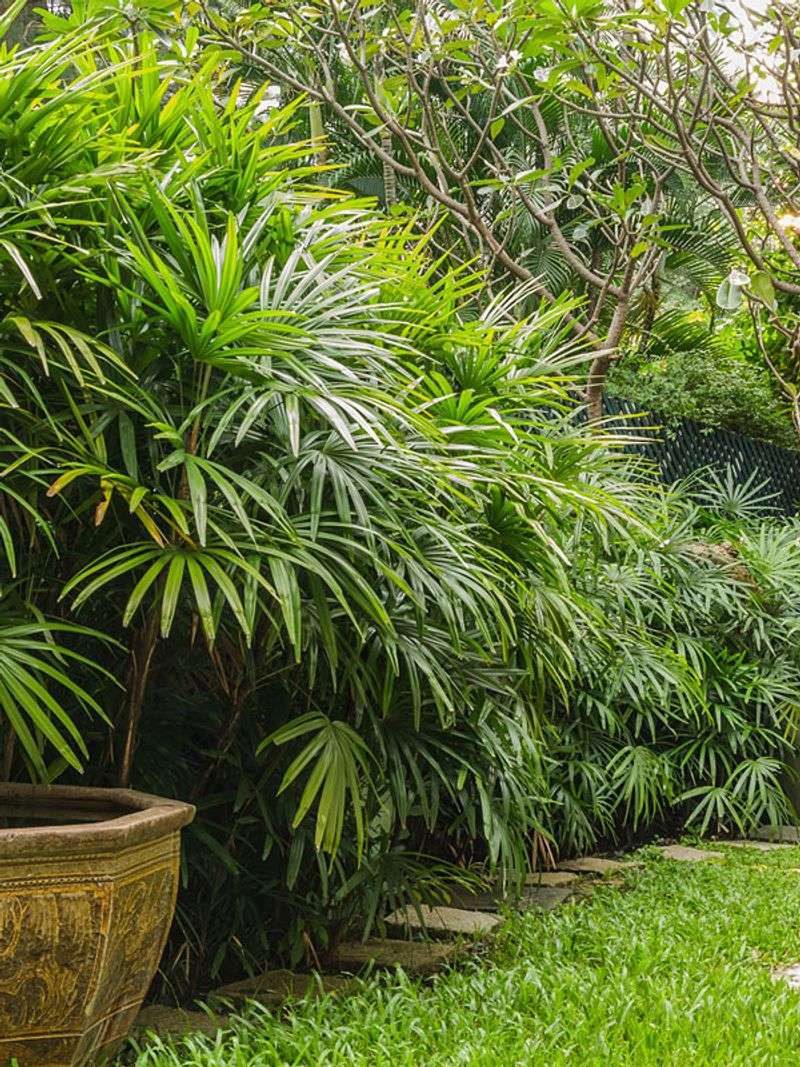
Shady porches deserve more than an empty pot and a tired welcome mat. Lady palm, Rhapis excelsa, brings dark green fans and slender clustered canes to places where many flowering plants struggle.
Its appeal is quiet rather than flashy. Set a pair in substantial containers near a covered entrance, or use a loose grouping to soften a shaded courtyard wall without creating a solid hedge.
Bright shade or filtered light suits it best. Strong afternoon sun can bleach or scorch the foliage, especially when a nursery-grown plant has not been gradually adjusted to brighter conditions.
Lady palm grows slowly and can eventually reach around 6 to 12 feet in the landscape. That slower pace means a fuller nursery plant costs more upfront, but it also reduces the need for constant size control.
Water when the upper potting mix begins to dry, and never leave containers sitting in runoff. It suits many protected Central and South Florida settings; North Florida gardeners should plan for freeze protection or movable pots.
5. Variegated Shell Ginger
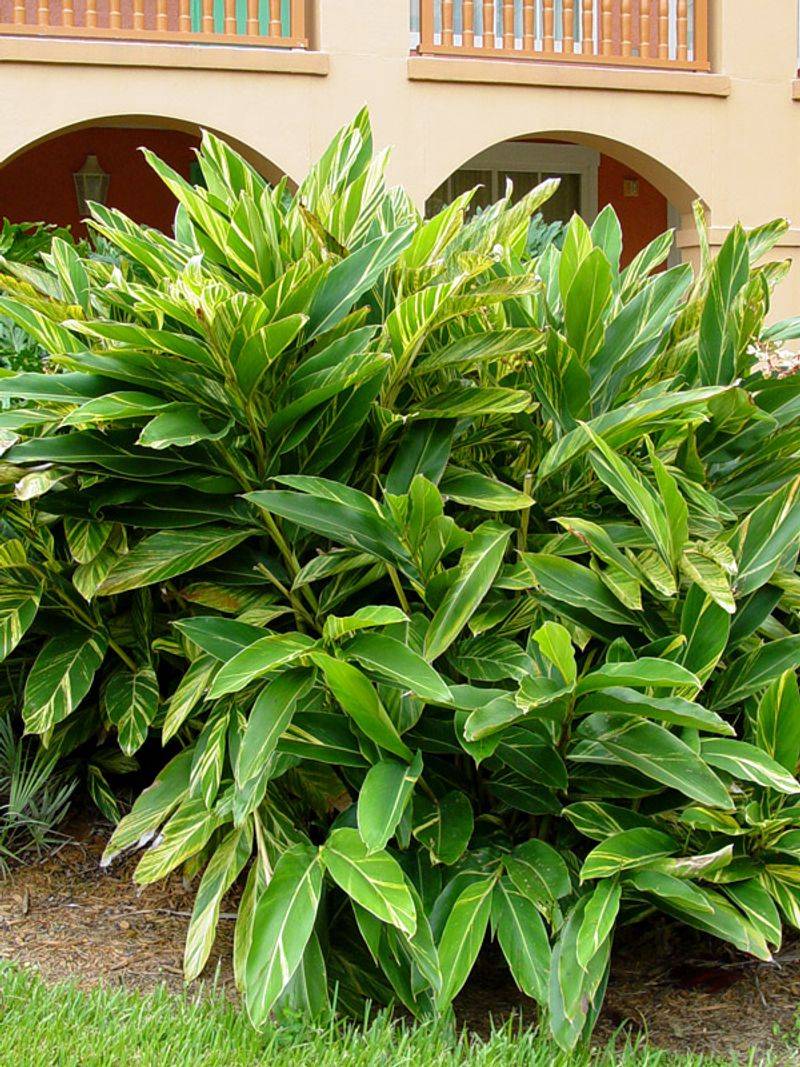
A dark side yard can look brighter without adding a single light fixture. Variegated shell ginger, Alpinia zerumbet Variegata, has long green leaves streaked with creamy yellow that catch even soft, filtered light.
Use it where you need a generous sweep of foliage, not a tiny accent. Mature clumps can reach about 6 to 8 feet tall in warm conditions and spread widely, so leave space between the plant, nearby paths, and the house.
Morning sun with afternoon shade is a useful starting point in Florida. Too much harsh sun can scorch the leaves, while very deep shade may produce a looser, less striking plant.
Work some compost into the planting area if the soil is very sandy, then mulch to help hold moisture. Water during dry periods, but avoid a low spot that stays soggy after heavy rain.
Freezes can kill the tops, especially in North and Central Florida, though established roots may recover where hardy. Grow it for the striped foliage, since cold damage can prevent flowering on older stems.
6. Neoregelia Bromeliad
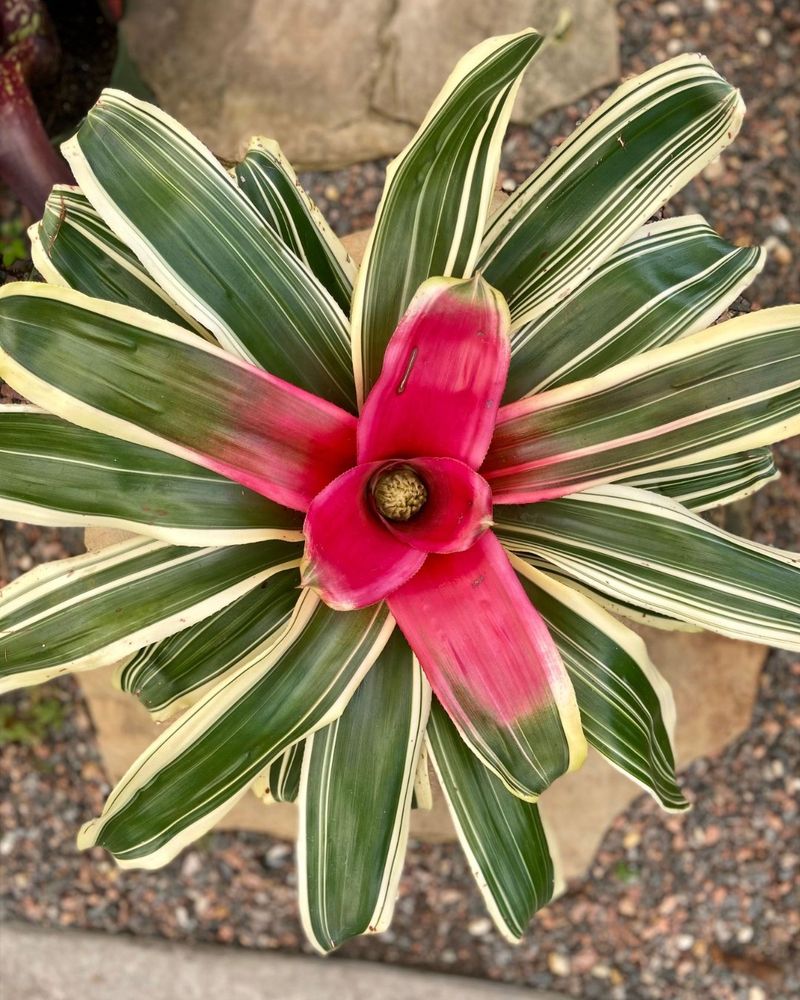
Small details often separate a thoughtfully planted yard from a random collection of pots. Neoregelia bromeliads provide that finishing touch with low rosettes, patterned leaves, and centers that can glow pink, red, or purple.
Repeat the same variety along a shaded bed edge or cluster several in a shallow, well-drained container. Their tidy shapes pair nicely with taller palms because they fill the lower layer without hiding the trunks.
Light needs vary by cultivar, so check the plant label rather than assuming every bromeliad wants full shade. Many perform well in bright filtered light, while sudden exposure to strong sun can leave lasting burn marks.
Use a loose growing medium and keep mulch away from the crowns. Each mature rosette eventually declines after flowering, but offsets, often called pups, can replace it and expand the planting.
The water held between leaves can support mosquitoes, so flush those cups regularly and follow local mosquito-control advice. Most Neoregelia need frost protection, making sheltered South Florida beds or movable containers the safer choices.
7. Xanadu Philodendron
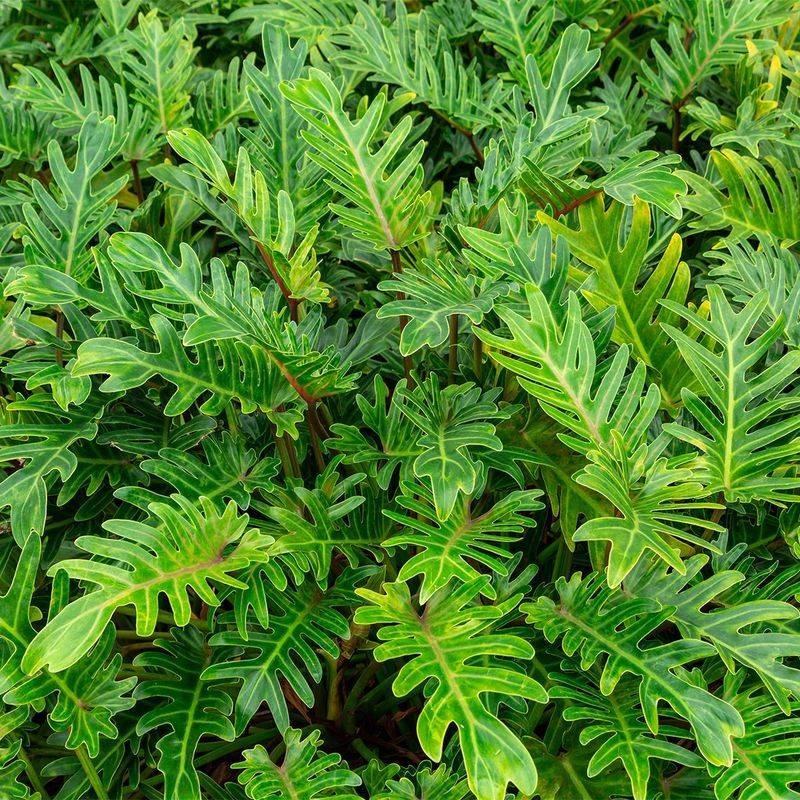
Deeply cut leaves give a garden texture that paint, pavers, and outdoor furniture cannot supply. Xanadu philodendron creates a rounded mound of glossy foliage that makes a simple planting bed feel fuller and more finished.
Often sold under its familiar philodendron name, it is now classified as Thaumatophyllum xanadu. Unlike climbing types, it stays self-supporting and commonly reaches about 3 to 4 feet tall, with a wider spread over time.
Use a few plants beneath taller accents or beside a blank wall where their leaf shapes can stand out. Leave enough room at the walkway edge so mature foliage does not force guests to brush past it.
Filtered light or partial shade works well, with protection from intense afternoon sun. Provide well-drained soil and steady establishment water, but do not place it where roof runoff keeps the roots saturated.
This is a warm-climate option, best suited to South Florida and protected warmer sites farther north. All parts contain irritating calcium oxalate crystals, so choose another plant where pets or children tend to chew foliage.
8. Ti Plant
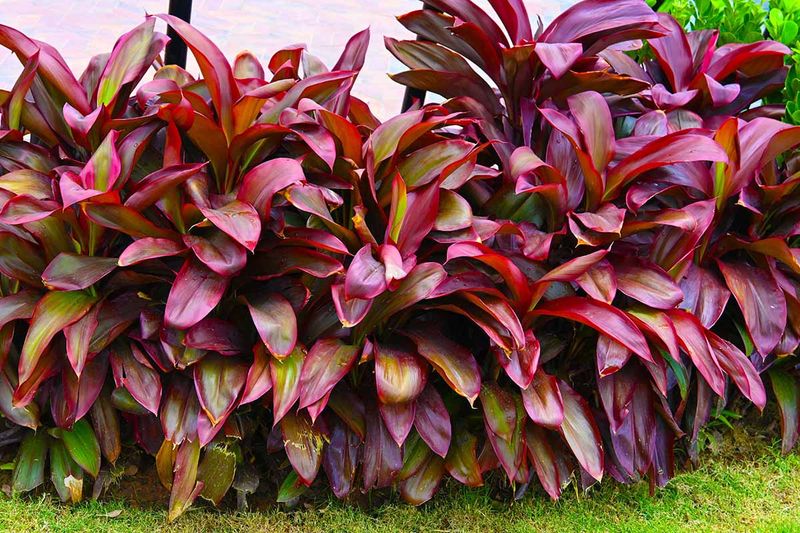
Near a cream-colored wall, a burst of burgundy foliage can look almost like outdoor artwork. Ti plant, Cordyline fruticosa, supplies that contrast with upright stems and broad leaves in shades of red, pink, purple, or green.
Its narrow, vertical habit makes it useful where a broad shrub would overwhelm the space. Place a small group behind lower green plants, or use one in a heavy container beside a sheltered patio seat.
Choose the cultivar for its mature size as well as its color. Some remain fairly compact, while others can reach 6 feet or more and develop bare lower stems as they age.
Bright filtered light or morning sun often gives a good balance of color and leaf quality. Harsh afternoon exposure, drying wind, and salt spray can damage foliage, so an open beachfront bed is not its best setting.
Ti plant is cold sensitive and most dependable outdoors in South Florida. Keep the root zone moist but drained, and remember that fluoride in some water supplies can contribute to brown leaf tips.
9. Coontie
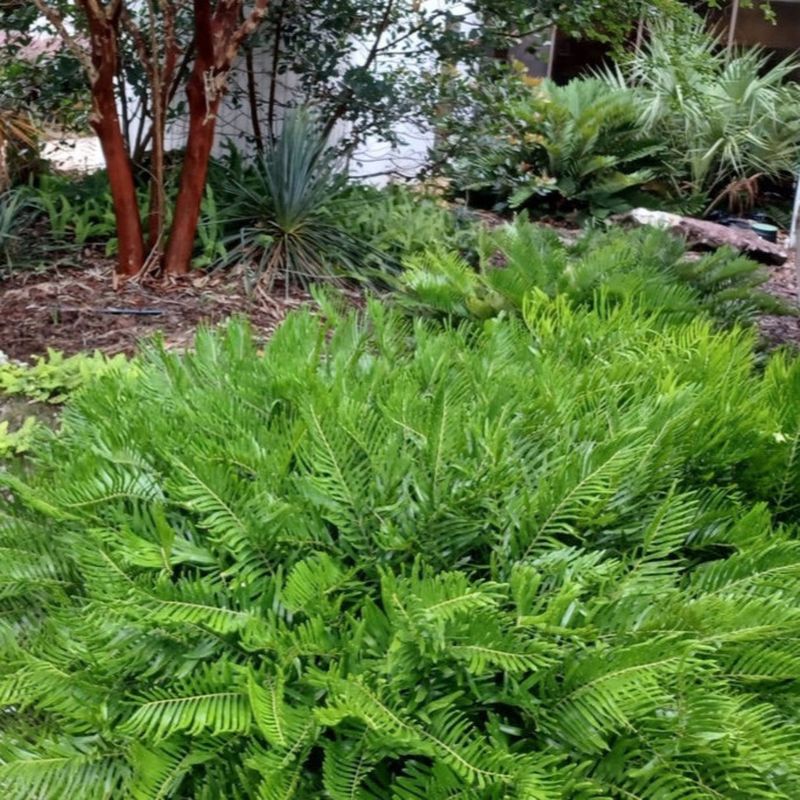
For a tropical look with Florida roots, start close to the ground. Coontie, Zamia integrifolia, is a native cycad with stiff, featherlike leaves that bring structure without turning into a towering specimen.
Its rounded form works beautifully along a foundation or in repeated groups beside a walk. Usually about 2 to 3 feet tall, it lets windows, porch railings, and architectural details remain visible.
Coontie handles sun or partial shade and suits well-drained sandy soil. Once established, it tolerates dry periods, making it a practical choice for homeowners who want fewer irrigation demands.
Growth is slow, so buy enough plants to create a clear pattern without cramming them together. Avoid soggy planting sites and resist the urge to add heavy fertilizer for faster results.
It also serves as a host plant for the rare atala butterfly where that insect occurs, mainly in southeastern Florida. Caterpillar feeding can affect appearance, but it supports a native species.
Every part is poisonous if eaten, especially the seeds. Keep it away from pets that chew plants, and purchase nursery-grown specimens rather than collecting from the wild.
10. Silver Saw Palmetto
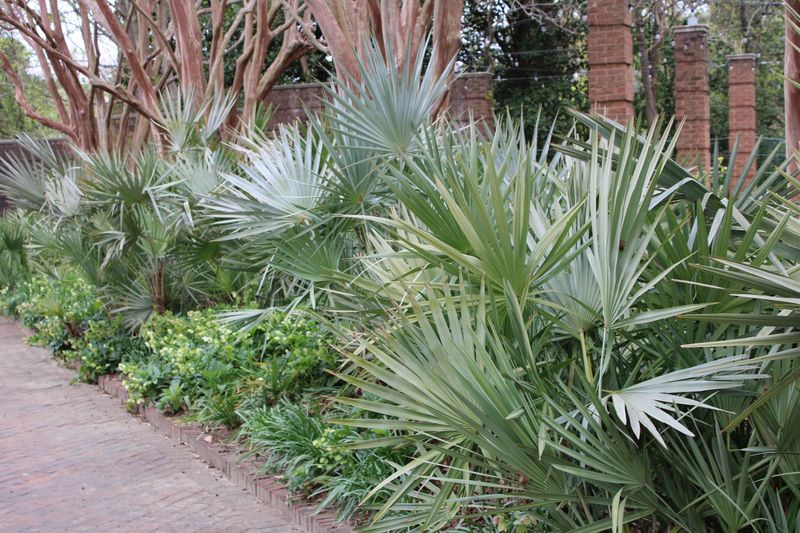
Blue-silver foliage can make a simple coastal house look sharply put together. The silver form of saw palmetto, Serenoa repens, adds that cool color while keeping the rugged character of a Florida native.
Unlike a tall, single-trunk palm, it forms a spreading mass of fans and creeping or leaning trunks. Think of it as a substantial landscape feature, not a small foundation shrub that will stay neatly beneath a window.
Give it full sun for strong silver coloring and allow a generous footprint. Mature plants can occupy 10 feet or more in width, so they fit large island beds and open property edges better than narrow entry strips.
Established saw palmetto tolerates drought and coastal exposure well, provided drainage is suitable. New plants still need careful watering while their roots settle into Florida’s sandy soil.
The leaf stalks have sharp teeth, which explains the common name. Keep plants away from play areas and busy walkways, and remove only dead fronds rather than repeatedly stripping healthy growth.
Wildlife benefits include flowers for insects and fruit eaten by birds and mammals.
11. Firebush
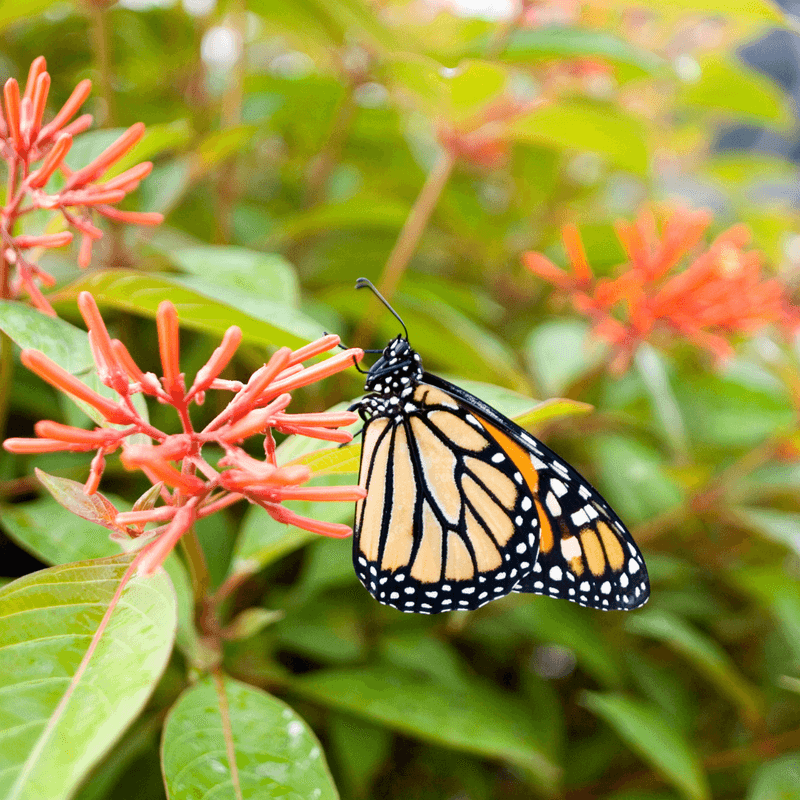
A garden looks richer when something is moving through it. Native firebush brings orange-red tubular flowers that attract butterflies and can draw hummingbirds, adding life to a sunny border near a patio.
Ask for Florida-native Hamelia patens var. patens if supporting local habitat is part of your plan. Nursery labels can be confusing, and plants sold as dwarf firebush may be different forms or related selections.
Give the native plant room to become a large shrub. In warm South Florida locations it can reach 8 to 12 feet or more, while freezes farther north may kill stems back and keep seasonal growth smaller.
Full sun encourages heavier flowering, although partial shade is workable. Plant in well-drained ground, water through establishment, and reduce irrigation once the roots are settled and conditions allow.
For an upscale appearance, place it behind lower foliage plants and selectively prune rather than shearing it into a tight box. Constant clipping removes flowers and hides its relaxed branching.
Use its warm blooms as one repeated accent color, letting the rest of the bed stay mostly green.