
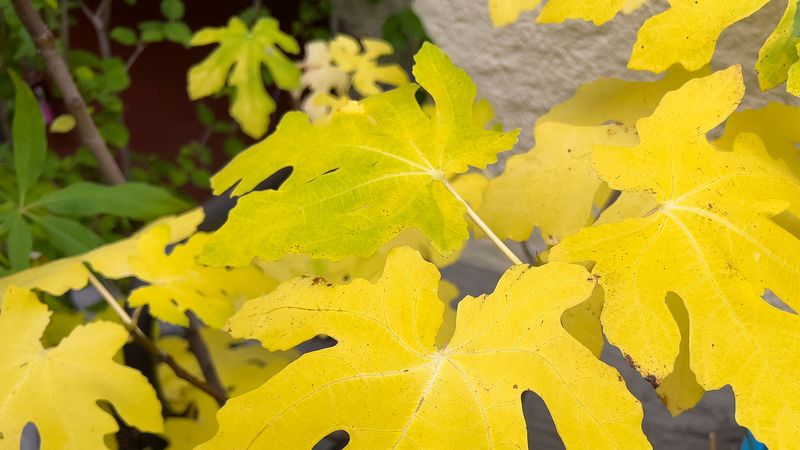
Seeing a fig tree fill your yard with yellow leaves can feel alarming, especially when the tree looked fine a few weeks ago. Sometimes it is just the tree following its normal fall routine.
Other times, soil moisture or a leaf disease may be adding stress. A few simple checks can help you tell the difference and get the tree ready for the cold months.
Could this be normal fall dormancy?
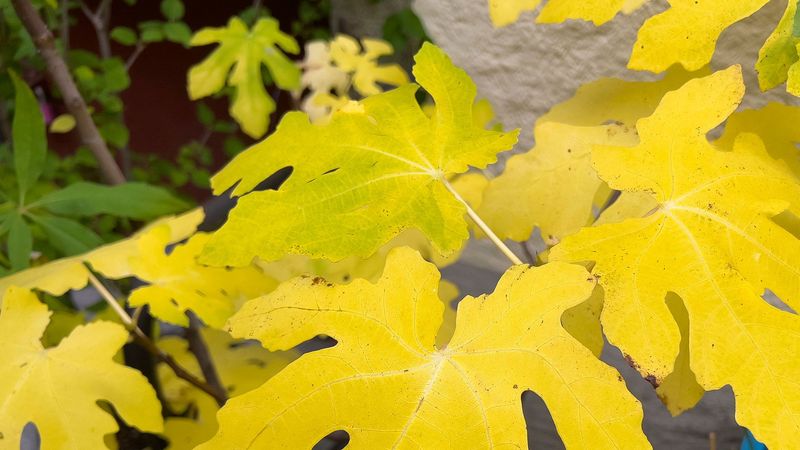
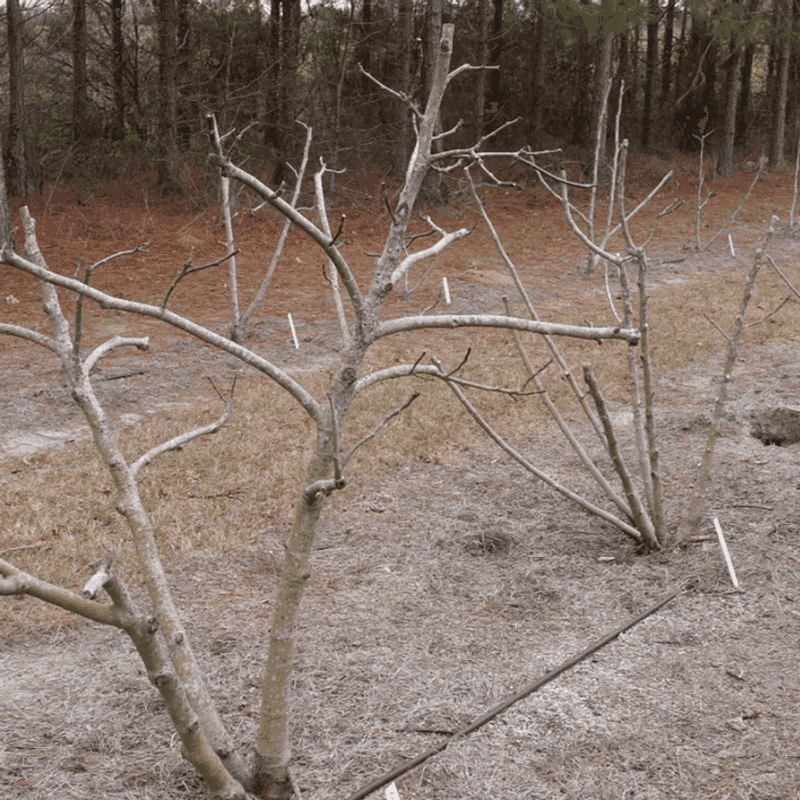
Good news first: a common fig (Ficus carica) is deciduous, which means it is built to shed its leaves. As nights cool, University of Florida IFAS Extension describes figs as entering a dormant period, and gradual yellowing and leaf drop can be part of that slow slide.
Pay attention to how the change is happening. A slow, steady fade across the whole tree, with no other warning signs, can fit a normal seasonal cycle.
Sudden, patchy drop, leaves spotted in unusual ways, or a tree that looks wilted all point toward something else worth checking.
Here is the catch. Yellow leaves alone do not prove the tree is going dormant, and they do not rule out stress either.
Drought, soggy soil, and fig rust can all cause leaves to drop too.
Timing matters as well. Fall arrives at different times in Florida and Texas, so a fig losing leaves in a warm stretch of autumn deserves a closer look than one dropping leaves after the first cool snap.
Treat dormancy as a possibility to confirm, not a conclusion to assume.
Check moisture and drainage before changing your watering
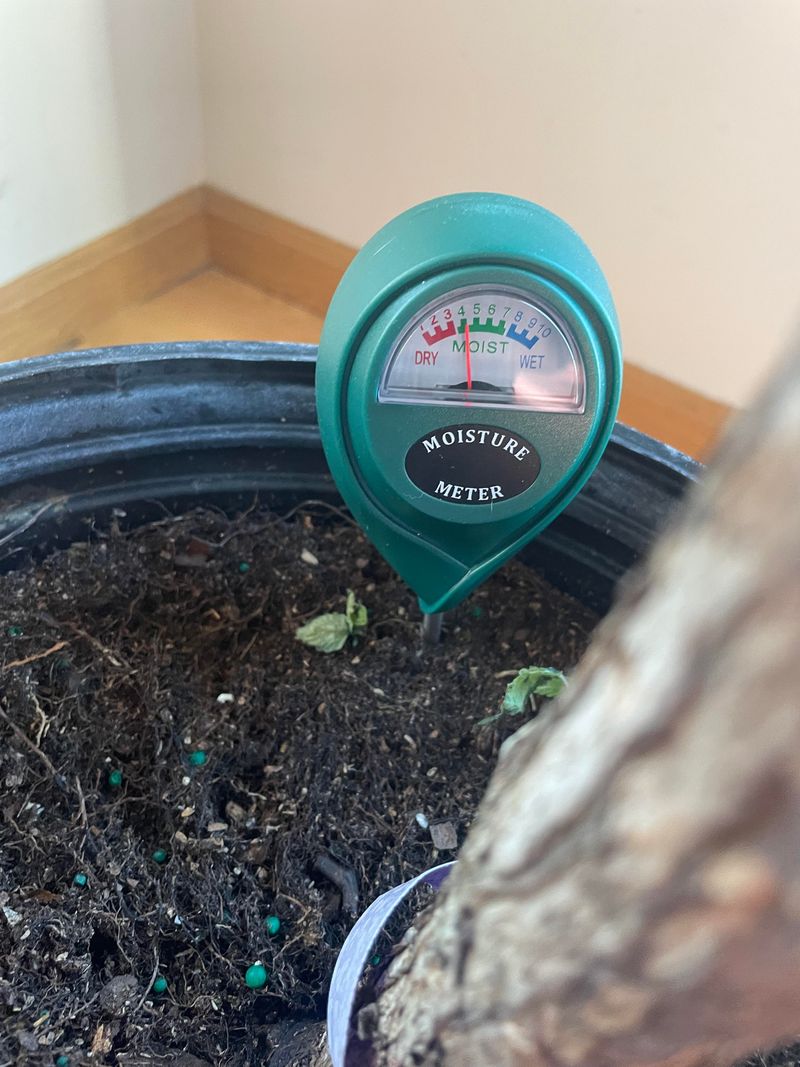
Before you reach for the hose, put your fingers to work. For a container fig, push your hand into the potting mix a few inches down.
For a tree in the ground, check deeper, using a trowel or a long screwdriver to get below the surface. Extension guidance on yellowing fig leaves suggests watering when the soil is fairly dry at that depth, and making sure pots drain freely and never sit in standing water.
Dry soil that stays dry can point to drought stress. Soil that stays wet for days, or a pot with clogged holes, is a reason to look closer at drainage.
Yellow leaves look much the same either way, so color alone will not tell you which problem you have.
Wet soil and poor drainage raise concern about the roots, but they do not confirm root rot. Colorado State University Extension notes that root and soil symptoms are often vague and need further evaluation.
Skip any fixed fall schedule. A summer rule of thumb from Georgia does not apply everywhere, and UF/IFAS says established Florida figs generally need irrigation mainly during prolonged drought.
Look beneath leaves for signs of fig rust
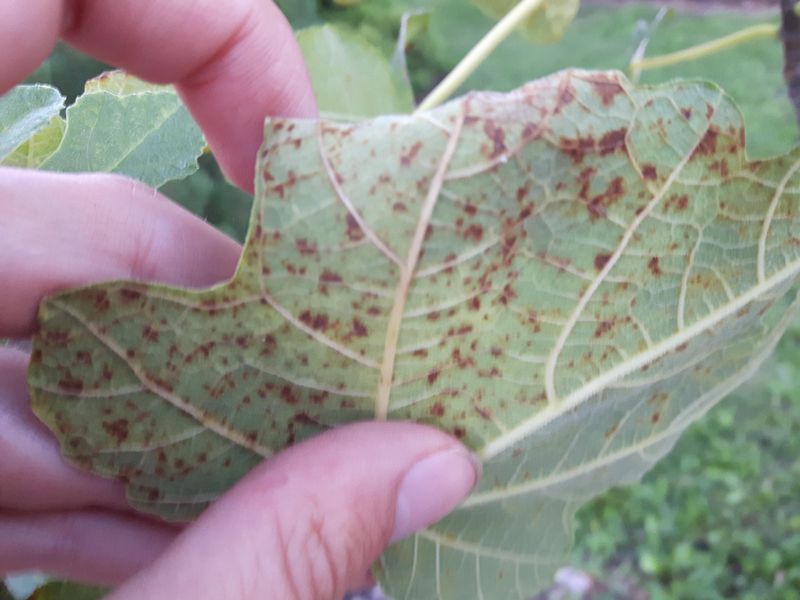
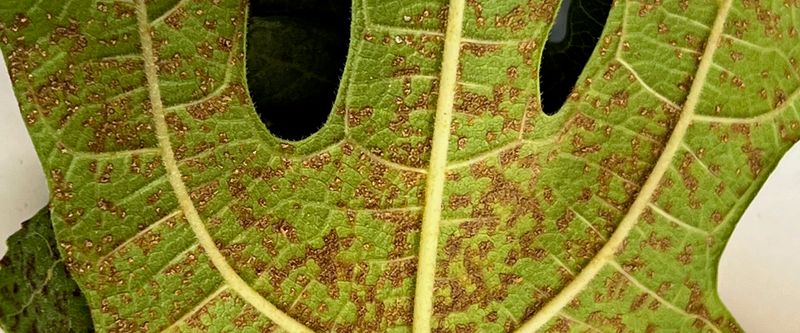
Flip a few leaves over. Fig rust shows up as small reddish-brown spots, and sometimes as orange, powdery growth, on the undersides.
University of Georgia Extension points to rust as one reason figs drop leaves early.
If you find those clues, cleanup is the simplest first step. Rake up and remove infected fallen leaves instead of leaving them under the tree, which may help reduce the fungus carrying over to the next season.
Spraying is where advice gets less clear. UF/IFAS describes a Bordeaux spray, while UGA says no fungicides are labeled for home-garden figs, and Texas A&M separates conventional products from copper-containing ones.
Because those recommendations do not match, check with your local Extension office and read the current product label before you consider any spray.
No spots on the undersides? Then rust is less likely to be the cause, and moisture, season, and drainage deserve another look.
Avoid pushing tender growth before winter
When leaves yellow, it is tempting to feed the tree and give it extra water to bring back that green. Hold off.
Without a diagnosed nutrient need, fertilizer will not fix yellow leaves, and it can do harm.
UF/IFAS cautions that late-season fertilizing and irrigation can spark a flush of soft new growth, and that kind of growth is vulnerable when cold arrives. A burst of tender shoots right before a freeze gives the weather something easy to damage.
This warning is about forcing growth, not about letting a thirsty tree go dry. If your soil check shows the root zone is truly dry and rainfall has been lacking, a drink based on local conditions is a different matter than watering to push the tree along.
A calm approach works best. Let the tree slow down on its own schedule, keep an eye on soil moisture, and save feeding for the next growing season when the plant can actually use it.
Match freeze protection to the tree and its location
Winter care is not one-size-fits-all across the South. Freeze risk in Florida can differ a lot from freeze risk in Texas, and even within one state it shifts by region.
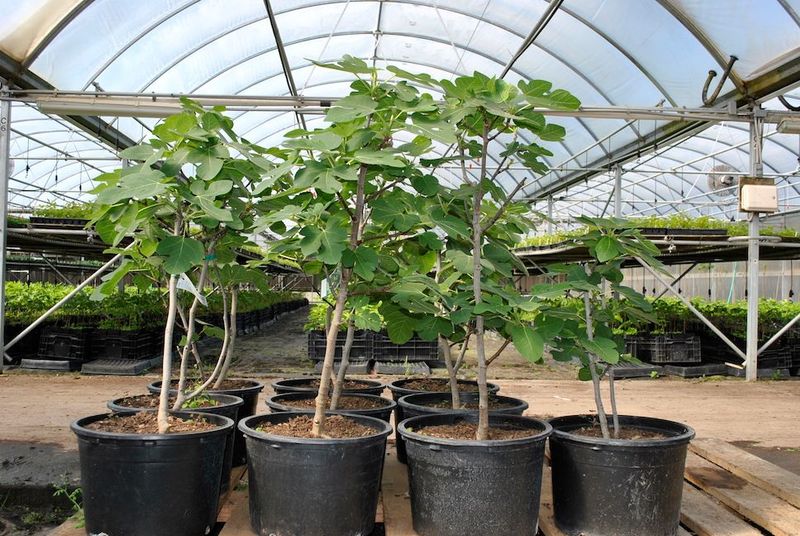
Your plan should fit your cultivar, the tree’s age, and whether it grows in a pot or in the ground.
Younger plants and tender trunks are more easily hurt by cold than mature trunks. Texas A&M AgriLife Extension describes a protective cage packed with organic material as one option for those vulnerable trees.
The same publication advises watering thoroughly a few days before a hard freeze. That applies to dry fall or winter conditions.
If the soil is already saturated, skip it, since extra water on soggy ground can add to the drainage worries you checked earlier.
Do not copy northern storage routines, such as dragging every fig into a cold cellar, unless your local freeze risk calls for it. A mature in-ground fig in a mild area may need little more than a watch on the forecast, while a small container tree may be easier to shelter.
Local Extension advice and UF/IFAS guidance can help you judge your own situation.
Choose your next step from the evidence
Think of this as a short path to follow. If leaves are yellowing and dropping gradually with no other decline, that may simply be the fig doing what deciduous figs normally do.
Next, check soil moisture a few inches down in a pot, or deeper in the ground, and look at drainage before you change how you water.
Then turn over some leaves. Reddish-brown spots or orange powder on the undersides suggest rust, and UGA Extension recommends removing infected fallen leaves.
Last, plan winter protection around your own tree: its age, its spot, and your local freeze risk.
If soil stays wet or leaves keep declining, a local Extension question can help you narrow things down.
No single yellow leaf justifies a blanket dose of water, fertilizer, fungicide, or wrapping. A fig that is simply getting ready to rest often asks for patience more than rescue.