
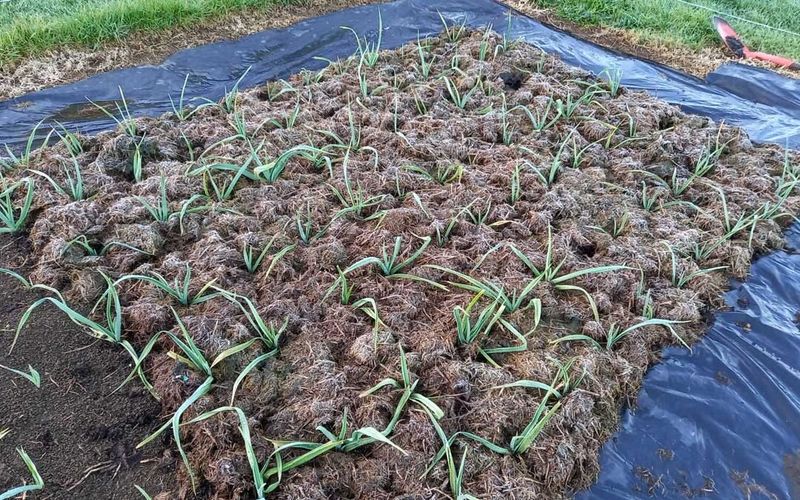
You planted garlic or onions this fall, and now a cold snap is in the forecast. Should you pile on straw right away?
The answer depends on which crop you grew and how your winters actually behave. A few simple checks can help you decide before you reach for the bale.
Frost heave depends on freeze-thaw cycles
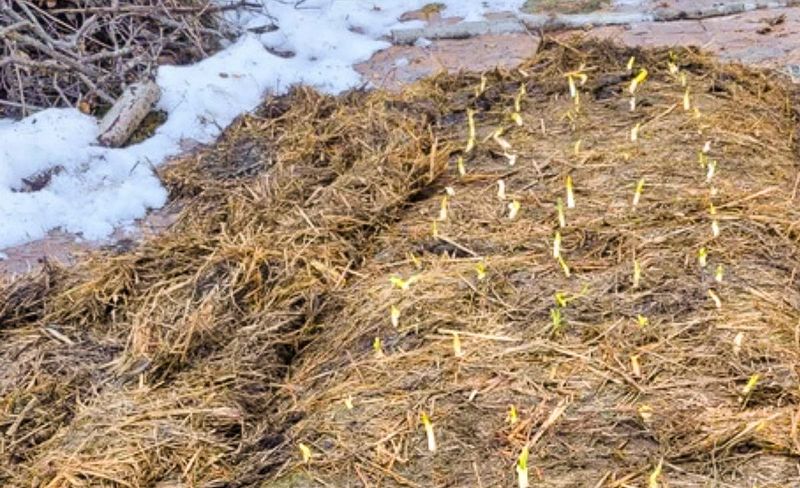
Picture soil that freezes solid at night, thaws by afternoon, and then freezes again. That back-and-forth is what Extension experts describe as the cause of frost heave, and it can push shallow-rooted plants and freshly set cloves up toward the surface.
Notice that the trigger is repeated freezing and thawing, not the date of the first hard freeze. One cold night followed by a warm week may do little.
A winter that swings above and below freezing again and again is a different story.
Your own risk depends on local winter patterns, your soil type, how deep the cloves or bulbs were planted, and how well roots have settled in. A planting that went in weeks ago and has rooted well is less likely to lift than one set in last weekend.
Check your beds after cold spells, and gently press any lifted cloves back into the soil.
Garlic mulch guidance varies across the South
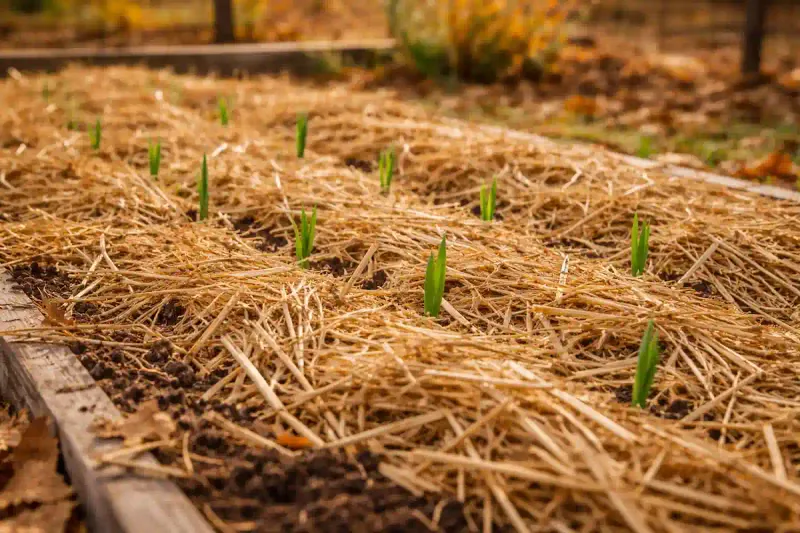
Georgia gardeners usually plant garlic from late September through November. University of Georgia Extension calls garlic very frost hardy and says mulch can protect bulbs from severe cold and help hold moisture.
The 2 to 3 inch figure you may have seen is a different job. Georgia advises that depth for weed control after garlic emerges, not as a blanket for every newly planted clove.
Keep that mulch 2 to 3 inches away from the stems, because damp mulch touching them may encourage disease.
Florida’s picture looks different. UF/IFAS guidance for Florida garlic lists freeze protection among growing requirements and points to softneck types such as Artichoke and Creole as a good fit.
Neither state’s advice works as a rule for the whole South, so lean on your own county Extension office.
Cold-region straw depths do not set a Southern rule
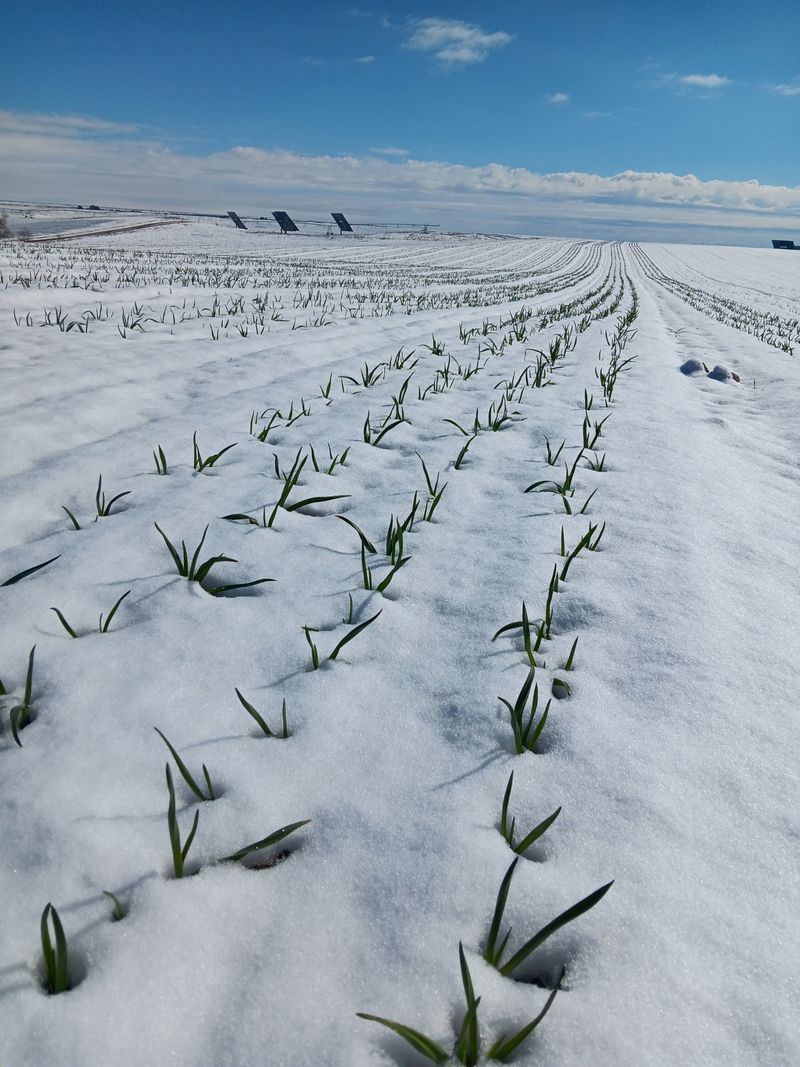
Many garlic articles recommend a deep straw layer. Iowa State Extension suggests 4 to 6 inches of straw in November, and a 2025 University of Maine trial used the same range.
Both come from states with long, hard winters. They make useful comparisons, but nothing in them shows that gardeners in Florida, Texas, Georgia, or other Southern spots need that much straw.
A thick layer in a mild, wet Southern winter could hold extra moisture around young shoots. Treat the northern numbers as a reference point, then check what your local Extension office says about your winters.
Better winter survival does not guarantee bigger bulbs
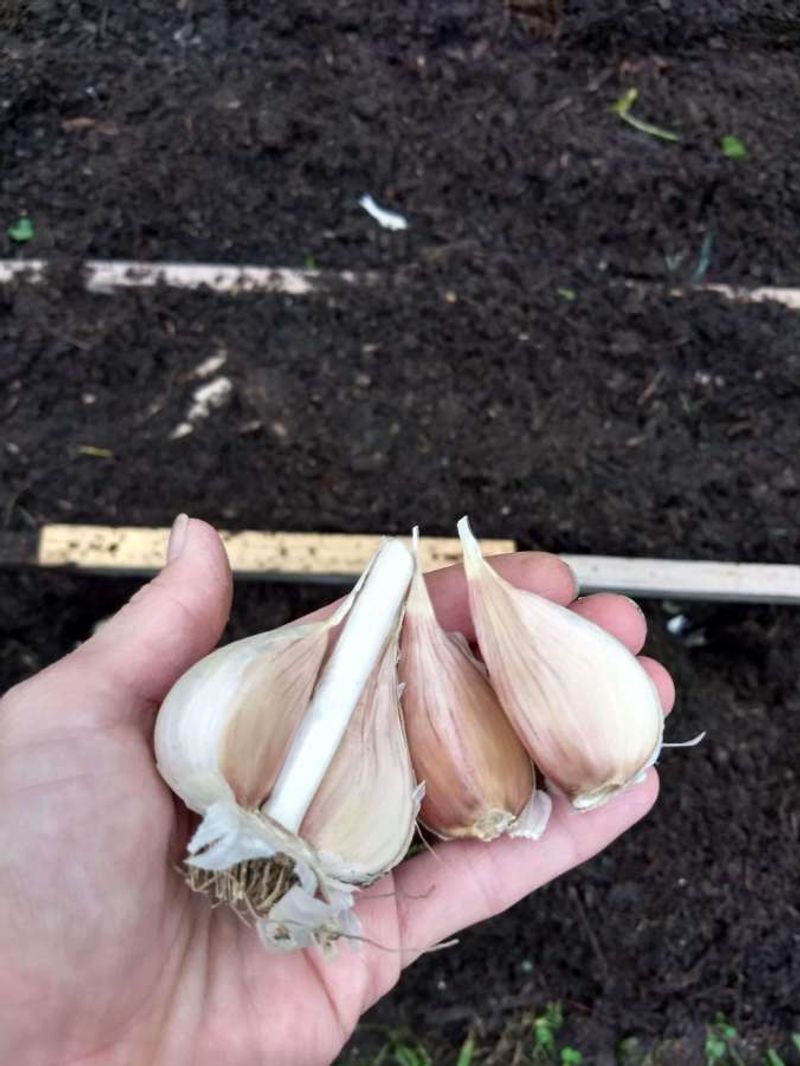
The Maine trial tested one hardneck variety. Straw improved survival, but the bulb-size difference was not statistically significant.
The yield advantage was credited to more plants making it through winter, not to fatter bulbs.
So mulch may help more cloves live, but it is not a bulb-size booster on its own. Georgia Extension says larger planting cloves give larger mature bulbs.
It also points to enough growth before bulbing, cool-weather exposure, steady moisture, and well-drained soil.
If you want to improve next summer’s bulbs, pick your biggest cloves for planting, keep the bed evenly moist, and make sure water drains away. Those steps matter whether or not you mulch.
Bulb onions need their own timing decision
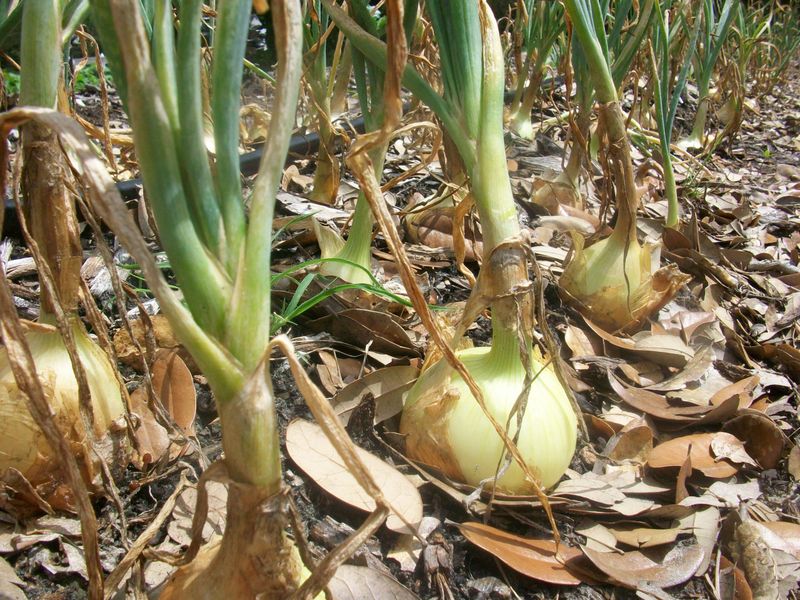
Onions follow a different calendar than garlic. Bulb onions, green onions, and other alliums are not the same crop, and the planting schedules here apply to bulb onions only.
UF/IFAS advises Florida gardeners to plant from September through December and to choose short-day cultivars. Texas A&M AgriLife lists short-day varieties for Texas, says seed can go in from October through December, and notes that bulbing responds to day length.
That is the main lesson: variety and day length steer onion success. These guides do not recommend a thick winter mulch, so do not borrow garlic advice for your onion bed.
Match protection to the crop and local conditions
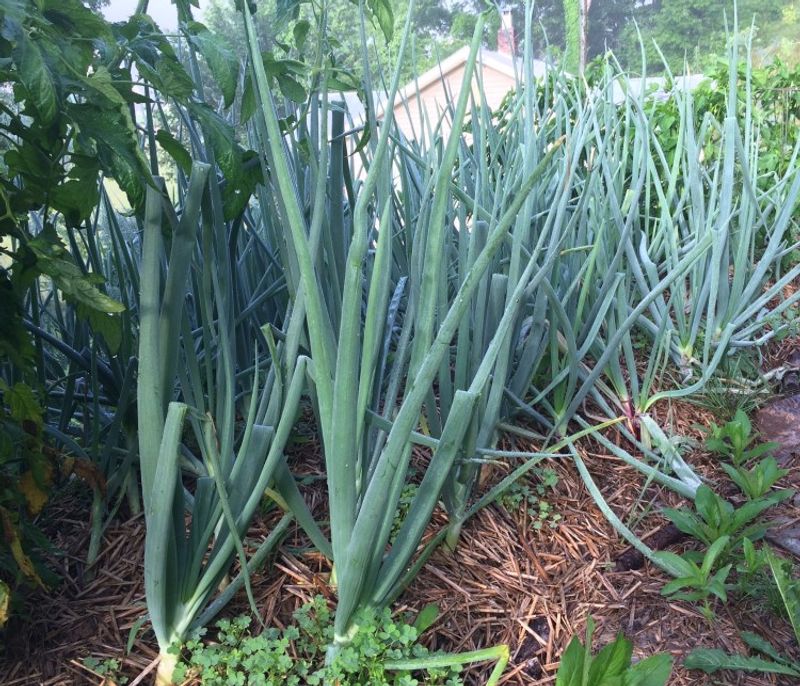
Start by naming your crop: garlic or bulb onion. Then look at your local winter, especially how often the ground freezes and thaws, and check your state Extension guidance.
Use mulch for what it can do, such as cold protection, moisture, and weed control, and keep it off the stems. Bigger bulbs come from good cloves, steady care, and the right variety, and straw is only a helper.