
Your neighbor’s kitchen window lines up perfectly with your patio chair, and you both know it. Plenty of California homeowners rush to plant a fast hedge, only to find roots cracking pool decks or creeping toward the slab years later.
The good news is that some shrubs grow quickly, sip little water, feed local bees and birds, and keep their roots polite. Here are ten smart picks that can give you privacy without a costly repair bill down the road.
1. Toyon (Heteromeles arbutifolia)
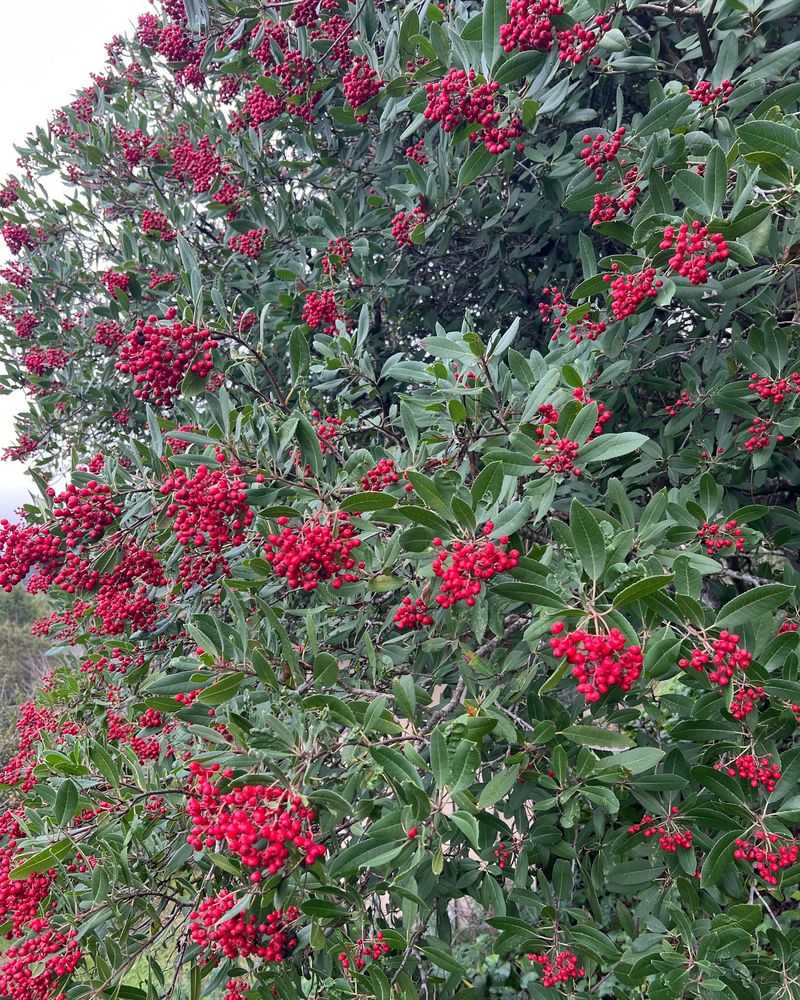
Hollywood got its name from this shrub, so it seems fair that toyon is a star at hiding you from the neighbors. Native to hillsides from Shasta County to Baja, it can reach 10 to 15 feet and stays evergreen year-round.
Roots tend to be deep and fibrous rather than wide and aggressive, which may make it a safer choice near hardscape than many thirsty hedges. Once established, it often needs little more than an occasional deep summer soak.
Bonus points go to the wildlife show. Summer flowers pull in native bees, and winter berries feed robins, cedar waxwings, and mockingbirds.
Plant it 5 to 6 feet from a pool edge and let it fill in naturally for a screen that looks like it belongs in California.
2. Pacific Wax Myrtle (Morella californica)
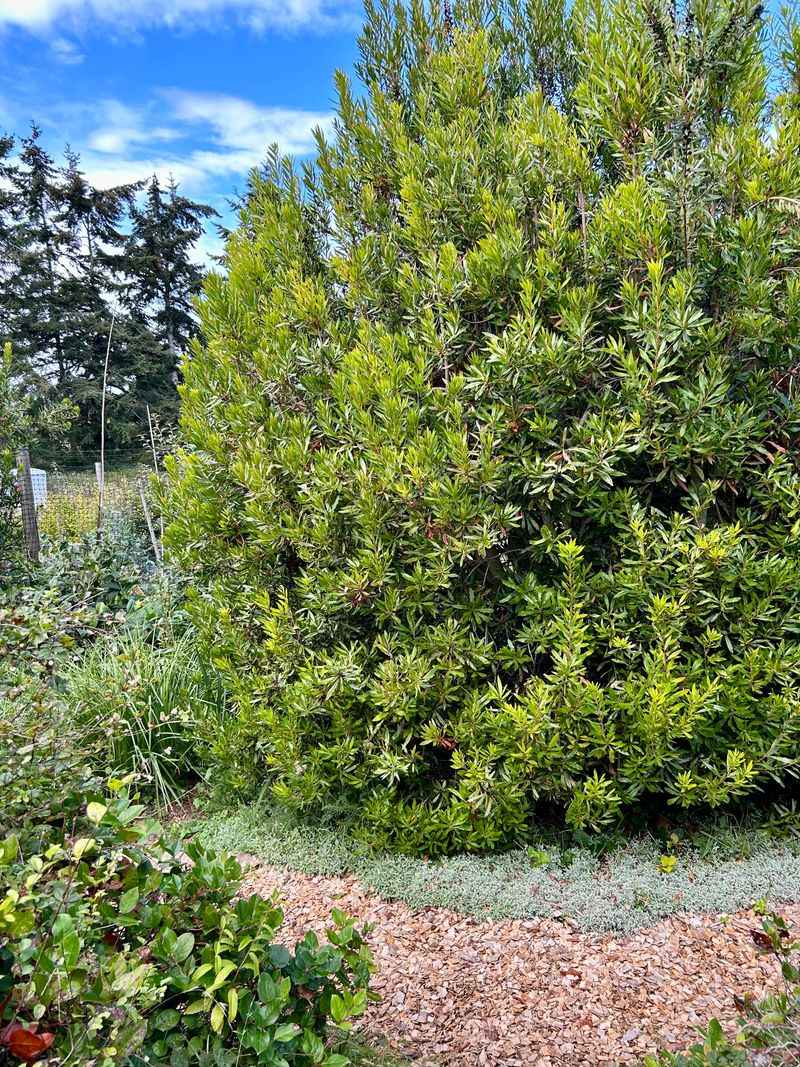
Coastal gardeners, meet your new best friend. Pacific wax myrtle grows thick from the ground up, so there are no awkward gaps at eye level where a neighbor can peek through.
It handles salty breezes, fog, and clay soil, and it can put on 2 to 3 feet a year with modest water. Growth usually tops out around 10 to 20 feet, though shearing keeps it tidy at fence height.
Its root system is generally considered non-invasive and works well in hedges near walkways. Birds love the waxy purple fruit, and the dense branches offer nesting cover.
If you live inland in hot valleys, give it afternoon shade and a bit more water.
3. Coffeeberry (Frangula californica)
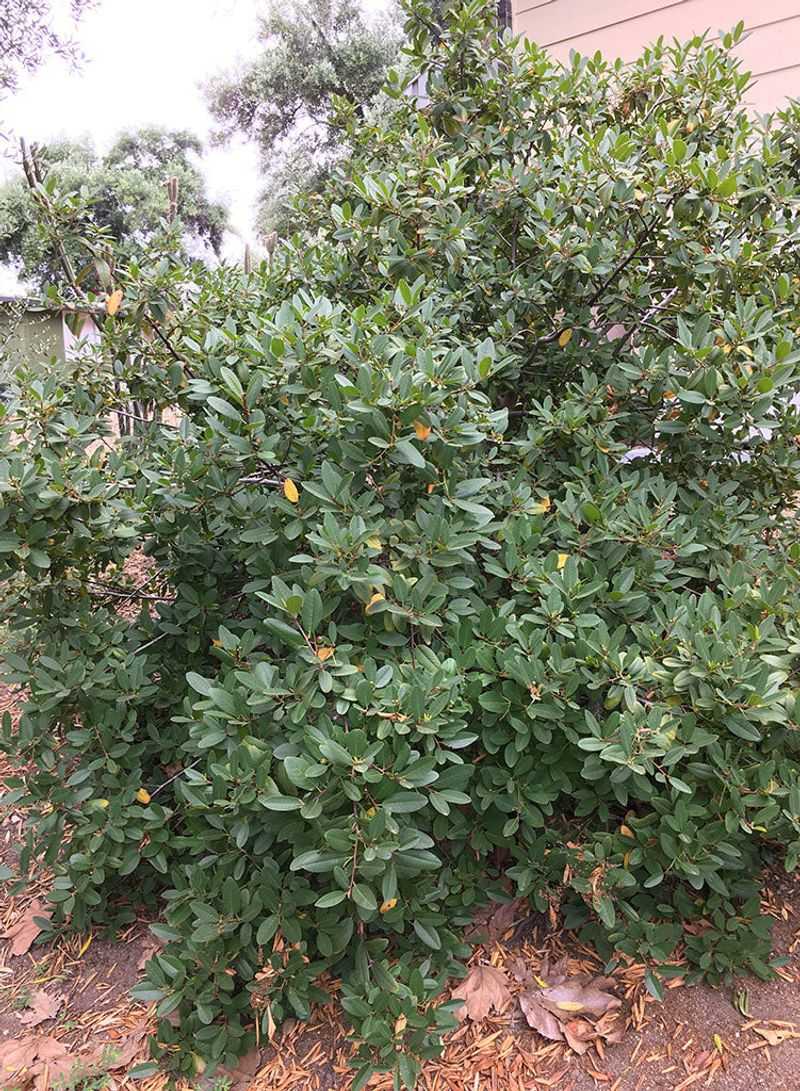
Ask a native plant nursery for a well-behaved privacy shrub, and coffeeberry will probably come up in the first sentence. Varieties like Eve Case and Mound San Bruno stay compact, while the species can climb to 10 feet or more.
The roots are modest and the shrub handles drought, sun, and part shade. It also tends to resist deer, which hillside homeowners will appreciate.
Tiny flowers bring native bees, and the berries shift from red to nearly black, feeding thrashers and towhees. Choose the taller form if you need to block a second-story window, and the compact forms for poolside beds.
4. Catalina Cherry (Prunus ilicifolia ssp. lyonii)
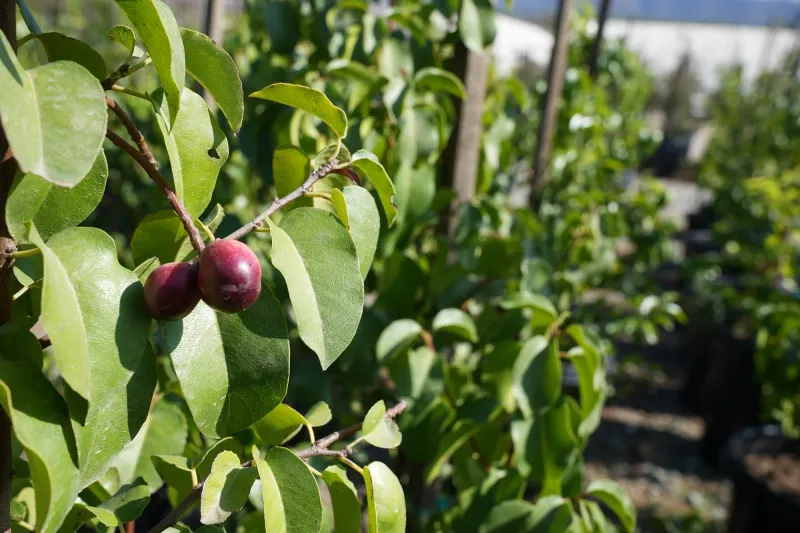
Picture a hedge that starts small and, within a few seasons, quietly erases the view into the house next door. Catalina cherry can grow 2 to 4 feet per year with deep watering at first, eventually reaching 15 to 30 feet if left unpruned.
Native to the Channel Islands, it is built for long dry summers. Its taproot-style roots usually dive downward instead of spreading under slabs, though giving it 8 to 10 feet from foundations is a wise cushion.
Spring flower spikes buzz with bees, and the dark cherries attract birds. Keep it as a tall shrub for screening or limb it up into a small tree that shades your patio.
5. Hollyleaf Cherry (Prunus ilicifolia)
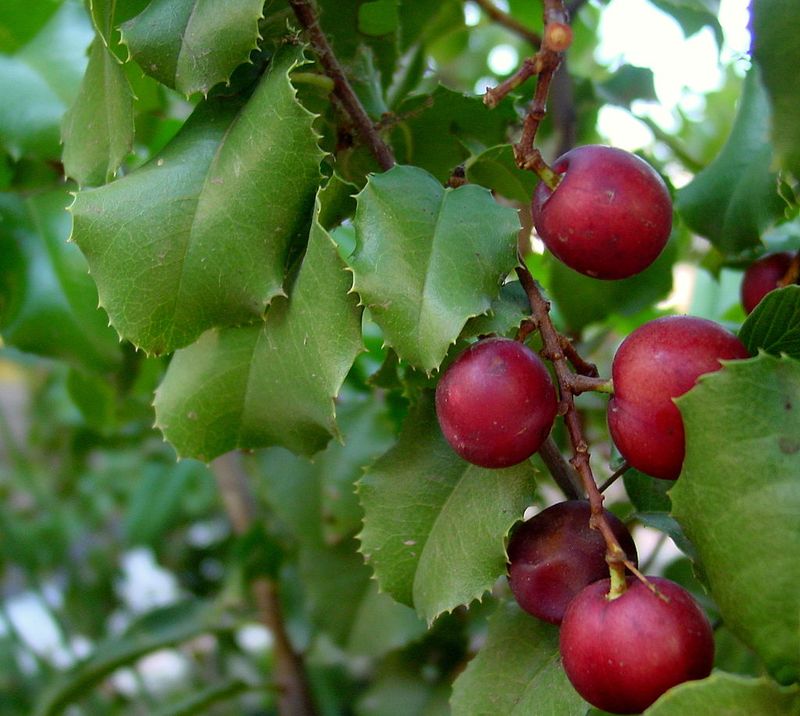
Think of hollyleaf cherry as the tougher, more compact cousin of Catalina cherry. It usually stays in the 8 to 15 foot range, a sweet spot for blocking a single-story window without towering over the yard.
Inland valleys from Sacramento to Riverside suit it well, since it shrugs off heat once established. Spiny leaf edges may also discourage trespassers.
Roots tend to run deep for drought survival, which can help keep them away from shallow pool plumbing. Deep watering every few weeks in the first summer helps it settle, then you can taper way back.
6. Ceanothus ‘Ray Hartman’
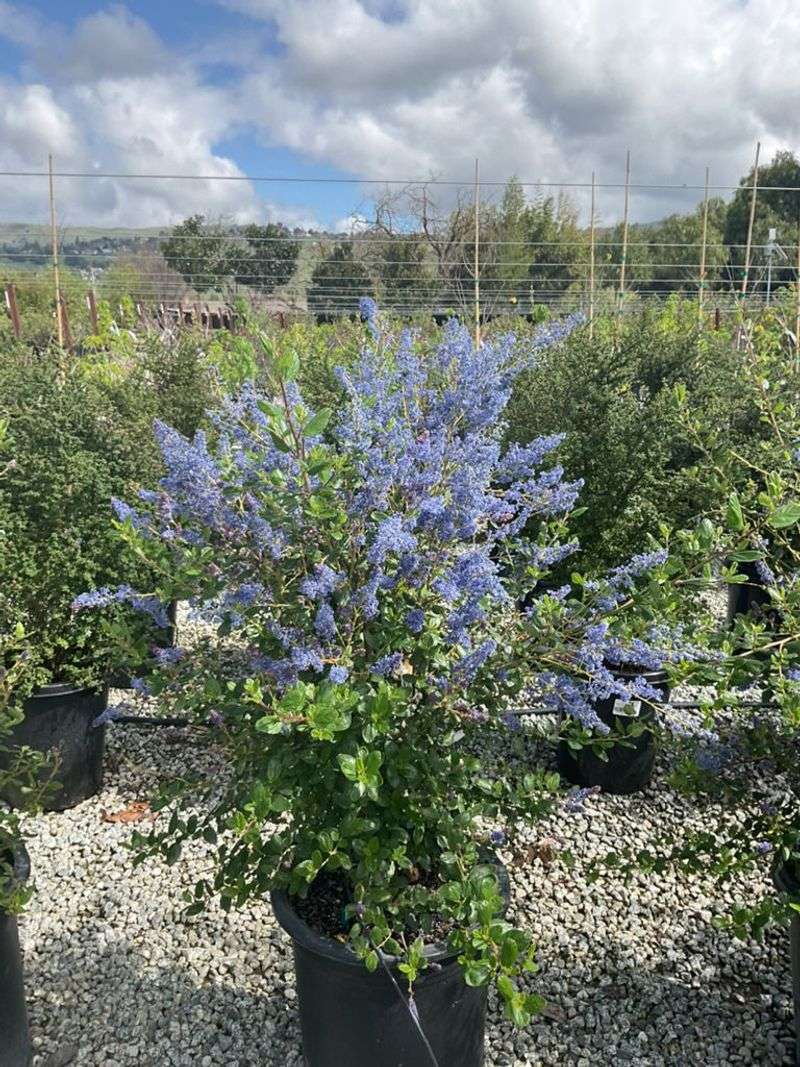
Every spring, this California lilac turns into a buzzing blue cloud. Bees arrive in such numbers you can hear the shrub before you see it.
Ray Hartman is one of the fastest ceanothus, often hitting 10 to 15 feet in just a few years. Like many ceanothus, it fixes nitrogen and needs almost no fertilizer, plus very little summer water.
One caution: overwatering shortens its life, so keep it away from lawn sprinklers. Roots are not known for invading structures.
Expect a lifespan around 15 to 20 years, so plan to replace it eventually.
7. Lemonade Berry (Rhus integrifolia)
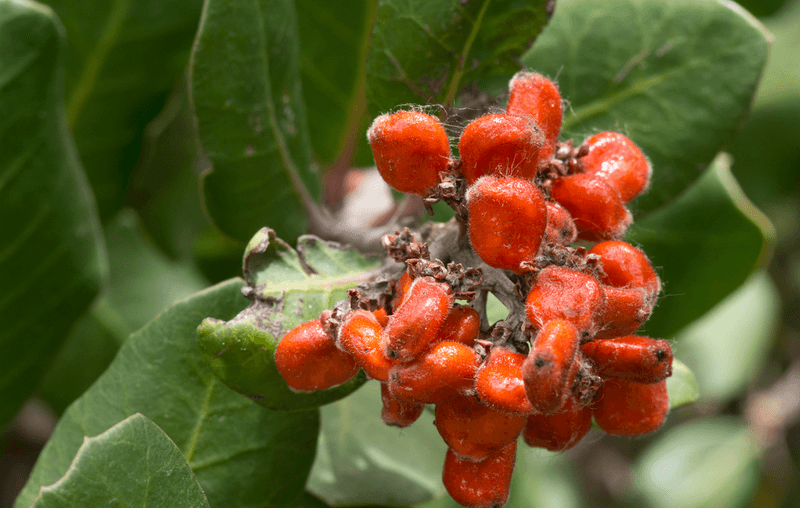
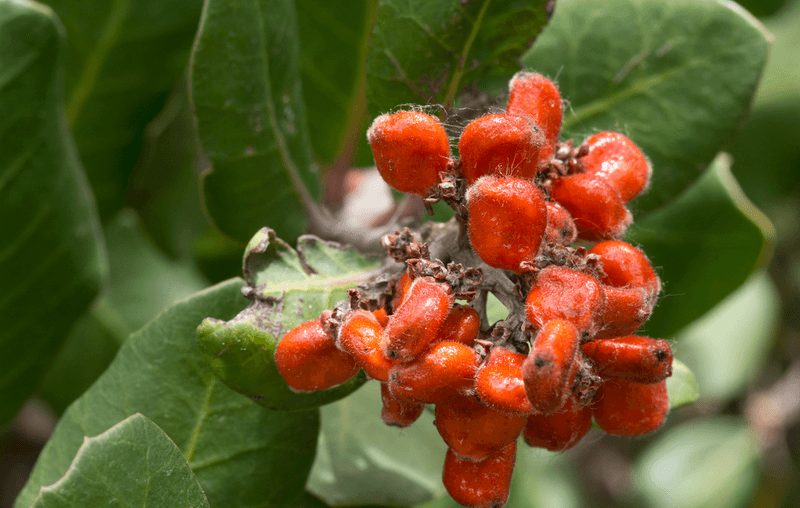
Kids in old California used to soak the sticky red berries of this shrub in water to make a tart drink. That fun bit of history comes attached to a seriously useful screen.
Lemonade berry grows 6 to 10 feet tall, often wider, and thrives on coastal slopes in full sun. It is extremely drought tolerant, and its roots help hold hillside soil without known damage to foundations.
In fire country, keep it well spaced, pruned of dead wood, and outside the zone closest to the house. Bees love the pink flowers in late winter.
8. Pittosporum ‘Silver Sheen’
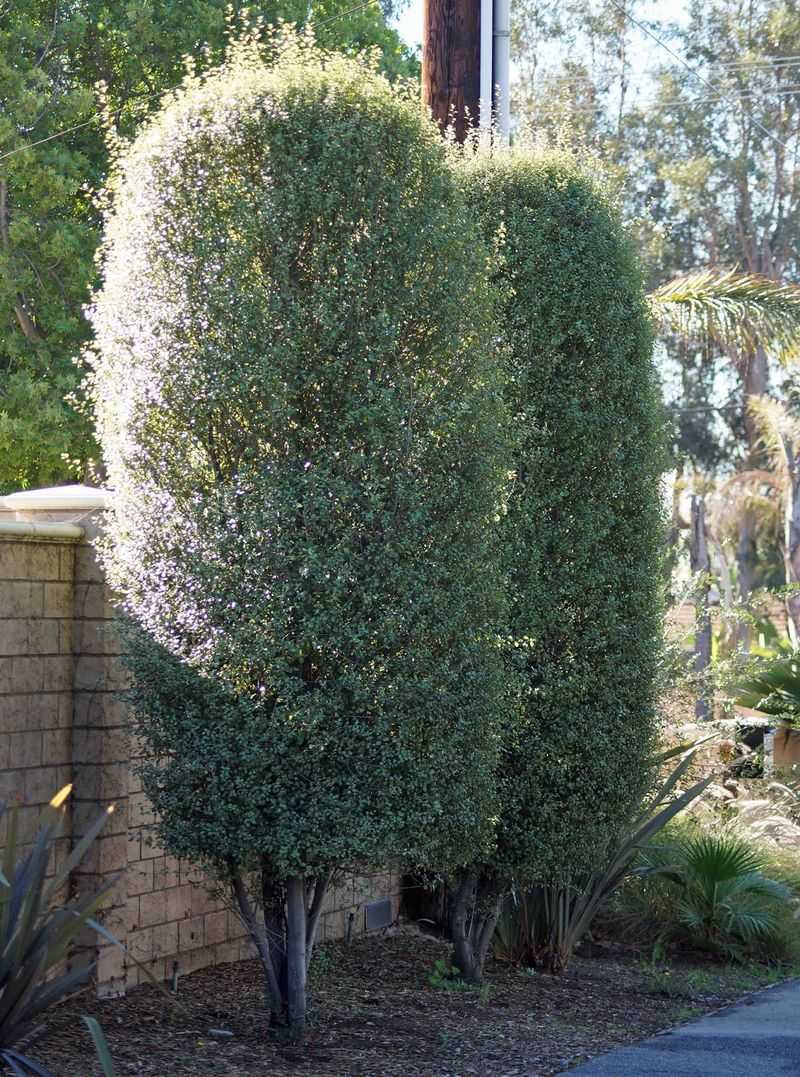
Narrow side yard with a window staring right at yours? Silver Sheen pittosporum grows upright and slim, often 15 feet tall but only a few feet wide.
Its small, shimmering leaves give a soft, airy look while still blocking views. It is not native, but it is non-invasive in most of California and needs moderate water.
Roots are generally fibrous and manageable, making it popular for tight spaces near walls and pools. Space plants about 4 feet apart for a living wall in two or three years.
9. Podocarpus macrophyllus
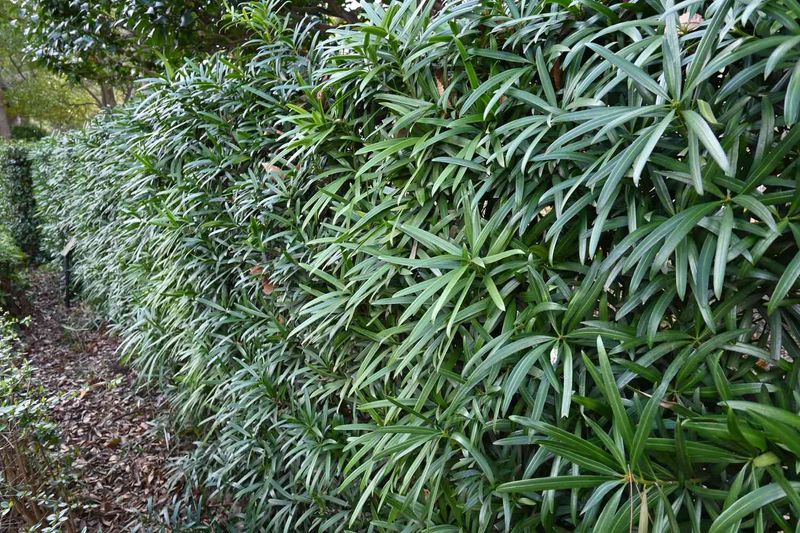
Pool builders often recommend yew pine, and for good reason. Its roots are well known for staying relatively tame, and it drops very few leaves into the water.
Podocarpus grows upright to 20 feet or more but shears beautifully into a tall, formal hedge. It is a steady grower rather than a sprinter, so buy larger plants if you need privacy sooner.
It needs moderate water and tolerates sun or shade. Pair it with native flowering shrubs nearby to keep pollinators happy.
10. Bush Anemone (Carpenteria californica)
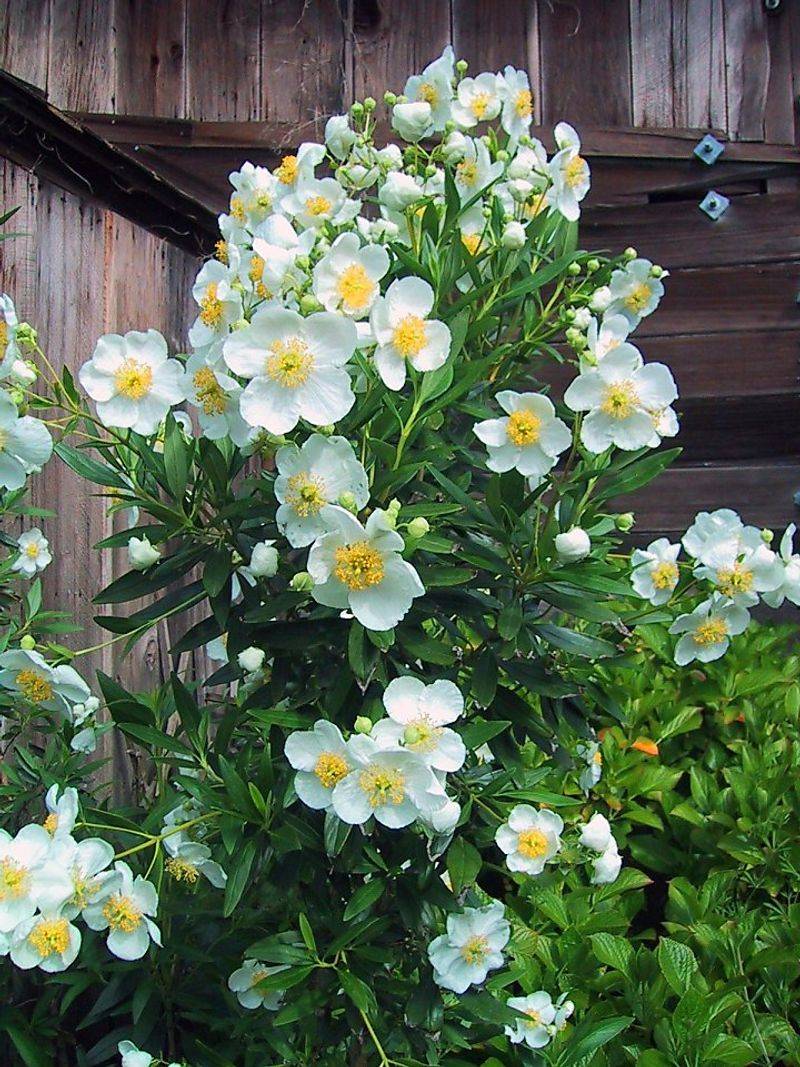
Rare in the wild and found naturally only in the Sierra foothills near Fresno, bush anemone feels like a garden secret. Big white flowers cover it in late spring.
It grows 6 to 8 feet tall with evergreen leaves, ideal for screening a patio or lower window. It prefers some afternoon shade inland and occasional summer water.
Roots stay compact, so it fits close to decks and paths. Planting it also helps keep a rare California native in circulation, a nice win for any stewardship-minded gardener.