
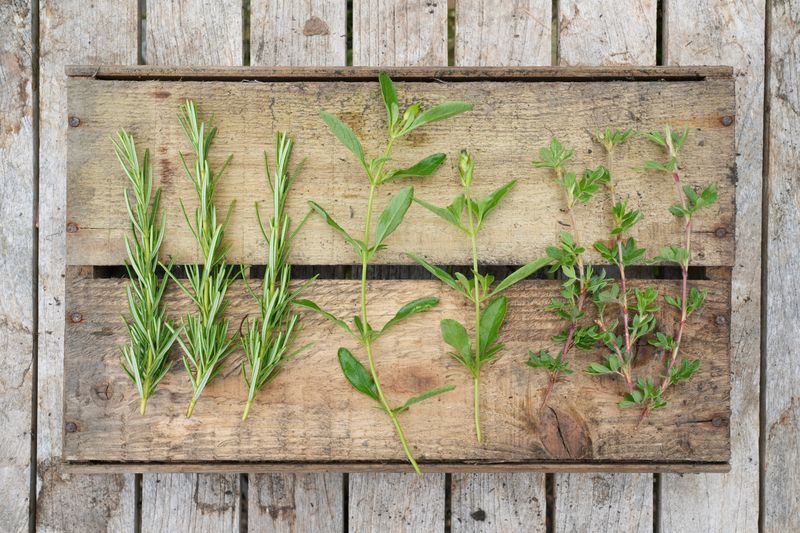
Got a rosemary bush that is sending out long green shoots? Those tips might become new plants if you root them the right way.
Rosemary and thyme do not take to the same method, and timing depends on where you live. Here is how to try each herb, what to expect, and why a few cuttings may not make it.
October is not a universal propagation deadline
Mid-October gets a lot of attention, but it is not a magic cutoff for taking herb cuttings. Florida Extension describes fall as a good season for planting herbs, including rosemary and thyme.
That is advice about setting plants in the ground, not about when to snip cuttings.
For rosemary, a UC fact sheet points to soft new growth in late spring or early summer. Thyme guidance from Texas A&M AgriLife explains how to root stem cuttings but sets no October cutoff.
So what should you do this week? Look at your own plant.
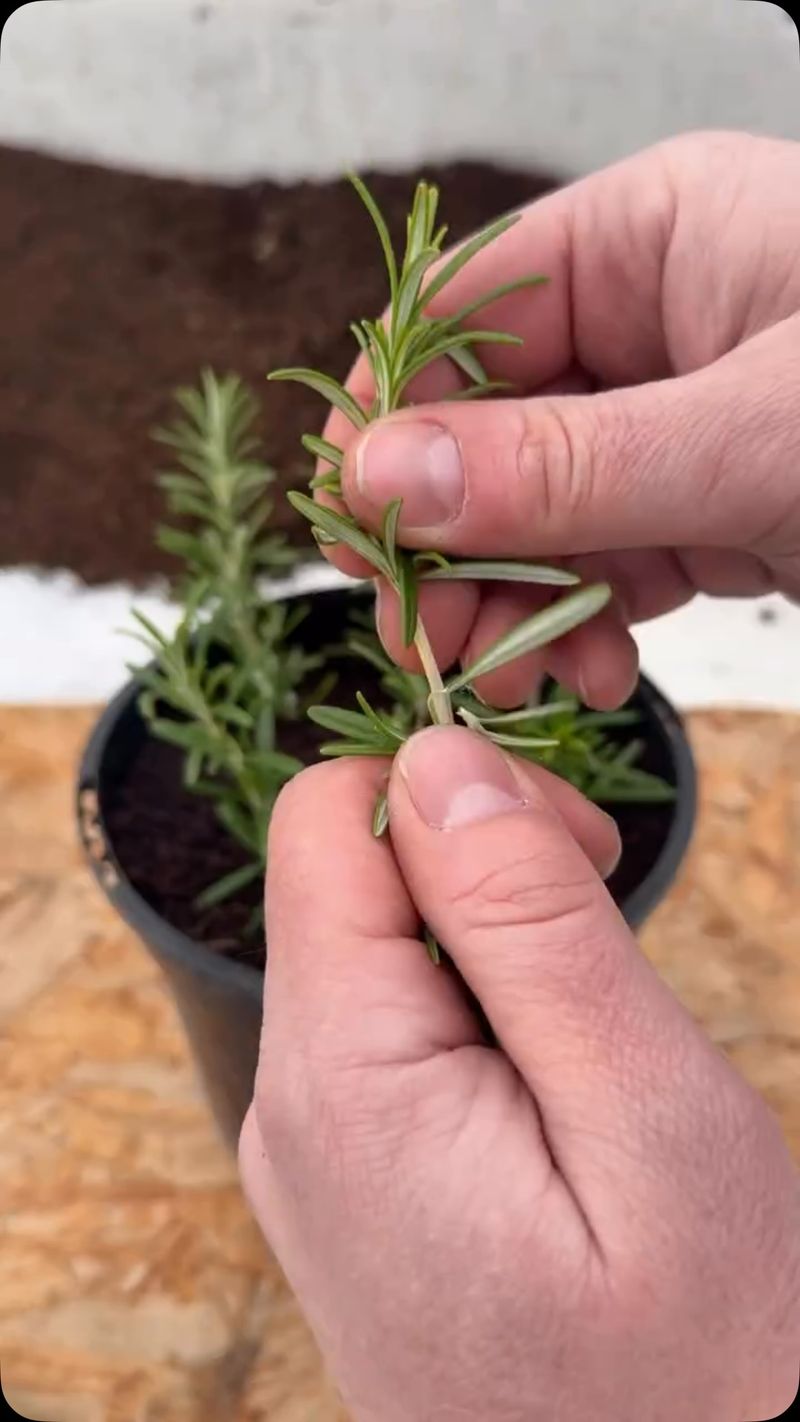
If it has fresh, flexible growth and your local weather is mild, you can try a few cuttings. If the plant is mostly stiff, woody stems, wait for new growth.
Your region and your plant matter more than the calendar.
Choose flexible tips, not the oldest wood
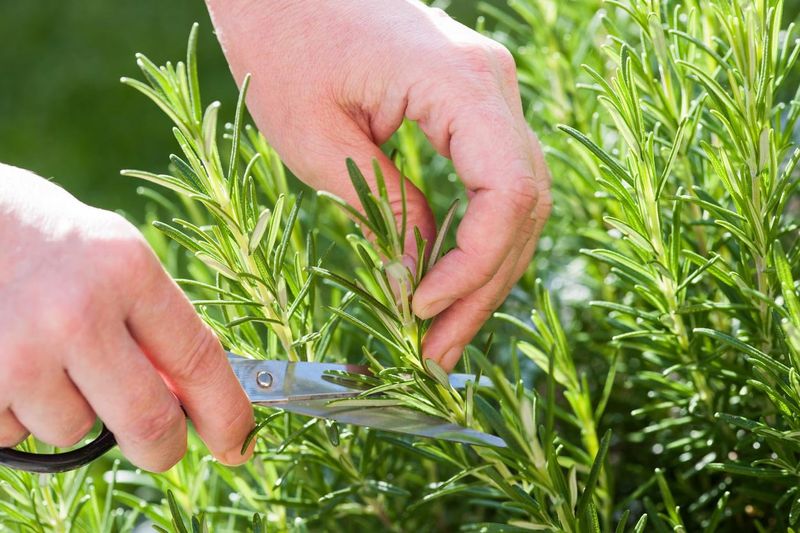
A big, overgrown rosemary plant looks like a gold mine, but size alone does not help. What you need is healthy, green, flexible new growth without flower buds.
The stiff, brown base of the plant is not the material to use.
Extension guidance from NC State and University of Nevada, Reno calls for cuttings of roughly 3 to 6 inches. A simple test: if the stem bends easily and does not snap, it is probably soft enough.
Strip the leaves from the lower portion of each cutting. Those leaves would otherwise sit underwater or below the rooting medium and may rot.
The UC fact sheet also describes softwood cuttings as the target.
If your overgrown plant has little fresh growth, trim it lightly and wait for new shoots rather than forcing old wood to root.
Root rosemary cuttings in a jar of water
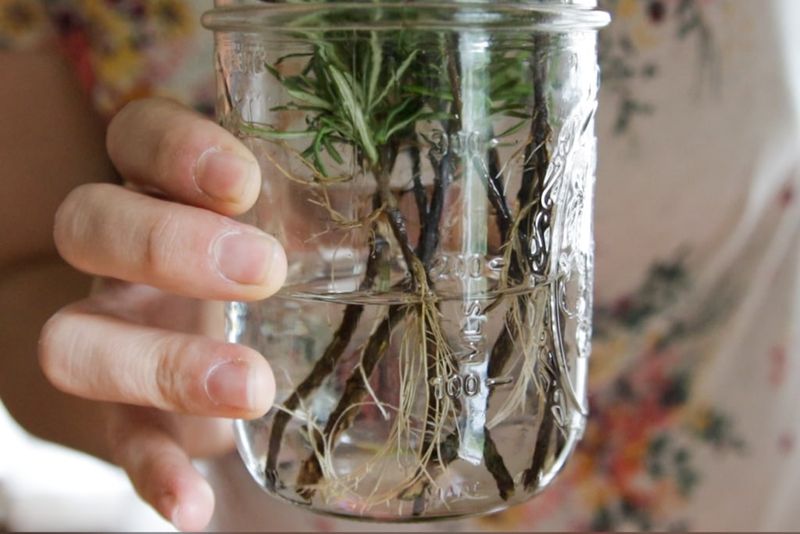
Here is the kitchen-counter method for rosemary. Fill a clean glass or jar with room-temperature water.
Place your prepared cutting in it so the bare stem is submerged and every leaf stays above the waterline.
Set the jar in a warm, bright spot, but keep it out of harsh direct sun. A sunny windowsill with filtered light often works well.
Several cuttings in one jar are fine if the leaves are not crowded.
Water rooting is a documented option for rosemary. A University of Nevada, Reno Master Gardener article lays out the steps, and a UC fact sheet lists water among rooting choices.
Neither source shows that water beats other methods, so think of it as a fun, easy option rather than a shortcut. This jar setup is for rosemary only, and thyme needs a different approach.
Use moist sand as the supported thyme method
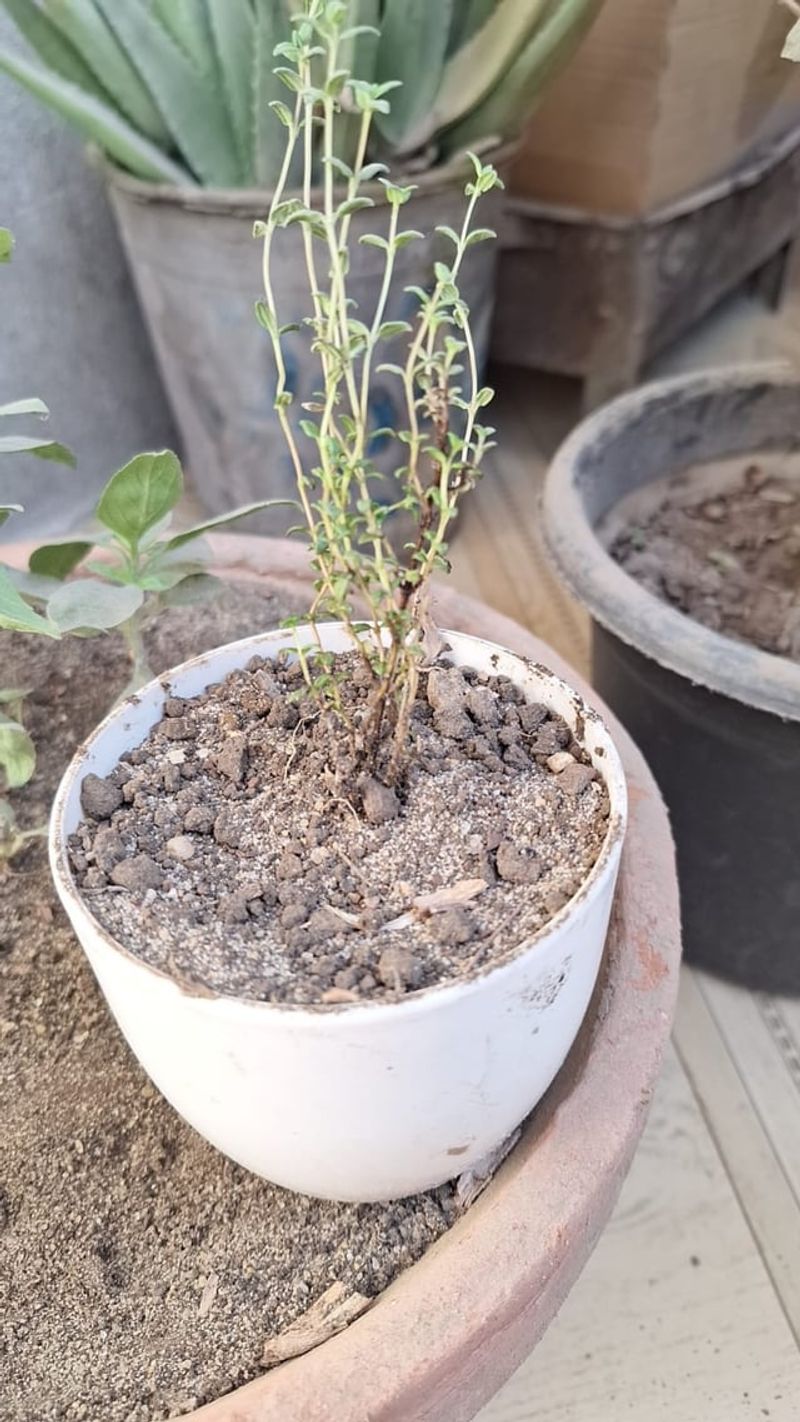
Thyme is happy to grow from stem cuttings, but the jar is not the best-supported route. Texas A&M AgriLife recommends 4 to 6 inch stem sections rooted in moist sand in a shady area.
Iowa State Extension agrees that thyme cuttings root readily under favorable conditions.
Moist sand is the better-supported choice, though it may not be the only method that could work. What we cannot say is that thyme roots well in standing water, because the guidance does not show that.
To try it, fill a small pot with clean sand, wet it until damp but not soggy, and insert the bare lower end of each cutting. Keep the pot in bright shade.
If you want both herbs, use water for rosemary and sand for thyme.
Expect roots to take weeks, not days
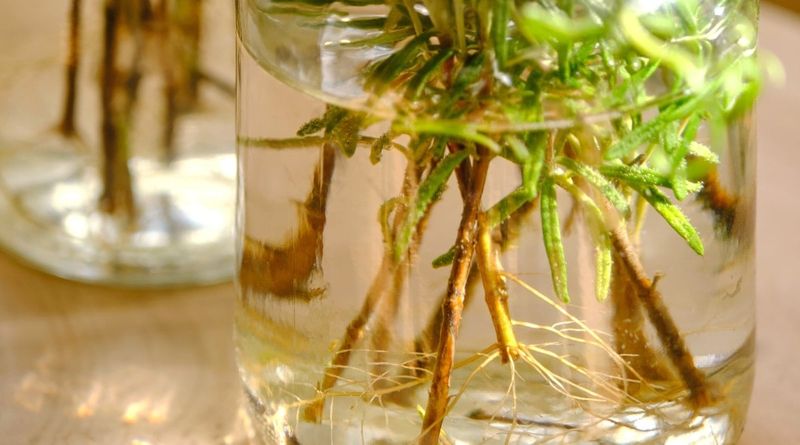
Patience is the main tool here. For rosemary in water, Nevada Extension says roots may begin in two to four weeks, while the UC fact sheet gives two to five weeks for softwood cuttings.
Thyme in moist sand runs longer. Texas A&M expects roots in four to eight weeks.
Those are estimates tied to each method, and your kitchen or patio may differ.
While you wait, change the rosemary water every few days, or sooner if it turns cloudy. Fresh water helps keep rot at bay.
A clear glass lets you watch for roots, but it does not guarantee they will form.
A cutting that turns black or mushy at the base is usually not coming back, so discard it and keep the healthy ones.
Move rooted cuttings into well-drained conditions
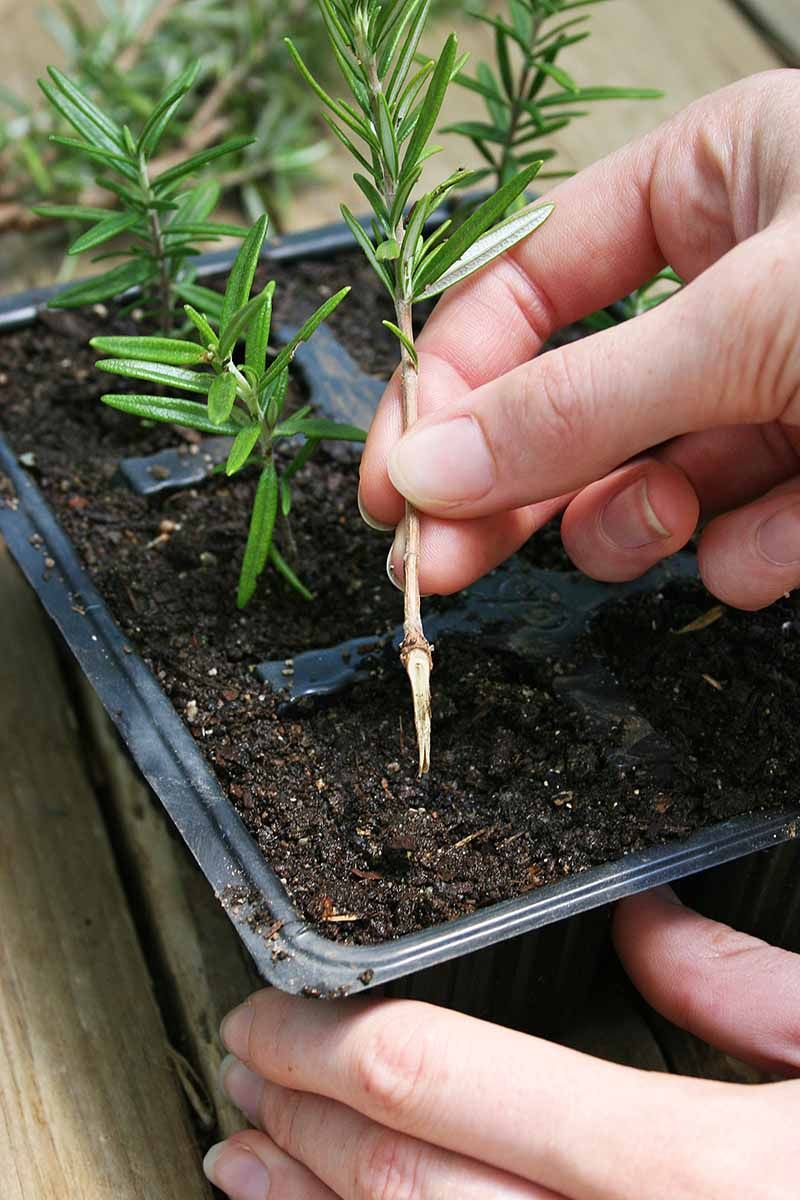
Once your rosemary shows several roots about half an inch long, it is ready to leave the jar. The Nevada Extension article uses that size as its transplant cue.
Pot it into a well-drained mix, not heavy garden soil.
Keep the young plant out of harsh sun, wind, and temperature swings while it settles in. NC State Extension advises protecting new plants and acclimating them gradually before they go outdoors.
Try a few hours in a sheltered spot, then lengthen the time over a week or two.
Drainage matters for the long haul. Texas A&M warns against soggy conditions for rosemary, and Iowa State says the same about thyme.
Water was only the rooting stage, so do not leave a mature herb sitting wet.
Take extra cuttings, not guaranteed plants
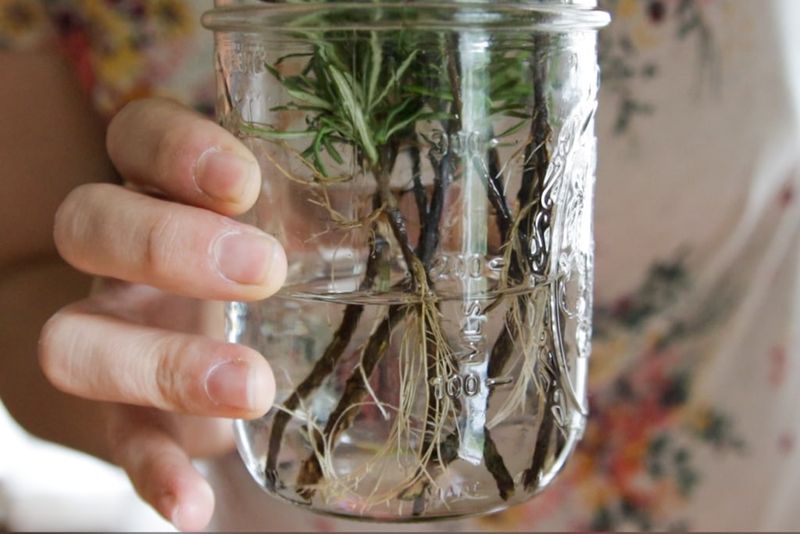
Try rosemary in water and thyme in moist sand, and snip more cuttings than the number of plants you hope to keep. Some will fail, and that is normal.
NC State Extension reports 30 to 50 percent rooting for its rosemary-in-pot method. That number is not a prediction for water rooting, but it shows that rosemary cuttings do not always take.
If you want four new plants, start with eight to twelve healthy tips. Label your jars and pots so you can track what works in your own yard.
Free plants are possible, never promised. Treat every cutting as a small experiment, and the ones that root become a bonus.