
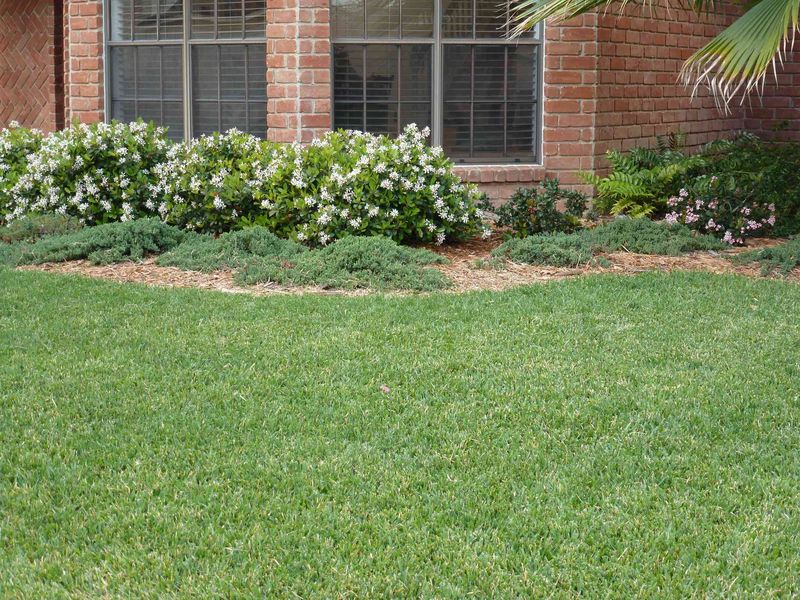
Brown, thin patches showed up in plenty of St. Johns County yards after a dry summer. Before you reach for the hose or a bag of fertilizer, it helps to know what is really going on in your grass.
October can be a good time to look closely and give your lawn steady, sensible care. This plan shows what to check, what to do, and what to skip.
What the dry summer may mean for your lawn
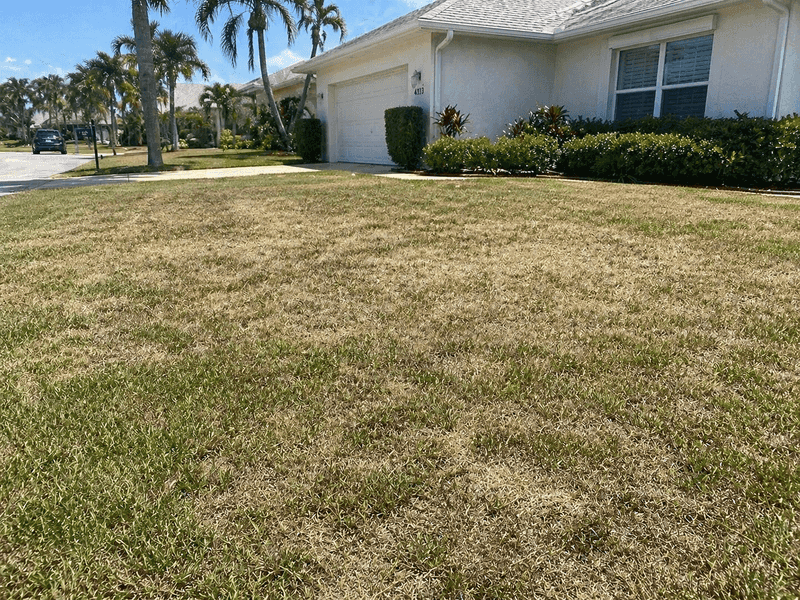
A dry summer can leave turf stressed, and this one was unusually dry along parts of coastal Florida. According to NOAA’s Drought.gov summer review, St. Johns County was still 10.26 inches below normal for January through September, and the same county summary ranks September as the 42nd driest on record.
Those numbers describe the county, not your yard. They cannot tell you whether a particular lawn is drought-damaged.
Rainfall, irrigation, shade, soil, pests, and disease can all produce different results on neighboring lots, so a green yard next door and a patchy one across the street are both normal.
That is why October works best as a time to look, not a time to treat everything. Walk your lawn, note where the grass is brown or thin, and ask whether the pattern matches drought, shade, or something else.
A lawn under a live oak behaves differently than one on a sunny, sandy lot.
Expect slower progress than you might hope. UF/IFAS explains in its winter lawn guidance that turf grows more slowly as days shorten and temperatures cool.
Careful care in October can help, but it does not guarantee a quick green-up, and some lawns will not need any special action at all.
Check St. Johns County’s watering rules first
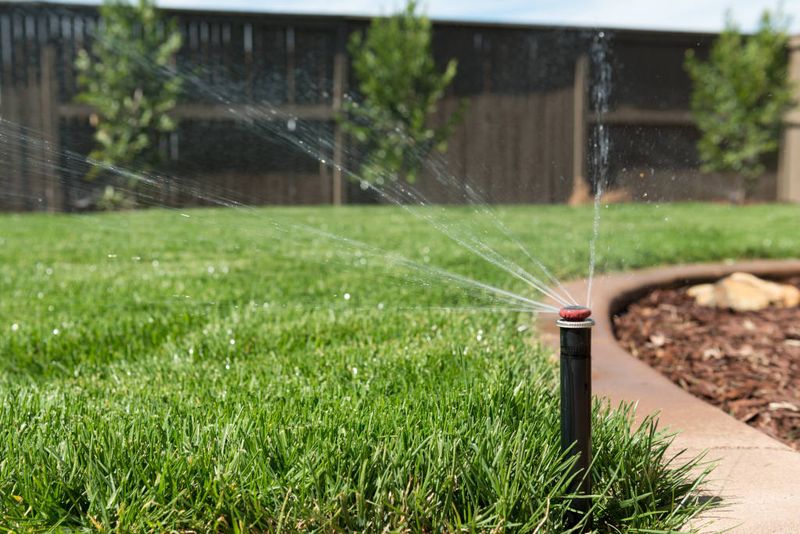
Local rules come before any watering plan. The St. Johns County Protect Our Water page reports Phase III restrictions effective May 11, 2026.
Landscape irrigation is limited to one day per week, and no irrigation is allowed from 8 a.m. to 6 p.m.
Residential addresses ending in an even number water on Sundays. Odd or unnumbered addresses water on Saturdays.
The county says the schedule applies to public and private utilities, wells, and surface or groundwater, so a private well does not exempt you. Reclaimed water is excluded from the one-day schedule.
Restrictions can change, so open the county page again before you set your timer. Confirm the phase, your day, and the allowed hours instead of relying on memory or a neighbor’s habits.
Keep one idea separate from the schedule. Being allowed to water on your day does not mean your lawn needs water that day.
The schedule sets the outer limit, and the condition of your grass decides whether to use it. Many homeowners find it helpful to turn off automatic timers and run the system only when the turf shows real stress.
Water established grass only when it shows stress
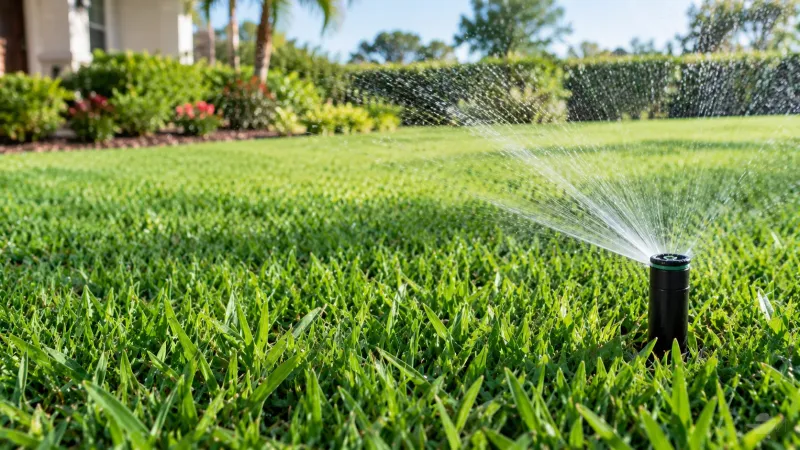
Established St. Augustine tells you when it is thirsty. UF/IFAS says in its St. Augustinegrass guide that blades may fold or wilt, the lawn may turn blue-gray, or footprints may stay visible after you walk across it.
If you see those signs, and your county day and hours allow, it is time to irrigate.
Aim for about one-half to three-quarters of an inch per irrigation, and count any rain that fell. Scatter a few empty cans across the lawn, run the sprinklers, and measure how much water collects.
That shows how long your system needs to run.
You can also check the soil. UF/IFAS irrigation guidance suggests that a screwdriver or soil probe should push easily 6 to 8 inches into moist soil.
If it stops short, the soil is drier than the surface suggests.
Skip daily or frequent shallow watering. It can encourage shallow roots and make grass more vulnerable to drought, and fall and winter call for less water than summer.
Also keep expectations honest. Water helps living turf, but it will not bring back dead grass or cure a disease, so brown areas that stay brown after a good soaking need a closer look.
Mow to protect the turf that remains

Where grass is thinning, every healthy blade counts, and mowing is one of the few things you fully control. For standard St. Augustine cultivars, UF/IFAS recommends a mowing height of 3.5 to 4 inches.
Taller blades shade the soil and support deeper roots.
Follow the one-third rule and never remove more than a third of the blade in a single mowing. If the grass has grown to 6 inches, cut it to about 4 inches, not 3.
When the lawn is under moisture stress, raise the mower deck a notch if you can.
Dwarf cultivars, such as some compact varieties, have different height guidance. Check the label on your sod or ask the grower before assuming the standard range fits your lawn.
A sharp blade also helps, since dull blades tear grass and leave ragged tips. Keep one limit in mind, though.
Good mowing protects what is still alive, but it will not tell you why a patch is brown and it will not repair one. Treat it as steady upkeep while you work out the cause.
Do not use October fertilizer as an automatic fix
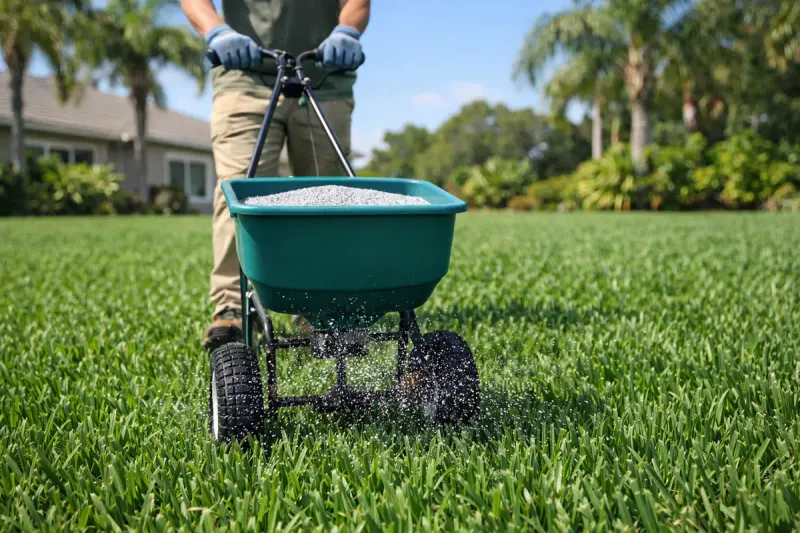
Feeding a brown lawn feels like the helpful move, but October is usually too late. UF/IFAS best management practices place the last fertilizer application in North Florida generally around mid-to-late September.
St. Johns County sits in that region.
The reason is simple. Once growth subsides, grass cannot make good use of extra nitrogen, and UF/IFAS cautions against fertilizing at that point.
Extra nitrogen can also raise the risk of large patch disease in fall, which would add a new problem to a stressed lawn.
Fertilizer will not give you a fast green-up either. Cooler weather and shorter days slow growth no matter what you apply, so a bag of feed in October mostly adds cost and runoff risk.
Iron is not a general cure for yellowing. Yellow or pale grass can come from disease, insects, poor drainage, or other stress, and iron only changes color temporarily in some cases.
Skip the automatic feeding, look at the pattern of discoloration, and find the cause first. If a soil test or a diagnosis points to a real nutrient problem, plan that for the next growing season.
Identify the cause before treating or repairing patches
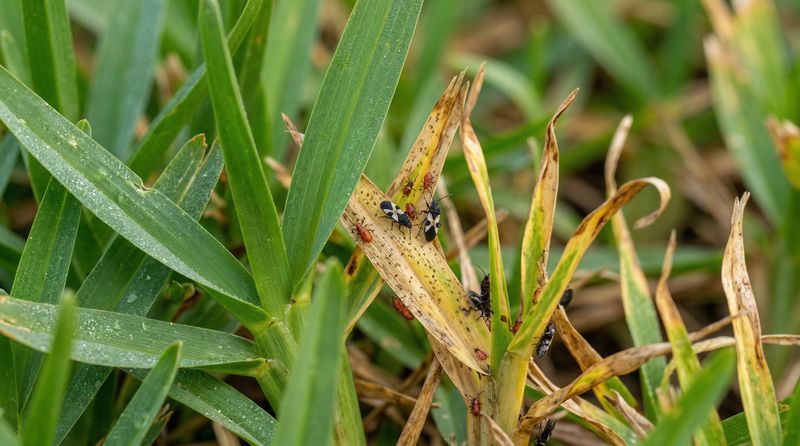
Brown or thin turf is not proof of drought injury. UF/IFAS lists drought, large patch, chinch bugs, and other stresses as possible causes, and they can look alike from the sidewalk.
Large patch often starts as yellow areas that turn reddish-brown, brown, or straw-colored. Tug a few blades and check the base for a soft, dark rot.
UF/IFAS large patch guidance says it is common in St. Augustine and most often noticed from November through May, though fall susceptibility matters too. Fungicide does not make turf grow faster, so do not use it as a green-up product.
Chinch bug injury often shows up near sidewalks, driveways, or buildings, where heat is greatest. Look at where the damage sits and how it spreads.
Do not apply insecticide or fungicide without a diagnosis, and follow every label. Your county extension office can help identify the problem.
If a large area is truly bare, St. Augustine is established vegetatively, so plugs or sod are the options, not seed. UF/IFAS establishment advice covers the basics.
Planting late in fall can risk winter injury, and new turf needs establishment watering that still follows county irrigation rules. Repair in fall is possible, but it is not risk-free.
Use October for a measured lawn check
Treat the month as a short checklist. Confirm the county’s current watering rules, then irrigate established grass only if it shows stress and your day allows it.
Mow at the height UF/IFAS recommends for your cultivar, skip automatic fertilizer per its timing guidance, and investigate stubborn patches before treating or replanting.
Plenty of lawns will need nothing beyond this, and recovery depends on the cause and on whether living turf remains. With slower cool-season growth, visible change may take until spring, as noted in UF/IFAS winter lawn advice.
A calm lawn in October is usually a lawn getting exactly what it needs.