
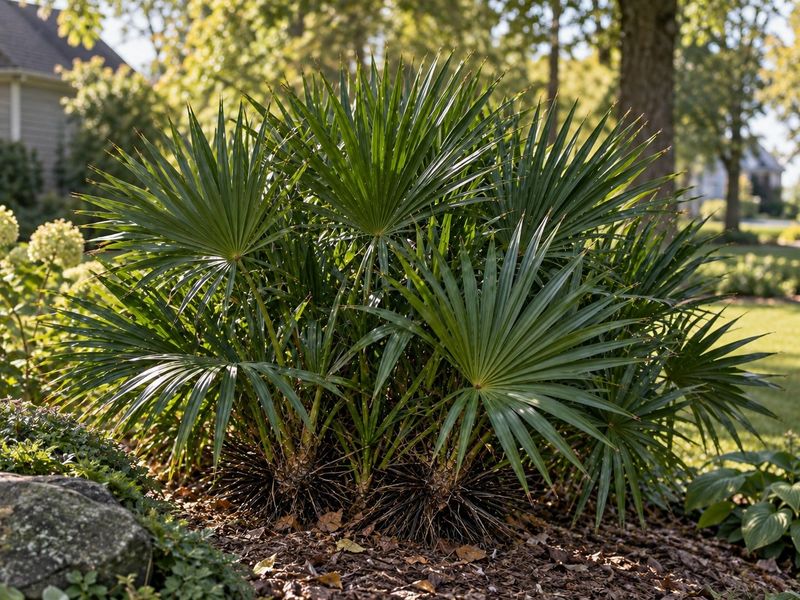
A winter freeze can turn a tropical-looking yard brown overnight, but the right palms give North Florida gardeners better odds. Several tough species handle local cold while adding bold leaves, height, and year-round color.
Some fit beside a porch, while others grow into large shade-casting trees. These seven choices offer different ways to get that tropical feel, though even hardy palms can suffer leaf damage during a severe or long freeze.
1. Cabbage Palm
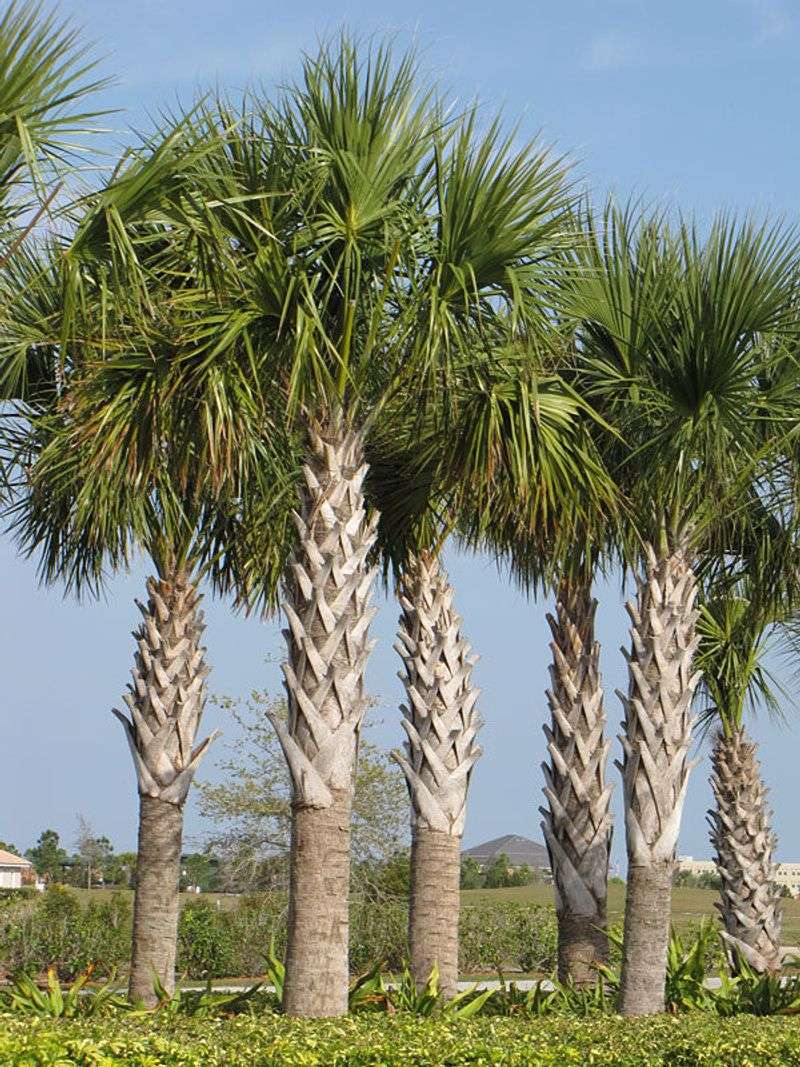
Few trees say Florida quite like a tall palm standing green above a quiet winter lawn. The cabbage palm, Sabal palmetto, delivers that classic look and is native to the state, making it a sensible starting point for many North Florida yards.
Expect a mature landscape height of roughly 40 to 60 feet, sometimes more. Its broad crown needs room away from roof edges, overhead wires, and tight entry paths, so think of it as a long-term canopy feature rather than a porch plant.
Established specimens tolerate drought, coastal conditions, and occasional wet soil. They commonly handle temperatures in the teens, but leaf damage and survival depend on the length of the freeze, the tree’s health, and its exposure.
Choose a sunny location and arrange professional installation for large specimens. Newly transplanted palms need careful watering while they rebuild their roots, even though established trees are relatively undemanding.
Keep green fronds instead of giving the crown a hurricane cut. Flowers feed insects, and the small fruits provide food for birds, adding wildlife value along with that familiar Florida skyline.
2. Needle Palm
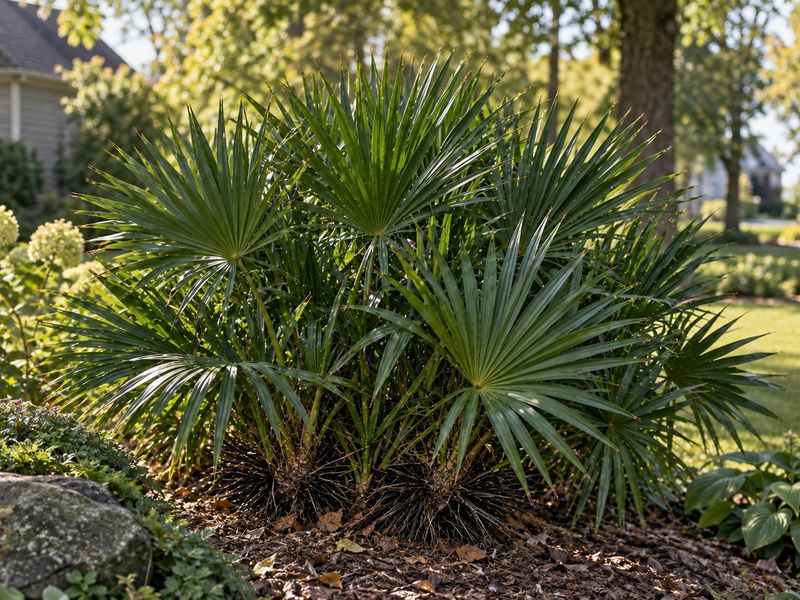
For the coldest corner of a North Florida garden, a palm that stays close to the ground can be a smart move. Needle palm, Rhapidophyllum hystrix, is among the most cold-hardy palms and brings lush fan leaves to places where tender tropical species struggle.
Rather than forming a tall trunk, it grows into a dense clump, often around 4 to 6 feet tall and potentially wider with age. That shape works well beneath an open tree canopy or along a woodland border where you want evergreen fullness.
Give this native palm partial shade and moist, well-drained soil. It can handle some sun, but an exposed, dry patch of North Florida sand usually asks more of it than a sheltered bed with steady moisture.
The name comes with a warning: sharp needles hide around the base. Keep it away from play spaces, narrow walkways, and spots where someone might reach into the foliage.
Plant a nursery-grown specimen in spring and water through establishment. Its slow growth rewards patience, so buying a fuller plant can give a small garden a more finished look from the start.
3. Dwarf Palmetto
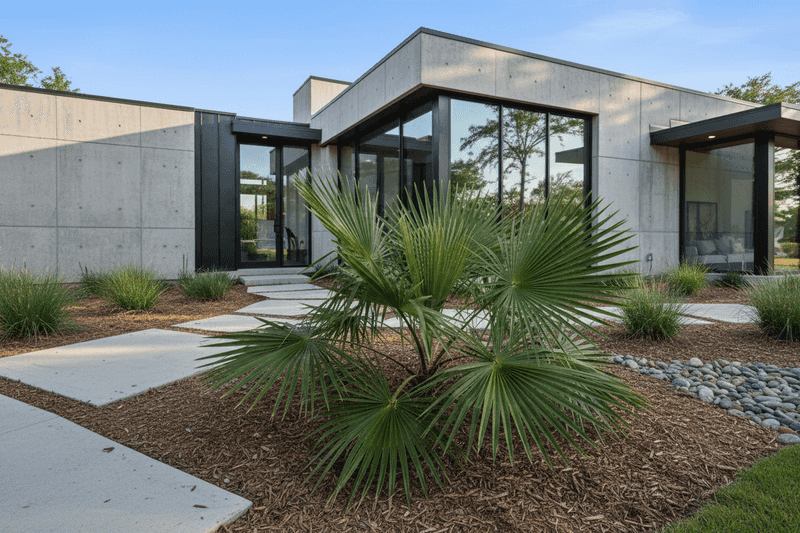
A low spot in the yard does not have to miss out on tropical foliage. Dwarf palmetto, Sabal minor, naturally grows in moist woods and floodplain settings, giving gardeners a cold-tough option for areas that stay damp after rain.
Most plants keep their trunk underground and carry broad fans roughly 3 to 6 feet above the soil. The effect is bold but low, useful beneath taller trees or beside a shallow drainage swale where a tall palm would feel out of scale.
Sun to partial shade works, provided the plant has enough moisture while getting established. Although mature plants tolerate some drought, do not confuse that resilience with a preference for baking, neglected sand.
Its strong cold tolerance makes it a dependable candidate for inland North Florida gardens. Severe weather can still mark the leaves, especially on a newly planted specimen, but established plants generally cope well with ordinary regional freezes.
Leave space around the crown for its fans to spread. Slender flower stalks and dark fruits add seasonal interest, and birds can use the fruit, making this native a useful bridge between an ornamental bed and a wildlife-friendly landscape.
4. Windmill Palm
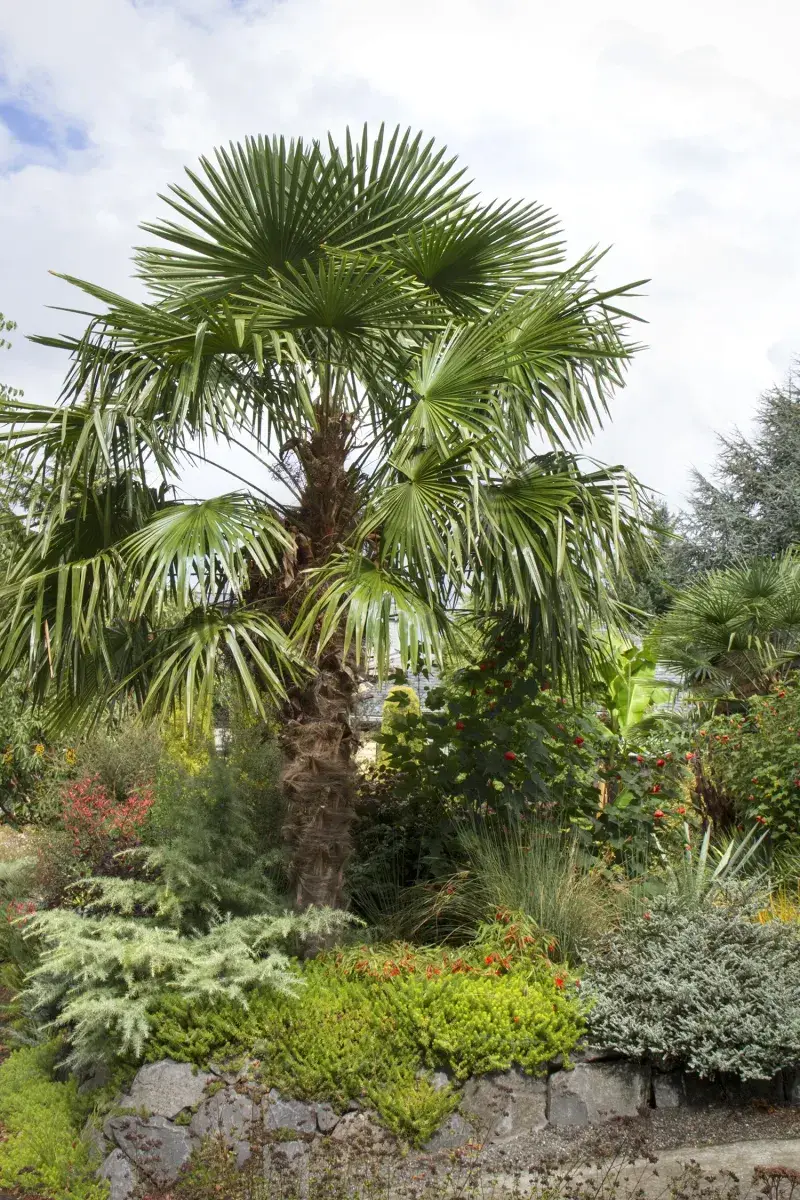
A shaggy trunk gives this upright palm a personality all its own. Windmill palm, Trachycarpus fortunei, pairs coarse brown fibers with rounded fans, offering a compact-looking alternative to the broad crown of a mature cabbage palm.
It often reaches 20 to 30 feet in landscapes, although taller specimens occur. Use it as a vertical accent beside a patio or in a protected courtyard, leaving enough room for the crown rather than squeezing it directly against a wall.
Cold tolerance is a strength, with established plants often enduring temperatures in the teens. North Florida’s long periods of heat and humidity can be more challenging, so good drainage and thoughtful placement matter just as much as winter hardiness.
Morning sun with some afternoon shade is a useful option in hotter sites. Shelter from strong winds also helps keep the fan leaves from becoming shredded and tired-looking.
Water regularly during establishment without keeping the root zone soggy. Choose a healthy nursery plant, plant during spring warmth, and avoid low areas that stay waterlogged; a cool-weather reputation does not make this palm suited to every Florida yard.
5. Pindo Palm
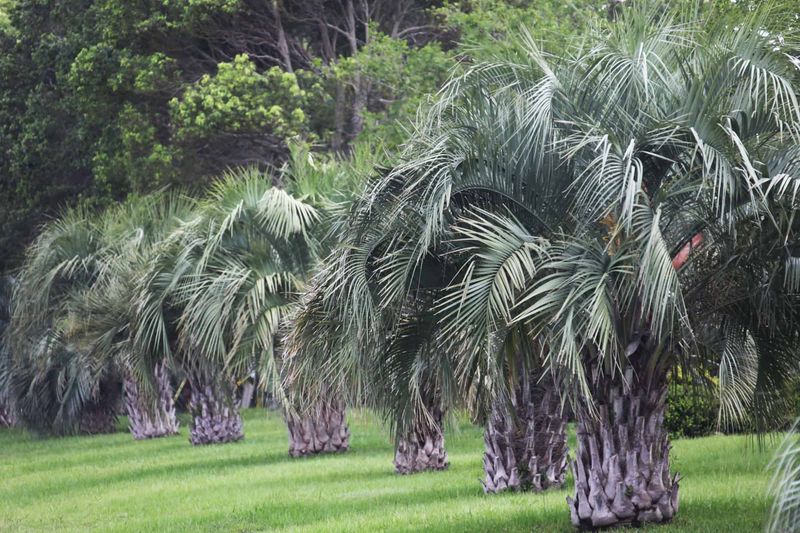
Silver-blue fronds bring a softer look than the stiff fans on many hardy palms. Pindo palm, Butia odorata, earns its place through long, arching leaves that create a feathery tropical shape without the cold sensitivity of a coconut palm.
Allow for a crown around 10 to 15 feet wide and a mature height commonly near 15 to 20 feet. A sunny lawn island or broad front-yard bed gives those curved fronds room to show off without brushing people or parked cars.
Established plants often tolerate brief cold snaps into the teens, though severe freezes can burn foliage. Choose well-drained ground, since persistent wetness can create problems even when winter temperatures are suitable.
The nickname jelly palm refers to its edible fruit, which some gardeners use for jelly. Fallen fruit can also create a sticky cleanup job, so avoid placing it beside a pool deck, busy sidewalk, or driveway.
Handle the leaf stalks carefully because they have teeth along the edges. Remove dead fronds as needed, but preserve healthy green foliage and leave enough distance from paths that routine pruning does not become a constant chore.
6. Saw Palmetto
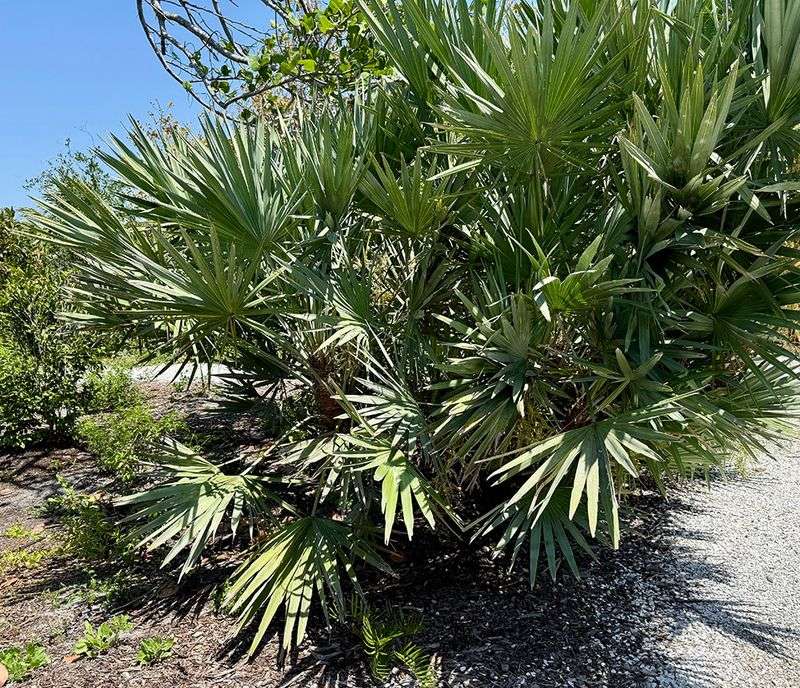
Along Florida’s sandy roadsides, tough palmetto clumps often stay green with little help from anyone. Saw palmetto, Serenoa repens, brings that rugged character home, especially where a broad planting bed needs texture rather than a tall centerpiece.
Green forms blend into woodland edges, while silver forms add striking color in sunny landscapes. Plants commonly grow about 5 to 10 feet tall and spread through creeping stems, so reserve a generous area instead of treating one as a small foundation shrub.
Cold hardiness, drought tolerance after establishment, and tolerance of coastal exposure make this native useful across much of North Florida. Give it well-drained soil and sun to partial shade, adjusting expectations because growth is usually slow.
The sawlike teeth on its leaf stalks are sharp. Place it away from mailboxes, children’s play areas, and narrow routes where arms or legs could brush the foliage.
Flowers attract pollinators, and fruits feed wildlife. Buy nursery-grown plants rather than collecting wild ones, and keep dense plantings away from the house where local wildfire-safety guidance calls for a more open, low-fuel zone.
7. European Fan Palm
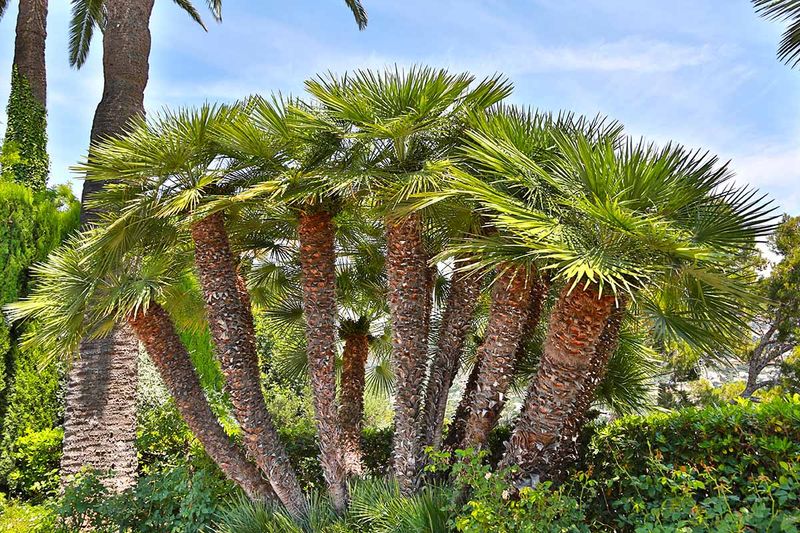
Not every yard has room for a palm towering above the roof. European fan palm, Chamaerops humilis, offers a smaller, sculptural presence, with multiple trunks and stiff fans that suit a sunny courtyard or a roomy entry bed.
Slow growth keeps its size manageable for years, although older plants can reach roughly 10 to 15 feet tall and develop a substantial spread. Buy for the mature clump, not just the neat little plant sitting in a nursery pot.
Established specimens commonly tolerate brief temperatures in the teens, but prolonged freezes can cause damage. A sunny, sheltered location with excellent drainage gives it a better chance than a soggy pocket exposed to cold wind.
Once rooted in, it handles dry spells well. During establishment, water the root ball thoroughly and let the soil drain between waterings rather than keeping the base constantly wet.
Its leaf stalks carry sharp spines, so leave comfortable clearance beside doors and paths. For this palm and the others on the list, spring planting gives roots a long warm growing season before winter; keep mulch off the trunk and remove only dead or badly damaged fronds.