
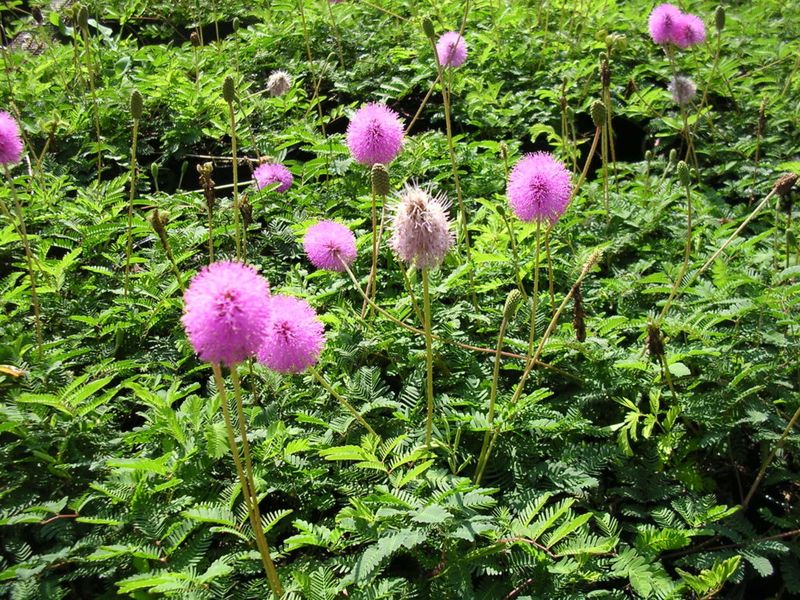
Anyone who has watched a summer downpour push mulch across a Florida bed knows the frustration. A living groundcover can hold the ground in a different way, with roots instead of a loose layer.
One Florida native, sunshine mimosa, spreads fast and has fans for good reason. Here is what it can do, what it needs, and where plain old mulch still wins.
Bark mulch remains useful in many Florida beds
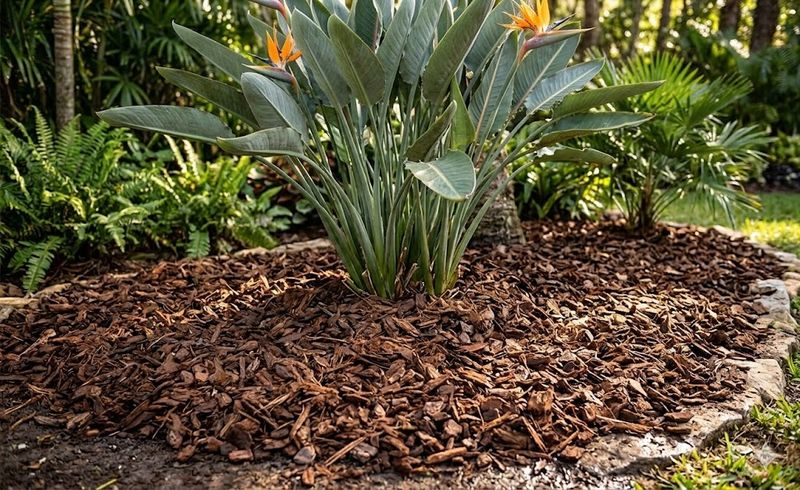
The headline says Florida gardeners are ditching bark mulch, but nothing in the sources behind this article shows that. There is no sign of a broad change in what gardeners do.
Mulch is still a standard tool in Florida landscapes, and for good reasons.
Organic mulch does break down over time, and that means topping it up now and then. That is a normal maintenance job, not a failure.
In return, UF/IFAS mulch guidance says mulch suppresses weeds, conserves soil moisture, and can reduce erosion. That is a lot of payoff for a few bags a year, especially in sandy Florida soil that dries out fast.
Pine bark also holds up better than many gardeners expect. A UF/IFAS study cited in that same guidance found it kept about two-thirds of its original depth after two years.
So it settles slowly rather than vanishing.
Heavy rain can still move loose mulch, particularly on slopes or where runoff gathers. That is a fair complaint, and it is the gap a living groundcover can help fill in some spots.
UF/IFAS recommends mulch for trees, shrubs, and many other plantings, so think of a groundcover as an option for suitable planted areas, not a replacement for every bed.
The rest of this article looks at one native plant that can work as living cover, and how to tell whether your bed is a good match.
Sunshine mimosa offers a fast-spreading living cover
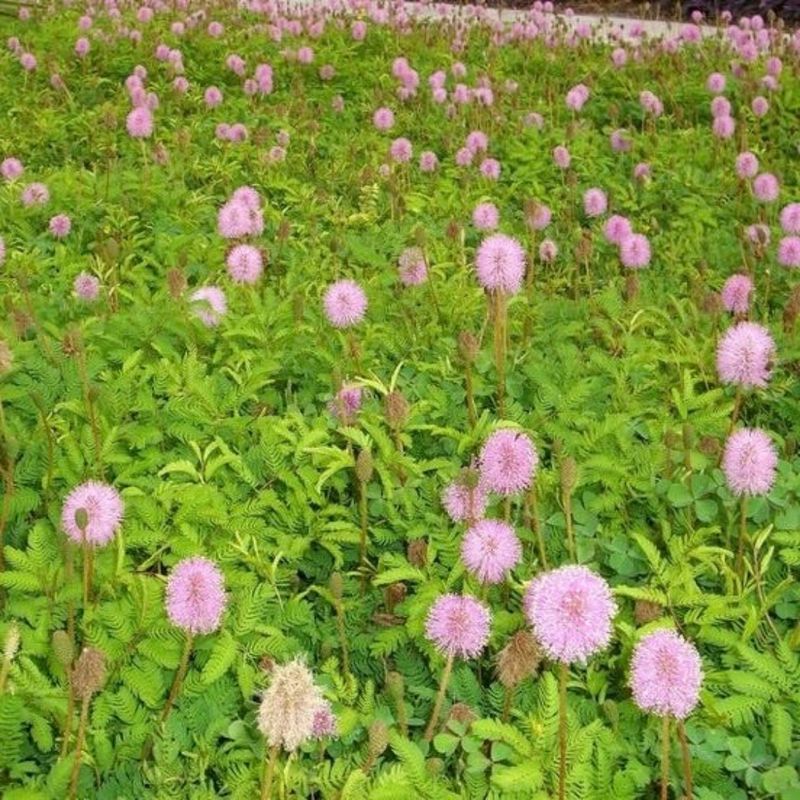
The headline never names its plant, but the best match is sunshine mimosa (Mimosa strigillosa). It is a low-growing groundcover, and UF/IFAS Gardening Solutions describes it as a Florida native that spreads quickly and can form substantial coverage.
Picture a carpet of fine, fern-like leaves hugging the ground. In warm weather it produces fuzzy pink powderpuff flowers that pollinators visit.
It grows in full sun or partial shade, which makes it a candidate for the bright beds where mulch tends to bake and dry out.
Fast spread is the main draw. Stems creep outward and cover bare soil, which can mean fewer gaps for weeds over time.
Because it is native, it also fits the Florida-first approach many gardeners want.
Still, quick spread does not mean guaranteed results. It will not fill every bed.
Soil, light, water, and how you care for it all affect how well it does. A shady corner, a spot that stays soggy, or a bed packed with other plants may not give it what it needs.
Treat it as a promising tool for the right spot, then check the details of your site before buying a flat of plants.
Established roots can help control erosion
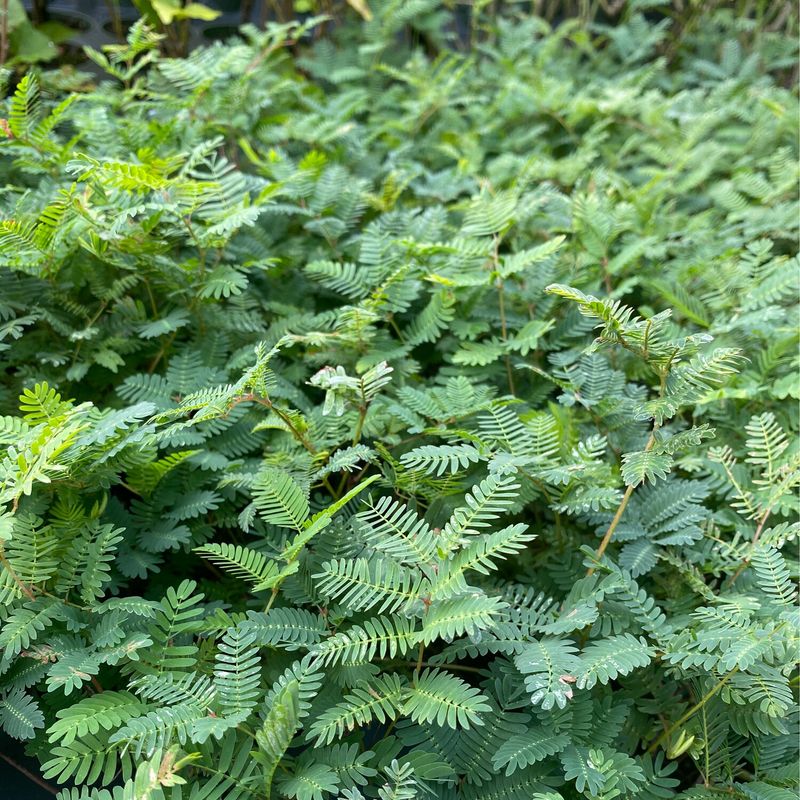
Here is the specific benefit UF/IFAS gives this plant. Once established, sunshine mimosa has deep roots that can help control erosion, according to UF/IFAS Gardening Solutions.
The key word is established. A young planting with thin roots does not offer the same hold.
Think about how the two approaches work. Mulch sits on top of the soil, so a strong flow of water can carry it off.
Roots grip the soil from within, and a leafy canopy softens the force of falling rain. That can give rooted cover an edge on a gentle slope or along a spot where water tends to run.
That is a measured advantage, not a promise. The source does not say the plant cannot wash out.
Extreme rain, flooding, or heavy runoff can still damage or dislodge plants, especially young ones. No groundcover is storm-proof.
A practical clue: if water already carves channels in a bed, fix the flow first with grading or a swale, then plant. Roots work best as one part of a plan, not the whole plan.
Give the groundcover time and care to establish
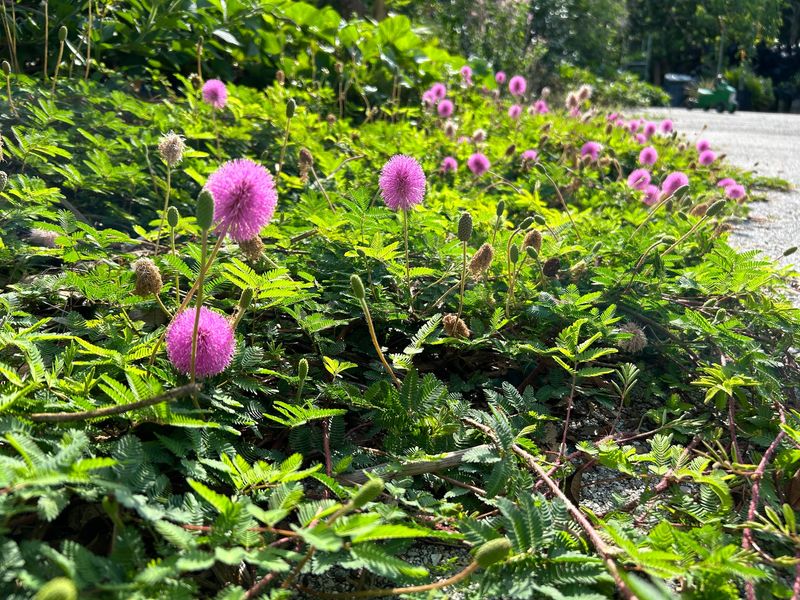
Planting day is the start of the job, not the finish. New sunshine mimosa needs regular watering while it gets established, and UF/IFAS notes it becomes drought-tolerant afterward.
In sandy Florida soil, skipping those early waterings can set young plants back.
Do not strip out all your mulch first. UF/IFAS butterfly-gardening guidance in its community ButterflyScaping publication advises keeping mulch while groundcovers establish.
Mulch fills the gaps between young plants, holds moisture, and keeps weeds down until the cover knits together.
Plant into the mulch by pulling it back from each planting hole, then settle the plant in and water well. As the stems creep outward, the living cover gradually takes over the job.
You may see a number floating around. UF/IFAS reports that four or five pots may cover up to 300 square feet in a season.
Treat that as reported potential, not a schedule. Your soil, sun, rainfall, and watering will decide the real pace.
Expect patchy coverage at first. Pull weeds by hand while the plants fill in, and be patient through the first season.
Match the groundcover to the bed
Before you buy plants, walk your yard and look at the light. Sunshine mimosa grows in full sun or partial shade, so sunny beds along a driveway or front walk are natural candidates.
Deep shade is a different story. UF/IFAS mulch guidance says mulch can be the better fit in deep shade and other difficult-to-grow areas, and it recommends mulch around trees, shrubs, and other plantings.
Under a dense oak canopy, a fresh layer of bark often does the job more reliably than a plant that wants light.
Ask a few quick questions. Does the bed get several hours of direct sun?
Can you water new plants regularly? Is there room for a spreading plant?
If you answer no to several, mulch may suit that spot better.
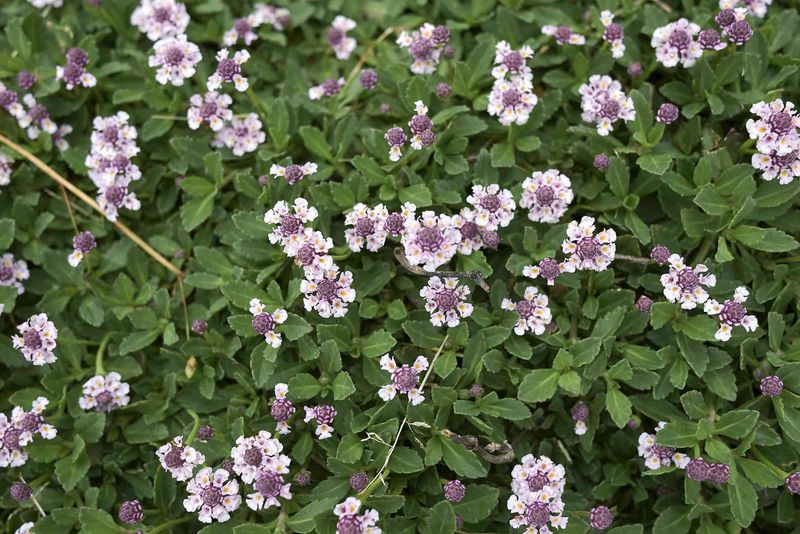
Frogfruit (Phyla nodiflora) is a separate Florida native worth a look if you want a dense mat. UF/IFAS says it spreads by rooting stems, grows in sun or partial shade across a range of soils, and can go dormant in winter or drought.
It is a different plant with its own habits, not another name for sunshine mimosa.
Some gardeners use both: living cover in open sunny beds and mulch where light is poor.
Plan for spread and seasonal dormancy
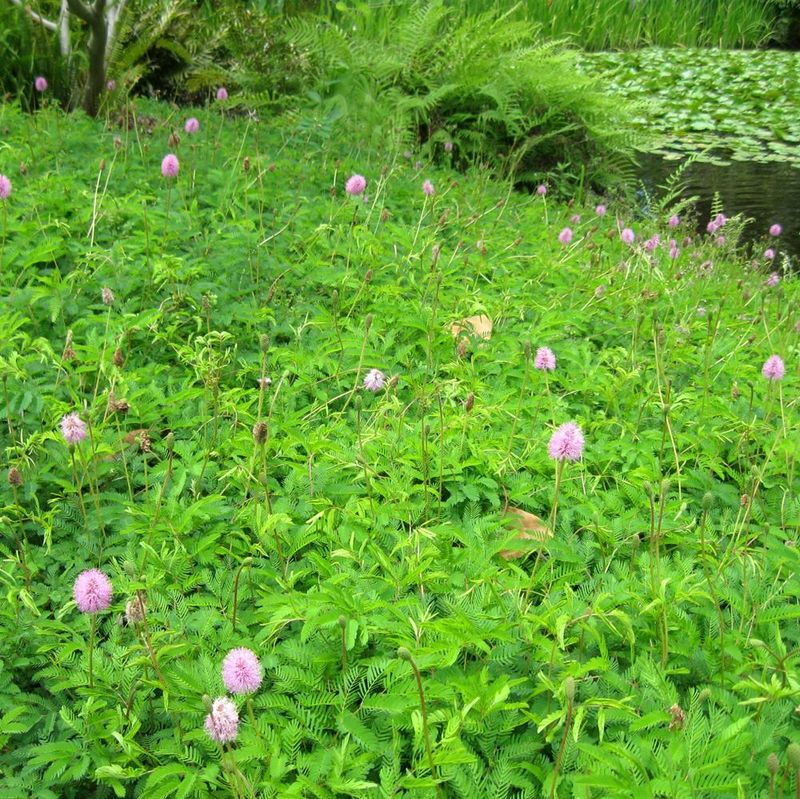
Spread is the plant’s best trait and its biggest chore. UF/IFAS Gardening Solutions says unwanted growth can be pruned or mown.
A Hillsborough County Extension guide, Groundcovers for an Alternative Lawn, adds that a barrier may be needed where you want to restrict it.
In practice, plan an edge. Beside a walkway, lawn, or a bed of smaller perennials, a buried barrier or regular trimming keeps stems from wandering.
Where it has room to roam, you may not need much at all.
Winter matters too. Sunshine mimosa is not evergreen, and its leaves may disappear during the coolest months.
The plant may go dormant, so a brown or bare look in January does not always mean it died. Expect new growth as warm weather returns, and keep that in mind if you want year-round green.
Finally, watch the name. Sunshine mimosa (Mimosa strigillosa) is a Florida native groundcover.
The mimosa tree (Albizia julibrissin) is a different plant, and UF/IFAS identifies it as invasive in Florida. Check the botanical name on the tag before you buy.
Use sunshine mimosa as a targeted mulch alternative
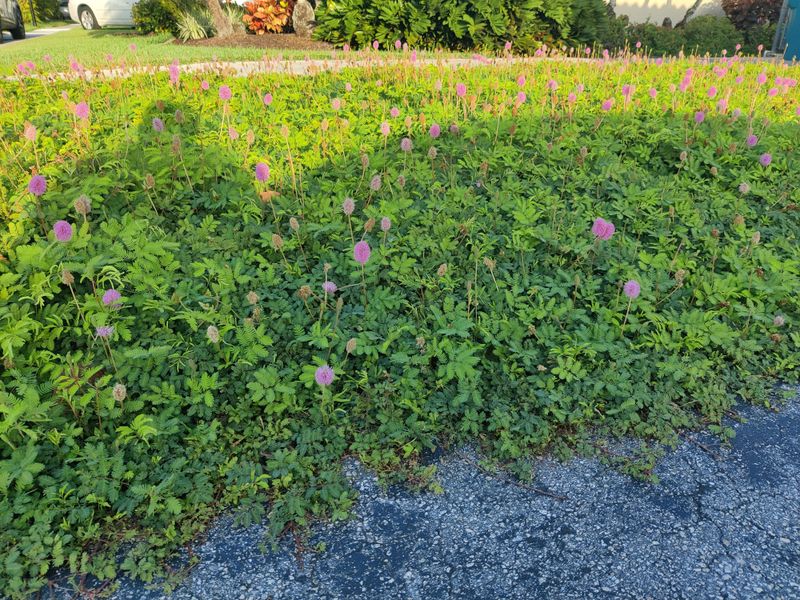
Sunshine mimosa can give a suitable sunny Florida bed rooted, spreading cover, as long as you water it while it settles in and leave room or a plan for its spread. Its roots may help with erosion, though UF/IFAS does not promise it will stay put through every storm.
Nothing here shows gardeners abandoning mulch, and bark mulch still earns its place in shade and around shrubs. Use each where it works best.