
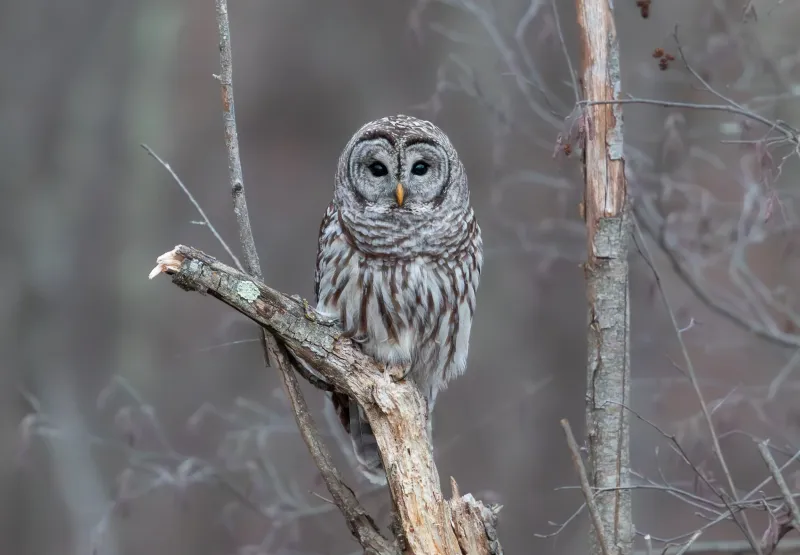
A soft trill or a shadow on a fence post can make you wonder why an owl keeps stopping by. Many Texans assume the answer is simple, but a sighting tells you less than you might think.
Still, it can point to things your yard and neighborhood offer, like perches, shelter, and hunting ground. Here is how to read the clues, check for real rodent problems, and make choices that keep owls and other wildlife safe.
A returning owl points to habitat, not a yard diagnosis
Seeing the same owl more than once feels like a message. Most of the time, it simply means the owl finds something useful nearby.
That could be a good perch, a hollow in a tree, or a decent spot to hunt.
The catch is that the owl may be using the whole neighborhood, not just your lot. It could sleep in a tree two streets over and pass through your yard on its nightly rounds.
A single sighting cannot tell you where the bird roosts or where it finds its meals.
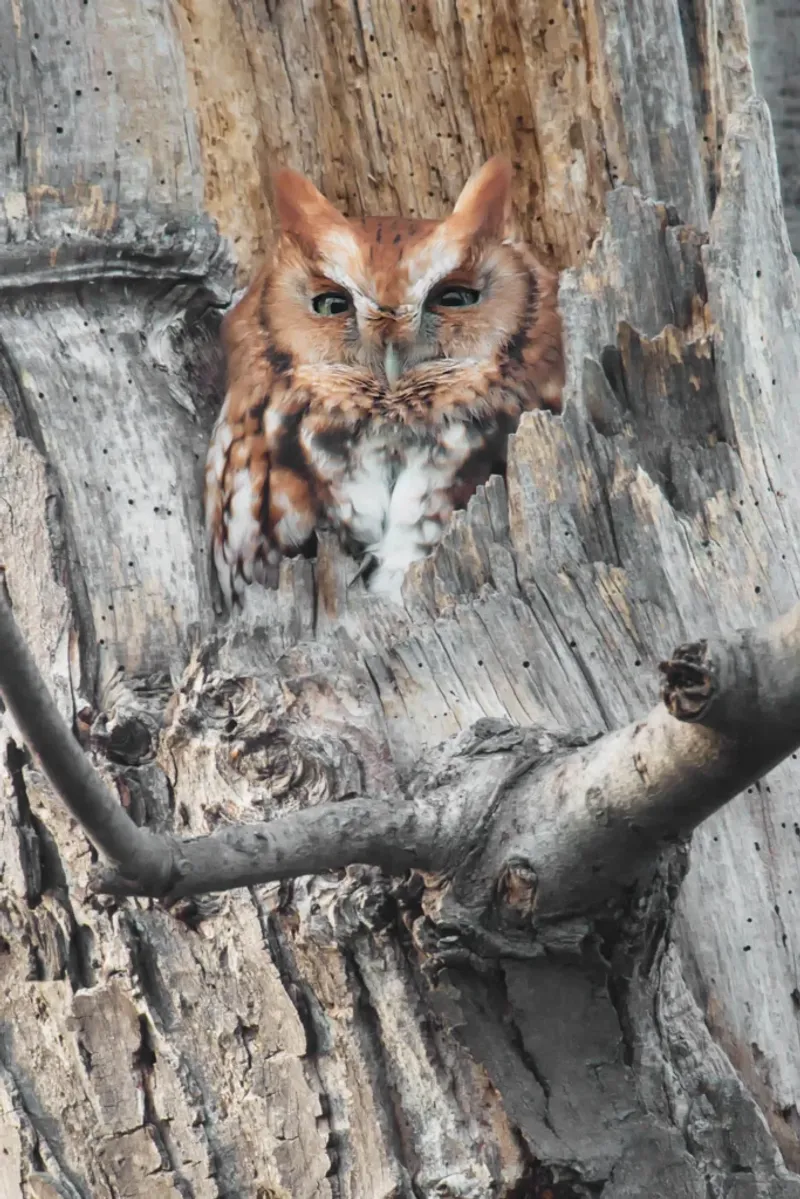
The eastern screech-owl shows why. Texas Parks and Wildlife Department notes that this small owl lives in open woodlands, parks, and suburban yards, and that it hunts small mammals along with insects and other animals.
By day it tucks into tree cavities or old woodpecker holes. That is one species with a mixed menu, so it should not be treated as a stand-in for every owl.
So here is what you can fairly say. An owl visiting suggests the area has some usable habitat.
It does not prove rodents have moved in, and it does not prove your yard is the owl’s home base.
Cool-weather calling may make some owls more noticeable
Cooler nights do bring a change for some species. Certain owls call more often to claim territories or attract mates, and a few start nesting in midwinter.
Cornell Lab of Ornithology’s guide to owl calls describes this kind of calling behavior.
That can make an owl easier to notice, since you may hear it before you see it. But it does not explain why one owl keeps returning to your yard.
Owl schedules differ by species, and plenty of owls do not follow a fall and winter pattern.
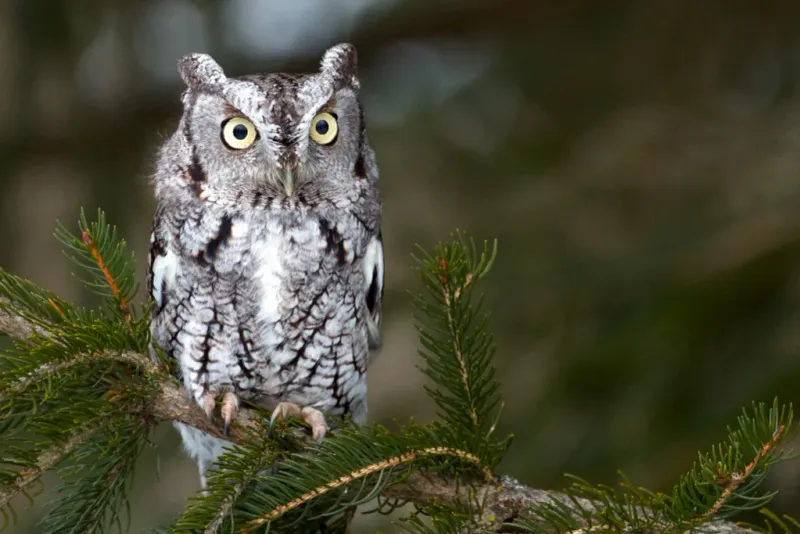
The eastern screech-owl is a good example of a timing that is more specific. According to Cornell’s page on its sounds and calls, its breeding season in Texas falls in late winter or early spring.
Its trills and whinnies may pick up as that season approaches.
If you hear calling on a chilly evening, enjoy it as a possible sign of courtship or territory-setting. Just keep the idea modest.
Cool weather alone does not account for a repeat visitor.
Check for rodent signs before changing your yard
Before you reshape your yard, find out whether rodents are really there. The owl cannot answer that question.
A bird passing through tells you about the owl, not about what is living under your deck.
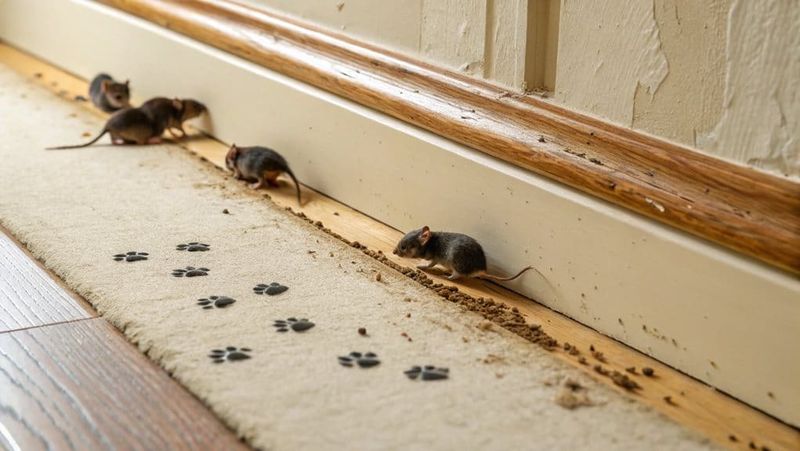
Direct evidence is what counts. Texas A&M AgriLife Extension describes signs used to identify rats and mice, including droppings, runways, gnawing, food crumbs, and noises.
Check along walls, inside sheds and garages, near pet food, and around the base of woodpiles.
Go out with a flashlight at dusk and again in the morning. Look for greasy rub marks, chewed bags, or tidy trails through grass.
Listen for scratching in attics or wall spaces.
The owl’s diet adds a little context, but not proof. Texas Parks and Wildlife says eastern screech-owls eat small mammals as well as insects and other prey.
An owl could be hunting beetles in your oak or mice across the street.
If you find no signs, you can relax. If you do, you have a real problem to solve with the steps in the sections ahead.
Cavity trees can provide shelter for some owls
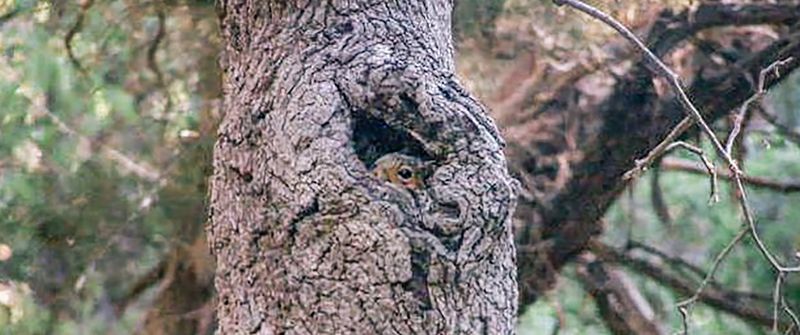
Hollow trees are valuable real estate for cavity nesters. Eastern screech-owls, for instance, typically rest during the day in tree cavities or old woodpecker holes, according to Texas Parks and Wildlife.
A gray, camouflaged owl tucked in a hole can be nearly invisible.
Dead trees matter too. TPWD habitat guidance says cavity-nesting screech-owls rely on snags for nesting.
Woodpeckers often carve the holes, and other birds then reuse them.
Still, a cavity is useful habitat, not a guaranteed roost. A tree with a hole may sit empty for years, or be used by squirrels, bees, or other birds.
You cannot assume an owl sleeps there just because you saw one nearby.
Safety comes first. Keep a standing dead tree only if it poses no threat to people or property.
A snag far from the house, fence, and play area can be a fine choice. One leaning over the roof or driveway should be assessed by a certified arborist.
Support habitat without inviting rodents
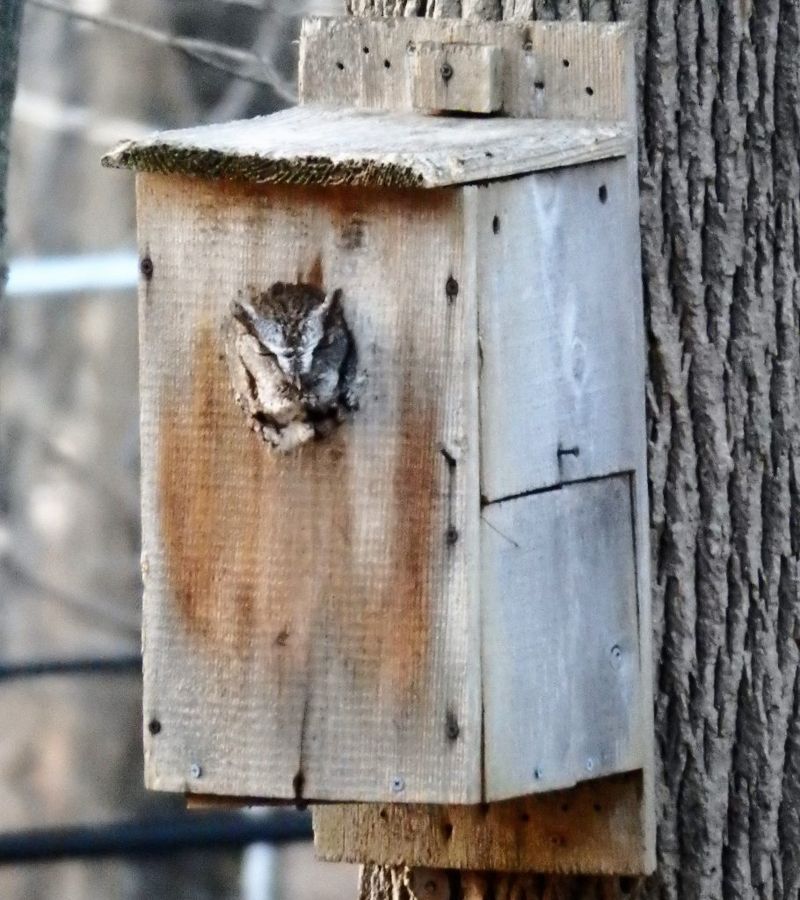
Helping owls does not mean leaving a mess. You can offer shelter and keep your home secure at the same time.
Start by preserving safe natural cavities, as covered above. If you want to try a nest box, choose one built for the species.
TPWD’s nest box plans for eastern screech-owls call for an 8-by-8-inch floor, a depth of 12 to 15 inches, a 3-inch entrance, and placement 10 to 30 feet above ground. Those numbers fit screech-owls only.
They are not a universal owl box design.
Even a perfect box is no promise. An owl may ignore it, and other animals may move in instead.
Treat it as a low-cost experiment.
Now pair habitat with prevention. The CDC says mice can squeeze through openings about a quarter inch wide, and it recommends sealing holes and keeping food, garbage, and outdoor areas managed.
Close gaps around pipes, doors, and vents. Use lidded trash cans, store pet food and birdseed in sealed containers, and clear fallen fruit.
Never leave food or rodents around to lure an owl, since that simply invites trouble to your door.
Choose rodent control that does not poison predators
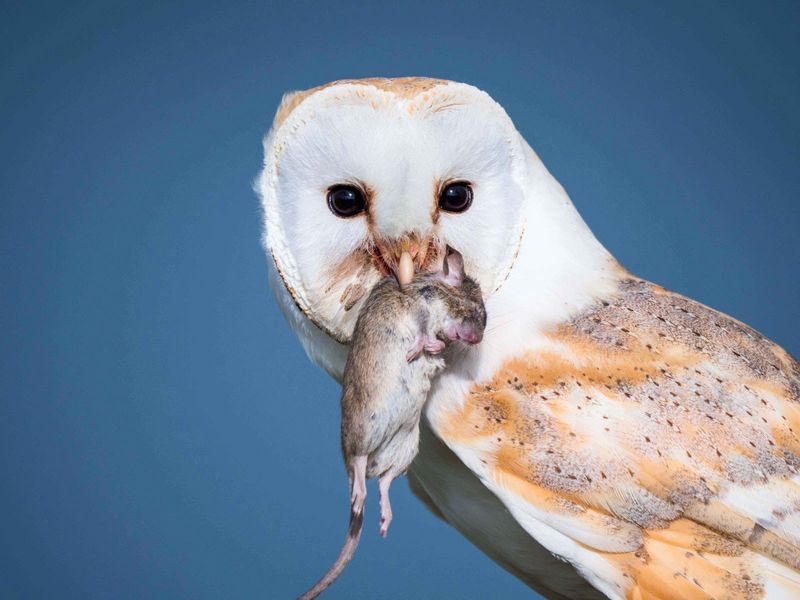
Poison creates a chain reaction. A rodent that eats bait can wander around for days before it weakens, and a hunting owl may catch it.
The poison then passes to the bird.
Texas Parks and Wildlife, in its owl guide for young naturalists, recommends traps over poisons because owls can be poisoned by eating contaminated prey. The EPA also describes risks to predators and scavengers that eat poisoned rodents.
So if you confirm a rodent problem, reach for snap traps placed where pets and children cannot get to them. Check them daily and wear gloves when disposing of catches.
Pair trapping with the sealing and food storage steps from earlier.
One more reality check. Owls are not a pest-control service.
Their diets vary, and no source suggests an owl will clear out a yard on a schedule. Treat any hunting help as a bonus and handle the problem yourself without putting wildlife at risk.
Observe quietly and leave handling to permitted rehabilitators
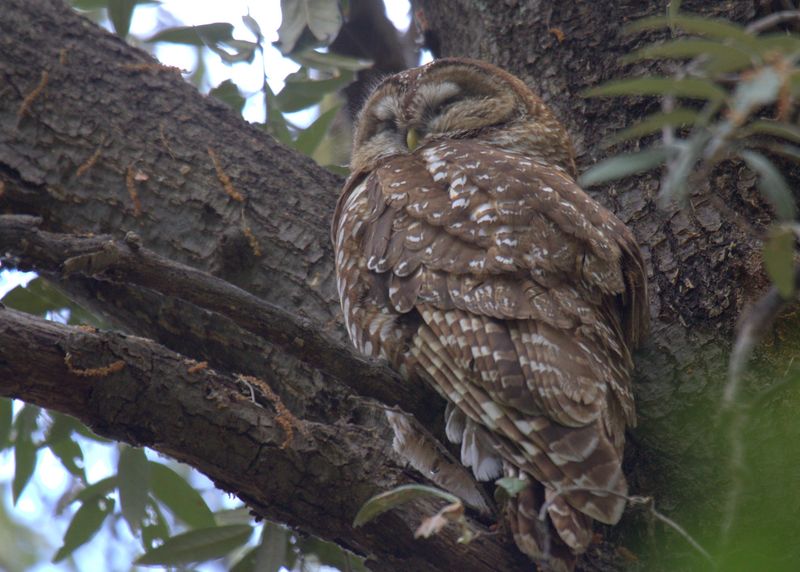
The best way to enjoy a visiting owl is from a distance. Texas Parks and Wildlife’s birding ethics guidance urges caution around roosts and active nests and restraint with recordings.
Skip playback to draw an owl closer, and keep bright lights and close approaches to a minimum.
Binoculars let you watch without bothering the bird. If you find a roost, resist the urge to return daily or tell the whole street.
Sometimes an animal truly needs help. TPWD advises watching from afar first, then contacting a permitted rehabilitator if it is clearly injured or orphaned.
Do not handle or transport wildlife yourself.
An owl on the fence is a reason to look around and listen, not to act right away.