
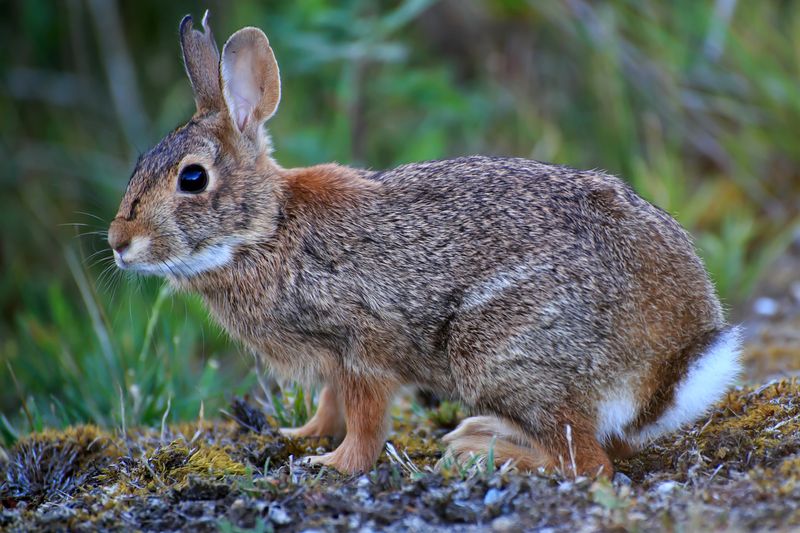
You step outside as the light fades, and there is a rabbit nibbling near your lettuce bed. It is easy to wonder why it showed up and whether it will be back tomorrow.
Cottontails follow some simple habits that explain a lot about what you see. Knowing them helps you protect tender greens and young plants without guessing.
Twilight sightings fit ordinary cottontail activity
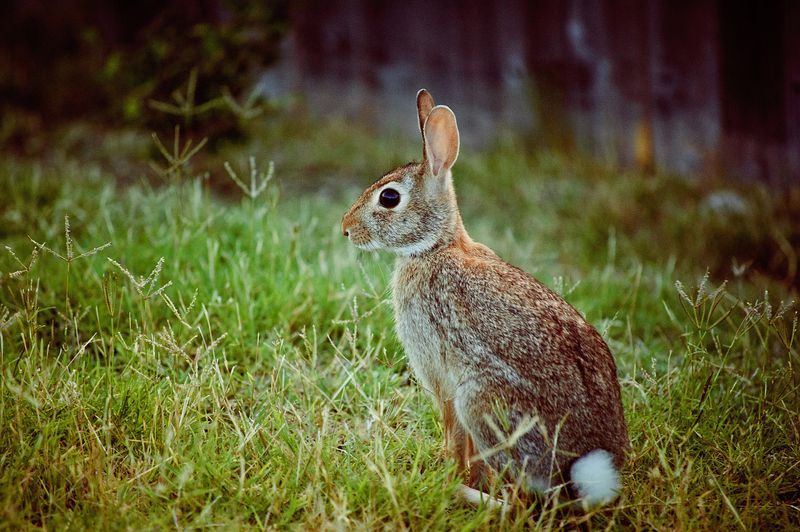
Dusk is prime time for cottontails. Texas Tech University’s account of the eastern cottontail describes the animal as active mainly at twilight and during the night.
So a rabbit hopping across your yard as the sun sets is doing what cottontails typically do.
That timing is useful for gardeners. If you only walk the yard in the middle of the day, you may rarely see a rabbit at all, even if one passes through often.
The evening hours are simply when you are most likely to catch one in the open.
It helps to keep the limits in mind. Twilight activity is a general habit of cottontails, not something that fall switches on.
A rabbit seen at 7 p.m. in October could just as easily be seen at a similar hour in spring.
Seeing a rabbit near the same spot a couple of evenings in a row also does not prove a precise schedule. Rabbits move around, and you may be seeing different animals.
Treat each sighting as a sign that your yard sits within normal cottontail range, and then look at what in the yard might be useful to them.
Nearby cover can make a yard useful
A yard works for a cottontail when it offers food close to shelter. Lawns and garden beds can supply plants to nibble.
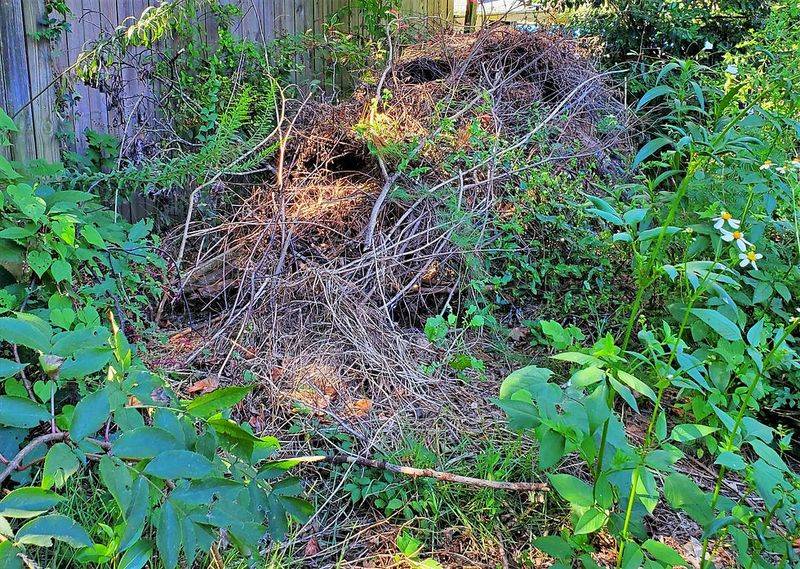
Brushy edges, thickets, burrows, or culverts nearby can give the animal a place to rest and hide.
The Texas Tech species account notes that eastern cottontails feed in gardens and flowerbeds and tend to stay near cover such as thickets. That pairing of feeding spot and refuge is common in Texas neighborhoods with overgrown fence lines, creek edges, or empty lots.
Walk your property at midday and look for these features. A dense shrub row, a brush pile, a gap under a shed, or a drainage pipe at the property edge could all be rabbit-friendly.
Yards backing onto a greenbelt or field may see more visits simply because cover is steps away.
A yard that fits this description makes repeat visits plausible. Plausible is not the same as proven, though.
Several rabbits may use the same cover, and you cannot tell them apart from the patio. What you can do is notice which parts of your yard offer both a snack and a hiding spot, because those are the places that deserve protection first.
Fall greens may be food, not the proven reason
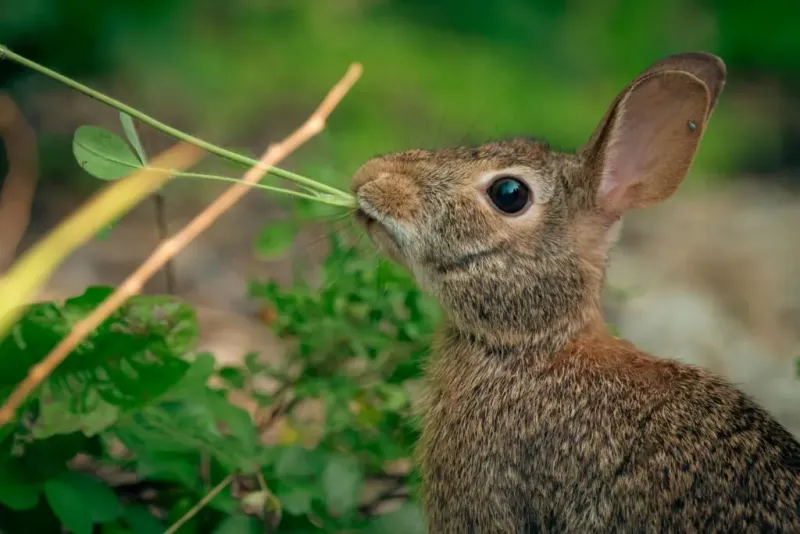
Cottontails eat a mix of plants. Texas Tech describes eastern cottontails feeding on grasses and forbs, then turning to twigs and bark from shrubs and small trees when other vegetation is scarce.
Texas Parks and Wildlife guidance on desert cottontails gives a similar picture of diet shifting with what is available.
Tender garden greens fit that menu. Fresh lettuce, kale, or young seedlings are the kind of soft growth a rabbit can reach easily.
So it is fair to call them accessible food.
Calling them the reason for a rabbit’s visits is a bigger step, and the sources do not take it. A rabbit crossing your yard at dusk may be passing through, feeding on the lawn, or heading somewhere else entirely.
Your greens may simply be one more option along the way.
Keep two ideas separate. What a rabbit eats can change with the season and with what is available.
When a rabbit is active during the day is a different matter, and twilight activity is typical year-round. Mixing these up leads people to blame fall for sightings that may have other explanations.
If you have young plants in the ground, treat them as vulnerable whatever the cause of the visits.
A yard sighting may not reveal the species
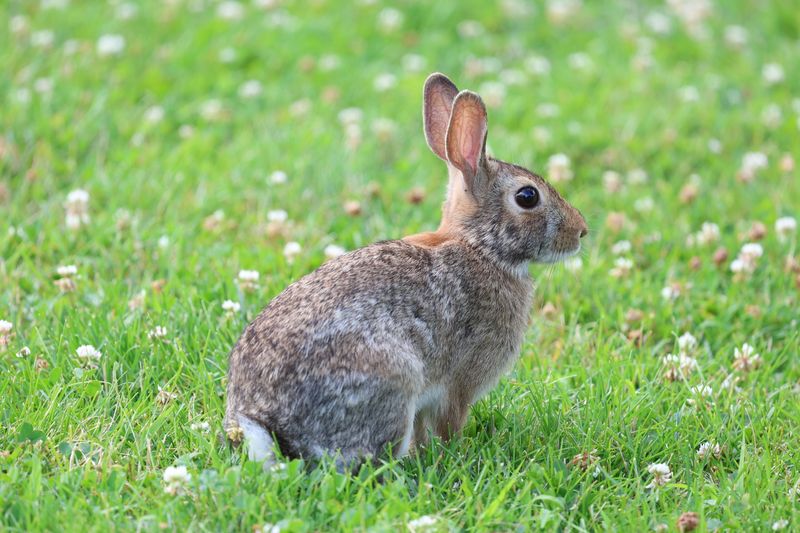
“Rabbit” is not a species name. Eastern cottontails occur throughout Texas, including Central Texas, according to Texas Tech University’s mammal account.
Desert cottontails also live in parts of the state, as described by Texas Parks and Wildlife.
Because ranges overlap and the animals look alike, a yard in Central Texas does not settle the question. Neither does the time of year.
A brief look at dusk, from a window or a patio, is rarely enough for a confident call.
For a gardener, the good news is that identification is not required to protect plants. Cottontails share the same basic habits of evening activity, feeding on low plants, and staying near cover.
The same protective steps apply either way.
If you are curious about the species, a clear daytime photo and a local wildlife resource are better tools than guesswork. Otherwise, it is simplest to call the visitor a cottontail and focus on what it does in your garden.
A barrier protects valued plants directly
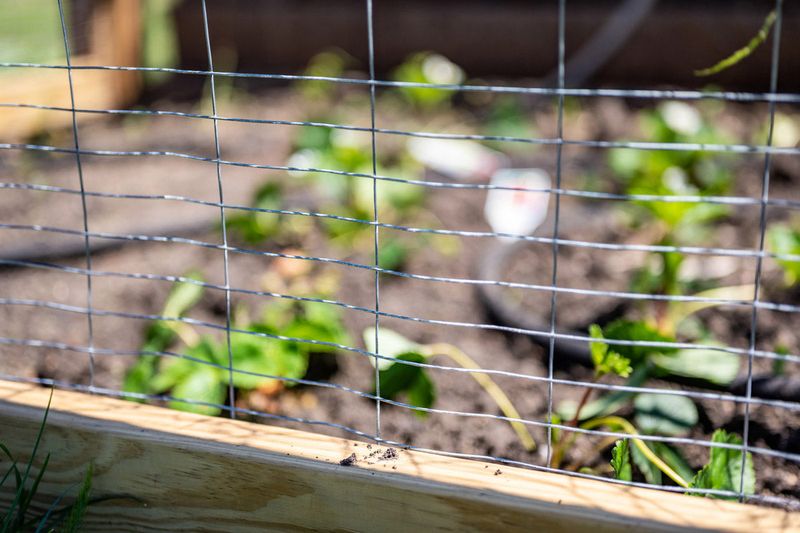
When you want to keep rabbits off specific plants, a physical barrier is the clearest researched answer. University of Maryland Extension recommends fencing with 1-inch mesh around valued plants.
The bottom should be buried at least 6 inches to discourage rabbits from digging underneath.
For a single plant or a small cluster, the same guidance describes individual wire or mesh guards. A cylinder of mesh around a young shrub or a cage over a row of seedlings can do the job without fencing the whole yard.
Start with what matters most. Fall greens, new transplants, and thin-barked young plants are the likeliest targets, so fence those beds first.
Check the fence line now and then for gaps, bent edges, or spots where soil has washed away.
Keep expectations realistic. This is guidance from an extension program in Maryland, not a Texas trial, and no barrier guarantees zero damage.
Still, a well-fitted barrier works by blocking access, which does not depend on a rabbit’s mood, the season, or whether it is the same animal each evening.
Repellents require upkeep and careful label reading
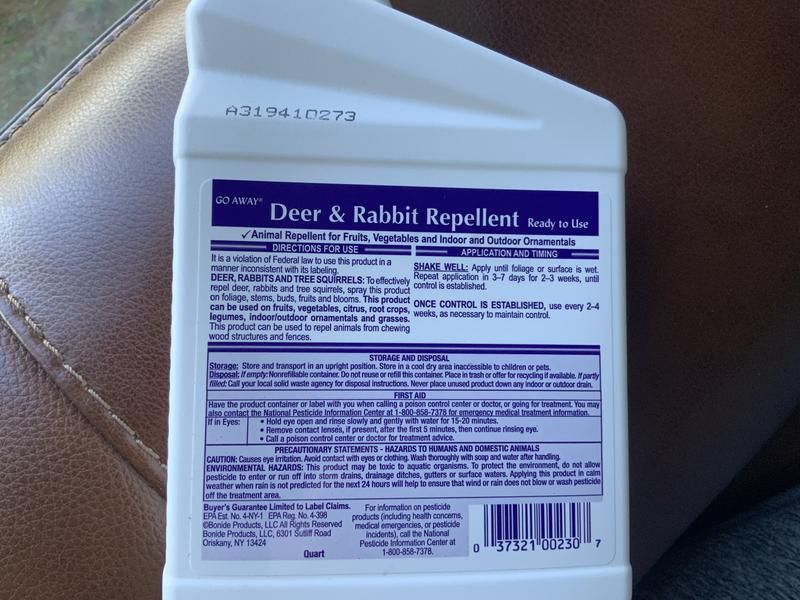
Repellents can look like an easy fix, but they come with trade-offs. University of Maryland Extension describes them as inconsistent, costly, and in need of reapplication.
Rain, watering, and new plant growth can all mean another round of work.
Results also vary from yard to yard. A product that seems to help in one garden may do little in another, so it is best not to count on any single repellent, scent, or plant to keep rabbits away.
If you want to try one on vegetables, read the label first. Look for whether it is approved for the crops you are growing.
Then follow the directions for application and the instructions on harvest timing.
Plan on repellents as a short-term add-on at most. Used alongside a barrier, they may be one more layer, but they should not replace the physical protection that guards your most valued plants.
Protect plants without overreading the visits
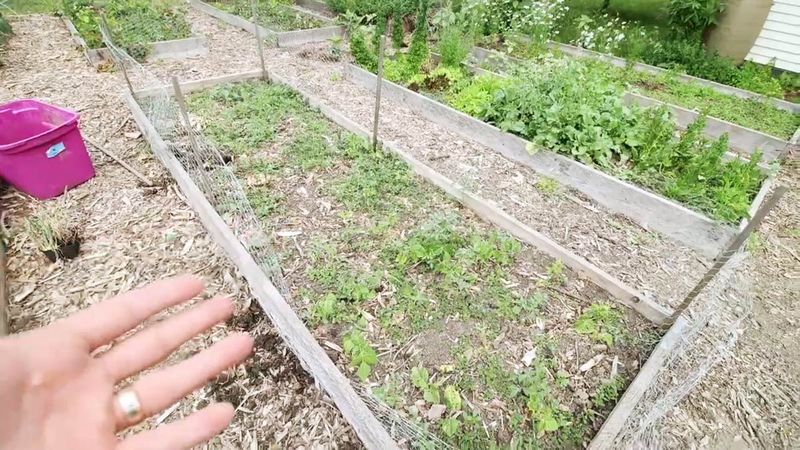
A rabbit at dusk usually points to ordinary cottontail behavior: evening activity near possible food and nearby cover. What it does not tell you is whether one animal is returning or whether the season is pulling it in, as the Texas Tech species account covers habits, not individuals.
For valued greens and young plants, fencing or guards remain the practical first step. Your fence works the same no matter which rabbit shows up.