
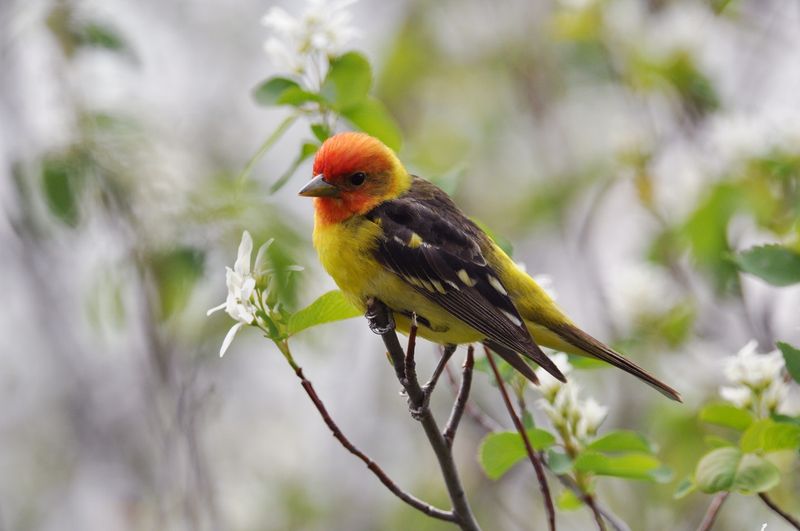
Every fall, a flash of yellow, black, and red-orange may slip through some California gardens on its way south. The Western Tanager is a migrant, and when it passes through depends on where you live.
A sighting is never guaranteed, but a few small yard choices can make your space friendlier to migrating birds of all kinds. Here is how to know what is possible and what you can do about it.
Why Western Tanagers May Visit California Yards
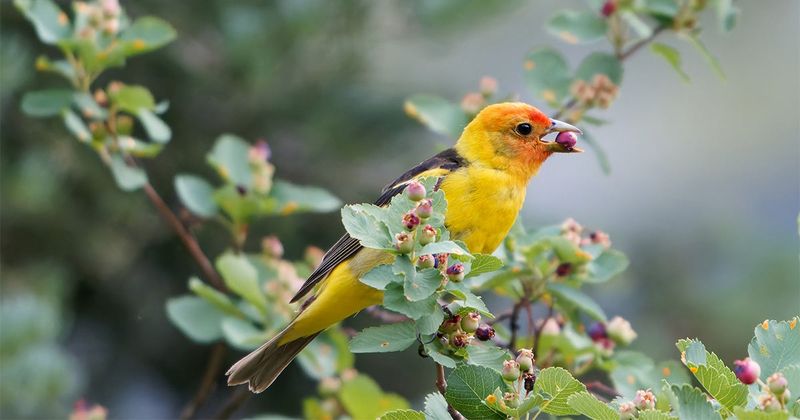
Gardens, parks, orchards, and suburban neighborhoods all show up in the list of places where this bird stops during migration, according to Cornell Lab of Ornithology life history notes. That makes an ordinary California yard a possible rest stop, though not a sure one.
Whether a tanager appears depends on your region, the date, and plain luck.
Food is the main reason a migrant stops. Western Tanagers eat insects and fruit, and fruit may make up more of the diet in fall and winter.
Recorded fruits include wild cherries, elderberries, blackberries, mulberries, and serviceberries.
Height matters too. These birds forage in the upper parts of trees and shrubs, so a yard with mature canopy or tall shrubs gives them a spot to feed and a place to hide.
A flat, bare lawn offers little of that.
Put those habits together and the picture gets practical. A yard with layered vegetation, some fruiting plants, and a healthy supply of insects can help many migrating birds, not only tanagers.
You are not trying to summon one species on demand. You are building a stopover that works for birds passing through.
Try spending a few quiet minutes each morning watching the treetops and tall shrubs. Tanagers can be easy to miss when they sit high and still among leaves.
A slow scan of the upper branches is often more rewarding than watching the ground.
How Late Can Fall Passage Continue?
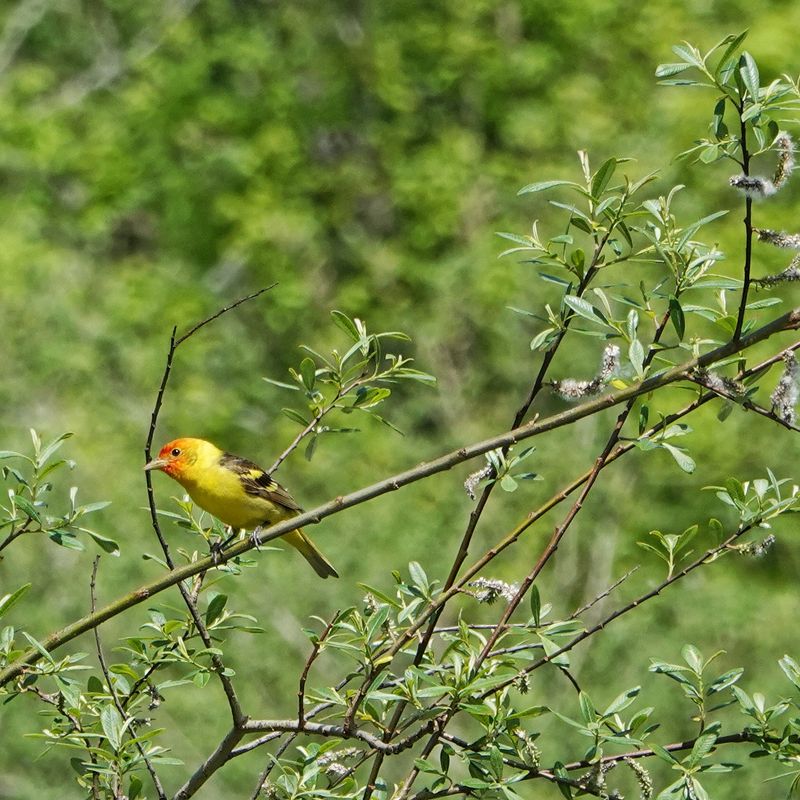
Fall timing is not one date on a calendar. A San Diego County bird atlas describes adults passing mostly in late July and August, while young birds move mainly in September and early October.
Some immatures continue into October.
That is a local pattern for San Diego County. It is not a statewide cutoff, and it does not tell you when birds pass through the Sierra foothills, the Central Valley, or the North Coast.
Migration timing varies by region, by age, and by individual bird.
So what about October 17, 2026? A late tanager remains possible in some places, but nobody can confirm one in your yard.
No record shows a statewide wave arriving this week, and a quiet yard does not mean you did anything wrong.
For geographic context, the Cornell range map shows the species breeding across the West and moving to wintering areas farther south. California sits along that route, which is why some yards get a brief look.
A practical step is to check local sighting reports from your county or nearby birding groups. They will tell you far more about your area than a general calendar.
Then keep a casual watch during mornings, when migrants often feed most actively.
Some Western Tanagers Winter in California
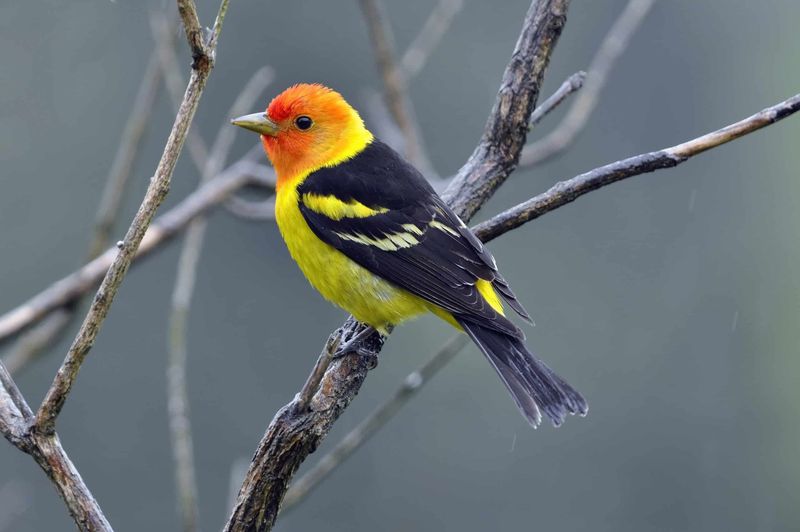
Tales of birds that vanish until spring leave out part of the story. According to the California Department of Fish and Wildlife life history account, most California breeders winter from Mexico to Costa Rica and generally return in April or May.
A smaller number stay closer. Some winter in the southwestern United States, including coastal Southern California, where the San Diego atlas calls them rare but regular in winter.
If you garden near the coast in the south, a winter tanager is not out of the question.
Notice what this does and does not say. It describes a broad seasonal pattern across many birds.
It does not follow any one tanager, so no one can promise that the bird you saw this fall will come back next spring.
For your own yard, the lesson is flexibility. A tanager sighting in December in San Diego could be a local winterer, while one in September in the foothills is more likely a migrant on its way.
Where you live changes what you are seeing.
If you do spot one in winter, jot down the date and place. Notes like these are useful if you share them with local bird groups, and they help build a clearer picture of where these birds spend the season.
Choose Plants for Your Local Conditions
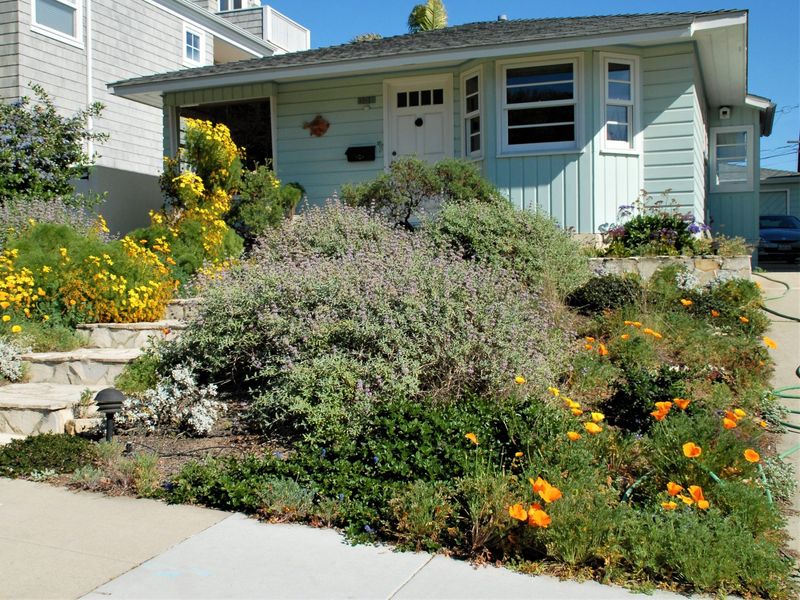
California spans coastal bluffs, hot inland valleys, mountain foothills, and desert edges, so no single plant list fits everywhere. The California Native Plant Society beginner tips encourage gardeners to choose plants for their own region and site conditions.
Sun, soil, slope, and water access all matter.
The same group’s habitat value guidance points toward plants that belong to your local plant community. Those plants tend to offer food and cover to local wildlife, and many are water-wise once established.
That fits a state with long dry summers.
Start by keeping what already works. A mature oak, a berry-producing shrub, or a tall tree is hard to replace, and birds may already use it.
Then add new plants in layers, mixing canopy, shrubs, and groundcover.
Next, look at pesticides. Audubon yard guidance recommends cutting back on pesticide use, since birds eat insects.
Seeing bugs on a shrub is not a reason to spray, and fewer routine treatments leave more food for birds.
None of this guarantees a Western Tanager. What it does is make your yard more useful to birds in general, and that is a good result whether or not a bright visitor ever shows up.
Visit a local native plant nursery and ask what grows well in your neighborhood.
Water or Fruit May Help, but Seed Is Not a Sure Draw
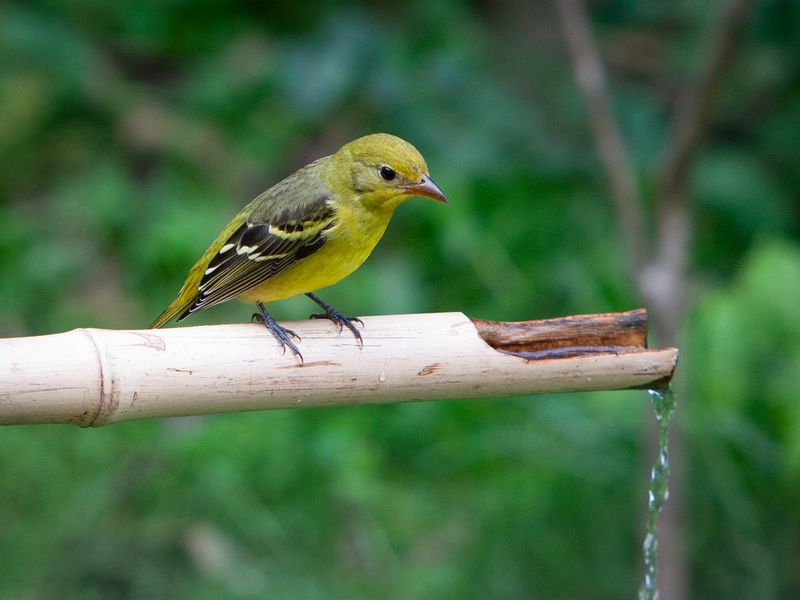
Cornell’s advice here is carefully worded. According to the All About Birds Western Tanager overview, a birdbath or moving water may help attract the species.
The word to notice is may.
The same source says tanagers may eat fresh or dried fruit. If you want to offer some, small amounts of fruit in a feeder or tray are one option.
Think of it as a possible extra, not a recipe for a visit.
Seed is a different story. Western Tanagers do not typically eat seed, so a tube feeder full of sunflower or mixed seed is not a reliable way to draw one.
It may still bring finches and sparrows, but it is not aimed at this bird.
Here is a simple way to decide. If you already enjoy a birdbath, a little movement from a dripper or fountain could make it more appealing.
If you have no interest in maintaining feeders, skip them, since good plantings do much of the work on their own.
Whatever you choose, it comes with upkeep. The next section covers cleaning and safety, which matter as much as the offering itself.
Reduce Night Lighting and Keep Baths Clean
Many birds migrate at night, and bright lights can confuse them. The U.S.
Fish and Wildlife Service suggests turning off unnecessary outdoor lights during migration, using timers or motion sensors, and shielding lights that point upward. Closing blinds or curtains also cuts the light that spills from windows.
A quick walk around your house after dark shows what to fix. Look for porch lights left on all night, uplights on trees, and bright windows facing the yard.
Even small changes can add up across a neighborhood.
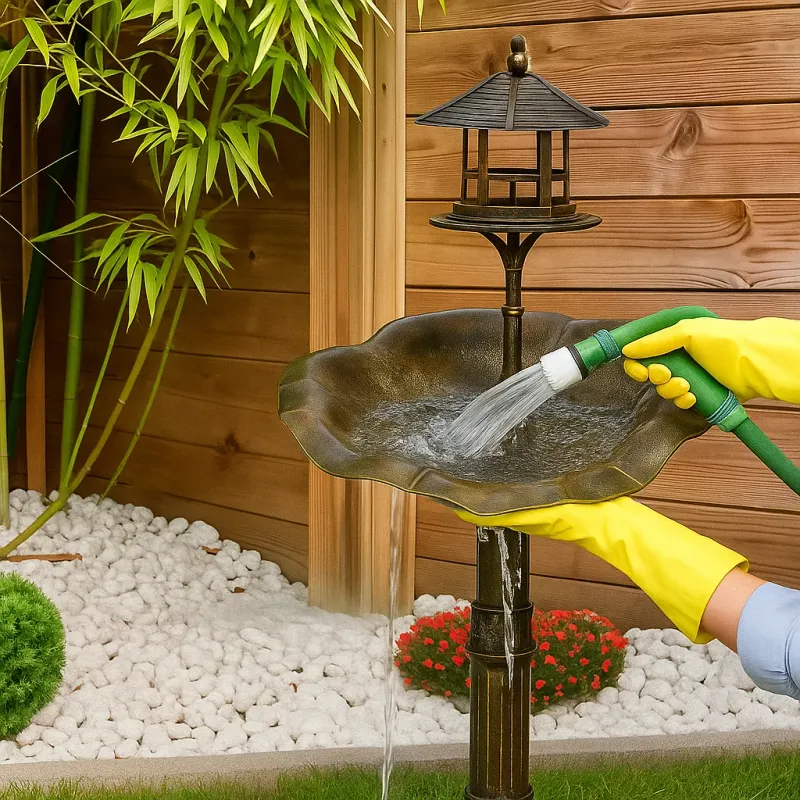
Clean water matters just as much. Refill birdbaths weekly, or sooner when the water looks dirty, and scrub away slime.
Dirty baths and feeders can spread illness, so feeding wild birds is never risk-free.
The CDC says to clean feeders and baths at least monthly, and more often when they are dirty. Keep pets away from them as well.
If you find a sick or dead bird, do not touch it. Take down feeders and baths for two weeks, and clean them outdoors before putting them back.
Fall visitors come and go, but a dark, clean yard is a good gift to any bird passing overhead.