
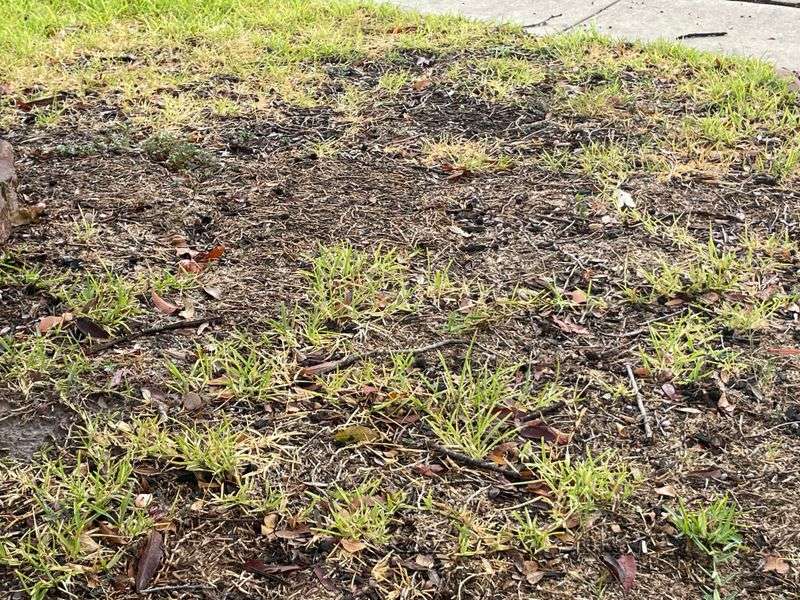
You step onto the grass after a good rain and it still crackles like breakfast cereal. That sound is a clue, and it does not point to just one problem.
In Central Texas, a brittle lawn in fall might be resting, thirsty at the roots, stressed by its site, or fighting something else. A few simple checks now can save you from wasting water and fertilizer before winter hides the evidence.
Rain does not promise an instant green-up
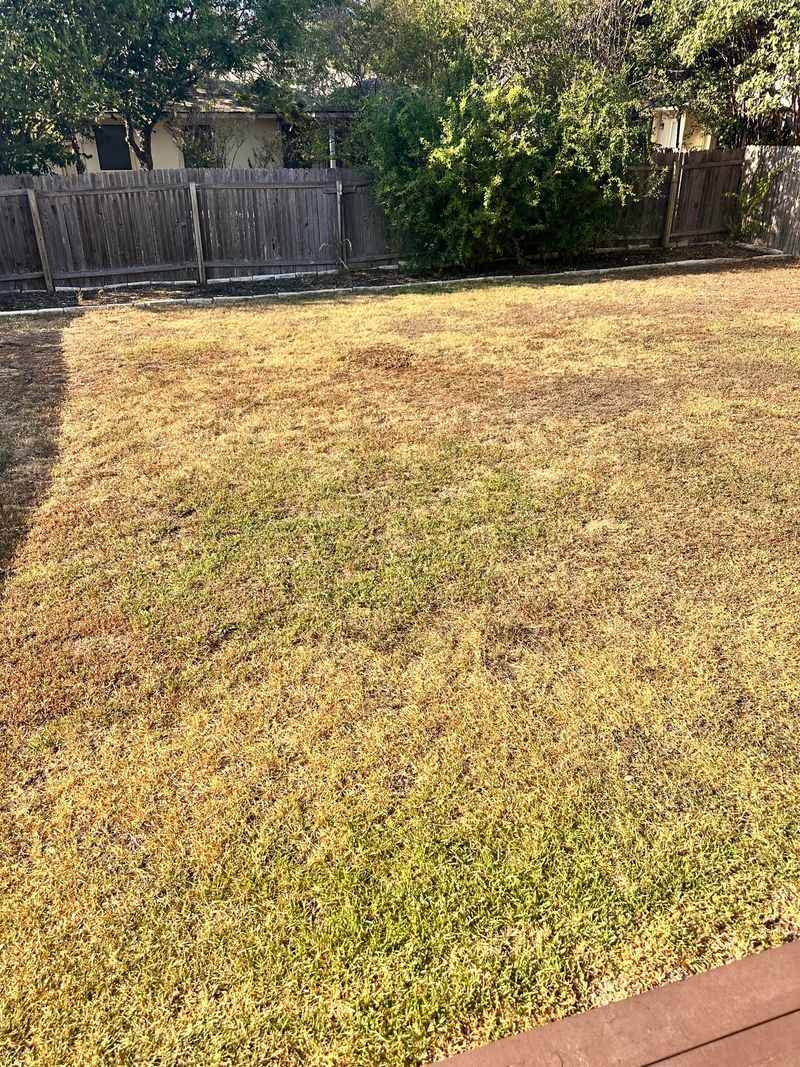
A wet weekend feels like it should fix everything. Grass does not always work that way.
Warm-season lawns, like bermudagrass, can turn brown and go dormant when they are under drought stress, and Texas A&M guidance on bermudagrass care notes that these lawns can survive in that state.
Recovery depends on a few things lining up. The grass has to still be alive, moisture has to reach its roots, and temperatures have to be warm enough for growth.
As fall cools off, growth slows, so rain may produce little visible change until spring.
There is also no set number of days after rain when a lawn should bounce back. Species and sites differ, and UGA Extension notes that zoysiagrass can recover more slowly than other warm-season grasses after drought.
That is a useful reminder that timelines vary, not a Texas schedule.
Crunchiness is best treated as a reason to look closer. Brittle turf can come from drought dormancy, but UGA turfgrass injury guidance also lists compaction, dry spots, and other injuries as causes of poor-looking turf.
Whether rain has really returned where you live is worth checking against your own rain gauge or a dated local weather record, since totals vary from block to block.
The sections ahead walk through what to check, one clue at a time.
Start with the grass and its growth stage
Before you read anything into brown, brittle blades, figure out which grass you have. Bermudagrass, St. Augustinegrass, and zoysiagrass all act a bit differently in fall.
Advice written for one is not a rule for the others.
Next, ask whether the lawn is still growing or easing into dormancy. Mowing less often, slower new leaf growth, and cooler nights all hint that growth is winding down.
For bermudagrass, Texas A&M describes drought stress as wilting and a blue-gray cast to the blades. If that stress continues, the turf may turn brown and go dormant.
A blue-gray lawn is asking for attention in a different way than a lawn that has already gone straw-colored.
Here is the tricky part. Dormant turf and dead turf can look the same from standing height.
UGA turfgrass injury guidance points out that drought-damaged tissue may not come back even after rain, so color alone cannot settle it.
A good habit is to note the grass type, the date, and how much growth you have seen lately. Those notes will help you read the clues in the next sections.
Did the rain reach the roots?
Rain on the forecast map is not the same as water in the root zone. Soil type, rooting depth, slope, and spot in the yard all change how much moisture the grass can actually use.
A hard slope may shed water, while a low corner may hold it.
Try a quick walk-around after the next rain. Push a screwdriver or soil probe into several spots and see how deep the soil feels damp.
If the top inch is wet but the soil below is dry and firm, the roots may still be waiting.
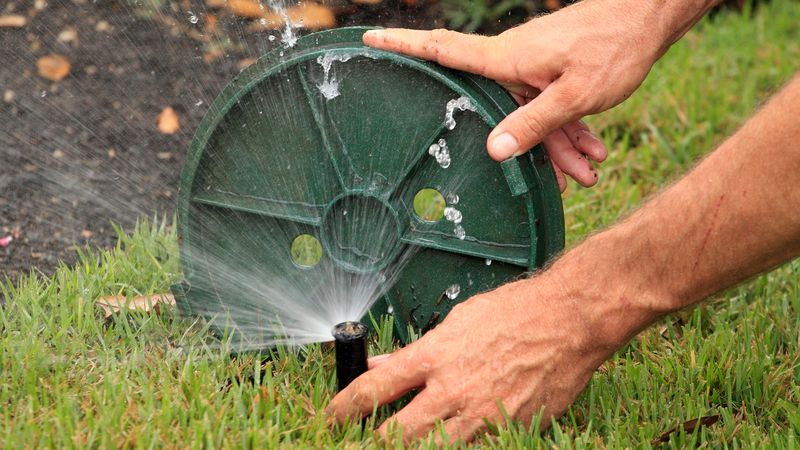
If you irrigate, a catch-can test shows what your sprinklers really deliver. Set out several shallow cans across the lawn, run the system, and compare the depth in each.
Uneven results can explain brown stripes or corners that never seem to recover.
Texas A&M also points to local evapotranspiration guidance and catch-can testing as ways to judge irrigation needs instead of following a fixed schedule.
So a crunchy patch does not automatically mean it needs more water. It may mean water is not arriving evenly, or that the grass has slowed down and needs very little.
Check first, then adjust.
What does the patch pattern reveal?
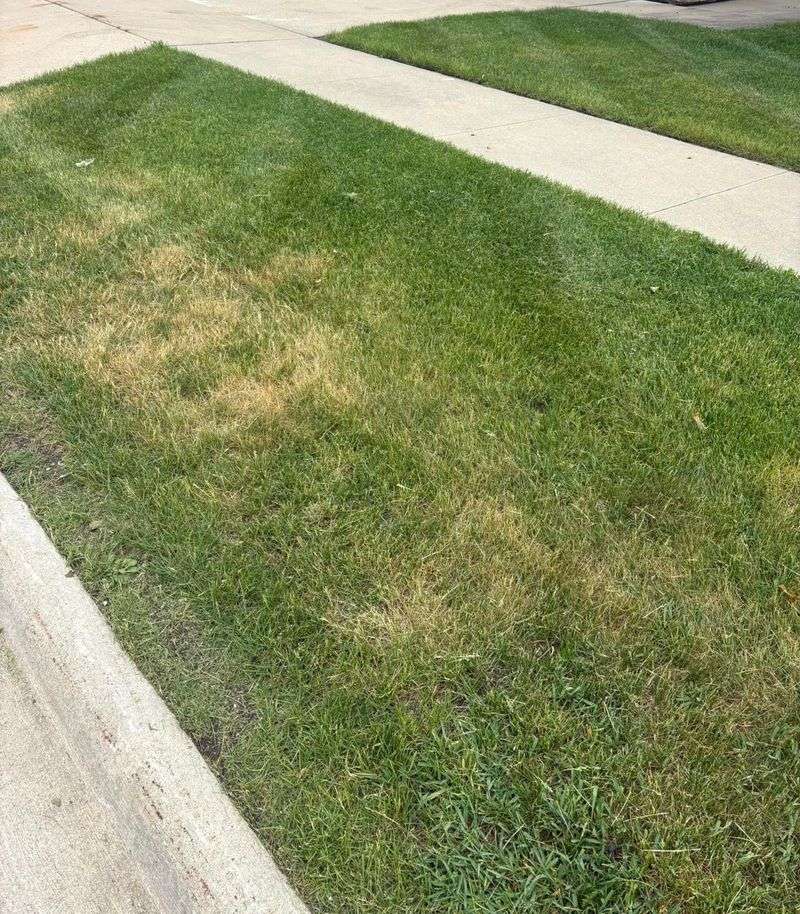
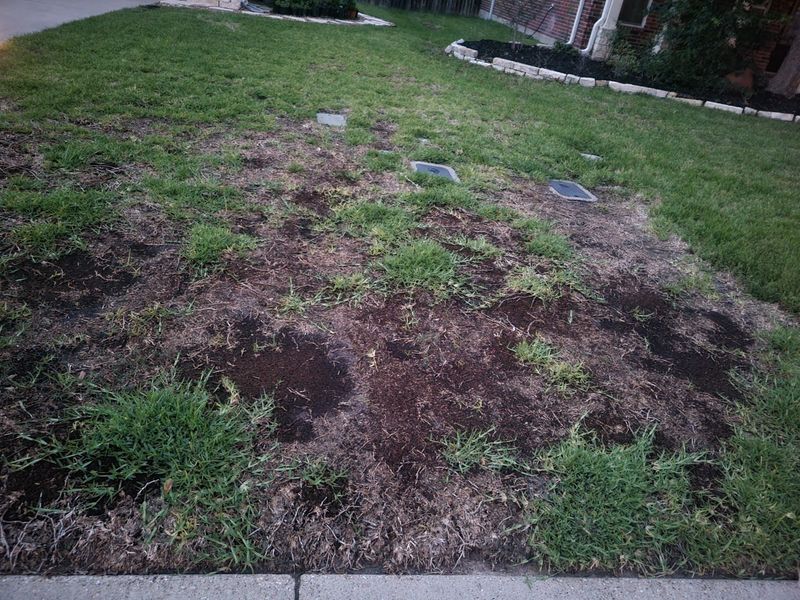
Stand back and look at where the damage sits. Patterns often say more than color does.
A brown strip along a walkway, a dog run, or the route to the trash bins is a classic spot for trouble.
Thin or brown turf along paths and repeatedly trafficked routes can be consistent with compaction. According to UGA turfgrass injury guidance, compacted soil can limit how well water soaks in and how deeply roots grow.
Rain may run off or sit on top instead of reaching the roots.
A simple test is to push a screwdriver into the soil in the brown strip and then into healthier turf nearby. If the strip is much harder to penetrate, compaction is a reasonable suspect, though not a confirmed one.
Other site conditions deserve a look too. Poor drainage can leave soil soggy in one spot, while localized dry spots can form near hot pavement, on sunny slopes, or where tree roots compete for moisture.
Write down which parts of the lawn are affected and what they share. A patch that follows foot traffic tells a different story than one that sits in a low corner or beside a driveway.
Could circular patches point to large patch?
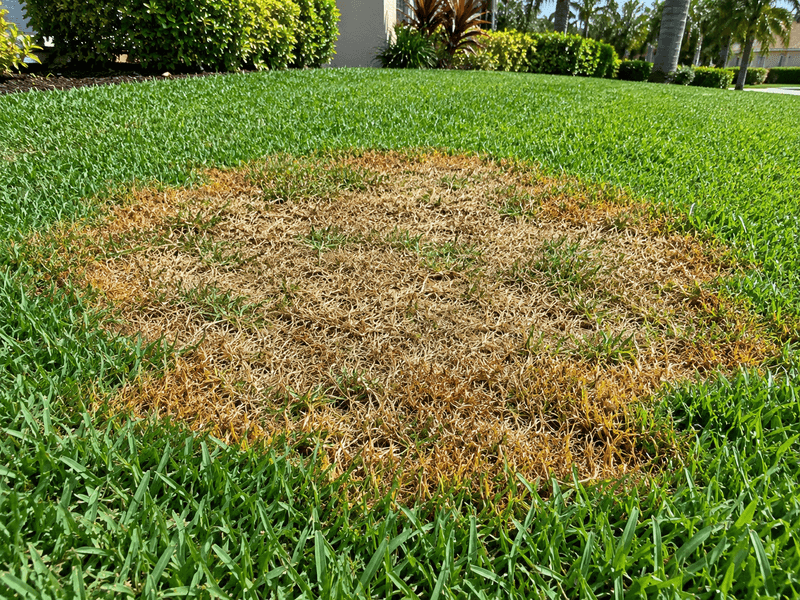
If your lawn is St. Augustinegrass or zoysiagrass, circles deserve a second look. Fall large patch is a fungal disease that can show up as rings or patches with yellow-orange margins, and it is a look-alike for drought-type browning.
Texas A&M’s large patch fact sheet links the disease to wet soil and temperatures below 70 degrees F. That makes cool, damp fall weather the setting to watch.
Affected shoots may also pull easily from their sheaths when you tug on them gently.
These signs are suggestive, not conclusive. Brown color by itself cannot tell large patch from drought stress or other trouble, and a patch with no ring at all does not rule it out.
St. Augustine lawns have other look-alikes. Texas A&M’s St. Augustinegrass guidance notes that chinch bug and take-all root rot symptoms can be confused with other turf problems, and treatments differ.
If you suspect a disease, photograph the patch, note the soil moisture and weather, and consider asking your county Extension office for help with diagnosis. Guessing with a fungicide can cost money and still miss the cause.
When turf lifts, look below the blades
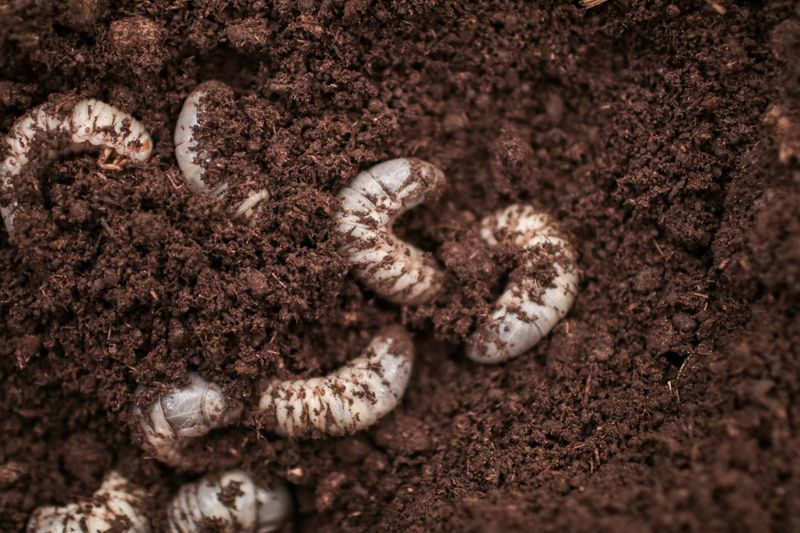
Sometimes the clue is not what you see but what happens when you tug. Give an irregular brown patch a gentle pull.
If the turf lifts easily from the soil, the roots may be damaged, and that calls for a closer look underneath.
White grubs feed on turf roots, and Texas A&M’s white grub page explains that their injury can resemble drought stress. In severe cases, the turf may roll back like a piece of carpet.
Peel back a flap and look at the soil beneath. Healthy roots should be white and firmly anchored.
Cut-off roots, or curled, C-shaped grubs in the soil, tell you more than the browning above.
Even so, a lifting patch is a reason to inspect, not a verdict. Other root problems can loosen turf too, and not every grub species damages lawns.
Timing matters as well. Grubs generally stop feeding in fall, so persistent brown patches alone do not justify an insecticide.
Treatment makes sense only when the evidence points to a real, current problem.
Let the diagnosis guide the winter response
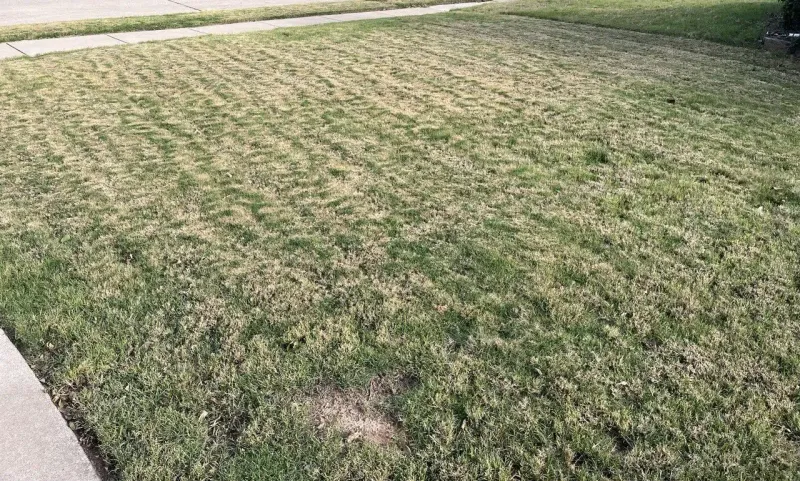
Here is the simple rule: match the action to the grass, its growth stage, how water is reaching the soil, and the pattern you see. A compacted path, a ring of large patch, and a dormant bermudagrass lawn each need a different response.
Extra water and a bag of fertilizer are tempting, but they are not automatic fixes. Texas A&M advises reducing irrigation on dormant warm-season grass and not fertilizing bermudagrass as it enters dormancy.
Too much fall moisture can also feed trouble, since large patch is tied to wet soil in cool weather.
A lack of green-up this fall does not prove the turf is dead, or that it is dormant. Mark your suspect patches and check them again in spring.
A crunchy lawn is not always asking for something. Sometimes it is just asking you to look first.