
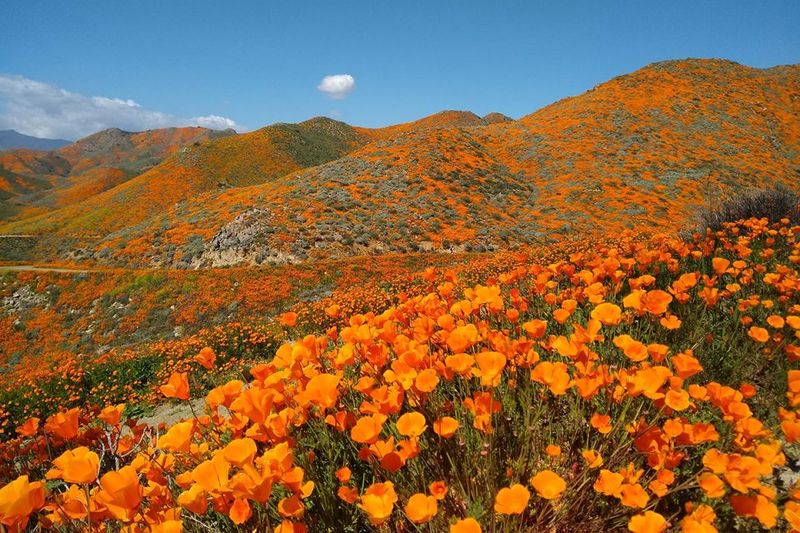
Every spring, orange California poppies light up roadsides and hillsides, and many homeowners wonder if they can get that look at home. In mild-winter parts of California, planting seeds in the fall lets winter rain do some of the work.
This guide, written for the fall planting season, shows when fall sowing makes sense and how to set up a sunny slope. It also explains what to expect, because flowers are a possible reward and not a promise.
How fall rains can give poppies a head start
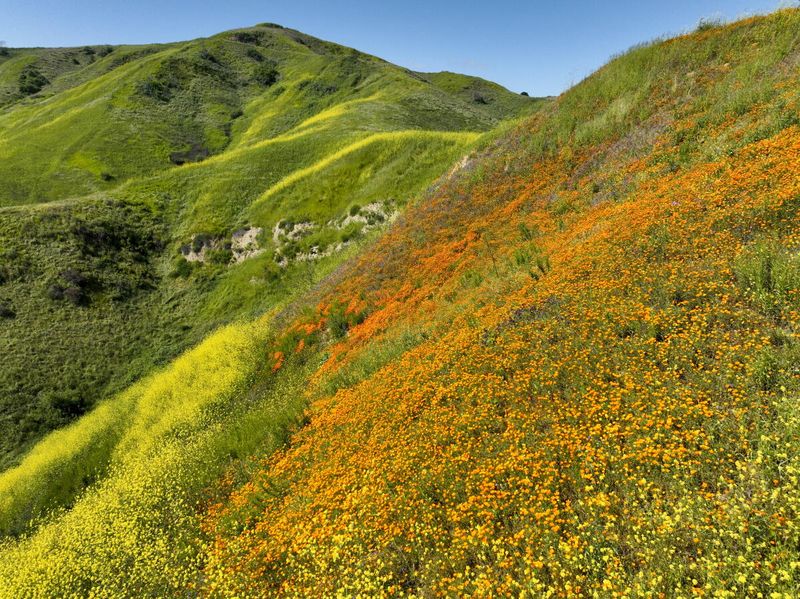
California poppies belong to a group of plants called annual native wildflowers. In mild-winter areas, their seeds sit through the dry summer and then wake up when fall and winter rain arrives.
UC Cooperative Extension describes this cycle: seeds germinate with the rains, seedlings grow through the winter, and blooming begins in early spring.
That is why fall sowing is such a natural fit for a Mediterranean climate like ours. You are copying what wild poppies already do, instead of forcing a spring planting to survive our long dry summers.
The California Department of Fish and Wildlife notes that this state flower commonly blooms in spring and summer.
Still, good timing only sets the stage. Whether you end up with a thick orange carpet, a scattering of blooms, or a few sparse patches depends on your local climate, your soil, and how much competition the seedlings face from weeds and grasses.
Think of fall sowing as a manageable way to encourage spring flowers, with the final display left up to the weather and your site.
If you have a sunny slope that looks bare for half the year, this approach is worth a try. The seed is inexpensive, the method is simple, and even a modest showing can brighten a hillside.
Choose a sowing window for your California climate
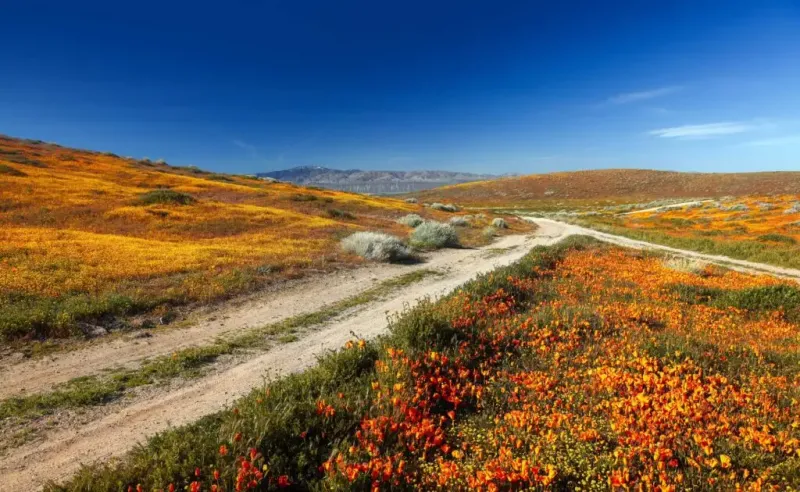
California is really a collection of climates, so one calendar date will not work everywhere. A better rule is to sow when your rainy season is about to begin and your winters stay mild enough for seedlings to keep growing.
Watch your local forecast and your own yard rather than a statewide schedule.
For annual native wildflowers in mild-winter areas, UCANR suggests sowing from mid-October into November. That window fits many coastal, valley, and southern foothill gardens.
It gives seeds a chance to meet the first soaking rains of the season.
Colder regions work differently. In high elevations or places with hard winter freezes, spring sowing may be the better choice.
A UCANR Master Gardener fact sheet on California poppy is a handy reference, and your local Cooperative Extension office can tell you what suits your area.
A practical example: a gardener near the coast might sow after the first cool, damp spell in late October, while someone in a snowy mountain town would wait until the ground thaws. If a warm, dry spell drags on past mid-October, there is no need to rush.
Waiting a week or two for rain in the forecast is often smarter than sowing into hot, dusty soil.
Prepare a sunny slope and clear the competition
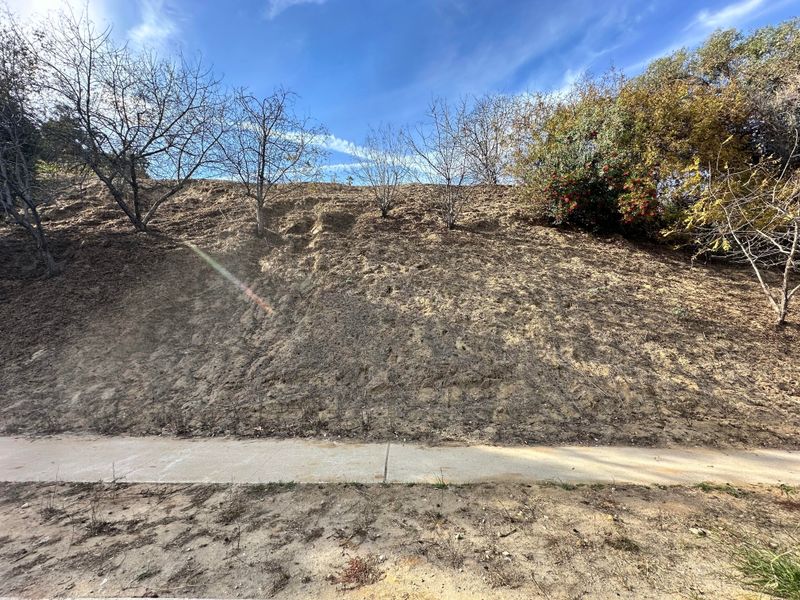
Poppies want full sun and soil that drains well. Before you buy seed, spend a day watching your slope.
Count the hours of direct light and check for spots where water pools after rain, because persistently saturated ground is a poor home for poppies. Most slopes drain nicely, which is a bonus.
Next, deal with the plants already there. UCANR warns that weeds can overrun young wildflowers, and USDA guidance says poppies do not compete well with established grasses.
Pull or cut back weeds and grasses before sowing, and rake the soil lightly so seed can touch bare ground.
On a steep slope, work carefully to avoid loosening more soil than needed. Light raking is enough, and leaving some roots in place helps hold the hillside together when heavy rain arrives.
If your property is in a fire-prone area, keep two jobs separate. Planting poppies is a pretty garden project, but it does not replace defensible-space upkeep.
CAL FIRE advises removing dead or dry vegetation around structures, and local rules can differ. Check with your local fire authority before deciding what to clear or plant near your home.
Sow directly and follow the seed supplier’s guidance
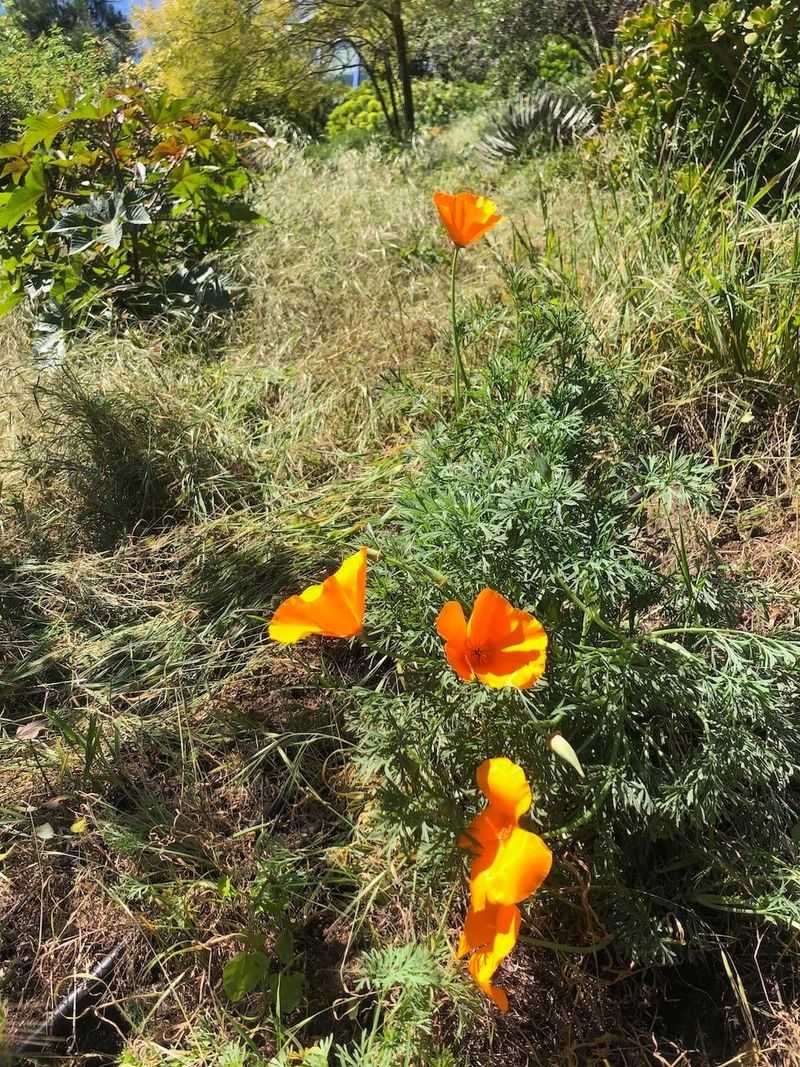
California poppies grow a long taproot, which is why they do not tolerate transplanting well. Sow seed right where you want flowers to grow, and skip nursery six-packs.
UCANR Yolo Gardener advice is to cover the seeds lightly instead of burying them.
Published depth guidance varies a bit. USDA gives about 1/8 inch for non-dormant seed and notes that some dormant wild seed may do better at 1/4 to 1/2 inch.
Because of that range, the safest plan is to read your seed packet and follow the supplier’s instructions, especially for locally sourced or wild-collected seed.
You may also hear that poppy seed needs cold treatment in the refrigerator. That is not a universal rule.
USDA says most domesticated garden varieties have reduced or no dormancy requirements, while some wild populations behave differently. Fall conditions in mild-winter areas can help any remaining dormancy fade on its own.
To spread seed evenly, mix it with a handful of dry sand and scatter it in two directions. Then press it in gently by walking over the area or patting it with the back of a rake.
Mixing with sand also lets you see where you have already sown.
If your bed is near natural poppy populations, a UCANR fact sheet and your local nursery can help you choose appropriate seed.
Check the seedbed when rain pauses
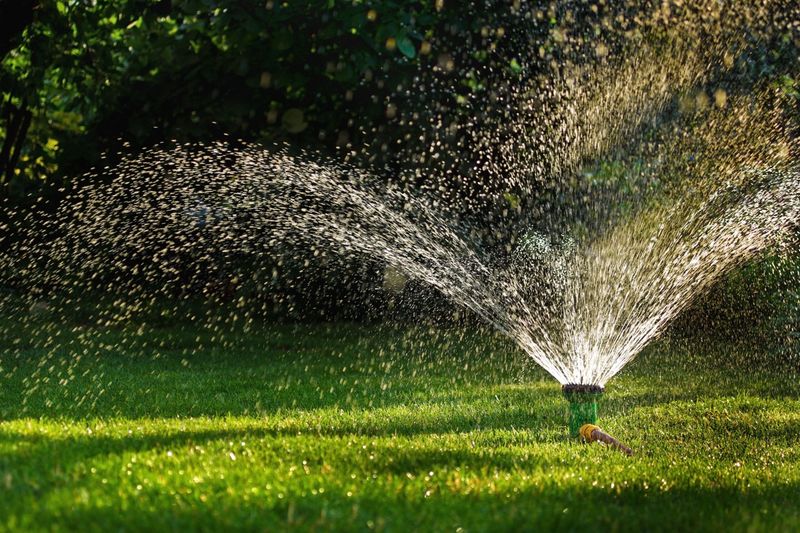
Direct sowing is simple, but it is not a plant-and-forget job. Rain may do most of the watering, and then the weather can turn dry for two or three weeks in the middle of fall.
A gentle check during those breaks is what keeps seeds from drying out before they sprout.
UCANR recommends watering during dry spells, and USDA guidance points to a moist seedbed through germination. Use a fine spray or a watering wand so the seed does not wash downhill.
Short, light sessions work better than one heavy soak on a slope.
A simple test: poke a finger into the top half inch of soil. If it is dry and crumbly, give the area a light sprinkle.
If it feels damp, leave it alone.
Moist does not mean soggy. Soil that stays saturated can rot seed and stress seedlings, and poppies do not thrive in persistently wet ground.
Water-wise gardeners can relax once seedlings are up and winter rains return, since established plants need far less attention.
Keep an eye out for weeds sprouting alongside your seedlings. Pull them by hand while they are small, taking care not to uproot the tiny poppy rosettes with their feathery, blue-green leaves.
Expect spring color, not a guaranteed blanket of flowers
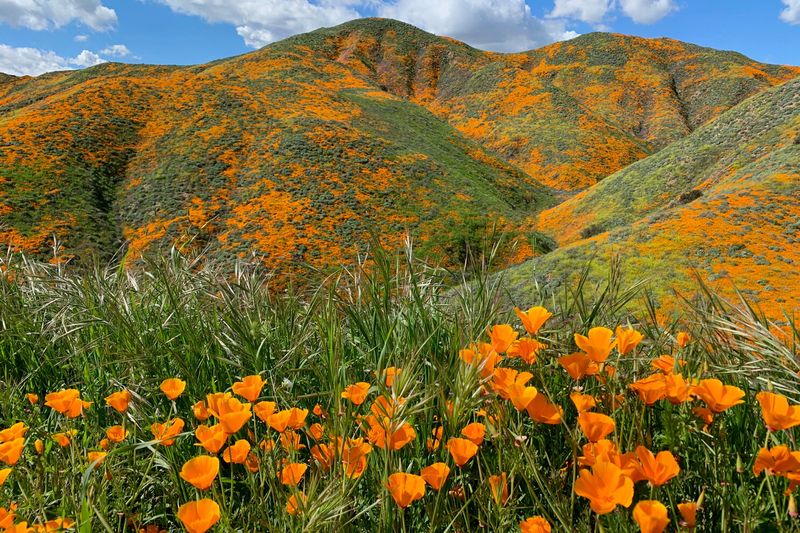
When things go well, poppies grow quietly through the cool months and burst into bloom in spring. UCANR describes annual native wildflowers blooming from early spring.
Poppies often keep going into early summer, though timing shifts with the season and your location.
Coverage will vary too. One year you may see a thick patch near the top of the slope and only a few flowers lower down.
Rainfall, temperature, soil, and competing plants all play a part, so try not to measure success against a roadside photo.
California poppies can behave as annuals or perennials. Calflora lists Eschscholzia californica among California’s native plants, and USDA notes that adapted populations often reseed.
If you let some flowers form seed pods and dry out in place, you may see more poppies the following year.
A word on wildlife: poppies produce no nectar, according to a UCANR fact sheet, though insects do visit for pollen. They are a lovely addition, but pair them with other native plants if you want a broader wildlife garden.
Also, keep livestock away from dense poppy patches, since USDA says the plant may be toxic to them.
A practical path to possible spring flowers
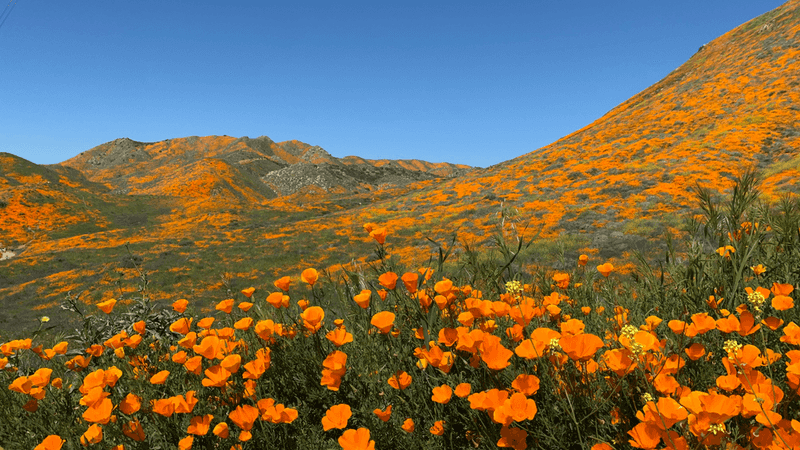
The steps are short: match your sowing to local rain and climate, prepare a sunny, well-drained spot, sow directly, and check moisture when rain pauses. UCANR’s wildflower guidance backs that rhythm of fall planting and spring bloom.
Flowers are the possible reward, not a sure thing. Even a thin scatter of orange is worth the effort, and each season teaches you something about your own slope.
A hillside only needs a few seeds and some patience to start telling a spring story.