
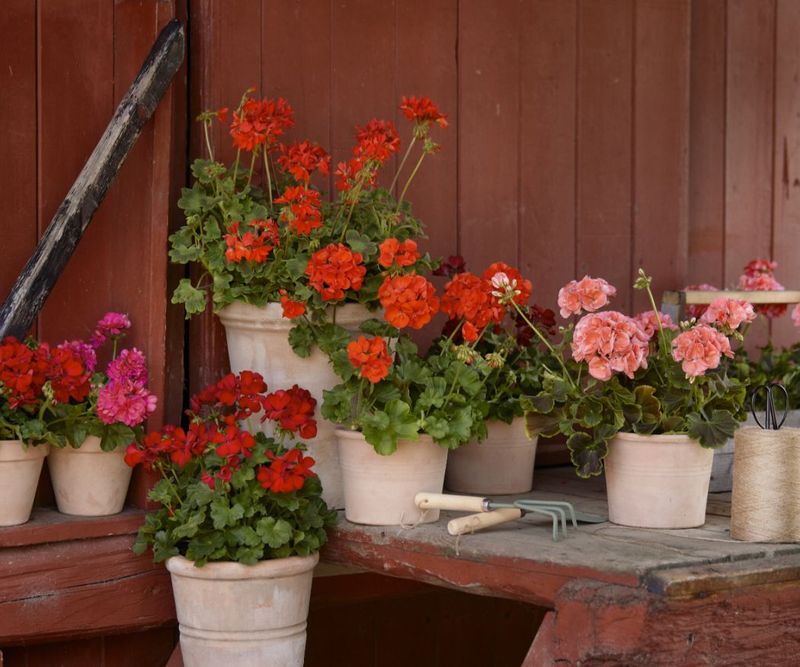
Your geraniums have lots of leaves but hardly any flowers, so you reach for the fertilizer. Hold off for a moment.
Feeding more is not a dependable way to get more blooms, and sometimes it makes things worse. Here is how to figure out what your plants really need before you open the bag.
More fertilizer is not a reliable shortcut to more flowers
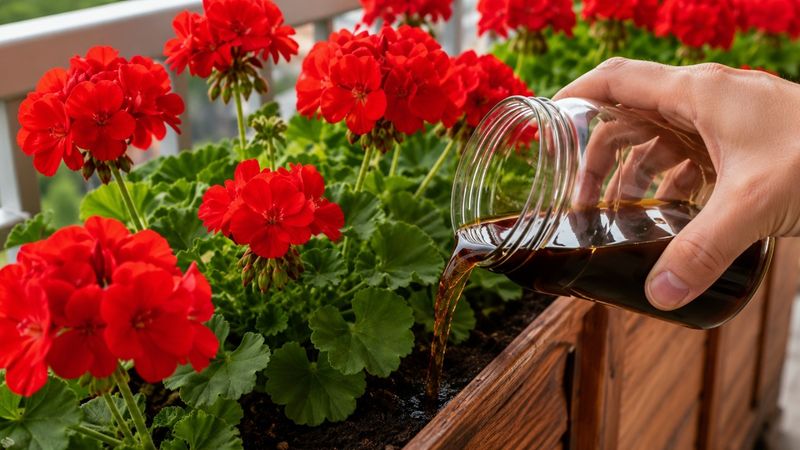
Many gardeners figure that if a little plant food is good, a lot must be better. With geraniums, that thinking tends to backfire.
University of Minnesota Extension notes that geraniums need little fertilizer and may bloom poorly if they get too much.
Texas gardeners hear the same warning. Texas A&M AgriLife Extension cautions that overfertilizing can produce lots of foliage and few flowers.
Notice the word can. Overfeeding is a risk, not a guaranteed outcome, and a plant with plenty of leaves and few blooms may have another problem entirely.
Nobody is telling you to stop feeding geraniums altogether. The goal is to stop treating the fertilizer bag as the first answer to every bloom problem.
This article is about common bedding geraniums, which are botanically Pelargonium. True Geranium species, sometimes called hardy geraniums or cranesbills, are a different group of plants.
Too little nutrition can also limit growth
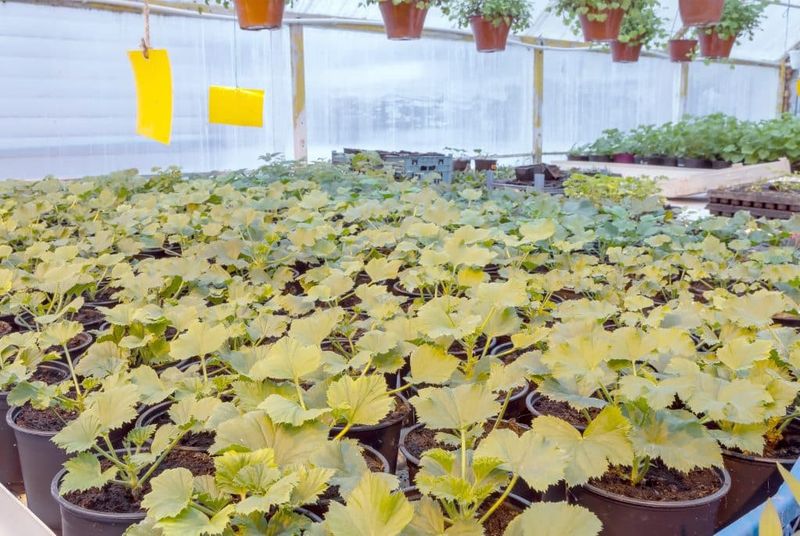
Starving a geranium is no better than stuffing it. A plant that runs short on nutrients may grow slowly, stay small, and turn yellow.
Clemson Extension says too little nitrogen can stunt and yellow geraniums, and it recommends regular feeding during the growing season.
Florida guidance in a UF/IFAS publication also describes fertilizing as part of normal geranium care. Advice does vary from one source to another, which is a good reason to look at your own plants instead of following one rule.
So the practical goal sits in the middle. Meet the plant’s needs.
Do not hold back food out of fear, and do not pour it on just because flowers are scarce. Pale, yellowing leaves on a slow-growing plant point toward a possible shortage.
A healthy green plant with few flowers points somewhere else.
Check sunlight and spent flowers first
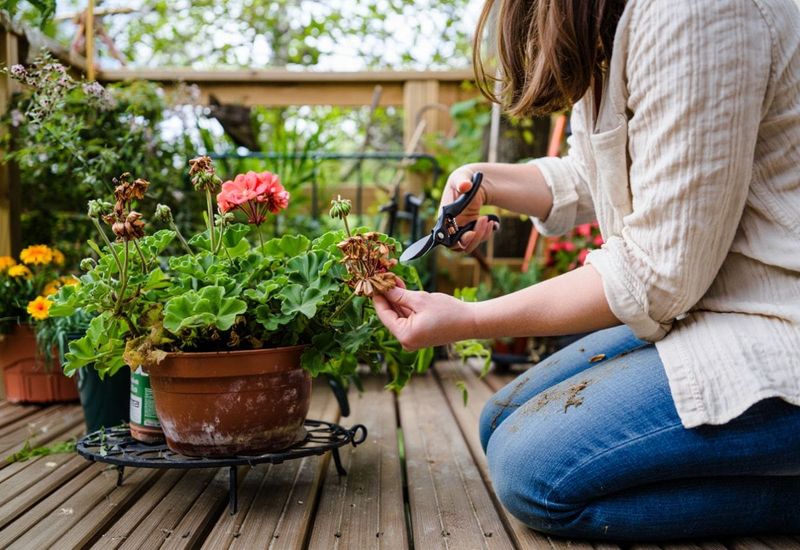
Before any feeding decision, walk out and look at where the plant sits. Light is a common reason for sparse blooms.
Minnesota Extension says less sun means fewer flowers and suggests at least eight hours of sun daily.
Iowa State Extension says at least six hours for best flowering. Both sources recommend removing faded flowers to encourage more blooms.
Try a simple test. Count the hours of direct sun that reach the plant, and snap off spent flower clusters with their stems.
A shady spot or a pile of old blooms can explain a lot.
These checks are different from diagnosing a nutrient problem. A low flower count by itself is not a reason to fertilize.
Check soil and potting mix before feeding
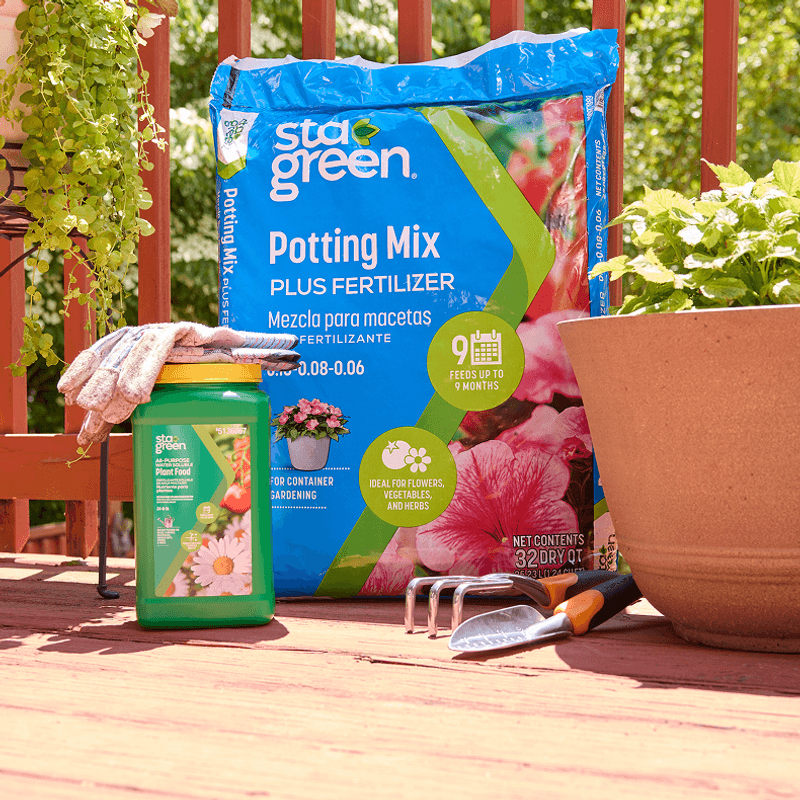
Soil that already holds plenty of nutrients does not need more. For garden beds, a soil test is the best way to learn whether anything is lacking.
County extension offices in Florida and Texas often offer testing, and the results tell you what to add, if anything.
Containers work differently. Check the potting mix bag, because many mixes come with fertilizer already mixed in.
Minnesota Extension notes that nutrients wash out of containers faster, so potted plants may need replenishing over time.
Too much can still do harm. UF/IFAS explains that overfertilized containers can build up salts, which may cause stunted growth, brown leaves, or even plant death.
Add up what is already there before adding more.
Use the product label, not a universal feeding schedule
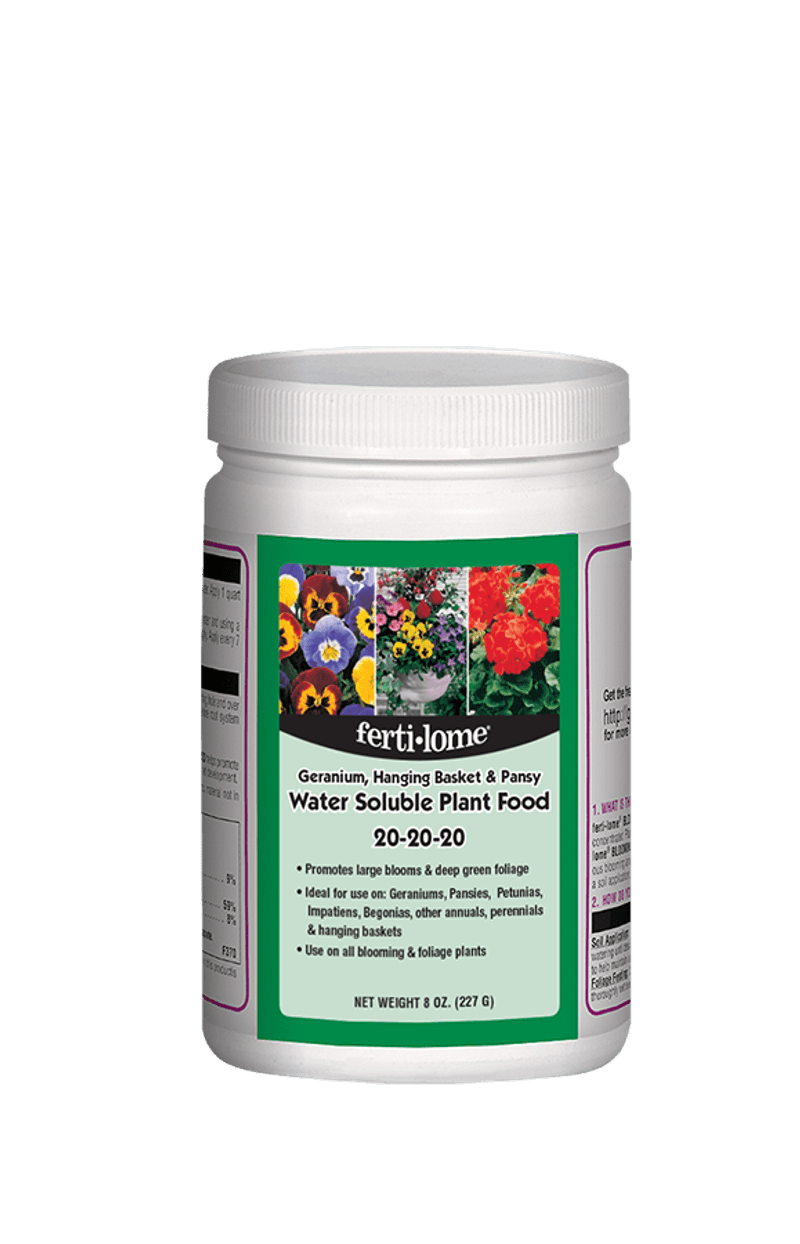
Ask three extension offices about feeding geraniums and you may get three answers. That is because they come from different places and situations.
Minnesota Extension suggests a balanced fertilizer or a half-strength water-soluble product under its stated conditions.
Clemson Extension recommends feeding every four to six weeks during the growing season.
Treat these as examples, not rules to swap back and forth. Your plan should fit your own setup, including the product you buy, the nutrients already in your soil or potting mix, and your growing conditions.
The product label is your best guide for how much to use, how to dilute it, and how often to apply. If the label and a blog post disagree, go with the label.
When a plant looks healthy, skipping a feeding costs far less than burning roots.
More flowers do not necessarily mean bigger individual blooms
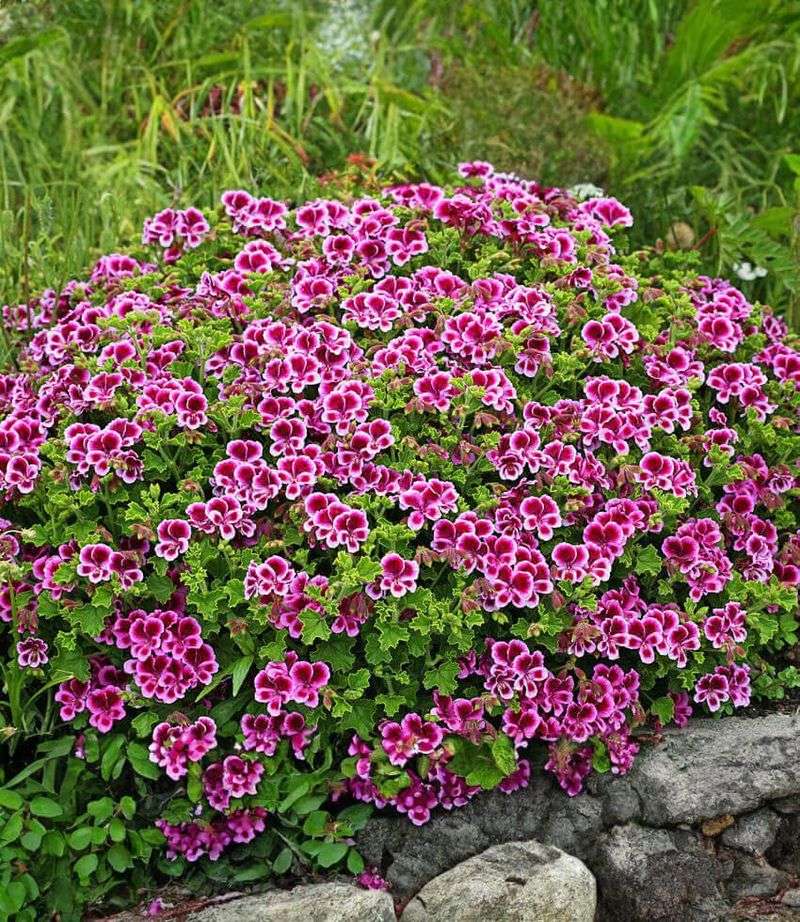
Flower count, cluster count, and the size of a single bloom are three separate things. A plant can produce many flowers that each stay small.
Another might make fewer, larger ones.
A controlled Pelargonium study tested fertilizer rates, biochar, and mycorrhizal inoculation. A higher fertilizer treatment increased flower and flower-cluster numbers in some of the tested growing media.
That result is useful, but narrow. It shows adequate nutrition can support flowering under certain conditions.
It does not give home gardeners a formula for bigger individual blooms, and it does not show that extra fertilizer will work in a Florida or Texas yard.
Variety, light, and heat also shape how a geranium blooms. Good feeding supports a healthy plant, but it is not a promise of bigger flowers.
In Florida, summer heat may be the bigger obstacle
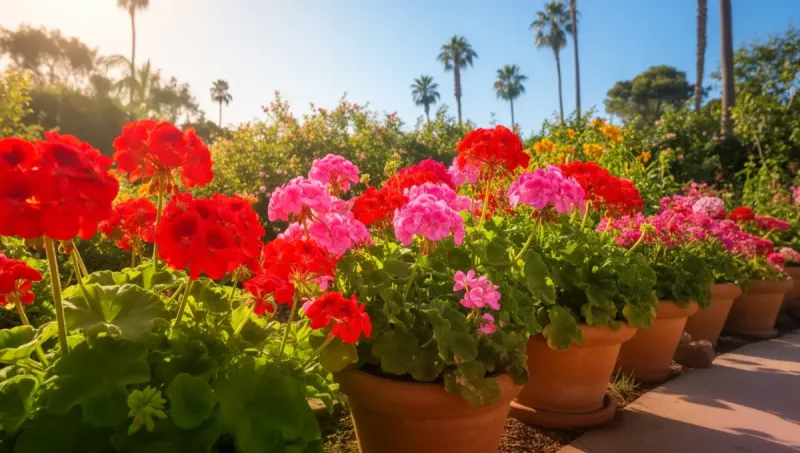
Gardeners in Florida face a challenge that fertilizer cannot fix. UF/IFAS says common geraniums struggle in Florida’s summer heat and humidity.
Another UF/IFAS publication adds that they generally do best in cooler weather in central and southern parts of the state. If your geraniums stall in July, heat may be a likely suspect.
Look at timing. Plants that bloom well in cool months and fade as temperatures climb are showing a classic pattern.
Moving pots to a spot with afternoon relief may help, though it is not guaranteed.
This is a regional point, not a rule for every Southern garden. Heat is one possible limit in Florida, and conditions in other areas of the South can differ.
Feed for the plant’s needs, not a promise of bigger blooms
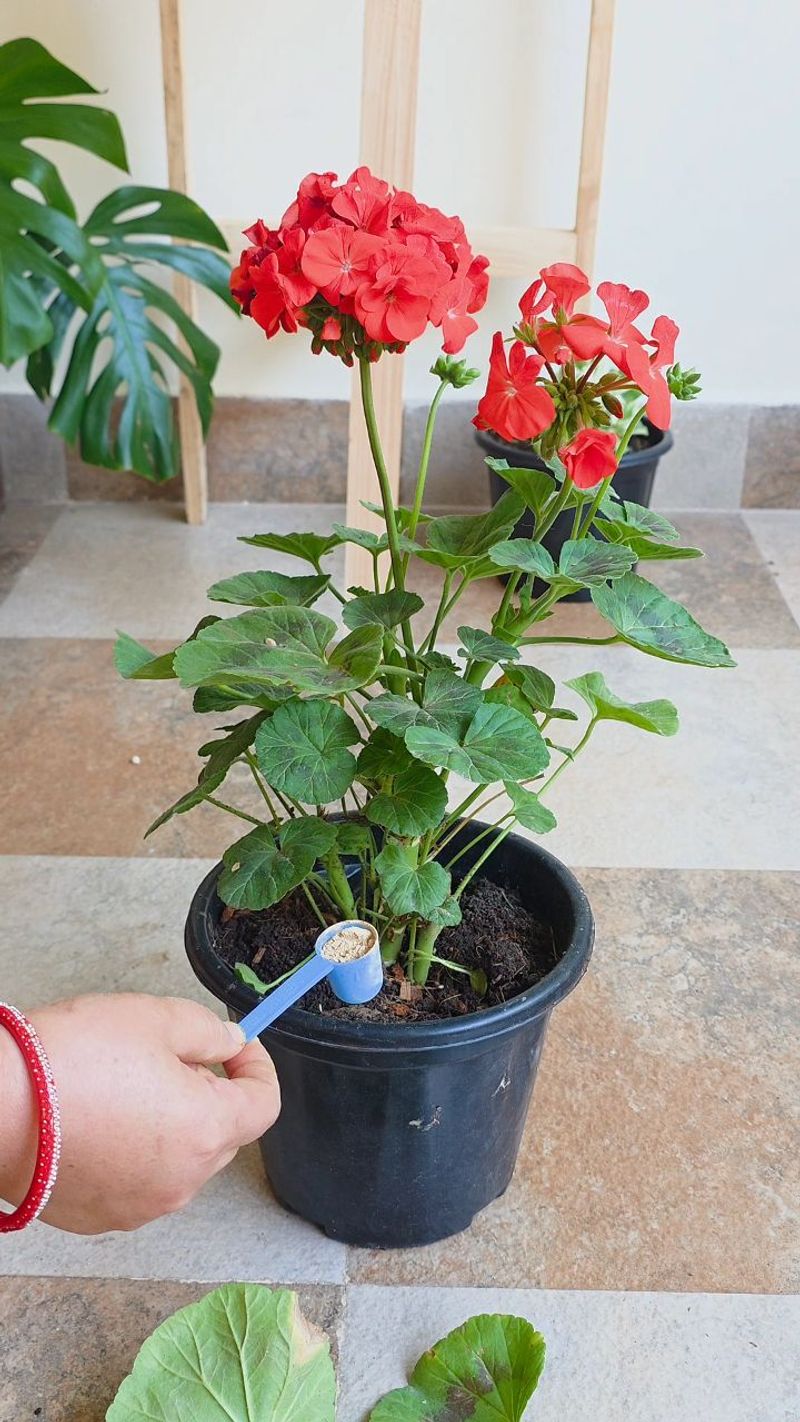
Work through the problem in order. Check sunlight and remove spent flowers.
Think about regional heat and your growing setup. Find out whether nutrients are truly needed, using a soil test or the potting mix label, and then follow the fertilizer label.
Skip the high-phosphorus bloom booster unless a soil test shows a need. UF/IFAS Escambia County explains that extra phosphorus will not improve growth when soil already has enough, and it can contribute to pollution.
Minnesota Extension also stresses modest feeding.
A geranium that gets what it needs is simply a healthier plant, and the flowers are up to the sun and the weather.