
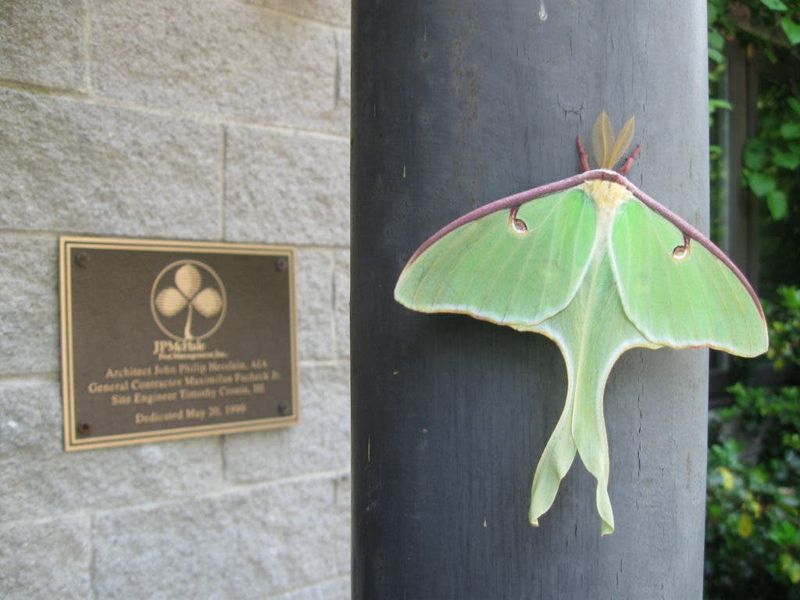
Few insects in Florida look as dreamy as a luna moth, with pale green wings and long, trailing tails. Many gardeners wonder if one tree can bring them close to home.
The real story starts earlier in the moth’s life, with a native tree that feeds its caterpillars. Before you plant anything, it helps to know what that tree does and what it does not do.
Sweetgum feeds luna moth caterpillars
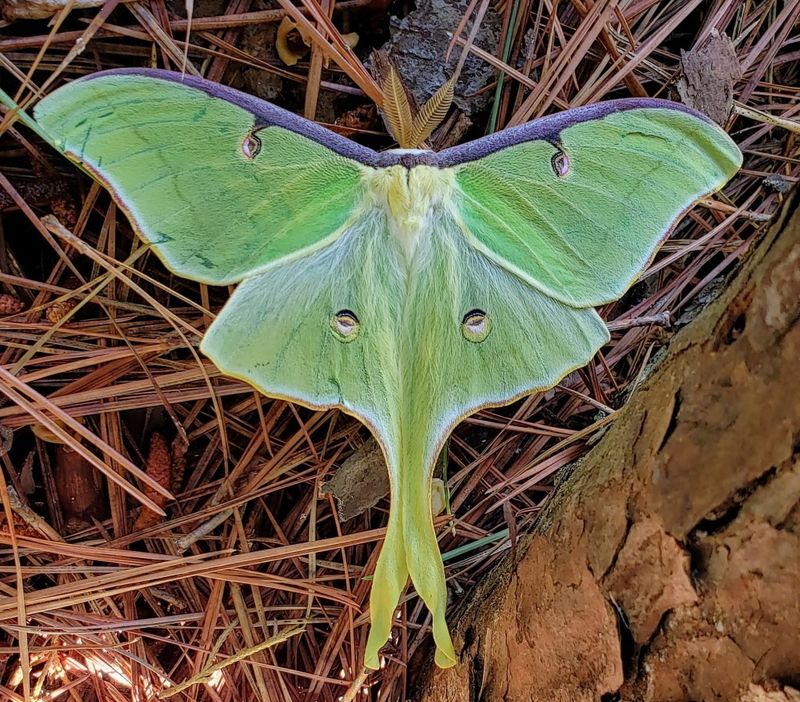
Sweetgum (Liquidambar styraciflua) is the tree at the center of this story. UF/IFAS lists sweetgum as a host plant for luna moth caterpillars and says it works well when people raise the caterpillars at home.
The star-shaped leaves are real food for the young, leaf-chewing stage of the moth.
That is a food relationship, and it stops there. A host plant is simply a plant caterpillars can eat.
Nothing in the research shows that planting a sweetgum will bring adult luna moths to your porch.
The tree is also a good fit for Florida on its own terms. The UF/IFAS tree profile lists sweetgum as native and describes it as a large shade tree.
Native status matters because local wildlife has had a long time to work with native plants.
So think of sweetgum as a nursery pantry. It can supply leaves for caterpillars, if a female moth happens to lay eggs nearby.
Whether she does depends on many things you cannot control, including where your yard sits and what moths live in your area.
The rest of this article sorts out the details. You will see what a host tree really does, how adult moths relate to light, and whether a tree this big suits your property.
That order matters, because the planting decision comes last.
A host tree feeds caterpillars, not adult moths
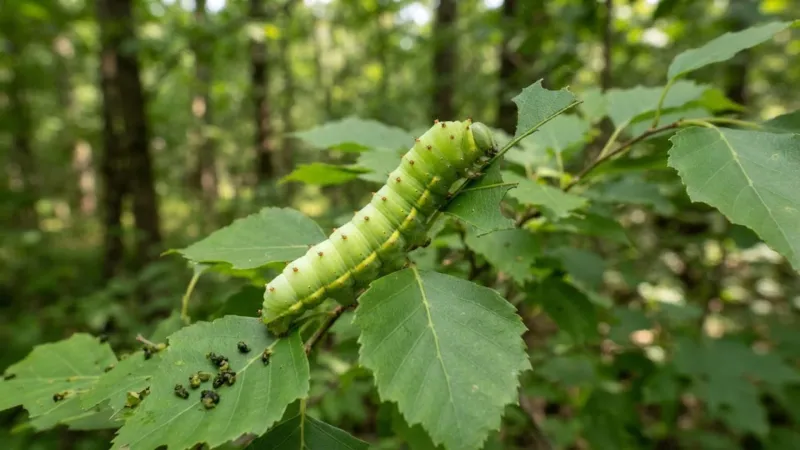
Picture a luna moth’s life as two very different jobs. Caterpillars eat and grow.
Adults, by contrast, have no working mouthparts, so they do not feed at all, and they live only a short time. UF/IFAS describes this life cycle and notes that caterpillars feed on the foliage of host trees.
That is why a host tree matters at the caterpillar stage only. The leaves are the meal.
Once the moth becomes an adult, the tree is simply a place it may rest or lay eggs.
Sweetgum is not the only tree on the menu. Southern luna moth populations use several host groups, including hickories, walnuts, sumacs, and persimmon.
If you already have one of these in your yard, you may be supporting caterpillars without knowing it.
There is one more catch. UF/IFAS cautions that some reported hosts may not suit every regional population.
The Escambia County extension office also covers the moth and its host trees, which shows how local the details can be. Sweetgum does work well in rearing, but it is not the single preferred choice.
For a homeowner, the lesson is practical. Look at what already grows on your lot before adding a large tree just for one moth.
Porch lights are a separate reason adults may be noticed
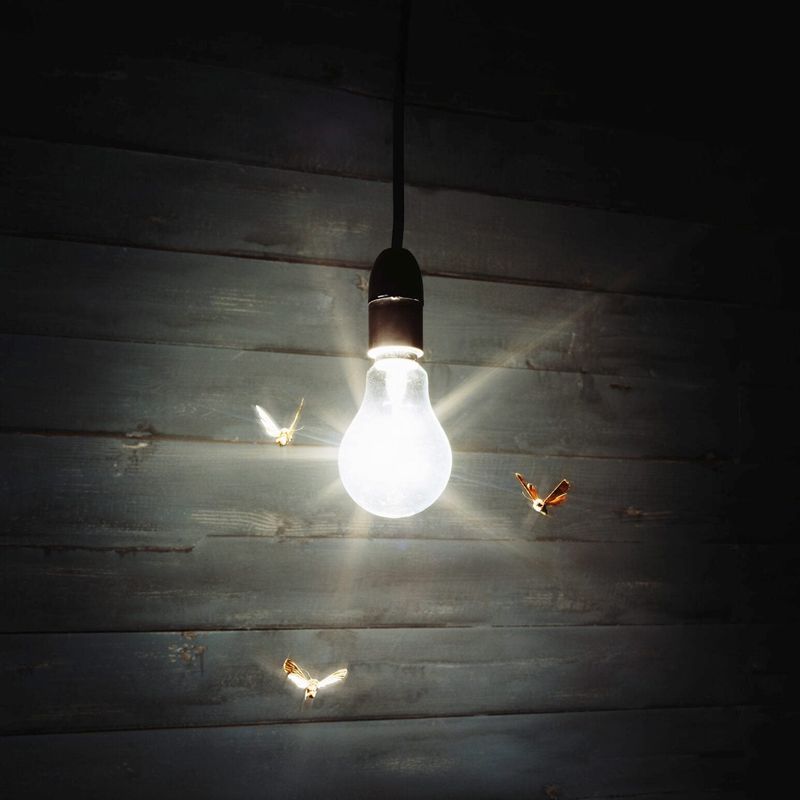
Here is where the porch-light idea comes from. UF/IFAS says adult luna moths are attracted to light, especially ultraviolet wavelengths.
A glowing bulb can make a moth that is already flying nearby much easier to spot.
That has nothing to do with sweetgum. The tree feeds caterpillars, and the light draws adults.
Mixing the two ideas leads to the false promise that a tree will pull moths to your door.
Lighting is also not a simple wildlife tool. A review of light pollution and moth declines reports that artificial light can suppress moth activity and disrupt behavior.
A field study of street lighting found changes in moth numbers, variety, flight activity, and pollen transport at lit sites.
Those studies cover moths in general. They do not show what a porch light does to Florida luna moths.
So there is no proven reason to leave lights on as a conservation step.
If you do see a luna moth by a light, enjoy it. Just treat it as a lucky look, not a result you can plan.
Could a full-size sweetgum fit your Florida yard?
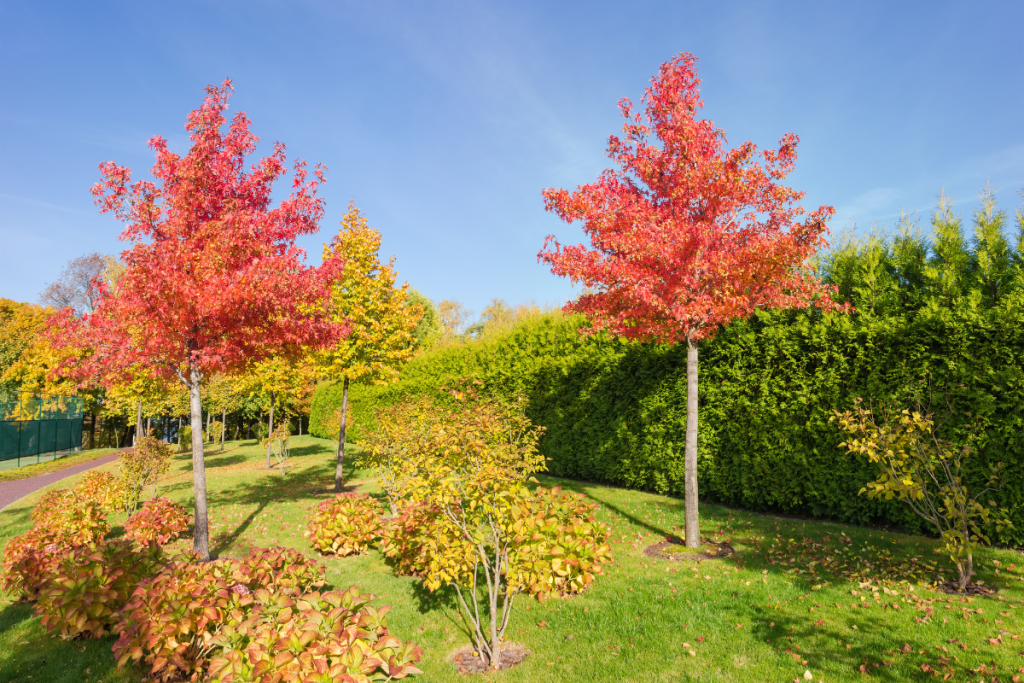
Size is the first thing to check. UF/IFAS lists a mature sweetgum at roughly 60 to 75 feet tall and 35 to 50 feet wide.
That is taller than most houses and wider than many front yards.
Compare those numbers with your lot. Walk off 35 to 50 feet from a spot and see what the crown would cover.
Look up for power lines and over for roofs, pools, and neighbors.
The good news is that sweetgum is flexible about conditions. It tolerates sand as well as several other soil types, which helps in much of Florida.
It also grows in full sun to partial shade, so a bright open spot or a lightly shaded one can work.
Still, tolerance is not the same as a perfect match. A big tree needs space above and below ground, however easy it is to grow.
This makes sweetgum a better fit for a roomy property than for a tight bed beside the porch. If your yard is small, it is not a small entry plant, and another host such as persimmon may suit you better.
Pick the site first, then decide if the tree belongs there.
Roots and spiny fruit affect where you plant
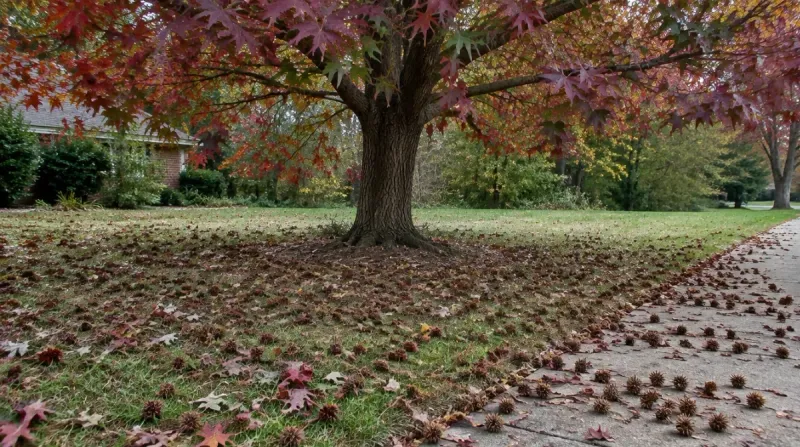
Two drawbacks decide where this tree can go. The first is below ground.
UF/IFAS warns that large, aggressive roots can lift curbs and sidewalks, and it recommends planting 8 to 10 feet or more from curbs.
Treat that distance as a minimum. Driveways, walkways, and pool decks face the same pressure, so more room is safer.
The second drawback is the fruit. Sweetgum drops spiny balls that litter lawns and can make patios, walks, and other hard surfaces a slipping nuisance.
Stepping on one barefoot is a lesson most people only need once.
Here is a simple placement check. Pick a spot well away from paving, then imagine raking and sweeping under it every season.
If that sounds like too much, choose another site or another tree.
A porch-side planting rarely passes this test. Roots, fruit, and a very large crown all collide with steps, railings, and walkways.
A back corner or open lawn edge gives the tree room to grow and keeps the mess off the places you walk.
Plant for habitat, not a guaranteed moth sighting
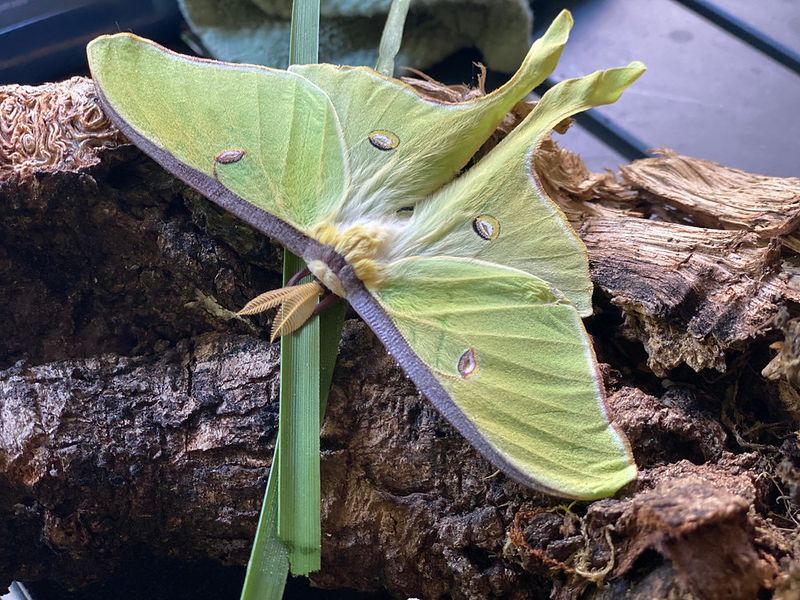
Use a simple rule. Plant sweetgum if its mature size and its need for space away from pavement suit your property, and if you want to give caterpillars food.
Skip it if the goal is a promised adult visit.
Moth timing is loose. UF/IFAS reports up to three generations per year in Florida and says adults may turn up in every month.
The Escambia County extension post covers the moth too. Those reports do not mean your odds are equal everywhere or all year.
You also do not need to worry about harm. UF/IFAS says luna moth caterpillars are not common enough to cause significant damage to host trees.
A sweetgum gives caterpillars a place to eat, and the moths decide the rest.