
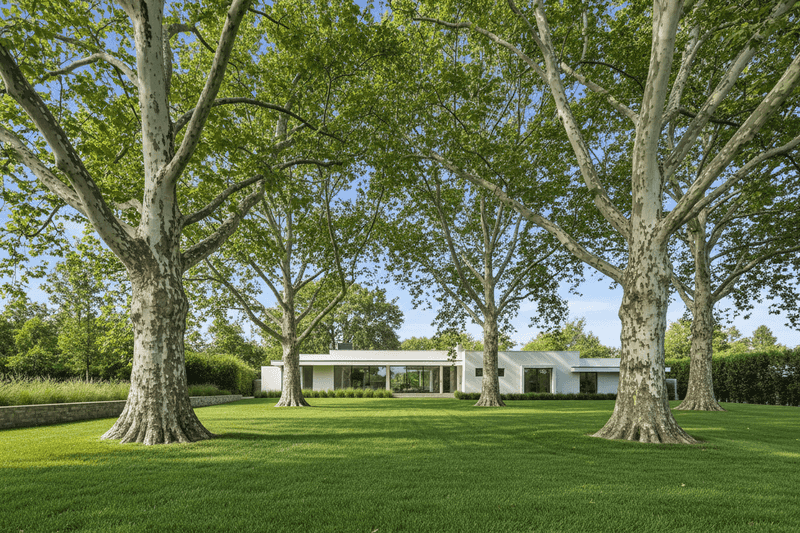
A fast-growing shade tree sounds like the answer to a hot Texas yard, but the label fits more than one tree. American sycamore is a Texas-native option that grows quickly, and it comes with some real requirements.
Planting season matters too, and Central Texas has a long cool-weather window to work with. Here is how to decide if this big tree belongs in your yard and how to plant it well.
Two sycamores fit the fast-growth clue
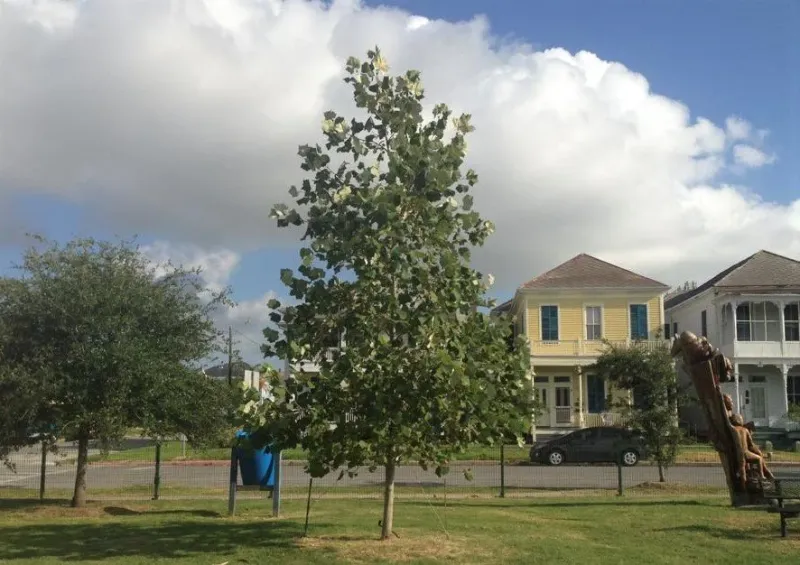
Search for a fast-growing sycamore and you will land on two different trees. Texas A&M’s tree selector lists American sycamore (Platanus occidentalis) as rapid-growing and Texas-native.
Mexican sycamore (Platanus mexicana) also gets a rapid-growth description in its own Texas A&M profile. So growth speed alone cannot tell you which tree is meant.
Where each tree comes from is the clearer dividing line. A USDA plant record places Mexican sycamore’s native range in Mexico and Guatemala, not Texas.
American sycamore is the one Texas A&M lists as a Texas native, which is why this article focuses on it.
The two trees also differ in what they ask of a site. Mexican sycamore is listed as more drought-tolerant, but Texas A&M cautions that it may not be cold-tolerant.
American sycamore is a large tree that wants a moist site and plenty of room.
Neither one is the best pick for every Central Texas yard, and nothing here suggests local homeowners are rushing to plant either. Think of this as a guide for people already curious about a big, quick-growing native.
The next sections cover whether your property can handle one and how to get it in the ground.
American sycamore needs room and moisture
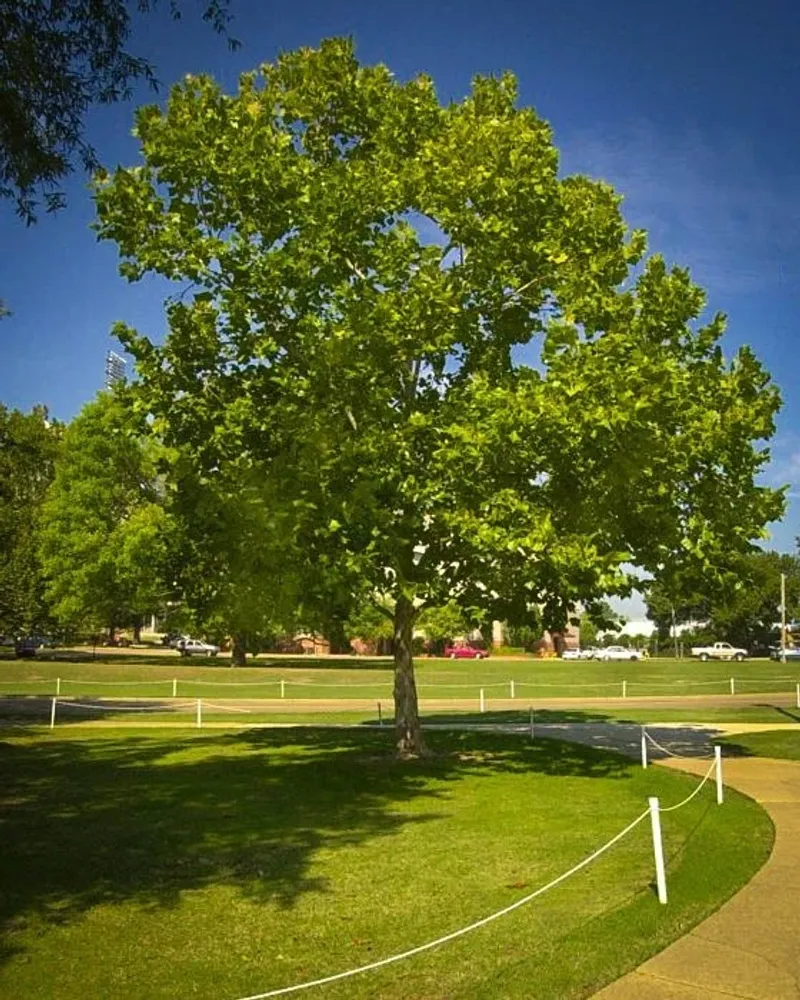
Picture a tree that keeps getting bigger and you have the right idea. Texas A&M describes American sycamore as a large, rapid-growing deciduous tree that needs a moist site and ample room.
A narrow side yard or a spot close to the house is a poor match.
Its natural home gives a clue about what it likes. Texas A&M Forest Service notes it grows along streams and in bottomlands in eastern Texas and along major rivers of the Edwards Plateau.
A dry, rocky, fast-draining lot is a different setting entirely.
Being native does not make it right for every yard. If your soil dries out quickly and you cannot water through hot spells, think twice.
Plan for cleanup, too. Texas A&M lists leaf and fruit drop, along with anthracnose and stem cankers, as problems for this tree.
A walk around your property can help: look for open space overhead and to the sides, a spot that stays damp, and a spot where falling debris will not be a headache.
Plant during the cool season, not by a freeze deadline
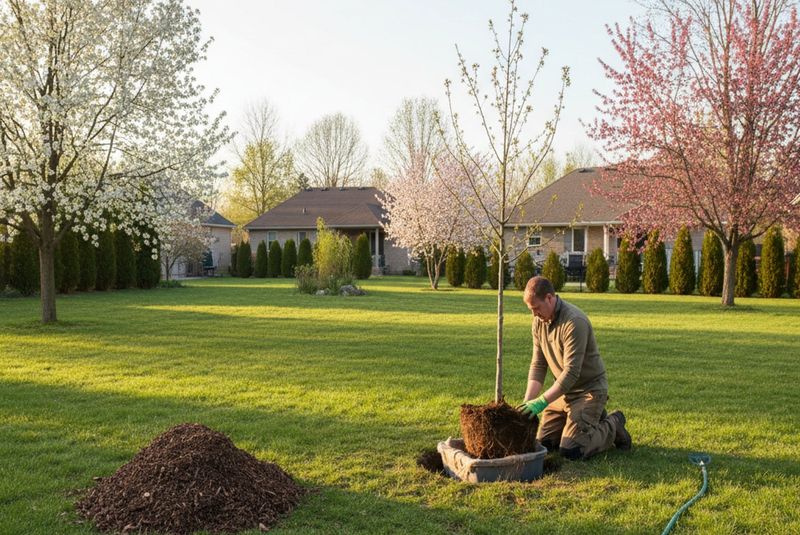
Timing in Central Texas is a season, not a single date. The City of Austin’s tree guide gives a planting window of October 15 to March 15.
Planting in the cool, wet months lets roots settle in before hot, dry summer weather arrives.
Texas A&M Forest Service gives a similar picture. In its guidance on choosing the right tree, it recommends November through early spring.
The two windows overlap for most of the cool season.
Notice what is missing: neither source treats the first freeze as a cutoff. If a freeze hits in November and your tree is not planted yet, you have not missed your chance.
Plenty of the recommended window is still ahead of you.
A practical approach is to pick your site and buy your tree in early fall. Then plant when the weather is mild and the ground is workable.
Waiting until late winter is fine if it keeps you from rushing a poor choice of spot.
Set the root collar at grade
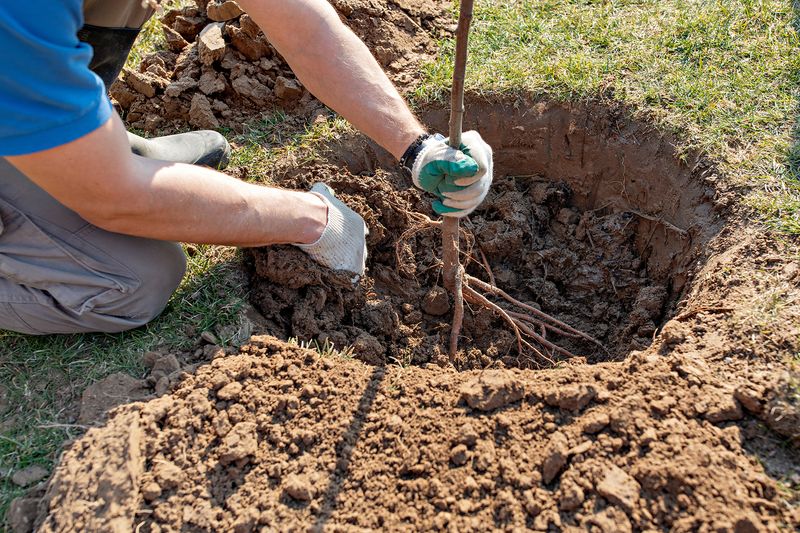
Planting depth is where many young trees go wrong. Texas A&M Forest Service planting guidance offers a simple sequence you can follow step by step.
Start with the hole. Dig it at least twice as wide as the root ball, but no deeper than the root ball itself.
A wide hole gives roots loose soil to grow into, while a hole that is too deep lets the tree sink.
Next, set the tree so the root collar sits flush with the ground or slightly above it. The root collar is the spot where the trunk begins to flare out toward the roots.
Then backfill with the same soil you dug out of the hole.
Finish with mulch spread 2 to 3 inches deep. Keep it from piling against the trunk, because a mulch ring should look like a doughnut, not a volcano.
Water the new tree for at least two years while it establishes. Hold off on fertilizer during the first growing season.
Beyond these steps, there is no need to add special amendments to the hole.
First-year shade is possible, not guaranteed
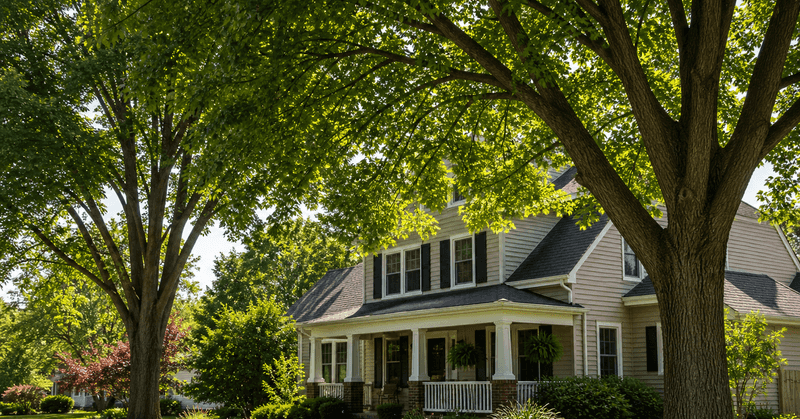
Yes, a young tree can start paying you back early, but how much depends on the details. The U.S.
Department of Energy’s home landscaping guide says a 6 to 8 foot deciduous tree near a home can begin shading windows in its first year. It also says a slow-growing tree may take up to 10 years to shade a roof.
Shade can reduce solar heat gain, so a well-placed tree may help keep a sunny wall or window cooler. That is a potential benefit, not a promise.
One young tree will not make a whole yard feel cooler by next summer.
Several things shape the result. The size of the tree at planting matters, as does where its shadow falls during the afternoon.
Survival counts too, which is why the care steps from the Forest Service planting guidance matter, including watering for at least two years.
Canopy growth also takes time. Mark where afternoon sun hits your house and patio before you choose a planting spot, and keep your expectations modest for year one.
Match the tree to the site
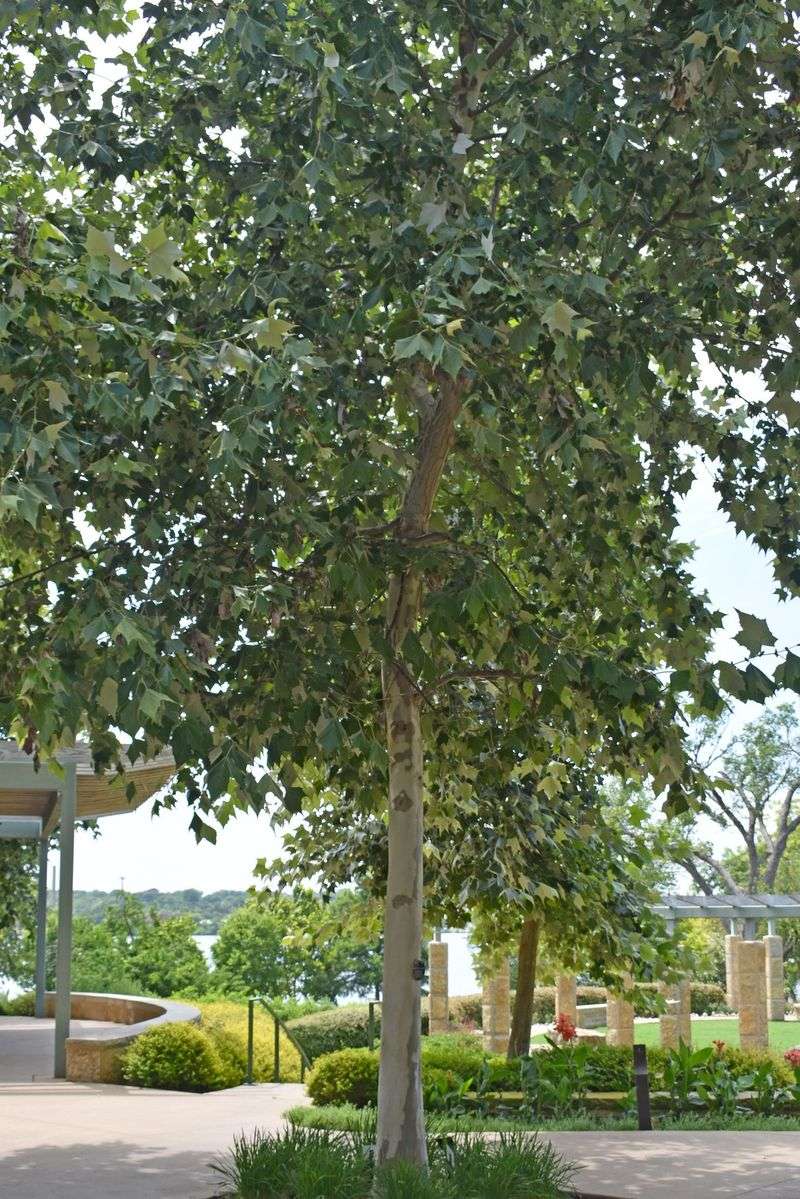
Start with the yard, not the tree. If you want the documented Texas-native sycamore, first ask whether your property can give American sycamore the room and moisture it needs.
If it can, use the cool-season window in the Austin guide instead of racing a freeze. Shade will depend on placement and establishment, as the Department of Energy explains, so expect a gradual payoff.
A good tree in the wrong spot is a long-term problem, while the right one in the right spot just keeps getting better.