
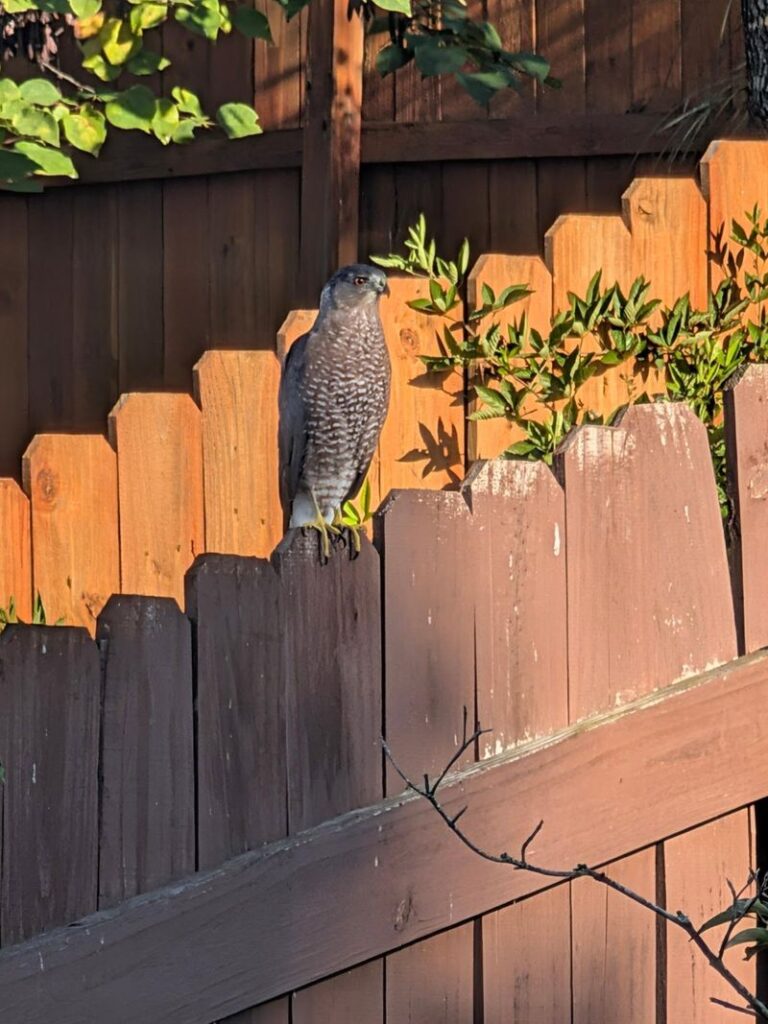
A big bird lands on your fence post, scans the grass, and then shows up again a few days later. It is easy to wonder what it wants and what it says about your yard.
Hawks are good at using what a landscape offers, so each visit can be a small clue. Here is how to read that clue without reading too much into it.
A returning hawk shows the yard is usable, not what its whole food chain looks like
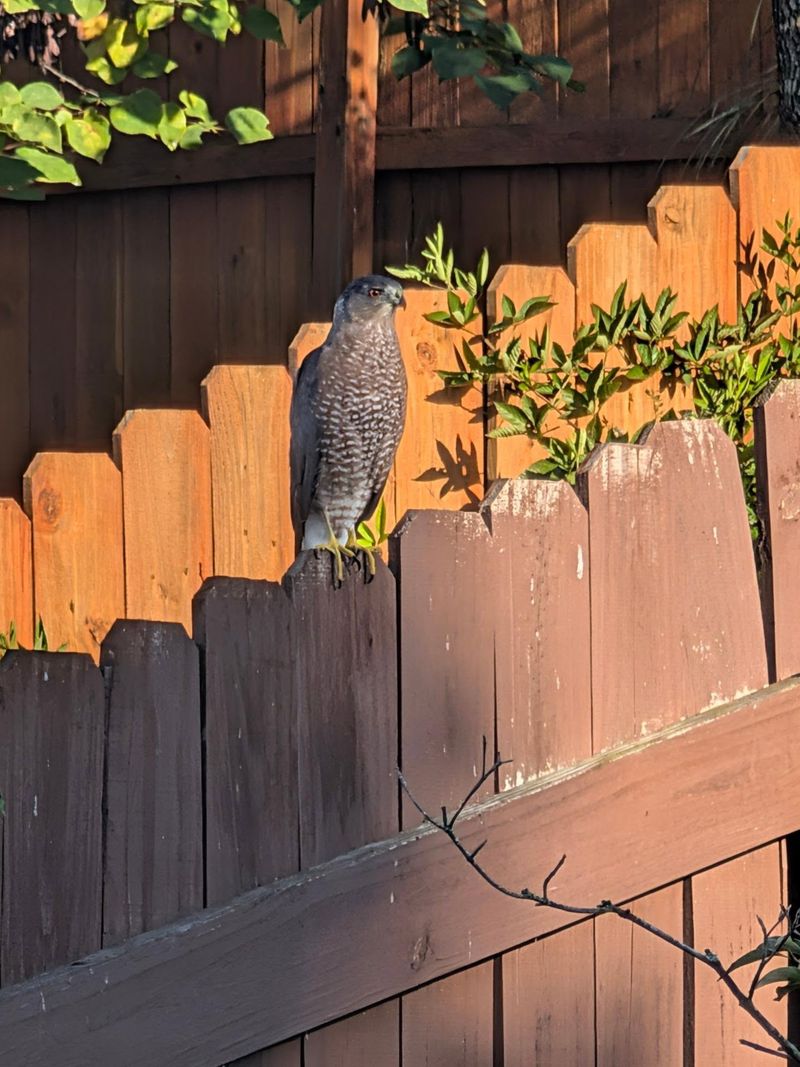
When a hawk keeps turning up, the plain answer is that it is using your yard or the land around it in some way. Maybe it likes a perch, a flight path, a patch of cover, or a spot where food is easy to find.
What a sighting cannot do is give you a full readout of every plant and animal in your yard.
Prey does matter to hawks, though. Hunters tend to stick around places where meals are available, and that idea has real research behind it.
In a peer-reviewed study of Cooper’s and Sharp-shinned Hawks in Chicago, the number of prey birds was an important factor in whether those hawks stayed in an area.
Look closely at what that study covered. It tracked winter occupancy across a whole metropolitan landscape, not single yards, and it was not done in North Carolina.
So it backs up a reasonable link between prey availability and urban hawk presence, but it does not prove anything about your lot.
That difference changes how you read a visit. A hawk on your fence does not mean mice, squirrels, or songbirds have multiplied in your yard.
It may be hunting a neighbor’s feeder, following a wooded creek line, or simply passing through on a regular route.
A better question than what the hawk says about my food chain is what the hawk is using here. Notice where it sits, what time it comes, and what is nearby.
Those small details tell you much more than the fact that it came back.
The hawk’s species narrows which yard features may matter
Knowing which hawk you have changes the picture. Cooper’s Hawks, according to Cornell Lab life history notes, mainly eat birds and use leafy suburbs, parks, and areas with feeders.
A Cooper’s Hawk darting through shrubs near your yard may be hunting songbirds.
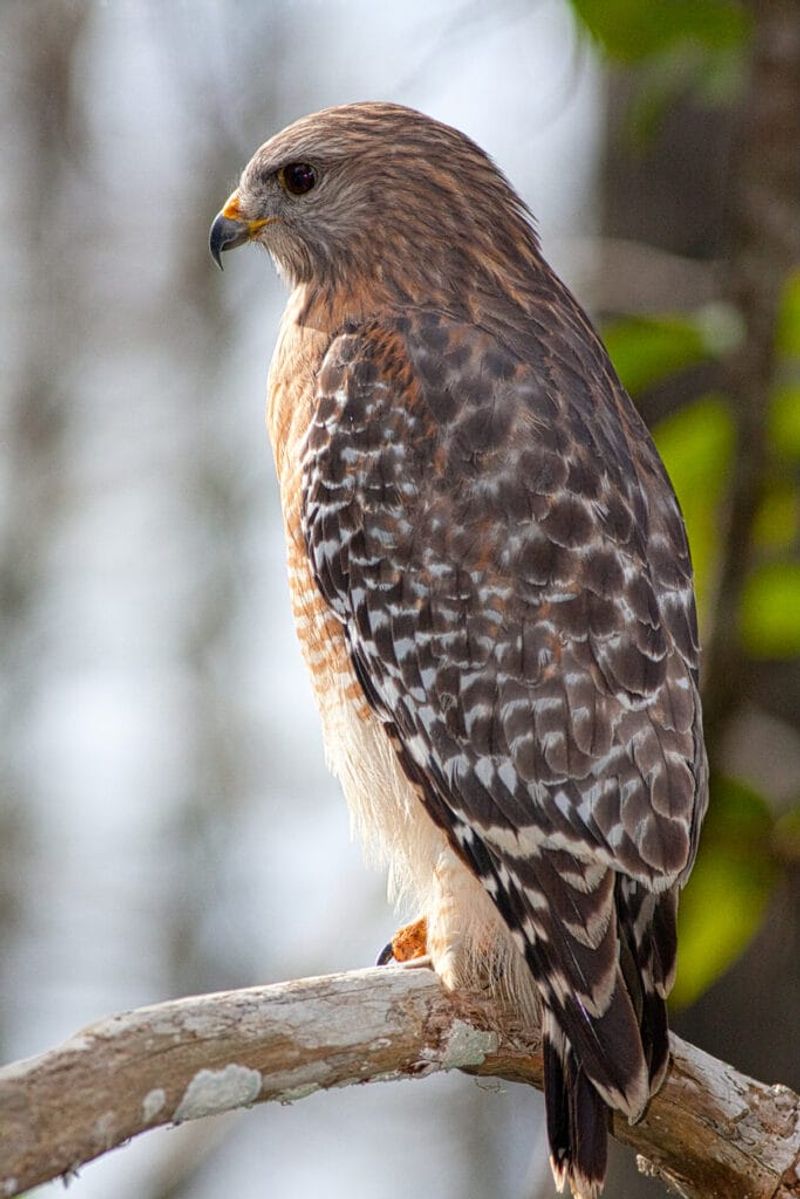
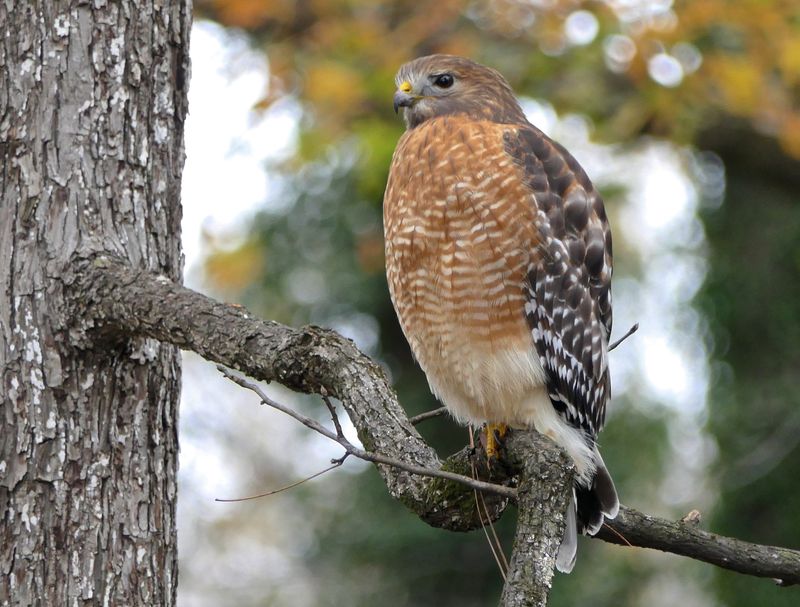
Red-shouldered Hawks lean toward wooded neighborhoods, often close to water. Their diet includes small mammals, amphibians, and reptiles, with birds taken now and then.
If you live near a creek or a shady lot in the Piedmont or coastal plain, this is a likely visitor.
Red-tailed Hawks are big and broad-winged. They are often linked to open areas and hunt from elevated perches such as poles, tall trees, and field edges.
A Red-tail on a light pole beside a big lawn or pasture fits that pattern.
Use these patterns as a set of possibilities. They do not tell you why one hawk chose your yard on one afternoon.
Even a perfectly identified bird might be eating something you never see.
A simple habit helps. Snap a photo, note the size and the tail, and write down where it sat.
Matching that to the habitat around you gives a sharper guess than any single sighting.
A feeder can concentrate the birds a Cooper’s Hawk hunts
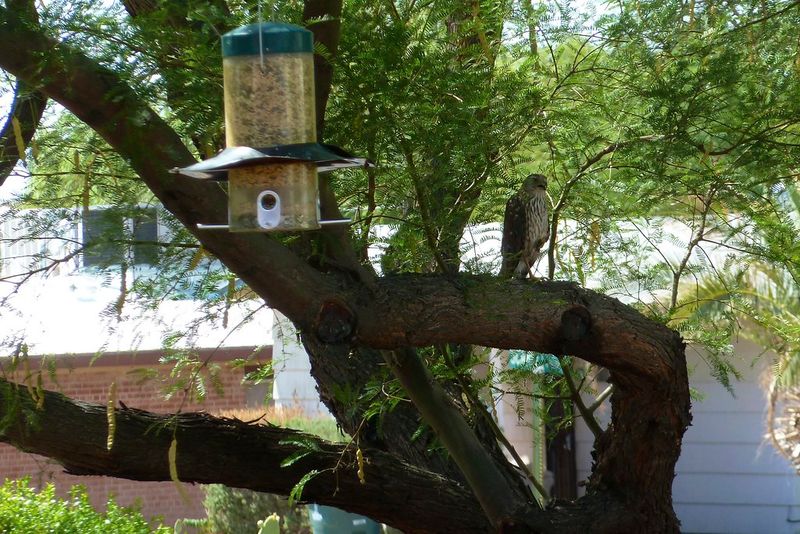
Picture a feeder as a dinner bell for small birds. Chickadees, finches, and sparrows gather in one spot, and that crowd can draw in a hunter.
Cooper’s Hawks sometimes hunt around backyard feeders for exactly that reason.
That makes a feeder visit a fairly specific clue. It points to bird activity at the feeding station.
It does not show that your yard has extra rodents or that every kind of prey is thriving.
If the visits bother you, Cornell Lab advice in its piece on seeing more hawks in your yard is to take feeders down for a while. Doing so can reduce that particular hunting opportunity.
Birds scatter, and the hawk may look elsewhere.
Keep the limits in mind. Removing feeders will not stop a hawk from using the wider neighborhood, because the trees, perches, and other feeders down the street are still there.
You are only closing one buffet.
Many North Carolina gardeners also find that a feeder near dense shrubs gives songbirds a quick place to dive for cover. When you restart feeding, that small layout tweak is an easy weekend project.
Repeated visits do not prove the hawk lives or nests in your yard
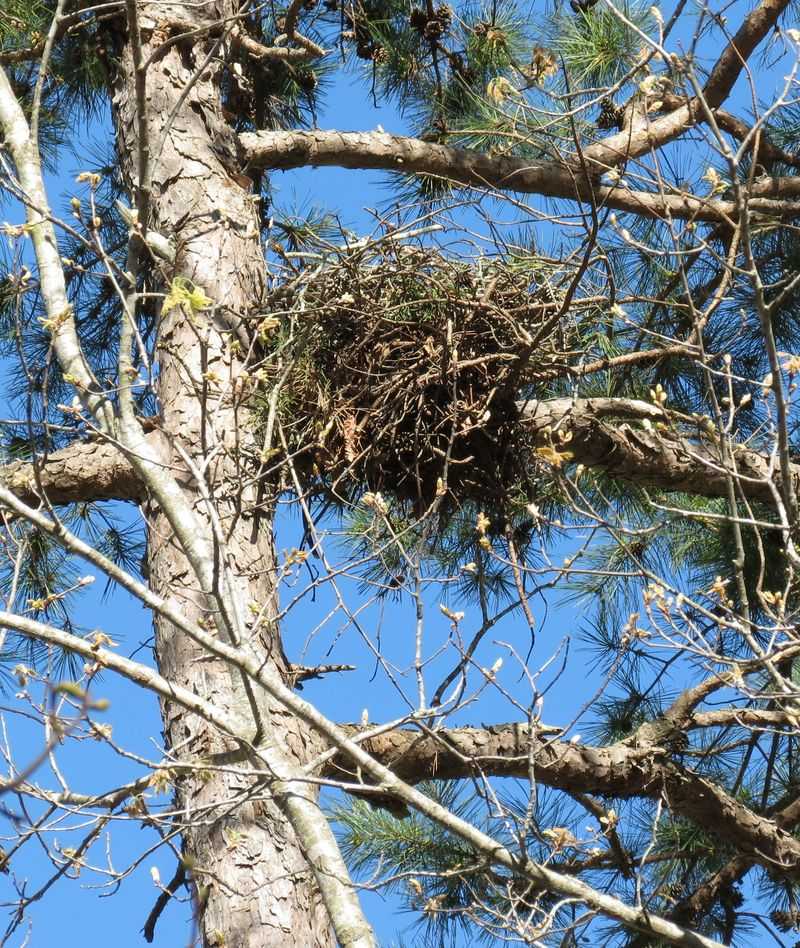
Seeing a hawk three times in a week feels like a pattern, and it is. But a pattern of visits is not the same as a hawk that lives or nests with you.
The bird might use your yard as a perch, a hunting spot, a travel route, or one corner of a much larger territory.
You also cannot tell whether it is the same bird each time. Neighboring hawks of one species look very much alike from a kitchen window.
Unless you can spot a clear mark, treat each visit as a hawk, not necessarily the hawk.
Nests are a different matter, and a few clues help. Red-shouldered Hawks can reuse nests and defend territories, so a bird that circles and calls loudly over one tree may be guarding something.
If you suspect a nest, stay back, watch from a distance, and do not touch the nest, eggs, or birds.
The legal side is worth knowing. According to the U.S.
Fish and Wildlife Service, most bird nests are protected, and destroying an active nest with eggs or chicks is illegal under the Migratory Bird Treaty Act. Details and permits can depend on the situation, so not every nest or action is treated the same way.
The simple rule is to leave a suspected nest alone and give it room. Any questions about tree work near one are best sent to wildlife officials before the saw comes out.
A hawk’s return is not, by itself, a reason to fear for pets
Few worries spread faster than a hawk overhead and a dog in the yard. The calm facts help.
Cornell Lab says in its guidance on small dogs and hawks that most dogs and cats are too large for hawks to carry off.
There is a caveat. A large raptor could attack a very small pet, such as a tiny puppy or a kitten.
That is a reason for ordinary care, not a reason for alarm.
Sensible steps are simple. Stay nearby when a very small animal is outside, especially in open yards.
Cover or shade near the door gives pets a quick escape spot.
A returning hawk does not mean your pet has been picked as a target. Most visits are about perches and prey birds or small animals, and a hawk usually has no interest in a household dog or cat.
Treat caution as a habit, not a response to a single sighting.
Treat the pattern as a clue, not a verdict

Think of a repeat hawk as a note in the margin of your yard. Check the species, where it perches or hunts, the habitat nearby, and whether feeder birds gather close by.
Those details turn a vague worry into something you can track.
Avoid jumping to bigger claims. Visits alone do not show that prey is rising, that a nest is near, or that pets are in danger.
The Chicago study supports a link between prey and hawk presence in cities, not a full picture of one North Carolina yard.
A hawk is borrowing a corner of your landscape, and that is a pretty good sign the neighborhood still works for wild things.