
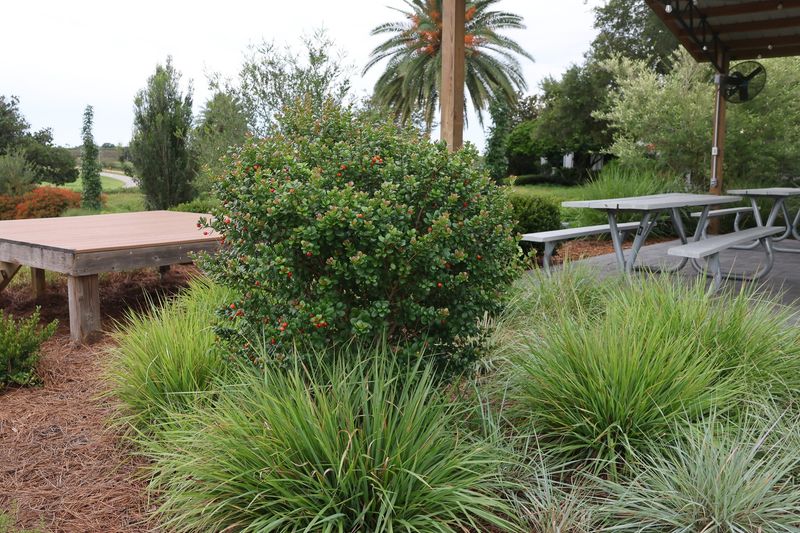
A resort-style entrance starts with the right plants, not a big landscaping bill. Bold leaves, soft grasses, and a few bright accents can turn a plain Florida doorway into a welcoming spot.
These nine plants offer different ways to get that look, with choices for sunny walks, shaded porches, and sandy beds. Match them to your part of Florida and their mature size, and you can spend less time fixing your landscaping and more time enjoying it.
1. Coontie
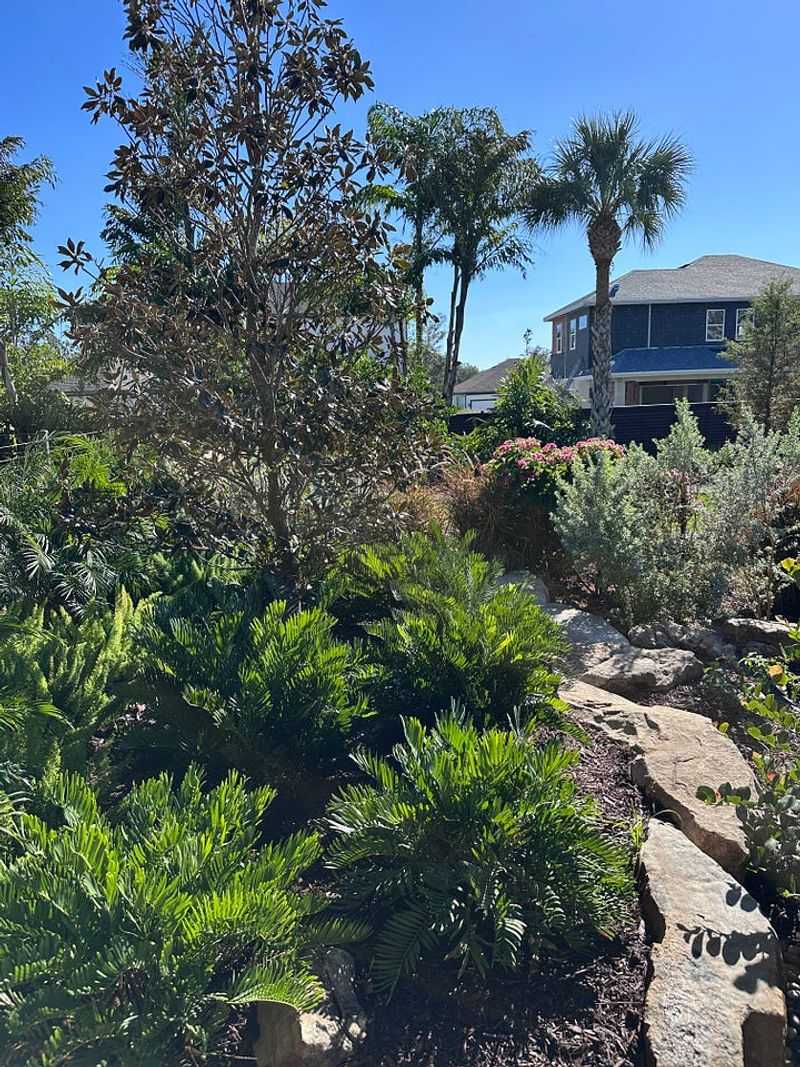
A few glossy, fernlike clumps can make a plain walkway feel carefully planned. Coontie delivers that polished look without needing constant clipping, and its low shape works well beneath windows or beside porch steps.
Despite its appearance, this Florida native is a cycad, not a fern or palm. Expect most landscape plants to reach about 2 to 3 feet tall, with a wider spread over time, so leave room rather than packing small plants tightly together.
Choose sun or partial shade and soil that drains freely. Once established, coontie handles dry stretches well, making it useful in sandy entry beds where thirstier plants struggle; water new plants regularly while their roots settle in.
For an easy design, repeat three plants along a curved bed and keep mulch away from their crowns. Coontie supports the native atala butterfly where it occurs, although feeding caterpillars may chew the leaves.
All plant parts are toxic if eaten, especially the seeds, so choose another location if children or pets might sample them.
2. Dwarf Palmetto
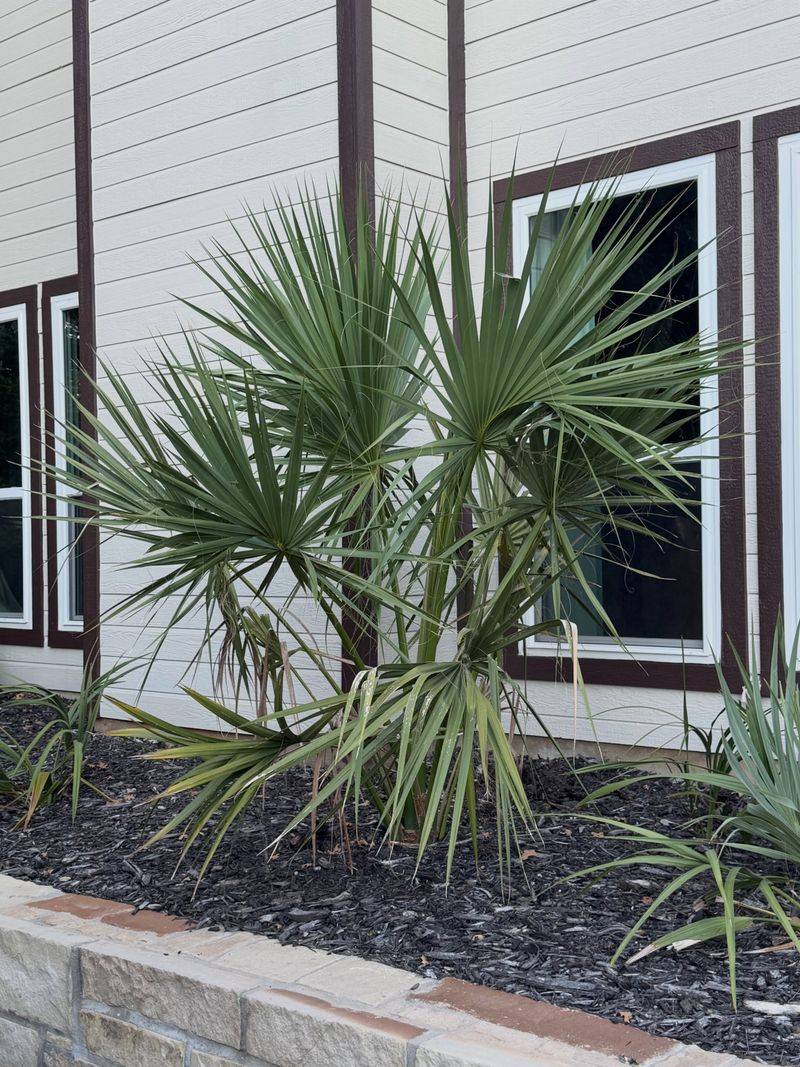
Want palm leaves without a towering trunk? Dwarf palmetto brings the vacation mood down to doorway height, where its broad fans can frame an entrance rather than disappear above the roof.
Sabal minor is native to Florida and is a useful choice for colder North Florida yards. It commonly grows about 4 to 6 feet tall and wide, though size varies, so it belongs in a generous bed rather than a narrow strip against the house.
Partial shade suits it well, and established plants tolerate a range of conditions. Unlike many plants chosen for sandy, dry beds, dwarf palmetto also handles moist soil and periodic freshwater flooding, making it worth considering for a lower spot away from the foundation.
Use one as a broad focal point beside the porch, leaving its full leaf spread clear of walking space. Remove only dead or badly damaged fronds rather than trimming green fans into a tight shape.
Growth is slow, so buying a healthy plant close to your desired size gives a more finished look from the start.
3. Muhly Grass
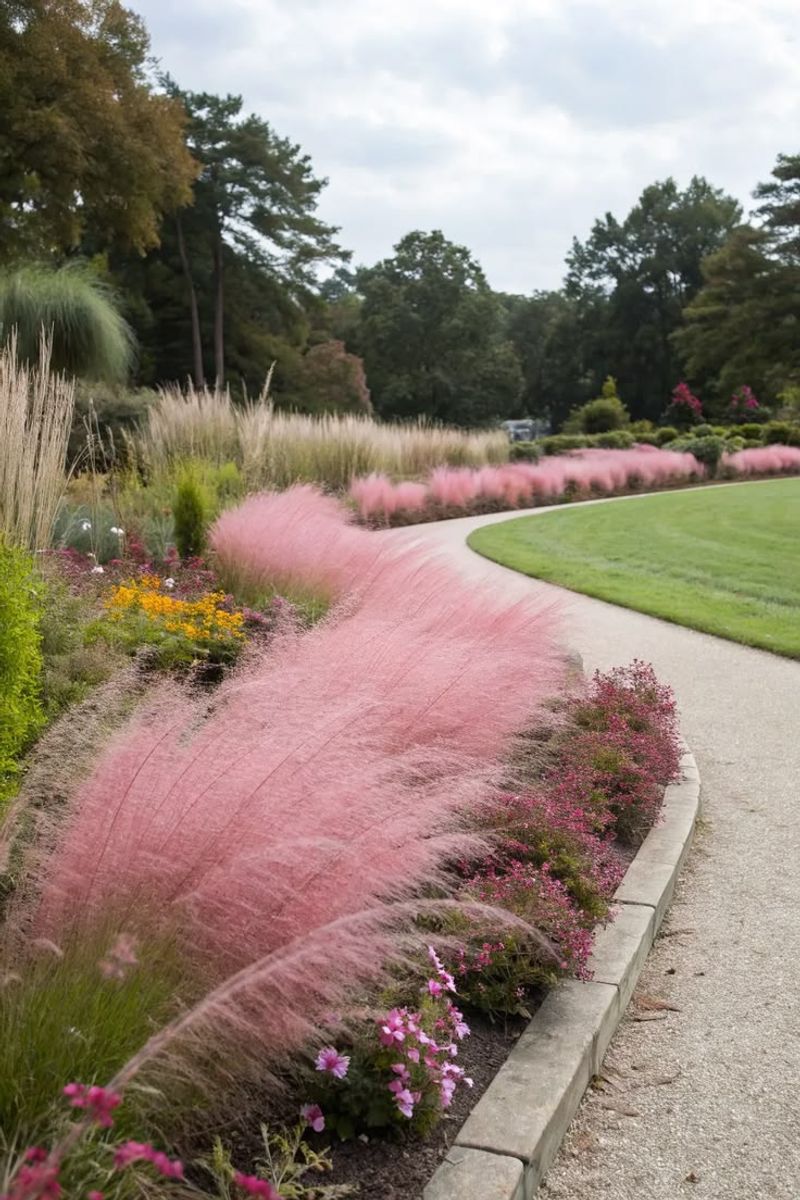
When fall sunlight catches the pink flower clouds, even a simple driveway bed can look special. Muhly grass adds movement and softness, giving an entry a relaxed coastal feel without relying on year-round flowers.
This Florida native needs a sunny position and good drainage for its strongest performance. Its fine green foliage forms a clump roughly 2 to 3 feet tall and wide, with flower stalks extending higher during the fall display.
Plant a small group where you can see the plumes against a darker background or with afternoon light behind them. Space plants about 3 feet apart, adjusting for the size listed on the nursery tag, and keep them back from the walkway so the arching leaves do not crowd visitors.
Water during establishment, then adjust irrigation to rainfall and soil moisture rather than soaking the bed on a fixed schedule. Avoid wet, heavily fertilized spots.
If the foliage becomes tired-looking, cut it back in late winter before fresh growth begins instead of repeatedly shearing it through the year.
4. Croton
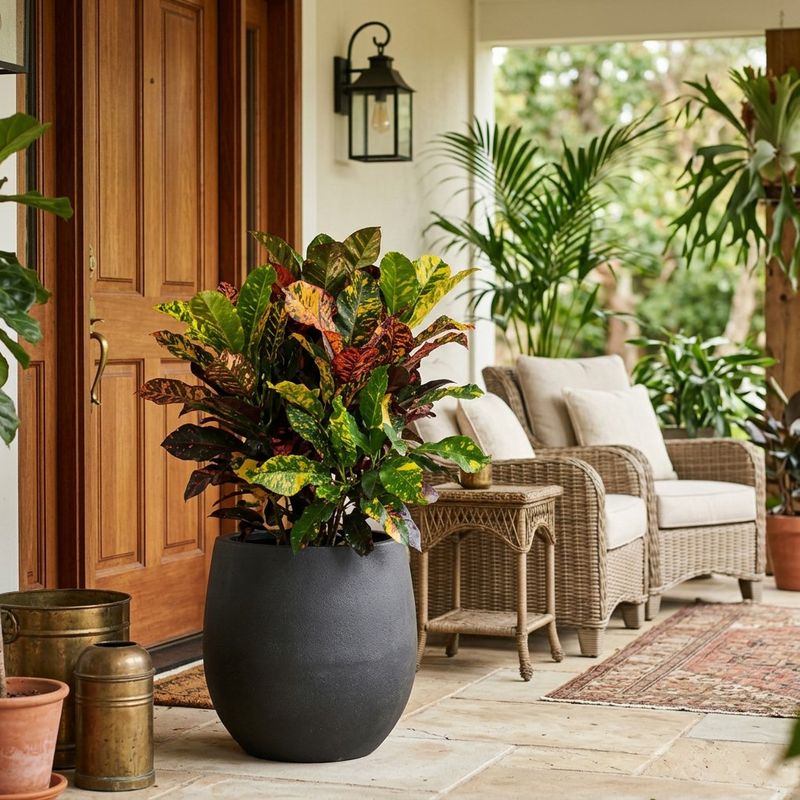
Color does not have to wait for bloom season. Croton leaves bring red, gold, orange, and green to an entrance, making this plant a strong choice when you want one bold accent instead of several pots of annual flowers.
The catch is cold sensitivity. Crotons are best outdoors year-round in warm, protected parts of South Florida; gardeners farther north can use containers that move into shelter before cold weather arrives.
Choose a variety for both its leaf pattern and mature size, since some grow into substantial shrubs. Bright light usually improves color, but exposure needs vary by cultivar, and plants raised under shade should be introduced gradually to stronger sun.
A heavy container with drainage holes makes placement simple beside a covered doorway. Keep the potting mix evenly moist but not waterlogged, and avoid letting irrigation collect in a saucer.
The sap can irritate skin, and the plant should not be eaten. Keep it away from nibbling pets, and move container plants to a sheltered spot before tropical storms.
5. Orange Bird of Paradise
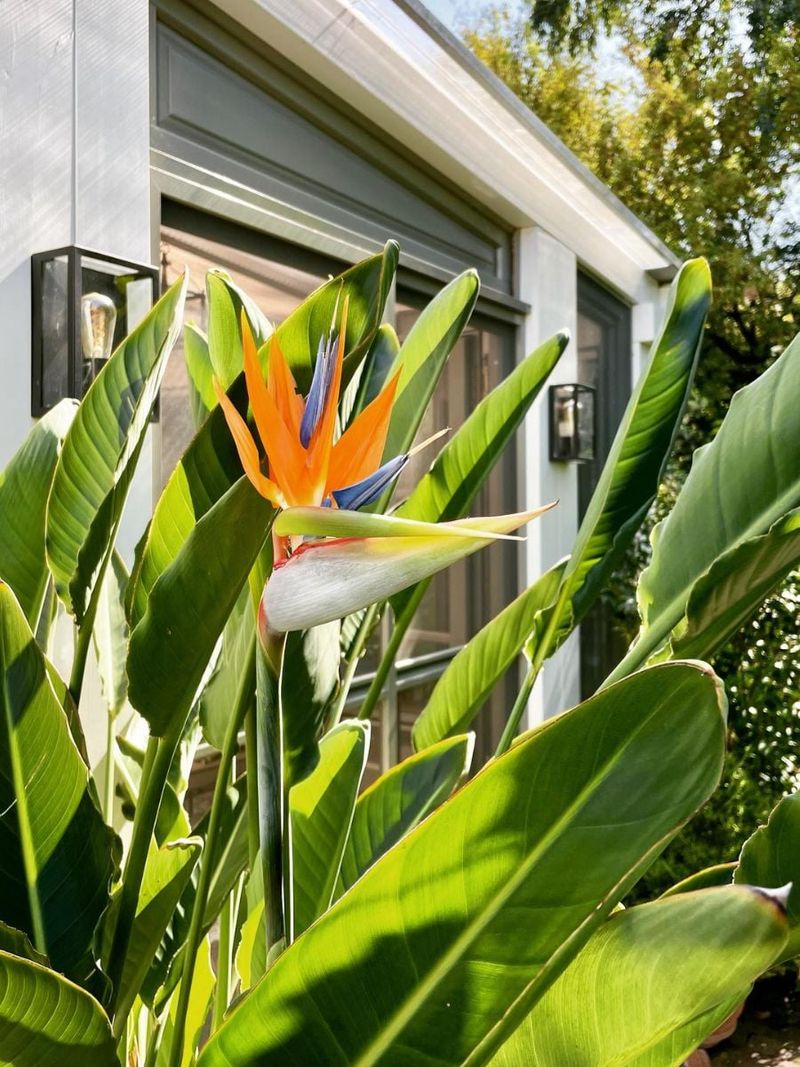
Few flowers announce a tropical entrance as clearly as an orange-and-blue bloom perched above paddle-shaped leaves. Orange bird of paradise supplies a sculptural focal point, even when it is not flowering.
Look for Strelitzia reginae, not the much larger white bird of paradise. The orange species usually reaches around 4 to 5 feet tall and forms a widening clump, making it more practical beside a residential entry than its towering relative.
Warm Central and South Florida locations offer the best outdoor prospects, although freezes can damage plants. Choose sun to partial shade, with brighter conditions generally encouraging better flowering, and provide well-drained soil rather than a soggy pocket beside a downspout.
Give the clump enough room that leaves can fan out without brushing people at the door. Water regularly while it establishes, remove spent flower stems near the base, and trim damaged leaves individually.
A young plant may take time to bloom, so buy it for its foliage first and treat the flowers as an added reward.
6. Firebush
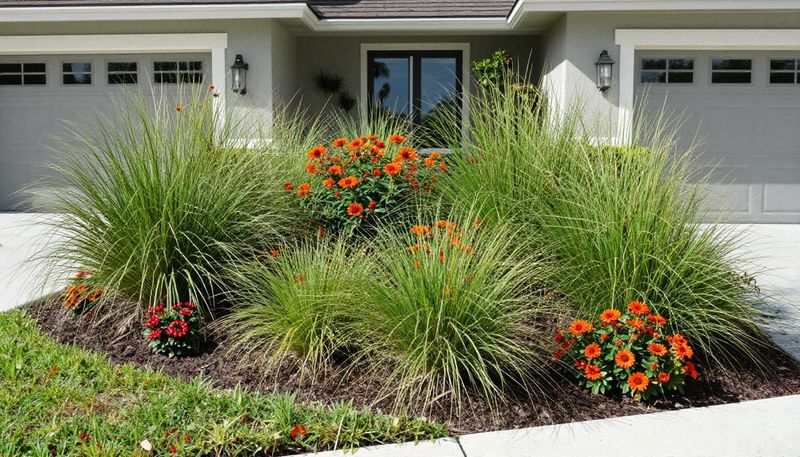
Butterflies stopping near the porch can make an entrance feel more alive than any ornament. Firebush offers that bonus along with clusters of orange-red tubular flowers through much of Florida’s warm season.
Choose the native Florida form of Hamelia patens from a nursery that can identify its stock. Plants sold under similar names may be nonnative forms or hybrids, so a label that simply says dwarf firebush does not confirm Florida-native origin.
Give it a roomy spot beyond the porch corner, not directly beneath a low window. In frost-free areas, firebush can grow 8 to 12 feet tall or more; in colder parts of Florida, frost may kill stems back, with regrowth possible when warmth returns.
Sun promotes dense growth and abundant flowers, while partial shade can produce a looser shrub. Water until established, then provide supplemental water during extended dry spells as needed.
Selective pruning keeps the shape more natural than frequent shearing, which removes flower-bearing growth. Place it where visiting pollinators can feed without sharing a cramped doorway with guests.
7. Simpson’s Stopper
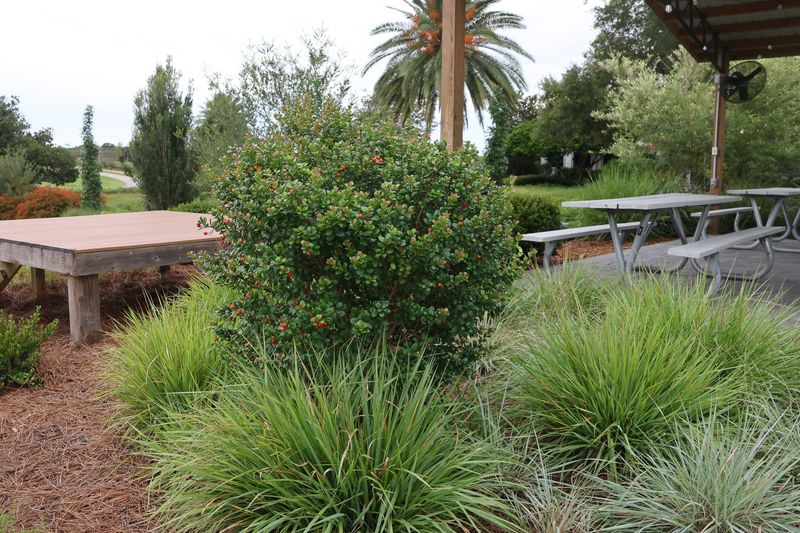
Not every plant needs to shout to make an entrance look expensive. Small glossy leaves, delicate white flowers, and colorful fruit give Simpson’s stopper the quiet polish of a well-kept courtyard garden.
This Florida native can become a large shrub or small tree, so check the label before bringing one home. A named compact selection is often easier to fit near an entry, while the full-size species needs considerably more room.
Sun to partial shade and well-drained soil suit it well. It is most dependable in Central and South Florida, with cold exposure affecting its usefulness farther north; a local nursery or county Extension office can help confirm the fit for your location.
Use a compact plant to anchor a porch corner or repeat several along a broad foundation bed. Light, selective pruning preserves its branching and allows more flowers and fruit than constant shearing.
Birds may visit the berries, while the evergreen foliage provides structure after nearby flowering plants fade. Keep mulch off the trunk and water regularly during establishment.
8. Neoregelia Bromeliads
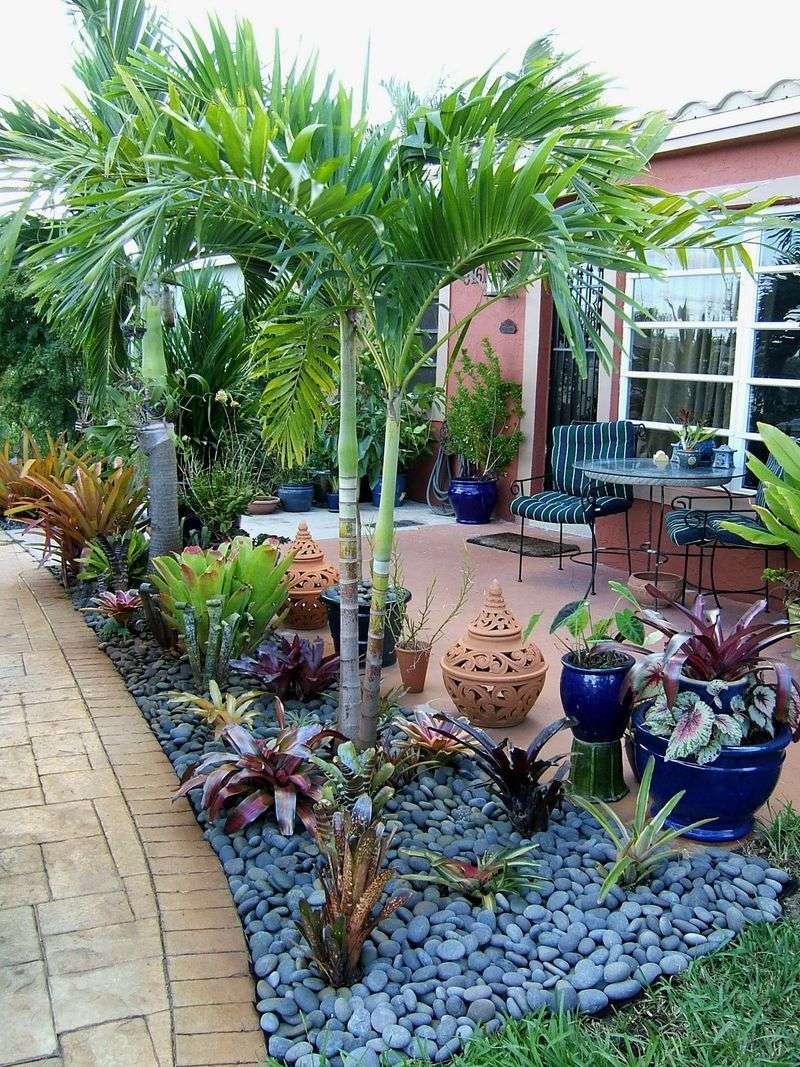
A shaded porch can still have a strong splash of color. Neoregelia bromeliads form broad rosettes with patterned leaves or bright centers, creating the layered tropical look often seen around resort courtyards.
They are especially useful in warm South Florida gardens and in containers that can be protected elsewhere. Many prefer bright, filtered light, although tolerance varies by cultivar; harsh afternoon sun can scorch plants that were grown under shade.
Start with a low, wide container with drainage holes and an airy bromeliad mix. Group a few compatible plants rather than mixing many leaf patterns, and keep their toothed edges away from places where bare ankles or hands will brush them.
The central cups naturally hold water, which needs attention in Florida. Flush them regularly with fresh water and follow local mosquito-control guidance; where necessary, use only a mosquito product specifically labeled for that setting.
Avoid standing water in saucers. After flowering, a mature rosette gradually declines while producing offsets, so replacing the old rosette with its pups keeps the display going.
9. Perennial Peanut
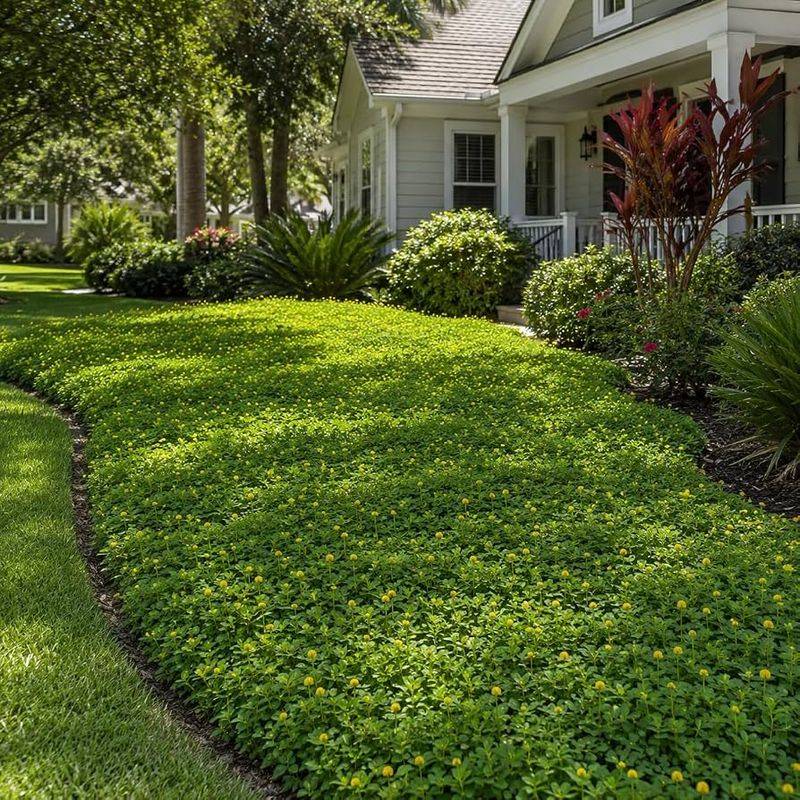
The space between your accent plants matters, too. A low carpet of perennial peanut can replace a patchy strip of grass with green foliage and small yellow flowers, giving the whole entrance a more finished appearance.
For landscapes, look for ornamental perennial peanut, commonly Arachis glabrata, rather than edible annual peanut. It performs best in full sun and well-drained soil, with established plantings tolerating drought better than many traditional lawn grasses.
Central and South Florida offer the longest green season. In North Florida, frost can brown the foliage, so do not count on a lush winter carpet around your front door.
Prepare the area carefully by removing existing weeds before planting plugs or pots. Filling in takes time, and young plantings need water and weeding until they knit together.
Keep an edge along pavement because spreading stems can creep beyond the bed.
Use it beside a walkway, not as the walkway itself, since repeated foot traffic can damage it. Occasional trimming helps maintain a tidy border, and established plants generally need little or no nitrogen fertilizer.