
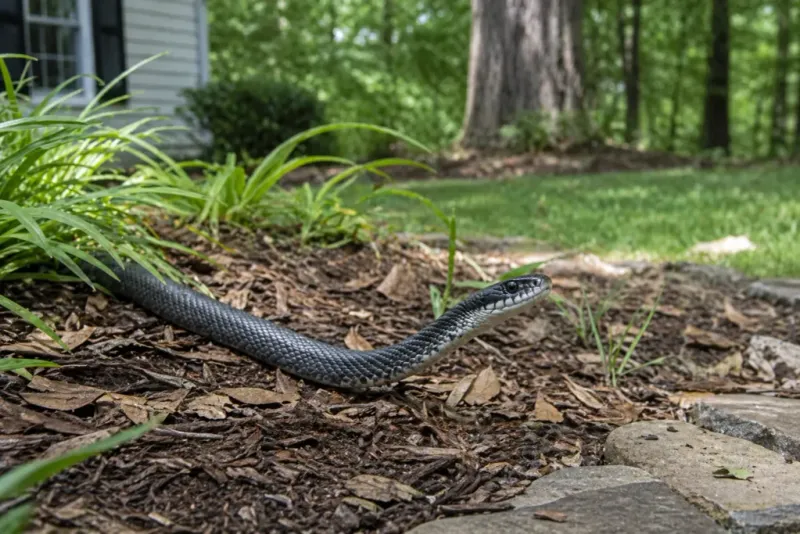
Most of us have stared at a woodpile or a tangle of shrubs and wondered if something is hiding in there. Snakes are hard to predict, and a yard rarely gives a clear signal about them.
What you can do is check the spots that may give a snake shelter, food, or a way inside. This guide shows you where to look in beds, piles, and along the foundation, and how to do it safely.
What a Shed Skin Can—and Cannot—Tell You
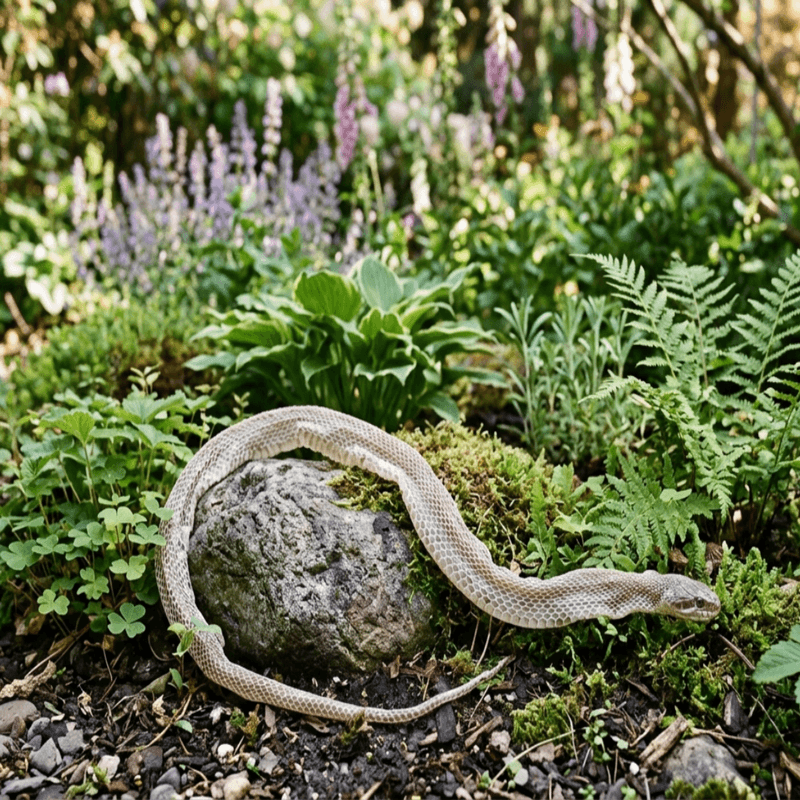
Finding a papery, see-through snake skin in the garden gets your attention fast. It is the one clue that directly shows a snake was in your yard at some point.
Penn State Extension notes that snakes shed as they grow, leaving the skin behind.
Skins often turn up in sheltered places, such as under boards or around rock piles, according to Washington wildlife officials. That fits what many gardeners notice, since a snake may pick a tucked-away spot while it sheds.
A skin has limits, though. It does not tell you the snake is still nearby, that it lives in your yard, or that it was venomous.
It also does not prove a nest, a den, or an ongoing problem.
Everything else in this guide works differently. Cover, piles, gaps, and holes are conditions worth checking because they may offer shelter, prey, or access.
They are not proof that a snake is present, so treat them as a maintenance checklist rather than a way to diagnose what is in your yard right now.
Check Beds and Borders for Cover
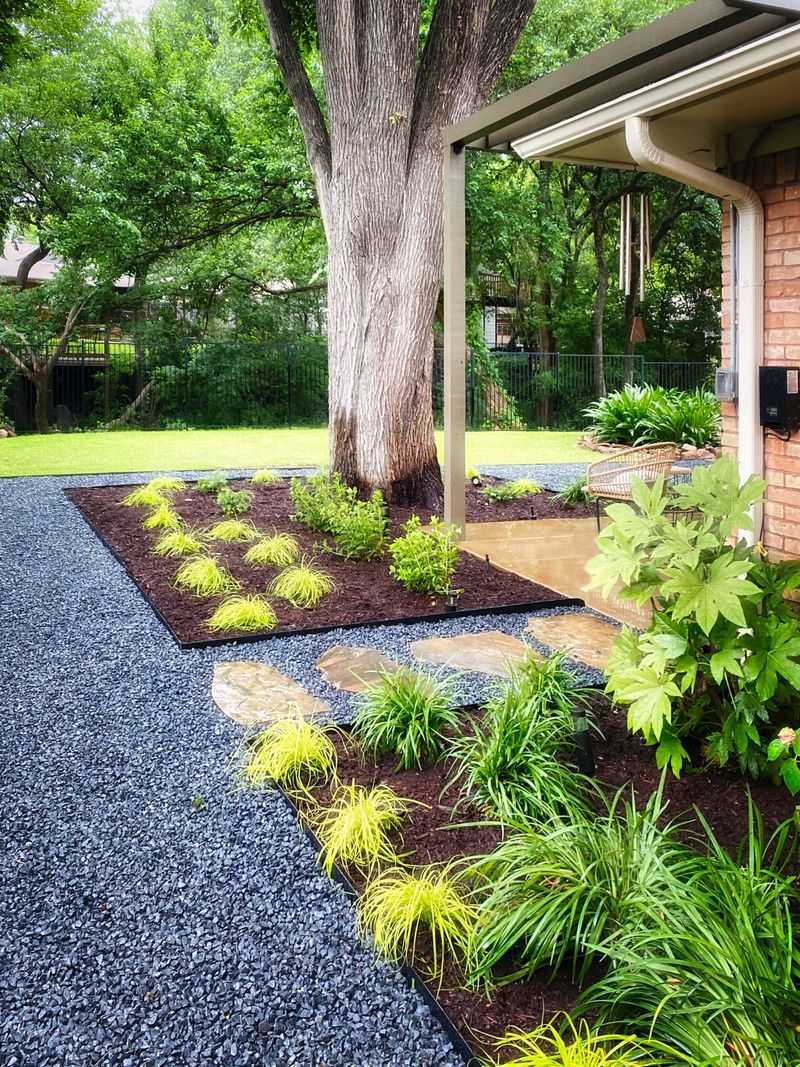
Walk the edges of your beds with fresh eyes this fall. Look for heavy ground cover, tall grass, deep leaf litter, brush, loose boards, and leftover debris.
UF/IFAS Extension lists these as places that can hide snakes and the small animals they eat.
Thick plantings are not a sign that a snake lives there. They simply give any small creature cover, and that is the point of checking them.
Start with the easy fixes. Mow tall grass, rake back excess leaves, trim shrubs so they do not droop onto the soil, and haul off old boards, spare pots, and scrap.
Texas Parks and Wildlife also points to clutter as something to reduce.
Use a rake or long-handled tool to pull material apart rather than your hands. Tidier beds can mean fewer places to hide, but no cleanup guarantees a snake-free yard, and snakes can still pass through.
Inspect Piles Without Reaching Inside
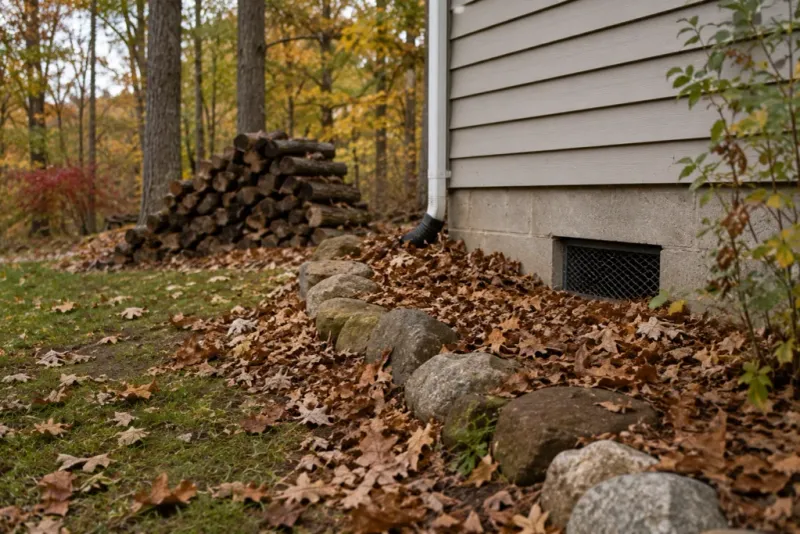
Woodpiles, rock piles, and brush piles are full of nooks and gaps. Those hidden spaces may offer a snake shelter, but a pile alone says nothing about whether one is inside.
The safest way to inspect is from a distance, using your eyes and a tool. Never reach into a pile or move hidden objects by hand.
If something must be shifted, nudge it with a long rake or pole while wearing sturdy shoes.
Texas Parks and Wildlife recommends storing wood and debris at least 18 inches off the ground. A simple rack or pallet frame does the job for firewood.
For the wood itself, UF/IFAS suggests stacking firewood tightly to minimize gaps. Fewer gaps mean fewer hiding spots.
Brush and rock piles you do not need are worth removing altogether.
Foundation Gaps May Offer a Route Indoors
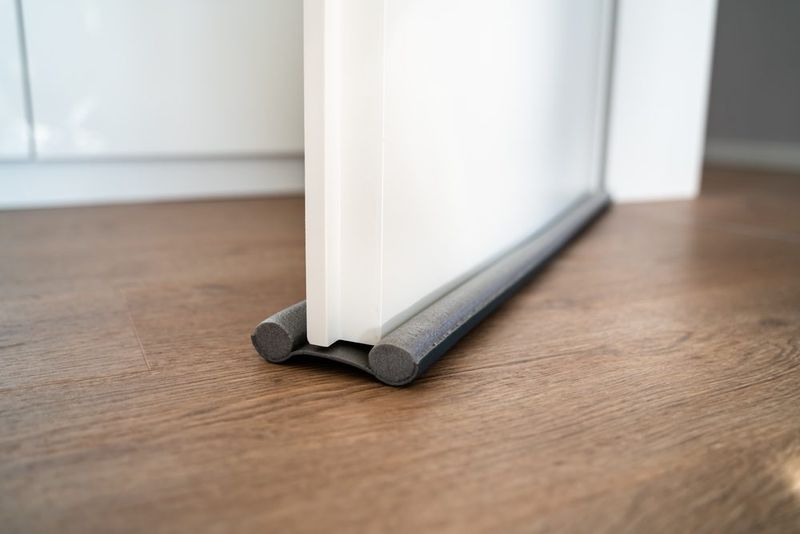
Take a slow lap around your house and look low. Check beneath exterior doors, and around pipes, wiring, vents, porches, and any cracked or damaged masonry.
Texas Parks and Wildlife explains that snakes may enter buildings through openings, and sealing entry points can help keep them out.
A gap is only a possible way in. It does not show that a snake has used it, and most gaps are never visited by one.
A flashlight helps with dim corners under porches. Door sweeps, weatherstripping, caulk, and fine metal mesh are common fixes for small openings, and they also help against rodents and insects.
UF/IFAS guidance on preventing snake encounters covers the same idea of closing off access. Sealing may reduce the chance of a surprise indoors, though it cannot promise one will never happen.
Rodent Signs Point to Rodents, Not Snakes
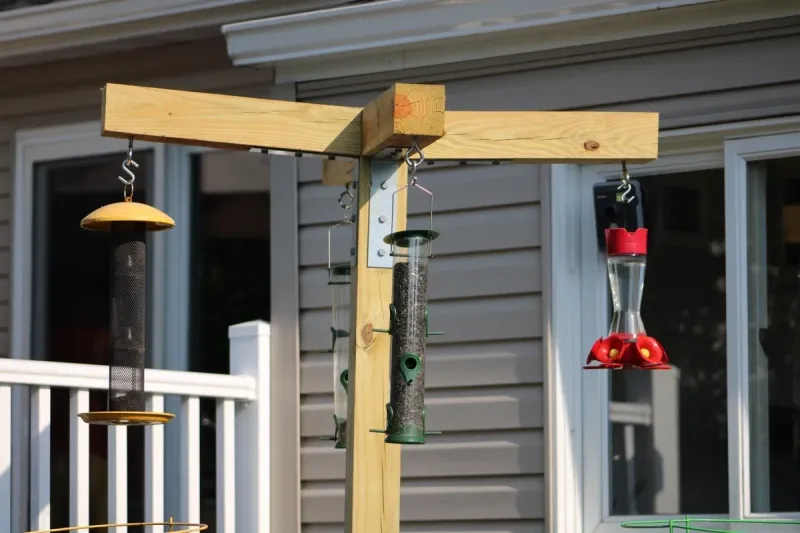
Droppings in the shed or a chewed bag of birdseed tell you one thing: rodents have been around. They say nothing about snakes.
The link is indirect. UF/IFAS notes that rodents can attract some snakes, since mice and rats are prey.
A rodent problem is a food source for a snake, not a sign of one.
That makes food management a practical step. Keep pet food indoors or in sealed containers, store bird seed in lidded metal bins, and sweep up spilled seed under feeders.
Fix any rodent trouble in sheds and garages too. The CDC also advises against leaving out food that draws wildlife.
Treat these as ways to cut down food opportunities. They cannot confirm that snakes are absent, or guarantee it.
A Yard Hole Does Not Identify Its Maker
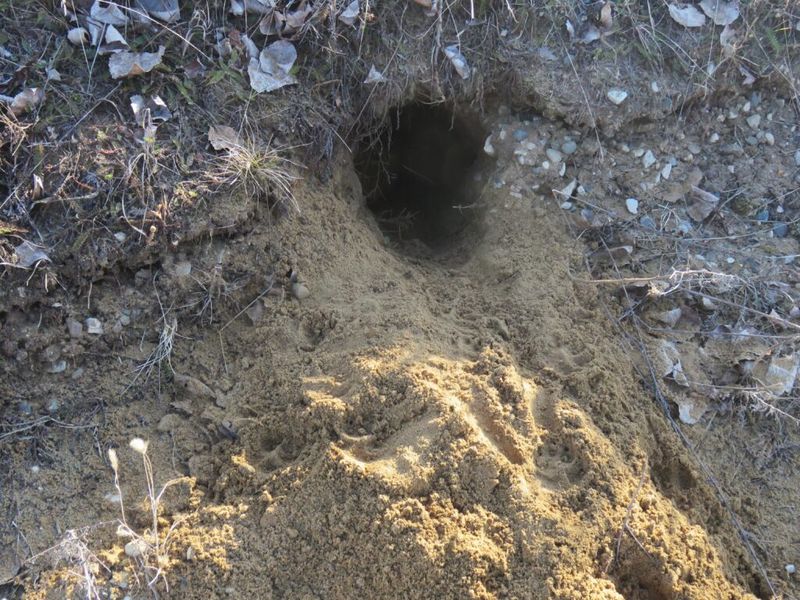
Spot a hole in the lawn and the mind jumps to snakes. That jump is usually wrong, and a hole alone is weak evidence of anything.
According to UF/IFAS Extension in Sarasota County, most Florida snakes are not adapted to dig holes. A few small species can burrow, and many snakes may use holes made by other animals.
So the maker could be a rodent, armadillo, gopher tortoise, crayfish, or something else entirely. Looking at the size, the spot, and any mounded soil can hint at the digger, but a guess is only a guess.
Whatever made it, keep your hands out. Never put a hand or foot inside to investigate, since you cannot see what is in there.
Instead, note where the hole is, keep kids and pets away, and ask your local extension office if you want help identifying the animal.
Maintain the Yard and Check It Safely
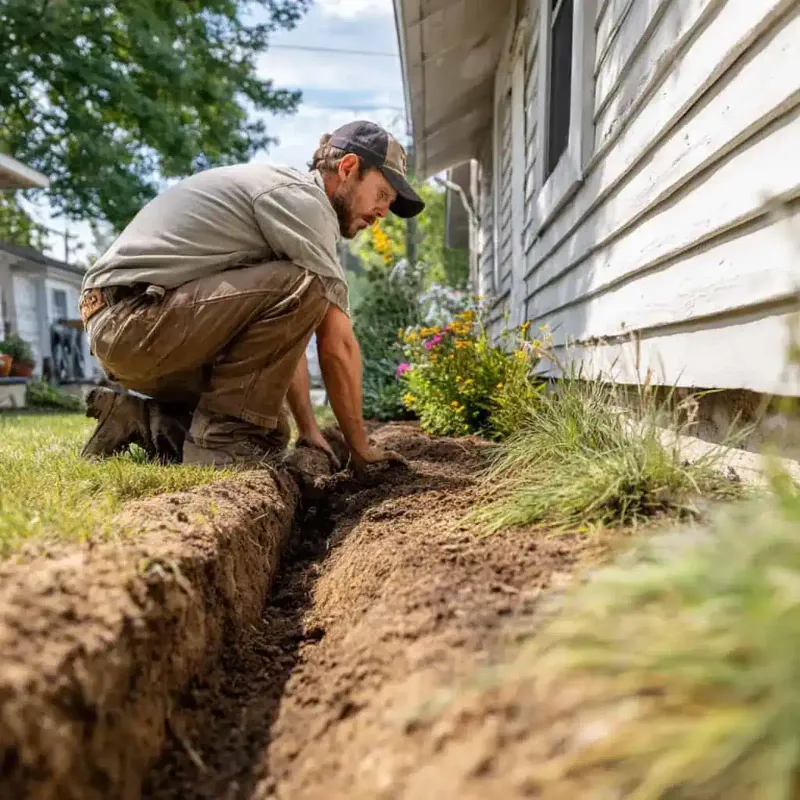
Build a few habits into your yard work. Wear closed-toed shoes and sturdy gloves, look before you place hands or feet, and use a tool to move objects instead of reaching underneath.
UF/IFAS and Texas Parks and Wildlife both back these basics.
If you see a snake, give it space. Do not catch, kill, or closely approach it, since UF/IFAS warns that trying to kill one raises bite risk.
After a bite, get medical care right away. The CDC says not to use a tourniquet or try to suck out venom.
Do not count on the calendar. UF/IFAS says many native Florida snakes can be active year-round, and activity varies by species, so fall does not end it in Florida or Texas.
Skip mothballs, sulfur, and other home remedies. UF/IFAS says outdoor mothball use is not an approved use and can harm people, pets, and wildlife.
Cleanup can trim shelter and food, but snakes may still pass through.