
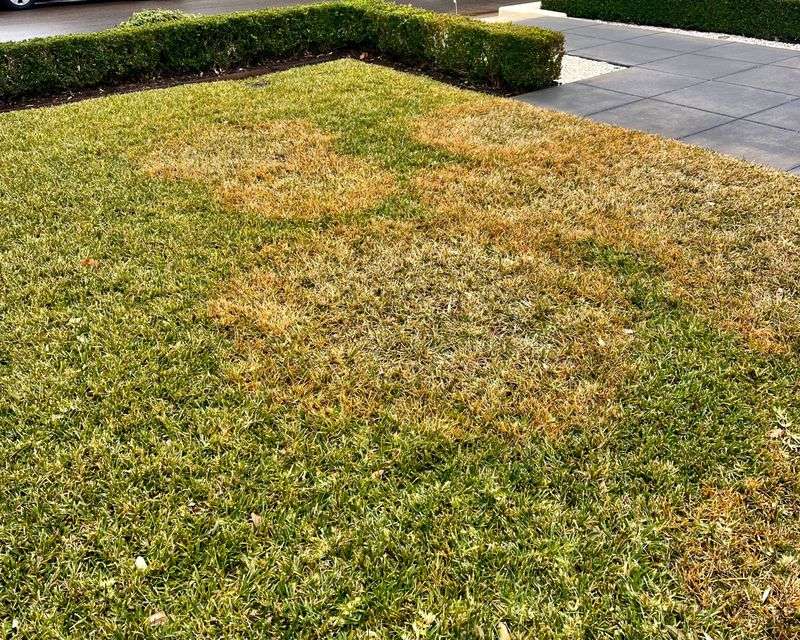
Thin, brown spots in a Florida lawn after a dry summer can make any homeowner worry. Southern chinch bugs are one possible cause in St. Augustinegrass, but they are far from the only one.
A few simple checks can help you sort out bugs, drought, and fungus before you spend money on the wrong fix. This guide covers St. Augustinegrass only, so it will not fit every grass type in Florida.
Fall color alone cannot identify the cause
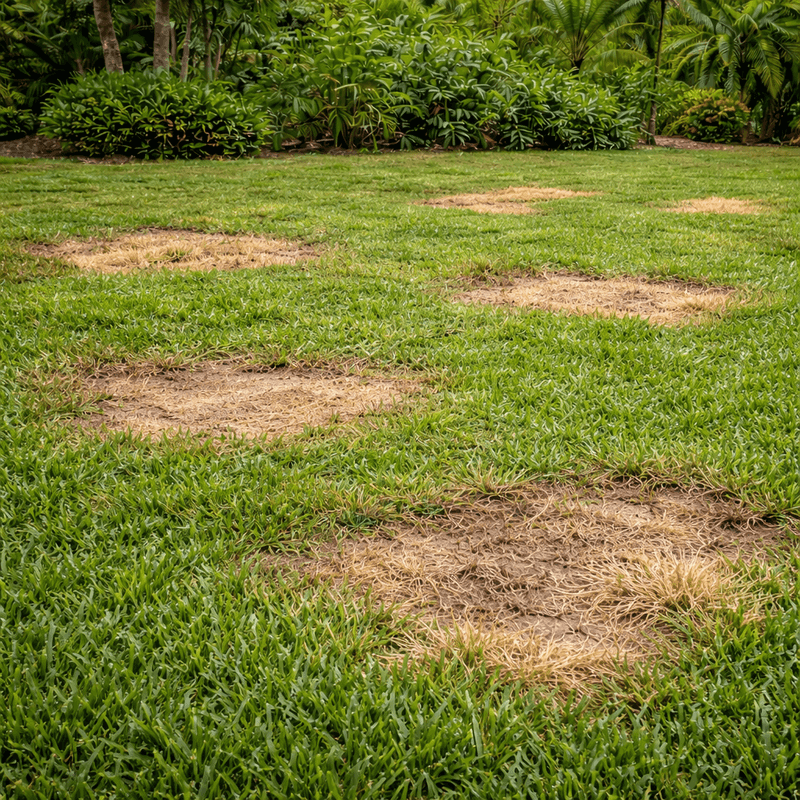
Brown grass tells you something is wrong, but it does not tell you what. Southern chinch bugs feed on St. Augustinegrass, and UF/IFAS chinch bug guidance explains that the grass can wither and turn yellow-brown before it dies.
The damage is often first noticed in hot, dry, sunny parts of a lawn.
That pattern raises suspicion, but it does not confirm the pest. The same guidance warns that brown or yellow spots do not necessarily mean chinch bugs.
Drought, root rot, other diseases, nematodes, and other insects can look very similar from the sidewalk.
Fall adds another suspect. Large patch is a fungal disease of warm-season grasses, and UF/IFAS large patch information says it is most noticeable in spring and fall.
In Florida it commonly shows up from November through May when conditions favor it. Some sources also call it brown patch, so season and color are clues rather than answers.
Gray leaf spot is another St. Augustinegrass disease, but UF/IFAS St. Augustinegrass guidance describes it mainly as a summer rainy-season problem on new growth. The next sections cover three checks you can do at home: a flotation test for bugs, a look for drought signs, and a look at the leaf bases for large patch.
Check the patch’s edge for chinch bugs
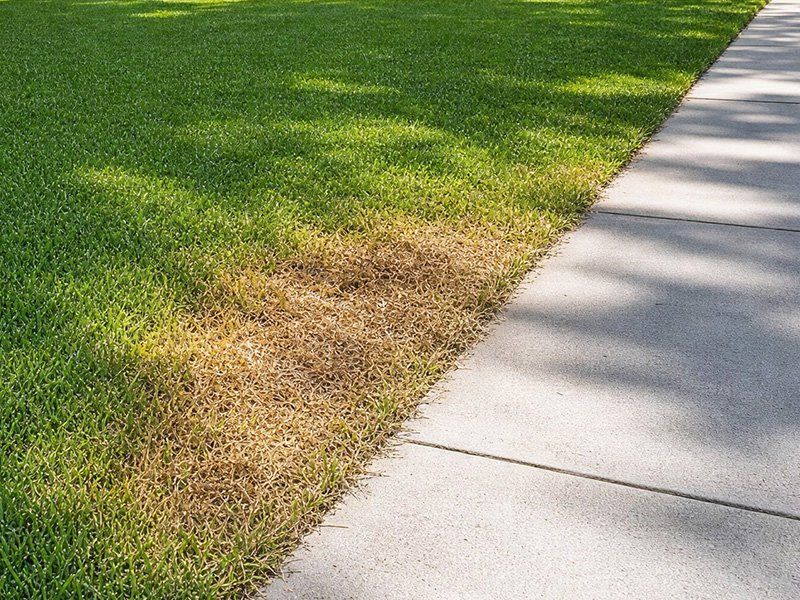
Stand at the edge of a brown patch, where yellowing grass meets green grass. That border is where bugs are most likely to be feeding, so it is the best place to test.
Cut both ends off a metal can, or use a bottomless metal can, and push it about 3 inches into the soil near the discolored turf.
Fill the can with water and keep it filled for five minutes. Then watch the surface for bugs floating up.
UF/IFAS advises repeating the test at least four times around the damaged area, with extra attention to the perimeter.
You may see tiny red nymphs, which are young chinch bugs, as well as the small adults. Seeing them is a strong clue that chinch bugs are present.
One test spot with nothing floating does not clear the whole lawn, which is why repeating it matters.
Be careful with what you find. The Duval County Extension post on managing southern chinch bugs notes that a beneficial minute pirate bug can resemble an adult chinch bug.
Those helpful insects eat pests, so treating them by mistake would be counterproductive.
Treat the can test as a way to find bugs, not to count them. It does not tell you how many bugs live in a square foot.
If the result is unclear, take a photo or a sample to your county Extension office.
Drought stress leaves different clues
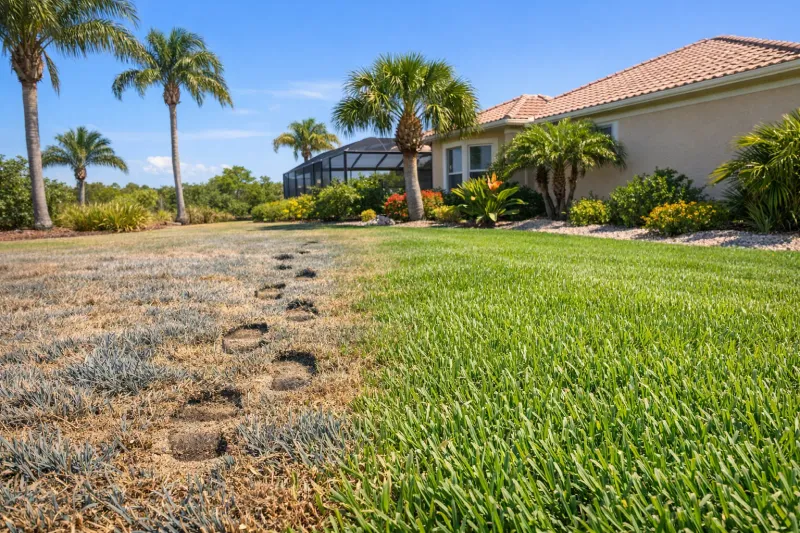
Dry turf gives itself away in small ways. Look for leaf blades folded lengthwise, a blue-gray tint across the lawn, and footprints that stay visible after you walk across the grass.
Those signs mean the grass is short on water.
Established St. Augustinegrass should be watered as needed, and UF/IFAS suggests about ½ to ¾ inch of water per irrigation. New turf is different and needs more frequent watering while roots develop.
In fall and winter, the grass uses less water, so you should water less often.
Before you change the schedule, check two things. First, look up your local watering restrictions, since many Florida counties limit days and hours.
Second, run your sprinklers and watch the coverage. UF/IFAS watering advice stresses even distribution, and a clogged head or a gap in the spray can leave one strip brown while the rest stays green.
A simple tuna can set on the lawn during a cycle can show how much water lands in each zone. Dry spots near the pavement or in full sun are common even with a good system.
Drought signs do not rule out other problems. A lawn can be dry and also have chinch bugs, or have disease on top of water stress.
Use these clues alongside the flotation test rather than in place of it.
Large patch can turn fall turf reddish-brown
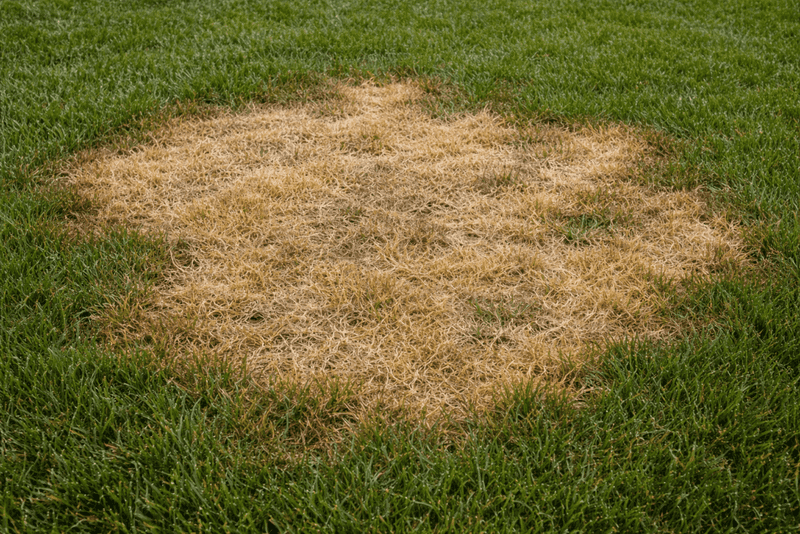
Fungus can look a lot like insect damage. According to UF/IFAS, large patch can begin as small yellow patches that turn reddish-brown, brown, or straw-colored and then expand.
It tends to appear when the weather cools and the grass stays damp.
Get down close and tug a few affected blades. With large patch, leaves may pull away from the stem easily.
The base can look dark and soft, and it may smell rotten.
Treat those findings as clues rather than proof. Other problems can also cause leaves to loosen or yellow, and a lab or Extension agent can give a firmer answer.
Keep in mind that the name brown patch can mean different diseases on different grasses, so make sure any advice you read is about St. Augustinegrass in Florida.
If large patch seems likely, start with simple changes. Avoid excess nitrogen, since lush, fertilized growth can feed the disease.
Water only when the lawn needs it, and do it in the early morning so the blades dry out during the day.
Those steps cost very little and help whether the cause turns out to be fungus or not. They also give you time to confirm the problem before you decide on any product.
When clues conflict, diagnose before treating
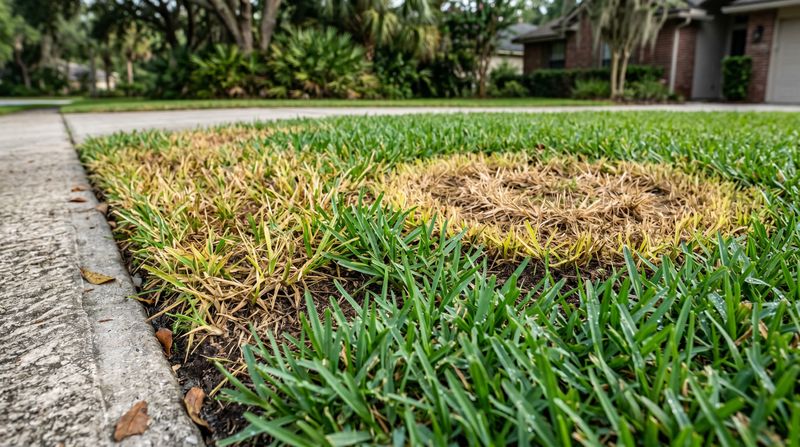
Real lawns rarely have just one problem. UF/IFAS lists over- or underwatering, shade, compaction, improper mowing, and soil conditions among the causes of poor St. Augustinegrass performance.
Other pests and diseases can also play a part, so a weak patch may have more than one cause.
That is why a spray bottle is a poor first move. Visual diagnosis can be difficult, and each product targets a specific problem.
UF/IFAS fungicide guidance points out that timing and label restrictions matter, including what is allowed for home use.
Insecticides carry their own catch. The Duval County Extension post mentions insecticide resistance in southern chinch bugs, so choosing a product without knowing the cause can waste money and miss the problem.
The UF/IFAS chinch bug publication calls for confirming the pest first.
Notice also that the Florida sources do not give a bug-count threshold for treating chinch bugs, so avoid numbers you find from other states. A can test is for finding bugs, not for measuring them.
When your checks point in different directions, call your county UF/IFAS Extension office or a qualified lawn professional. Bring photos, a note about where the damage started, and a description of your watering routine.
That information helps them narrow down the cause quickly.
Choose the next step without guessing
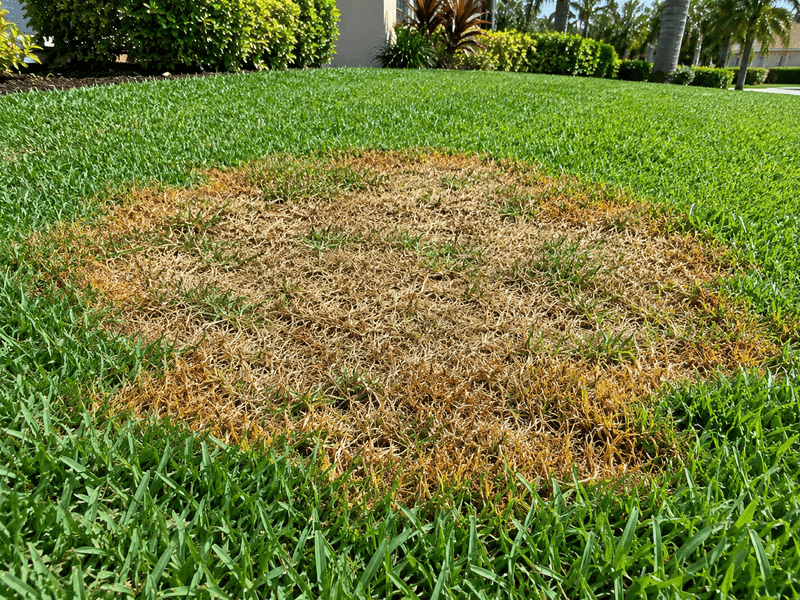
Match the check to the clue. Run the flotation test if the damage sits in a hot, sunny spot, look for folded blades and lingering footprints if the lawn seems dry, and inspect leaf bases if large patch fits the picture.
Adjust watering where it is off, and hold off on products until you know what you are treating.
When the evidence is mixed, ask UF/IFAS Extension or a professional for help. Brown grass is only a symptom, and a few minutes of looking closely can save a lot of guessing.