
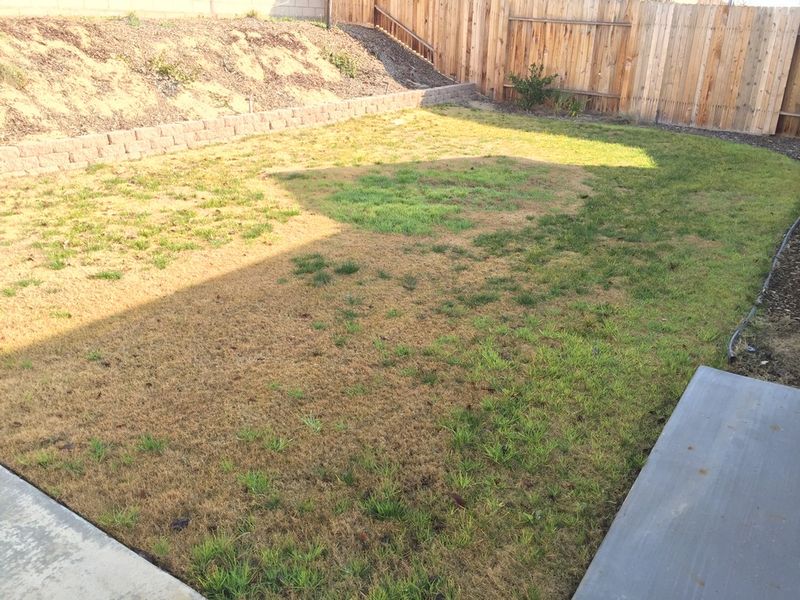
Bermuda grass keeps creeping into lawns and flower beds, and every fall many California homeowners wonder if it is time to act. Once cool weather arrives, the grass turns brown and seems to disappear.
But brown does not mean gone. Here is how to tell whether your yard still has a good window to cut back bermudagrass, and what to do about the roots that stay behind.
October is a growth check, not a statewide deadline
Plenty of garden advice treats October as a hard stop for bermudagrass control. In California, the calendar is a poor guide.
A coastal yard in San Diego, a valley lawn in Sacramento, and a foothill yard in the Sierra all cool down at very different speeds.
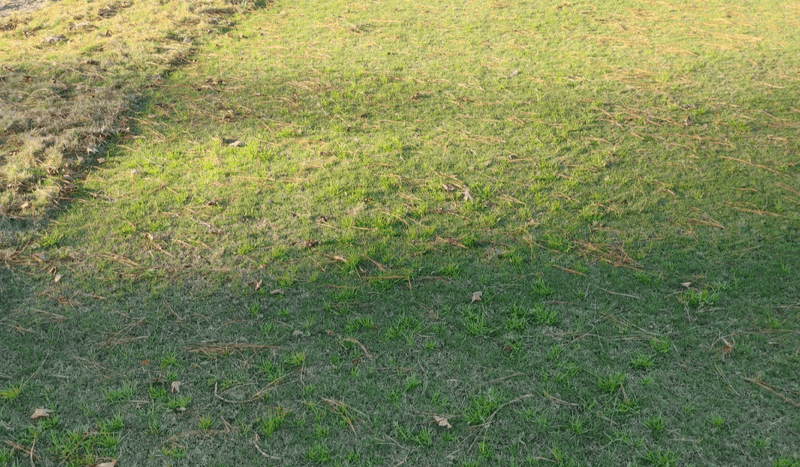
What matters more is whether the grass is still actively growing. Look for fresh green runners, new leaves after mowing, and turf that still fills in gaps.
If the patch is green and pushing outward, it is still working, and that is the condition you want before considering treatment.
Warm-season grasses like bermudagrass slow down and go dormant as soil cools. In its lawn guidance, UC IPM gives a general threshold of soil temperatures below 52°F for winter dormancy.
That is a rough cue, not a forecast for your street or a date you can circle on the calendar.
Microclimates make the difference. A sunny, south-facing strip beside a driveway may keep growing weeks after a shaded side yard has turned straw-colored.
Walk your own yard and check several spots.
UC also notes that brown, dormant bermudagrass is not a dead plant. The roots and rhizomes stay alive underground and push back up when spring warms the soil.
If your lawn has already gone fully brown, waiting until the grass wakes up again is usually the smarter move.
Why late-season growth can make treatment worthwhile
Bermudagrass behaves differently depending on the season. While it is actively growing in late summer and early fall, it is also moving energy down into its roots and rhizomes to prepare for winter.
That downward flow is the reason timing matters for glyphosate.
A product sprayed onto green leaves can travel along with those stored carbohydrates. UC IPM identifies late summer as the general best time for glyphosate, when the grass is growing strongly and storing food in its roots.
Early fall is not off the table. The same UC guidance says it can work well in some lawn settings, such as bermudagrass invading a tall fescue lawn.
Think of it as a good stretch of weeks, not a single magic window.
Spring has its place, too. UC recommends early spring applications for certain grass-selective herbicides, so the best moment depends on the product and the turf you are protecting.
Even with good timing, results vary. Weather, plant health, and how thick the bermudagrass is all shape the outcome.
A fall treatment gives you a decent chance to knock the patch back, but it does not promise a clean slate.
What kind of lawn are you treating?
Before picking a product, sort your yard into one of two situations. In the first, bermudagrass is creeping through a lawn you want to keep, such as tall fescue.
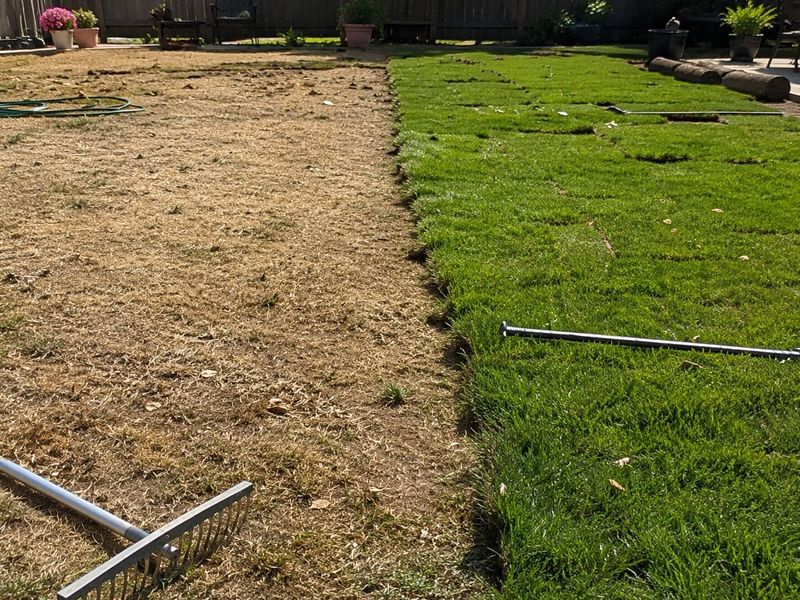
In the second, the whole lawn is bermudagrass and you plan to start over.
The difference changes everything. UC IPM explains that nonselective herbicides can damage the lawn you want to keep, while selective options are limited by turf species, product labeling, and the risk of injury.
Glyphosate is the nonselective choice. It harms nearly any green plant it touches, including the good grass right next to a bermudagrass patch.
That can suit a full renovation, but in a mixed lawn it can leave bare spots wherever it lands.
For some cool-season lawns, UC describes selective options that target bermudagrass. Even so, repeated applications may be needed, and some products can injure ornamental grasses and other plants nearby.
A selective product is not automatically safe for every turf type or every neighboring shrub.
Take a few minutes to identify what is growing where. Note your desired turf, any ornamental grasses along the edges, and nearby beds or trees.
Those details decide whether spot treatment, selective control, or full renovation fits your yard.
Prepare the grass before choosing a treatment
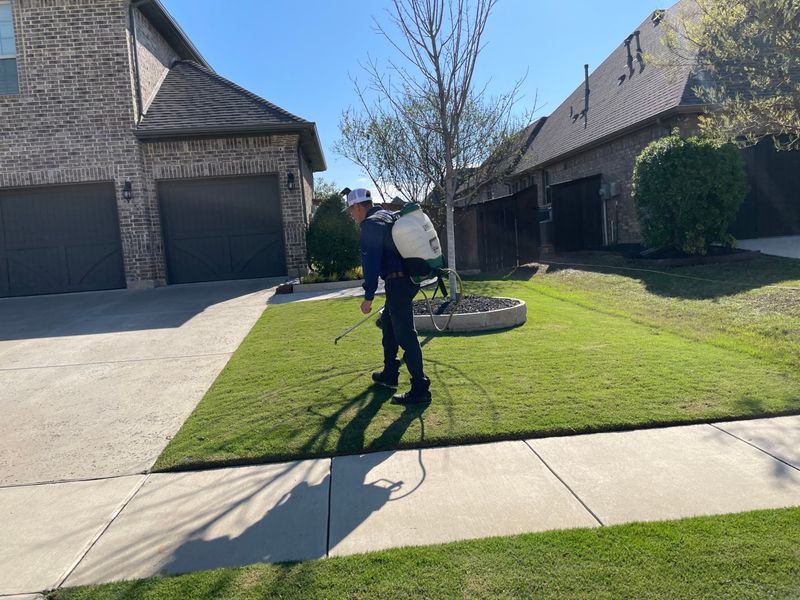
Glyphosate works best on grass that is ready to take it up. UC IPM recommends treating actively growing, non-drought-stressed bermudagrass that has enough leaf surface to absorb the product.
A thin, scalped, or wilting patch will not move much of it down to the roots.
That leads to a simple readiness check. Is the grass green and growing?
Has it had enough water to avoid stress? Are there plenty of leaves, not just stubble?
Mowing matters too. UC advises skipping the mower for two to three weeks before treatment so the grass can build up leaf area.
After treating, wait at least seven days before mowing or cultivating so the product has time to travel through the plant.
Next, identify exactly what you are aiming at. Mark the bermudagrass edges, and note the desirable turf, ornamentals, and garden plants close by.
Precise application keeps spray off the plants you want to keep, and a calm day helps limit drift.
Finally, remember that these are UC’s general directions. The label on the specific product you choose controls how it can be used.
Pick a product labeled for your intended use in California, and follow its directions and precautions, including what it says about keeping people and pets out of the treated area.
If the grass is stressed, already dormant, or mixed too closely with plants you cannot risk, holding off may be the better call.
One application may reduce bermudagrass without ending the problem
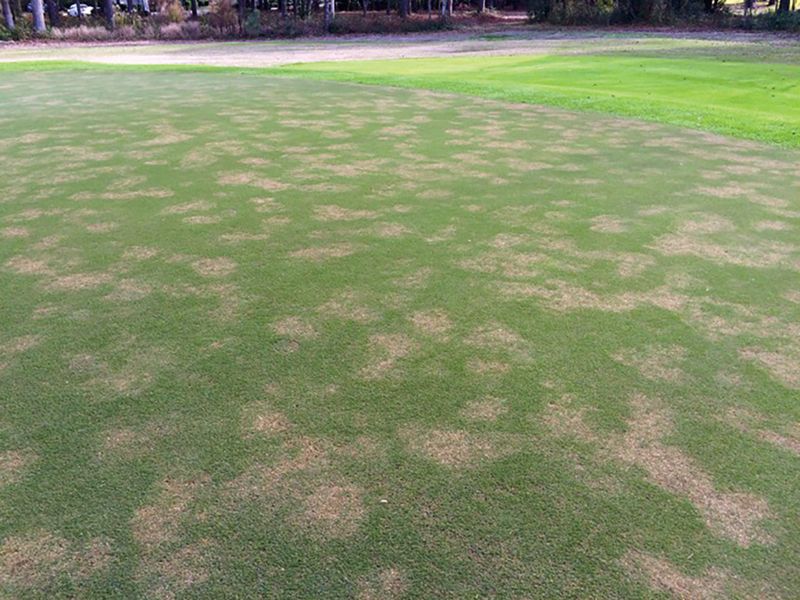
Bermudagrass is stubborn for structural reasons. It spreads by stolons that run along the surface and rhizomes that travel underground, and both can root and form new plants.
UC IPM also notes that fragments can regrow in moist soil, and that deeper rhizomes and roots may survive a treatment.
That is why one spray rarely finishes the job. A few survivors under the soil, or a stray piece tilled into a bed, can restart a patch.
Research points the same direction. In a Kansas study at two sites, one autumn glyphosate application reduced bermudagrass cover the following spring.
The study did not test California yards, and it did not show that the grass was eliminated. The researchers also pointed to additional spring treatment as a possible way to get greater control.
So plan on checking back. Once spring warms up, look along edges, near fences, and around sprinkler heads for new green shoots.
Early spots are far easier to deal with than a mat that has had all summer to spread.
If regrowth appears, reassess. You may need a follow-up treatment, a different method, or better protection for nearby plants, all under the directions on the product label.
Treat the first application as step one, not the finish line.
Choose by the grass, the lawn, and the label
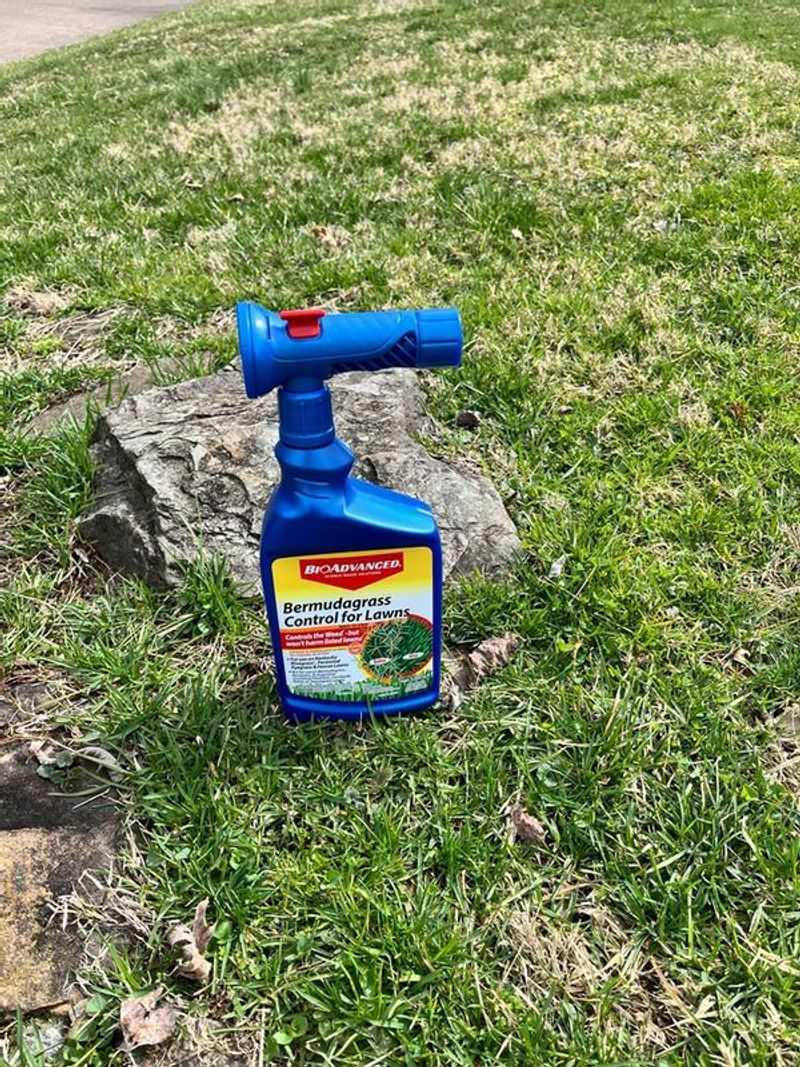
Start with the grass: is the bermudagrass still green and growing in your yard? Then match the method to your lawn, whether that means spot control in turf you like or a full redo.
Shield the plants you want to keep, and use a product labeled for your intended use in California, following its directions and precautions. EPA notes that glyphosate is broad-spectrum and can harm non-target plants through spray drift, so careful application matters.
Fall can offer a real chance to knock bermudagrass back. It is just not a guaranteed last chance, and the roots have a long memory.