
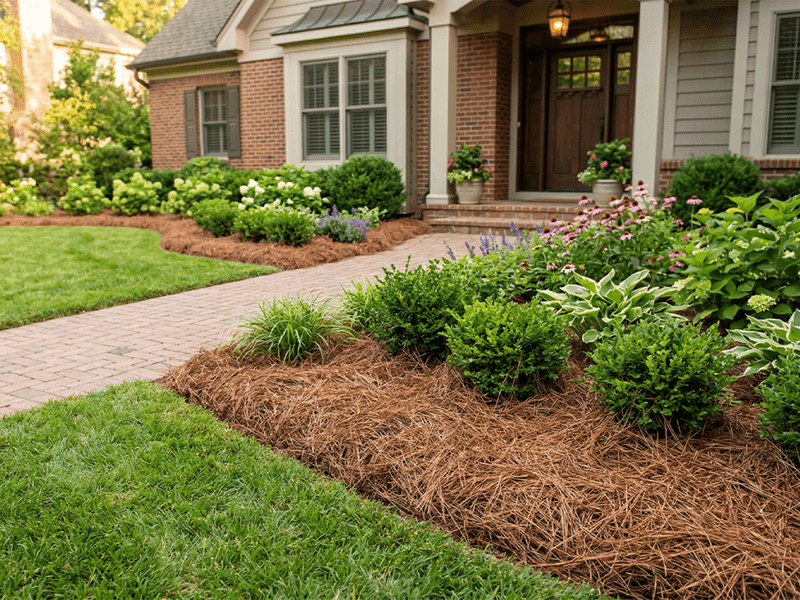
Every fall, pine trees drop a blanket of needles that most of us rake up and haul away. Those needles can go to work in your garden beds instead.
You may have heard they will turn your soil sour, but that worry is bigger than the facts. Here is how Southern gardeners can use them well, and where they are the wrong pick.
Fallen pine needles can be useful mulch
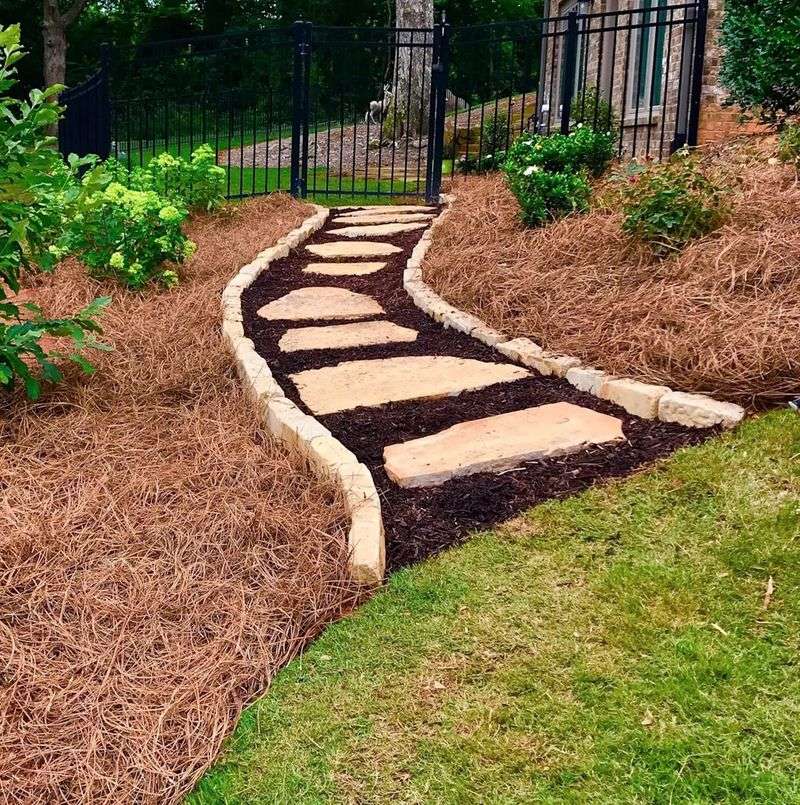
Raking pine needles into a bag is a chore, but spreading them over a bed turns that chore into free mulch. Southern gardeners often call them pine straw, and plenty of yards already have a supply sitting right under the trees.
Like other organic mulches, a layer of needles can help hold moisture in the soil, keep soil temperatures steadier, and slow down some weeds. University of Georgia Extension guidance on mulching vegetables also notes that mulch keeps fruit off bare soil and that lightweight pine straw may need to go on deeper because it settles when wet.
That does not make pine needles the top mulch for every garden. Nobody has ranked them against the alternatives, and they come with tradeoffs.
They can blow around, they settle, and they are a poor match for some sites, especially where fire safety matters.
The sections below walk through the acidity question, what a layer can do, how deep to spread it, where to keep it away from plants, and when to skip it. Use them to decide whether your beds are a good fit.
Will pine straw make garden soil too acidic?
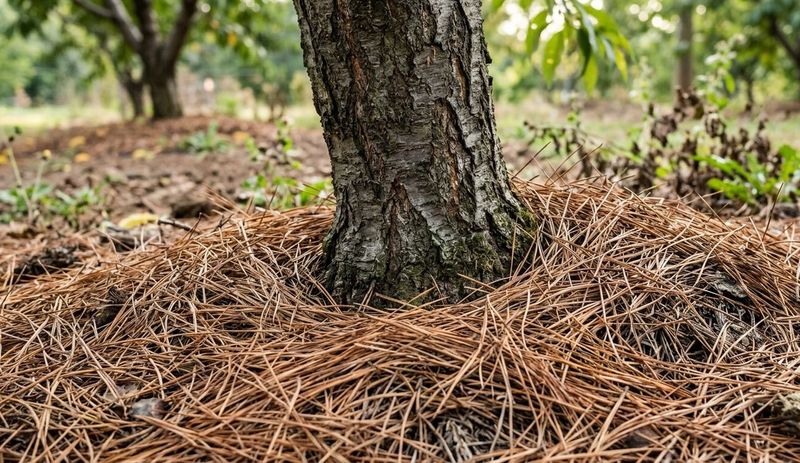
Fresh pine needles are acidic, so the worry makes sense. Still, University of New Hampshire Extension explains that a typical surface layer of needles generally does not appreciably change soil pH.
Soil is a big buffer, and mulch sits on top of it.
Research from the USDA Agricultural Research Service points the same way, with a catch. A USDA study on pine straw and potting medium found little potential for pine straw to acidify soil at a typical field rate, though its container experiment did record a pH drop under different conditions.
So it is fair to say a normal mulch layer in a garden bed is unlikely to cause trouble, but not fair to say pine needles can never affect pH.
The flip side matters too. Do not count on pine straw to lower pH for blueberries or other acid-loving plants.
If your plants need a different pH, test your soil first and follow the crop-specific recommendations for adjusting it.
What a layer of needles can do for a bed
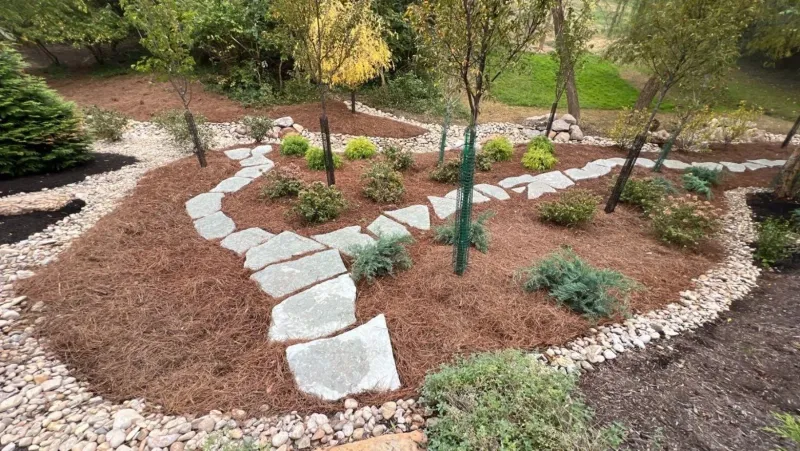
A good mulch layer works quietly. It can slow moisture loss from the soil, soften swings in soil temperature, and keep rain from splashing dirt up onto leaves and fruit.
UGA Extension lists these among the main reasons to mulch vegetables.
Pine needles have one trait gardeners like: they tend to stay fairly loose instead of packing into a dense, soggy mat. Water can move through them, and the bed can still breathe.
Weeds are where expectations need a check. Mulch can suppress some of them, but only when coverage is adequate.
Thin spots and gaps let light reach the soil, and shifting needles can uncover bare patches. Expect fewer weeds, not none.
Mulch also is not a stand-in for water or care. UF/IFAS guidance on mulching edible landscapes treats it as one part of good plant care.
Keep checking soil moisture, especially during a hot Southern stretch, and keep feeding and watching your plants as usual.
Match mulch depth to the bed and the plants
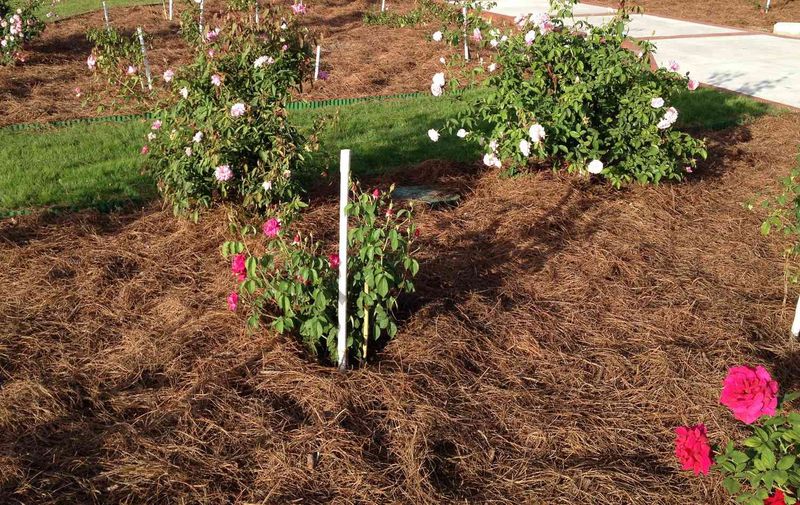
No single depth fits every bed, and the experts do not all give the same number. That is because the right layer depends on the mulch, the plants, and the setting.
For vegetable gardens, UGA Extension suggests 3 to 4 inches of mulch in general. Because pine straw is lightweight and settles when wet, it may need to go on deeper at first, perhaps around 5 inches.
Edible landscapes are different. UF/IFAS advice for Florida-friendly edible landscapes calls for 2 to 3 inches around established plants, but 1 inch or less around seedlings and small vegetables or herbs.
Young plants can be smothered by too much.
Florida guidance on landscape mulches, published by UF/IFAS, also cautions against mulch staying deeper than 3 inches in established landscapes.
So treat these figures as a range, not interchangeable rules. Pick a starting depth that suits your bed, then measure again after the needles settle and adjust.
Keep needles clear of stems and check for gaps
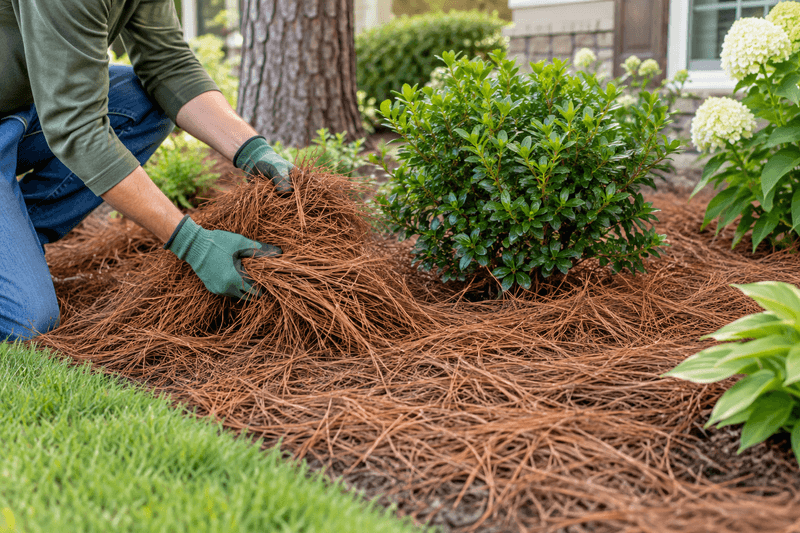
Spread needles evenly, then pull them back from plant bases. Piling mulch against stems or trunks holds moisture there, which can contribute to rot and other problems.
UF/IFAS suggests leaving about a foot around large plants and trees, and a couple of inches around smaller plants.
Pine straw is light, so wind can push it out of a bed. UGA Extension notes it may need reapplying after wind disperses it, and that is also how bare soil gets exposed.
It settles as well. In a UF/IFAS settling study, pine straw settled more than the other mulches tested.
That was an open-field test, so it will not match what happens in your yard.
Skip the calendar and use your eyes. Walk the bed after heavy rain or a windy week, look for thin patches or visible soil, and top up where needed.
Check firewise guidance before using dry pine straw
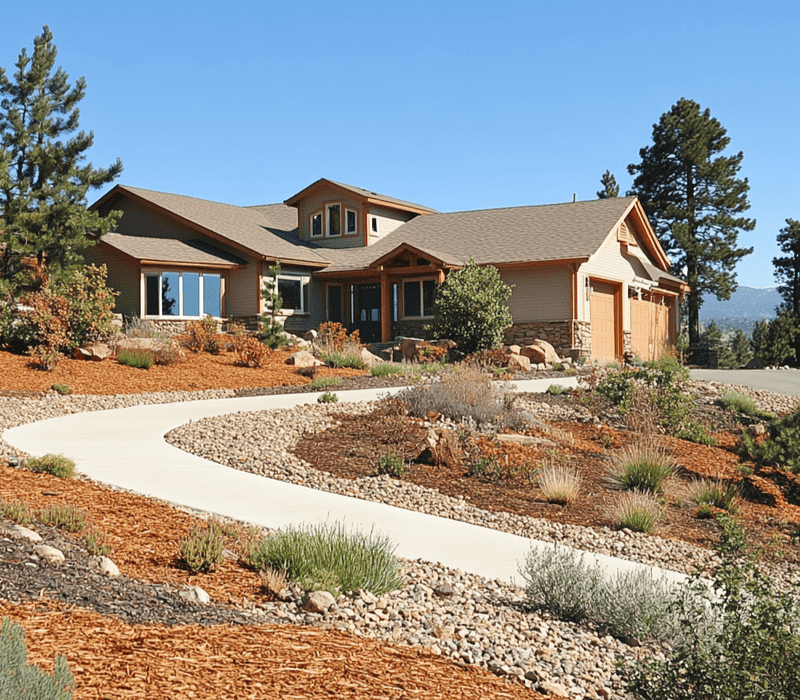
Here is the big exception. UF/IFAS firewise guidance identifies dry pine-straw mulch as highly flammable and advises against it in firewise landscapes, including defensible space and spots near building surfaces.
Combustible organic mulch against a house is a concern.
Not every yard faces the same exposure. The warning matters most for homes in wildfire-risk areas, so check local firewise guidance and consider using a different material close to the house.
Where pine straw does suit your site, the plan is simple. Pick a depth that fits your plants, with a thin layer for seedlings and more for established beds.
Keep it clear of stems and trunks, and look for gaps after wind and settling, as UGA Extension advises when pine straw blows away.
Free mulch is only a bargain when it fits the spot where you put it.