
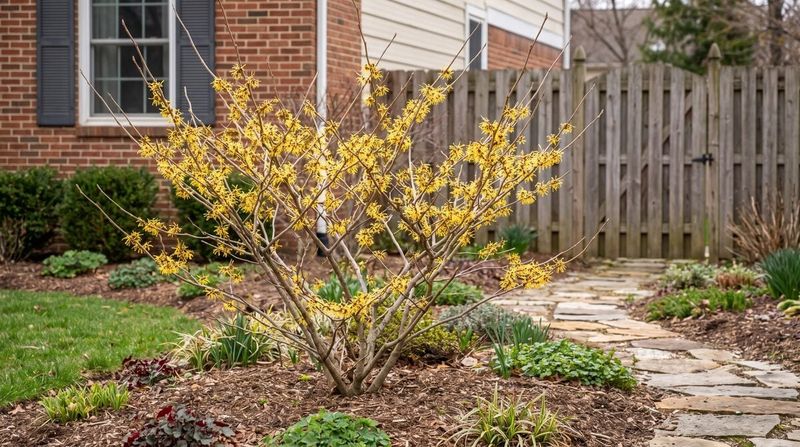
Most North Carolina gardeners think of witchhazel as a winter plant, but the native kind can open its flowers in fall. American witchhazel has small, spidery yellow blooms that show up after many summer flowers have faded.
It is a big shrub with real needs, so it helps to know what you are getting before you plant. Here is what to expect from its bloom, size, site, and wildlife value.
A North Carolina native with a variable late-season bloom
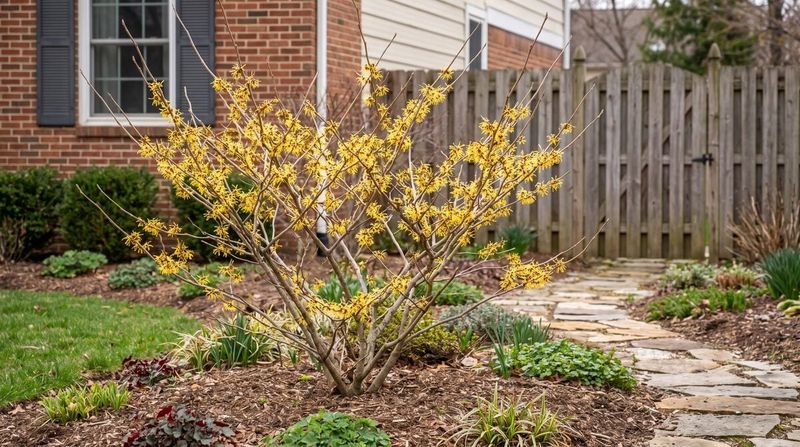
American witchhazel (Hamamelis virginiana) is a plant North Carolina gardeners can claim as their own. NC State Extension’s plant profile lists it as native in the Coastal Plain, Piedmont, and Mountains, so it fits naturally into yards from the coast to the foothills and beyond.
The bloom time is where it gets interesting. NC State gives October to December for the yellow, spidery flowers.
The USDA Forest Service records flowering in September and October, and a reproductive-biology study reports late September through late November.
Put those together and you get a wide window that runs from September into December. Weather, elevation, and the individual plant likely shift the timing from yard to yard.
Treat October as a time to start looking for flowers, not as a date the shrub will hit its peak.
One more thing to check at the nursery tag: the species name. Ozark witchhazel (Hamamelis vernalis) is a different plant, and NC State Extension describes it as a late-winter bloomer.
If you want flowers in fall, look for Hamamelis virginiana, also sold as common witchhazel.
A complement to other fall flowers
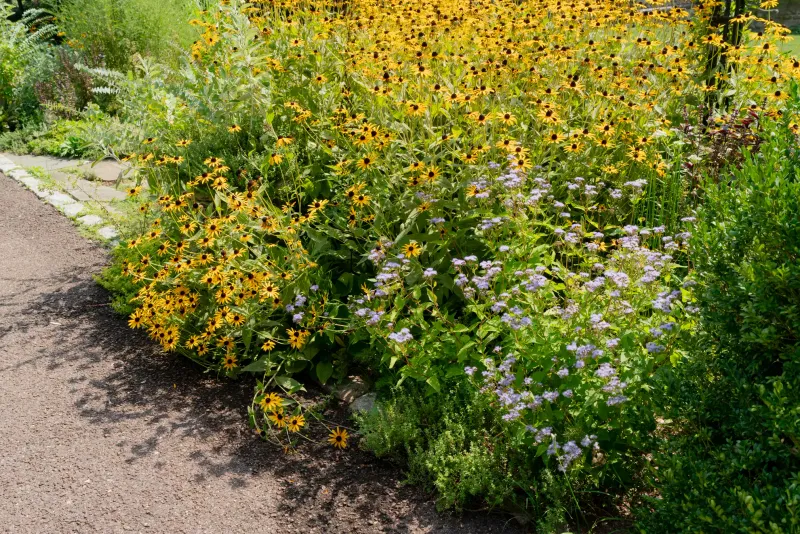
Walk a North Carolina garden in October and plenty is still in bloom. Asters and goldenrods are classic examples, and NC State’s pollinator garden design for full sun includes fall bloomers as part of its plan.
Goldenrod gets its own spotlight in an NC State Extension article on bringing this roadside wildflower into the garden. The Extension Gardener Handbook chapter on native plants also lists several fall-blooming perennials.
So witchhazel is not filling an empty stage. Think of it as one more layer.
Its flowers can carry on at shrub height while the perennials bloom below, and its window may run later than some of them.
A simple way to use it: plant witchhazel at the back of a border or along a woodland edge, and let asters and goldenrods fill the foreground. You get a longer run of fall flowers without asking any one plant to do everything.
Small flowers with a distinctive look
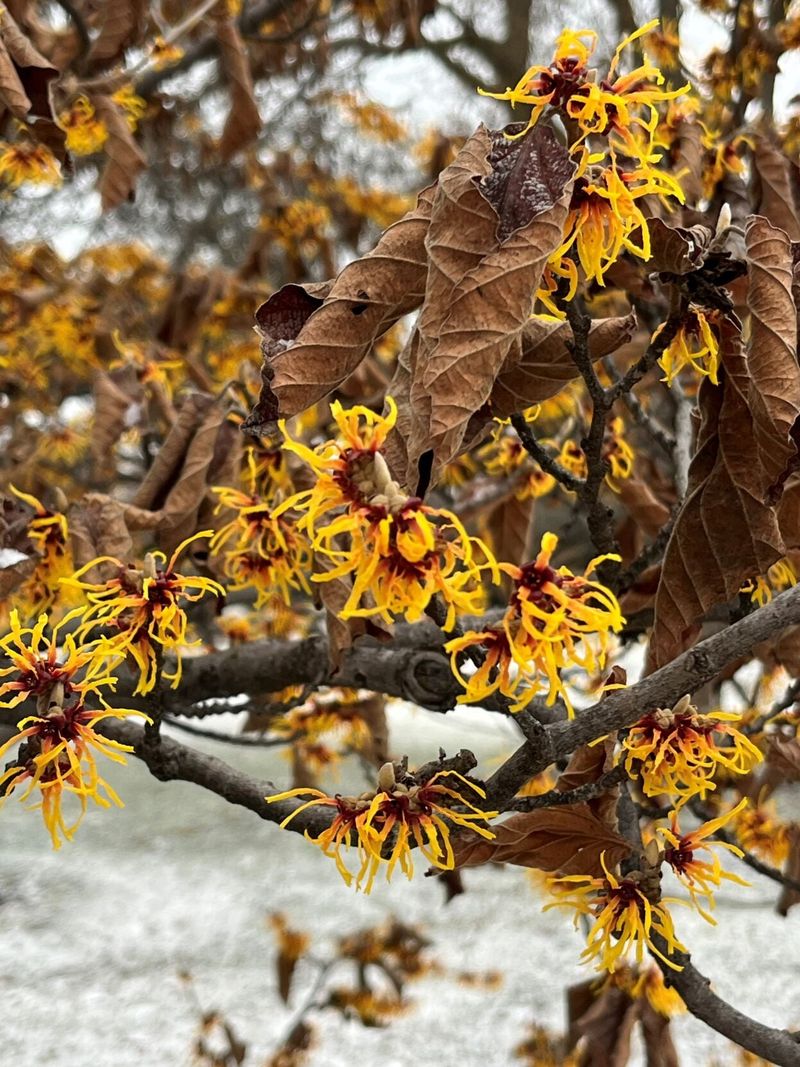
Up close, witchhazel flowers are a little odd, in a good way. Each one has narrow, strap-like yellow petals that look like tiny curled ribbons, and NC State Extension describes them as spidery.
Individual flowers are under an inch across.
Size matters for how you use the plant. A mass of asters or a stand of goldenrod makes a bold splash of color you can see from the street.
Witchhazel is quieter. The blooms sit along the branches, often among yellowing leaves, and you notice them when you walk close.
The University of Florida’s IFAS profile of witch-hazel calls the flowers more interesting than ornamental. That is a fair way to set your expectations.
Where it works best is near a path, patio, or window, where you can enjoy the details. Plant it where you will pass by on a cool afternoon, and the small flowers become a pleasant surprise instead of a disappointment.
Choose a site with room for a large shrub
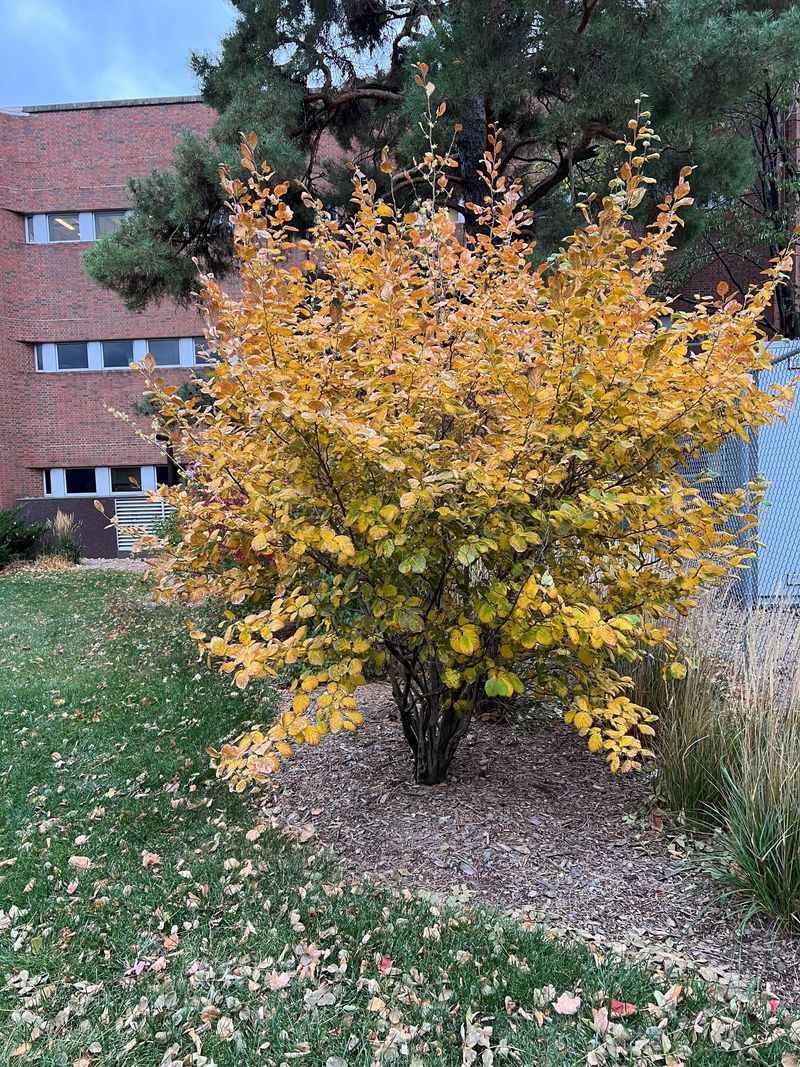
Before you buy one, measure your space. NC State Extension lists the mature size at about 15 to 30 feet tall and 15 to 20 feet wide.
That is a lot of plant.
Witchhazel is a deciduous shrub or small tree, and it often grows with several stems. It is not a good fit for a tight foundation bed beside the house, where it would soon crowd walls, walkways, and windows.
Better spots include a yard corner, a woodland edge, the back of a large border, or a naturalized area where it can spread without pruning battles.
For light, NC State recommends full sun to partial shade, and its profile notes that flowering is best in full sun. If your only open spot is shady, the plant may still grow but may flower less.
For soil, aim for moist, acidic, humus-rich, and well-drained. Adding leaf mold or compost can help build that kind of soil.
Skip very dry sites and low spots where water stands, since the plant is not a sure bet in either one.
The same advice applies across the Coastal Plain, Piedmont, and Mountains, since the plant is listed for all three. Match the site to the soil description, not to your region.
Use fall planting advice realistically
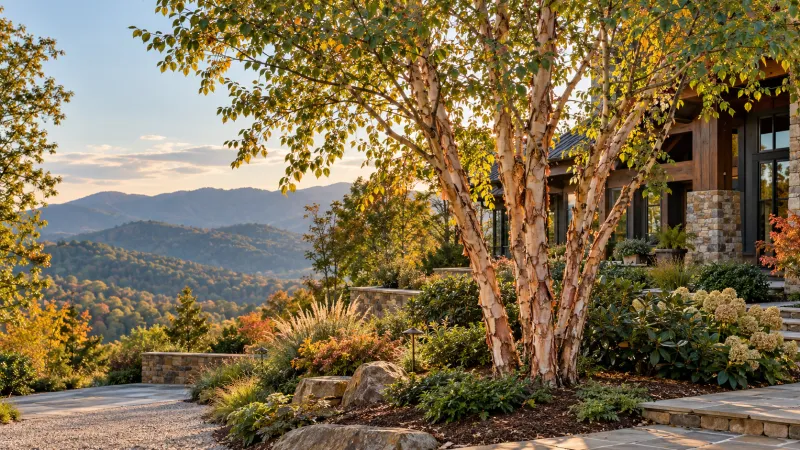
Planting time and bloom time are two separate questions. On planting, NC State Extension’s guide to landscaping for wildlife with native plants points out that fall is generally a good time to plant natives in North Carolina, partly because of the state’s hot summers.
Cooler air and warmer soil give roots a gentler start than July heat does.
That does not mean a witchhazel planted this October will flower this October. A newly planted shrub is busy growing roots, and nothing in the guidance promises first-fall flowers.
Think of the first season as setup.
A few practical steps help. Pick a spot that matches the light and soil needs listed on the NC State plant profile.
Water the new plant during dry spells, and spread mulch over the root zone, keeping it off the trunk.
Meanwhile, the bloom window stays loose. Because flowering can run from September into December, a young plant may flower on its own schedule once it settles in.
Plant it now for the long game, and enjoy asters and goldenrod nearby while you wait.
Describe wildlife value without promising outcomes
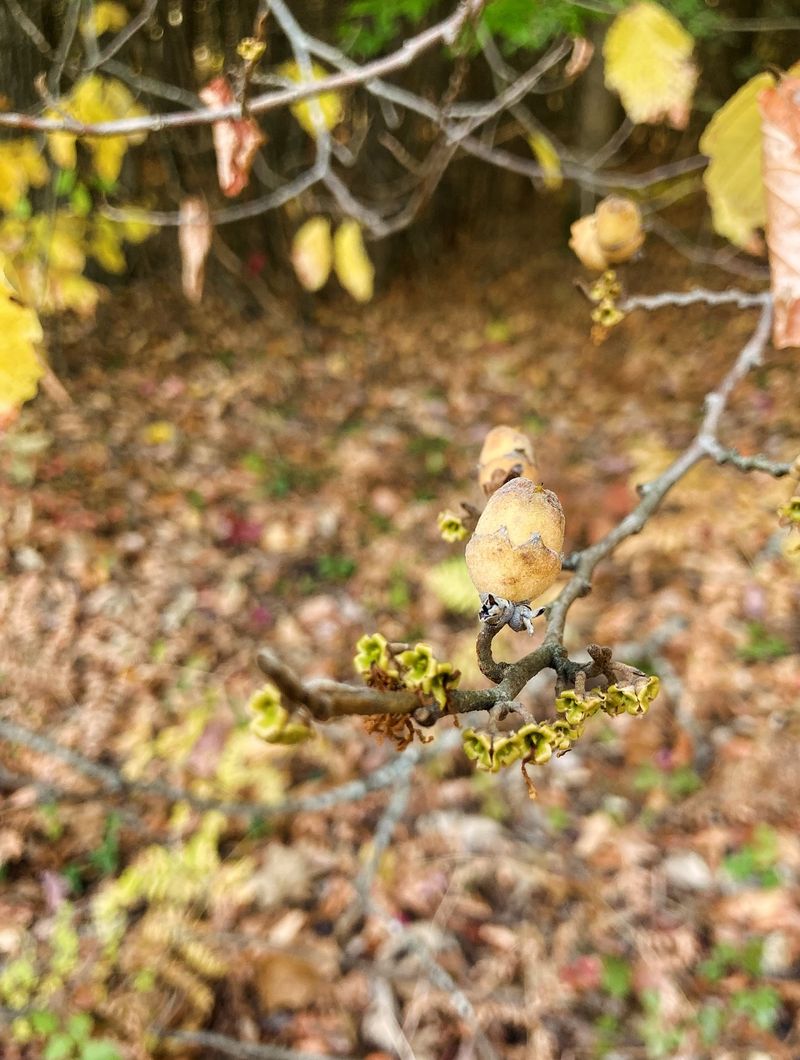
Witchhazel does offer some wildlife value, and it helps to be specific about it. NC State Extension notes that birds and small mammals eat the fruit, and it lists the shrub as a host for the witchhazel dagger moth.
The insect side is more modest. A reproductive-biology study recorded insect visitors that included flies and bees, and it concluded that insects likely pollinate the flowers.
Visits were not frequent, though, and natural fruit set was below 1 percent. In plain terms, many flowers produce very little fruit.
So what should you expect? Probably a handful of insects on a mild day and, in some years, a modest amount of fruit for wildlife.
Do not count on a crowd of pollinators, and do not count on food for pollinators all winter.
The practical move is to treat witchhazel as one piece of a varied native planting. Pair it with asters, goldenrods, and other natives that bloom around the same time, so wildlife has several options instead of just one.
Decide whether witchhazel fits your garden

Witchhazel suits gardeners who have room for a large native shrub and like the idea of small, unusual flowers that arrive in fall. NC State’s profile lists it for the whole state, so the question is really about space and taste.
If you have a roomy corner and want an extra layer of flowers, it is worth a look. If you want a big October show or have only a narrow bed, other plants will serve you better.
Some shrubs shout. This one whispers, and the whisper tends to come when you are already outside raking leaves.