
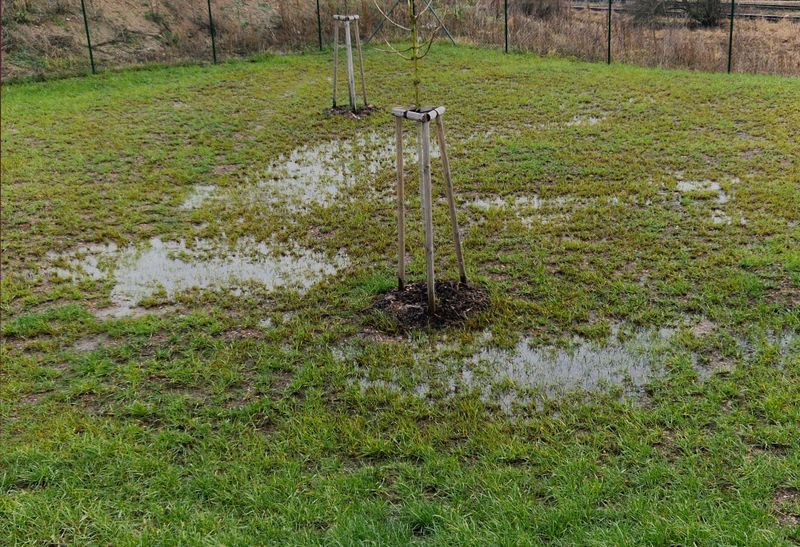
You spread the compost, you did the work, and the bed still feels like a sponge after a storm. That is a common frustration in California yards with clay.
Compost helps in real ways, but it is only one piece of the puzzle. Once you know where water actually goes in your yard, you can pick a fix that fits before the winter rains arrive.
Compost improves structure, not the soil’s basic texture
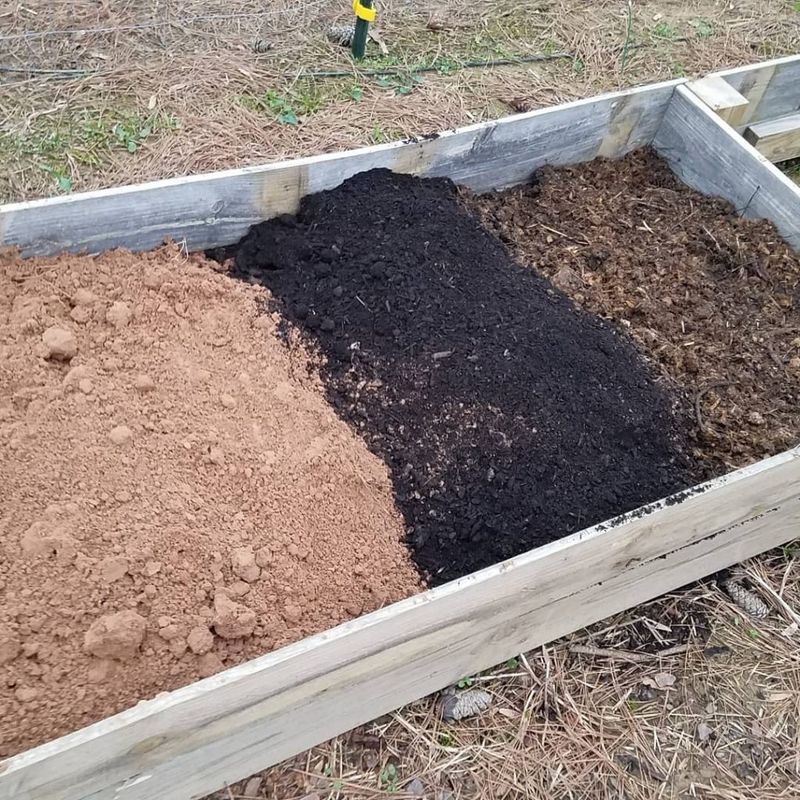
Clay is made of extremely fine particles with tiny spaces between them. Water moves slowly through those small pores, so clay holds moisture and drains slowly.
That same quality is part of why clay can be nutrient-rich, so it is not all bad news. UC Master Gardener guidance notes that clay’s texture is difficult to change.
Texture and structure are two different things. Texture is the mix of clay, silt, and sand particles, and it stays put.
Structure is how those particles clump together into crumbs and the air channels between them. Compost and other organic matter can improve structure, aeration, and water movement over time, as described by UC Marin Master Gardeners.
Here is where the mystery clears up. Compost works in the top layer where you spread it, and it builds benefits gradually.
It cannot remove a dense layer deeper down, and it is not a guaranteed quick fix for standing water. UC ANR’s clay soil guide points to compaction and site conditions as other things that shape how clay drains.
So if your bed is still soggy after generous compost, nothing went wrong on your part. The compost is likely doing its slow job, and something else on the site may be holding water in place.
The next step is finding out what.
Look for where water enters, collects, or gets blocked
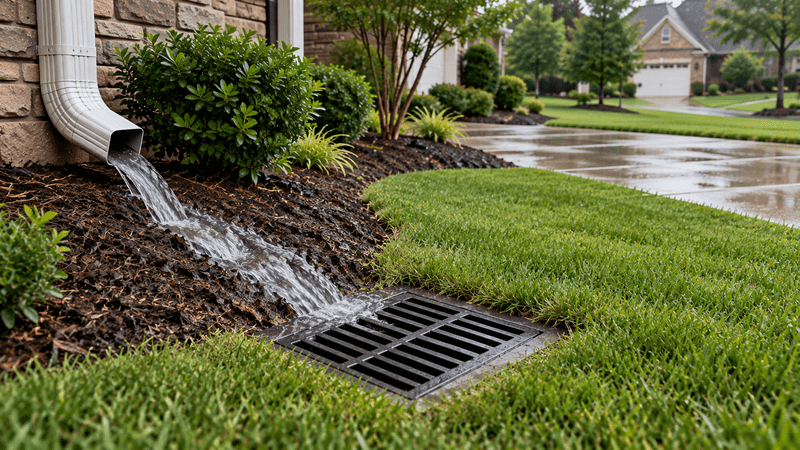
Think of your yard as a place where water arrives, travels, and either soaks in or sits. Soggy soil can come from any part of that journey.
Clay is one possible factor, but the word clay alone does not explain why a particular yard stays wet.
Start with where water comes from. Roof downspouts, patios, driveways, and walkways can send runoff straight into one bed.
After a storm, watch where the water flows and where it pools. Low spots and grading that trap water can keep a spot wet no matter how good the soil is.
Next, consider the soil itself. UC Master Gardeners in Placer County point out that compacted soil drains poorly and that people sometimes misidentify their soil, so checking drainage beats assuming.
Areas near construction, heavy foot traffic, or where equipment once rolled are common suspects.
Then think about what lies below. A dense or impermeable layer under the topsoil, often called hardpan, can stop water from moving down, so the loose soil above fills up like a bowl.
Compare more than one part of the yard. If one bed drains better than another with the same soil, the difference is a clue.
Winter-prep advice from UC ANR in Alameda County also encourages watching how your garden handles rain so you can plan ahead.
A percolation test offers one useful clue
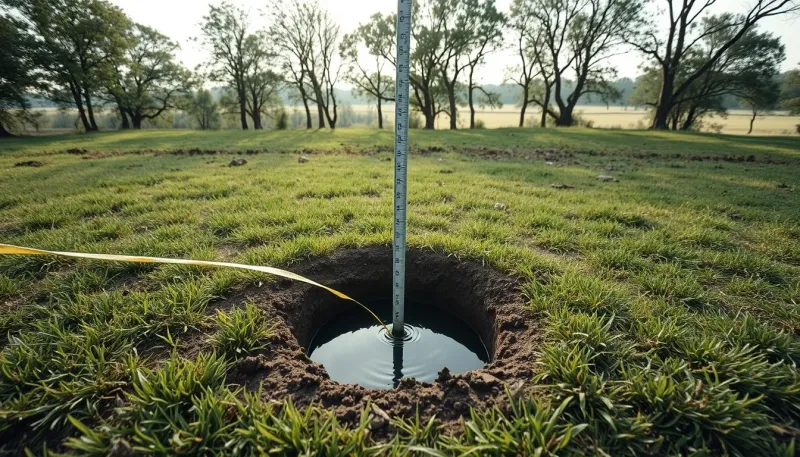
A percolation test is a simple way to watch how water moves through the soil in one spot. You need a shovel, water, and a ruler.
It takes some patience, but it gives you real information instead of guesses.
UC guidance in UC IPM’s soil drainage page calls for digging a hole about 12 inches deep. Clay can leave glazed, smooth sides when you dig, so roughen them up with a trowel or fork.
Fill the hole with water once and let it drain completely. Then fill it again and observe how quickly the level drops.
UC IPM describes about 1 to 2 inches per hour as a good rate for many landscapes. Treat that as a general guide, not a pass or fail grade.
Different plants and soils have different needs, and a slower result does not automatically mean something is broken.
Remember what the test can and cannot tell you. It shows how water moves at the spot where you dug.
It does not diagnose the whole yard, and it does not reveal why drainage is slow. A slow result could point to clay, compaction, or a dense layer, but the test alone cannot say which.
Try it in two or three places, such as a bed that stays wet and one that does not. Then compare the results with what you saw about grade, runoff, and soil depth.
Keep saturated clay undisturbed before winter rains
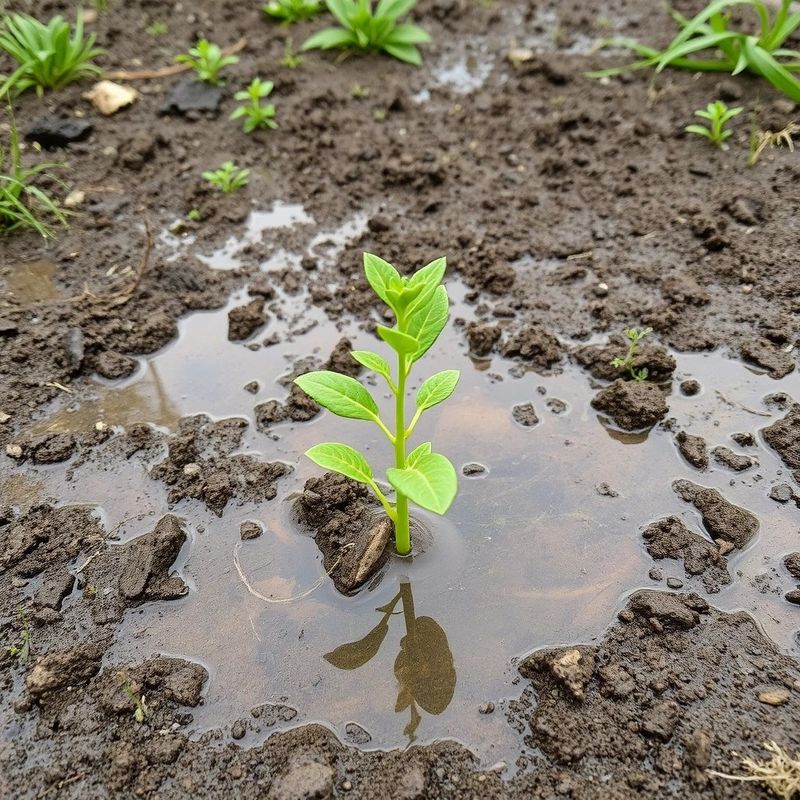
When clay is soaked, the urge to get out and fix things can be strong. Resist it.
Wet clay compacts easily, and the weight of footsteps, a wheelbarrow, or a shovel can squeeze out the air spaces that took so long to build.
Guidance from UC ANR on managing clay soil advises staying off wet clay and avoiding digging or tilling it while saturated. Working it at the wrong moment can damage its structure and leave it denser than before.
A handy check is to grab a handful and squeeze. If it forms a slick, sticky ball that stays put, the soil is too wet.
If it crumbles when you poke it, it is closer to workable. Wait until it reaches that point before you add amendments or plant.
Getting ready for winter does not mean keeping every inch of soil dry. Even well-managed clay can become saturated during long stretches of rain.
The goal described in UC ANR’s winter rain advice is protecting soil structure and managing excess water.
Practical steps include setting stepping boards on routes you must cross and marking beds so family members know to stay off. Save the digging and planting for a drier stretch.
Raise the root zone when a planting area needs relief
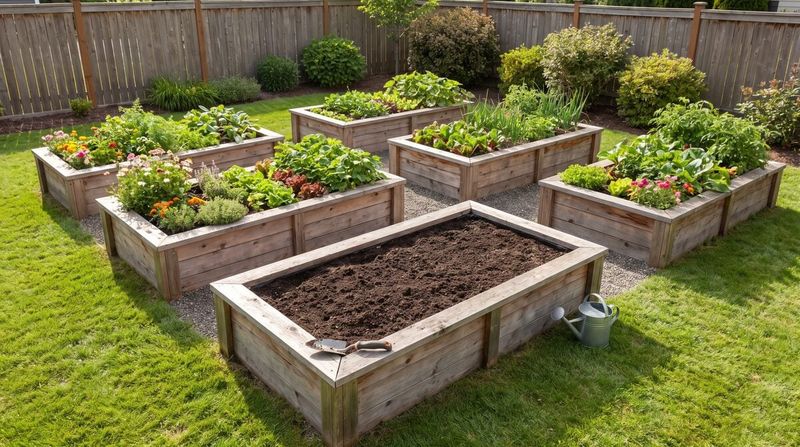
Some plants simply do not like wet feet. For those, a raised bed or mound lifts the roots up and away from soil that stays saturated.
It is a plant-level fix that gives a specific planting a better chance.
According to UC ANR’s clay soil guide, raised beds or mounds can help when plants need better drainage in heavy ground. The idea is to give roots a zone that sits above the wettest soil.
Keep the limits in mind. A raised bed changes where the roots sit.
It does not fix flooding in other parts of the yard, and it does not remove a site-wide drainage problem. UC Master Gardeners of San Mateo and San Francisco Counties discuss soil questions like these and stress matching the solution to the situation.
A raised bed can also sit on the very soil that is causing trouble, so the water below may still rise. Think of elevation as one useful tool, best for a specific planting such as a vegetable patch or a row of shrubs that struggles each winter.
If several beds across the yard stay wet, the cause is probably larger than any one planting area. That is a signal to look at the whole yard, which is the focus of the next section.
Yard-scale drainage changes need a safe destination for water
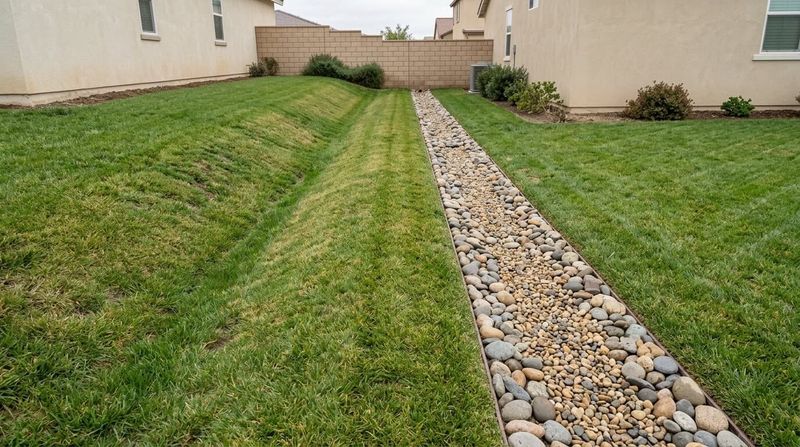
When waterlogging returns year after year across a large part of the yard, the answer usually lives at the yard scale. Before you move any soil or buy drain pipe, ask a basic question: where can this water safely go?
Guidance from UC ANR on correcting yard drainage problems recommends assessing the grade and finding a suitable destination for excess water first. A drain with nowhere to empty will just fill up, and a slope change can send water toward a neighbor’s fence, your foundation, or another bed.
Walk the yard during a rain and watch. Note the direction of slope, where water pools, and what lies downhill.
Check how roof water leaves your house. Take photos so you can compare conditions across storms.
Not every yard can be fixed with the same tool. A French drain, a berm, regrading, or a dry well may suit one site and cause trouble at another.
Rules about runoff and property lines can also apply, so local requirements matter.
If the problem is large, a site visit from a qualified landscape or drainage professional can save money. Bring your notes and photos.
Careful observation now helps ensure any change moves water somewhere it can safely go instead of simply relocating the problem.
More amendments are not always the next step
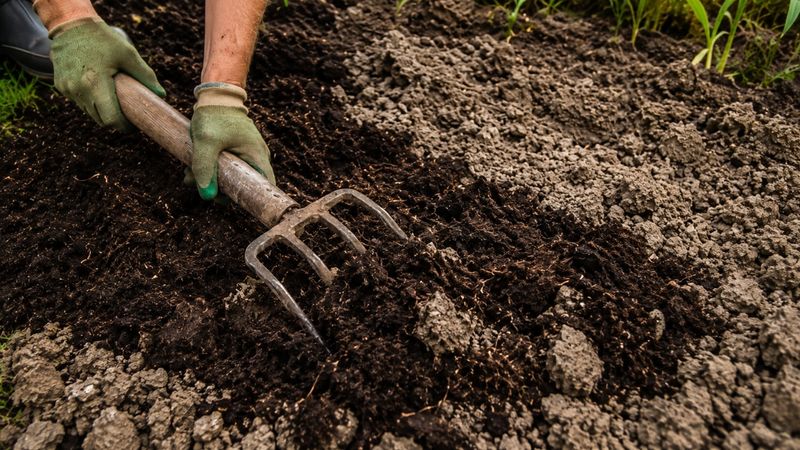
When a bed stays wet, adding something feels like the natural response. But the wrong amendment can waste effort or even make things worse, so it helps to know what each one can and cannot do.
Compost is worth adding for long-term soil building, as UC Master Gardener guidance describes. Still, more of it is not guaranteed to fix deep compaction, a dense layer, or poor grading, because those problems sit outside the compost zone.
Sand sounds logical, but it backfires. UC Master Gardeners in Contra Costa County warn that small amounts of sand can worsen clay’s physical condition, and changing the texture meaningfully would take impractical quantities.
Skip it as a drainage fix.
Gypsum is another popular idea. According to UC ANR on soil compaction, gypsum can improve water infiltration in sodium-rich soils, but it does not relieve compaction.
Without knowing your soil has a sodium problem, there is no reason to assume it will help.
The better habit is to diagnose first. Use your runoff observations and percolation results to decide whether you have a structure problem, a grading problem, or something deeper.
Then choose a remedy that targets that cause.
Match the fix to the cause, not just the clay
Keep adding compost as a patient, long-term habit, and treat your observations and percolation tests as clues rather than verdicts. Stay off saturated soil, and let it reach a workable state before you dig or plant.
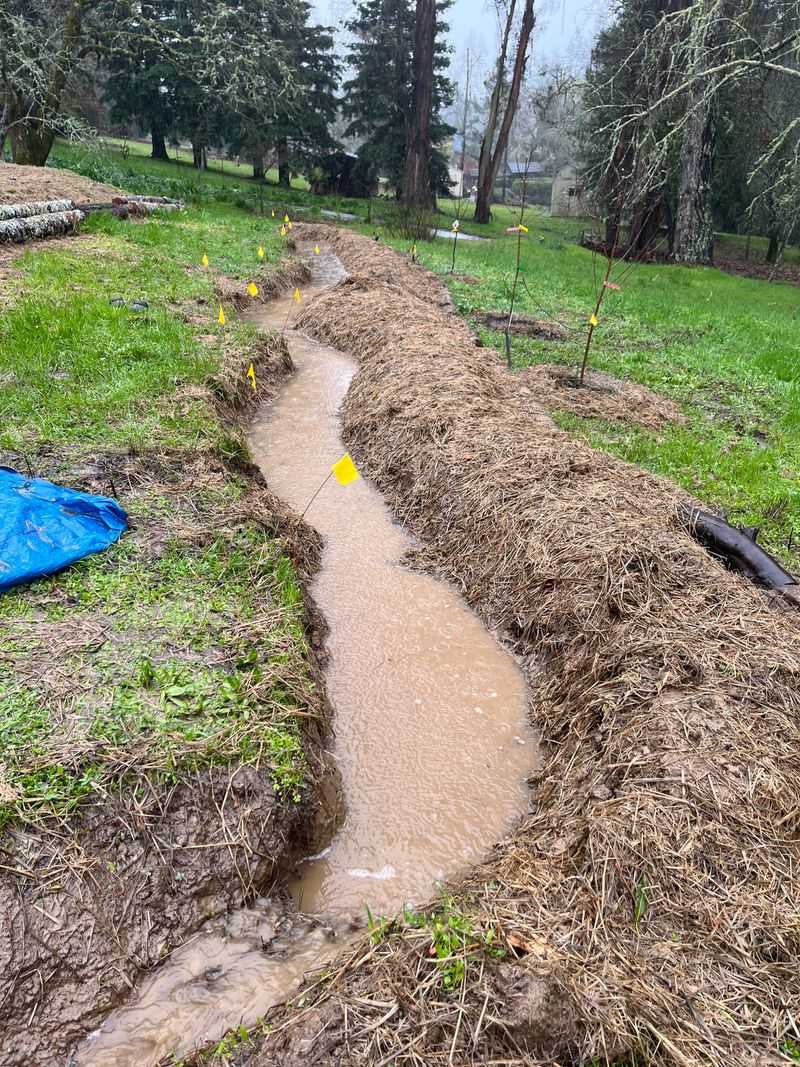
Then choose a response that fits what you found: a raised root zone for a single planting, or a site-specific plan for yard-scale water, as UC ANR’s drainage guide suggests.
No single step guarantees a dry yard when rain keeps coming, a point also made in UC ANR’s winter rain advice. A wet spot is a message about your site, and reading it well is the real skill.