
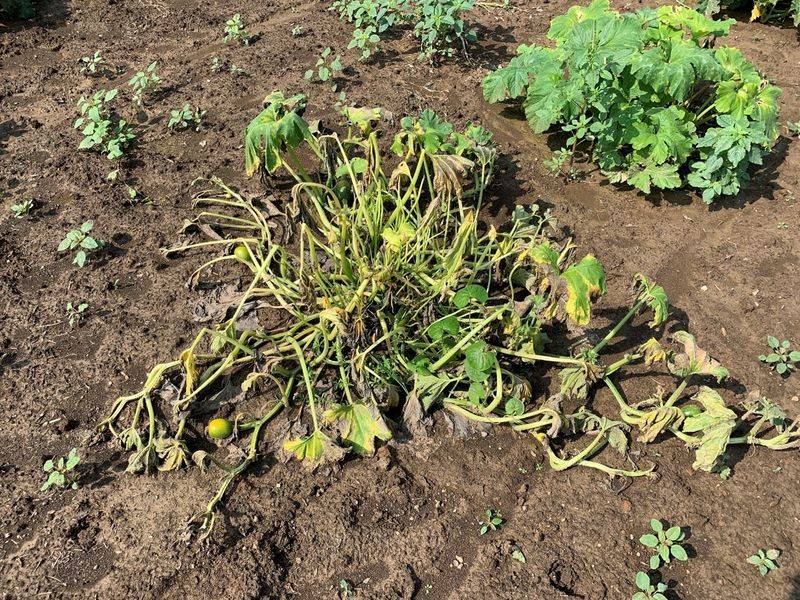
A zucchini plant can look fine one afternoon and droop the next morning. Squash vine borers are the reason, and the damage often starts inside the stem where you cannot see it.
Knowing what to look for, and when each step makes sense, gives your plants a better shot. Here is a season-aware guide for North Carolina gardeners, including what to do in late October.
Match borer advice to the season and your location
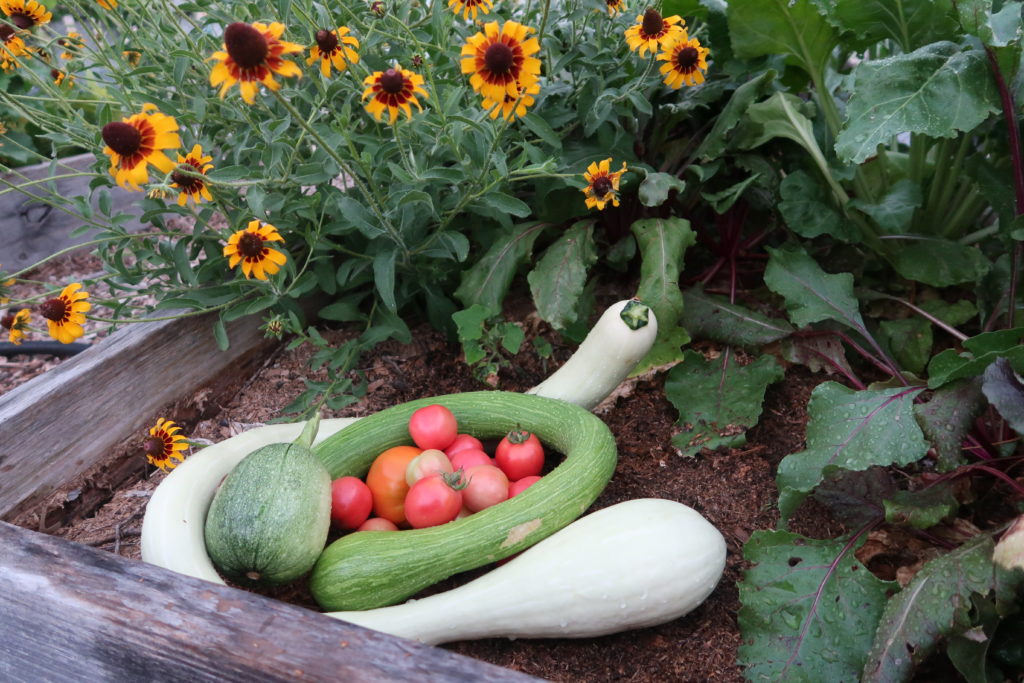
If you are reading this in late October 2026, most of the borer advice that sounds urgent in summer is no longer timely. Vines that have finished producing call for cleanup and planning, not late-summer treatments.
Scouting and prevention belong to the next growing season.
Timing during the season is not the same everywhere. NC State Extension describes a second generation of larvae in August.
Meanwhile, Pamlico County Extension discusses adults laying eggs earlier in summer.
Neither point gives you one statewide schedule. Mountain, Piedmont, and coastal plain gardens can see different weather and different flight periods.
Treat any single calendar date with caution.
For in-season timing, check with your county Extension office and look for current local guidance before planting next year. Until then, think of the year in two parts.
Right now is for cleanup and planning. Spring and summer are for scouting and prevention.
Borer timing information from other Southern states, such as Florida, does not transfer to North Carolina, so stick with local sources.
Inspect lower stems for signs of squash vine borer
Sudden wilting is the most visible symptom. A runner or whole plant may look limp, especially in the morning, even when the soil is moist.
Wilting is not always borers, so look closer before you decide.
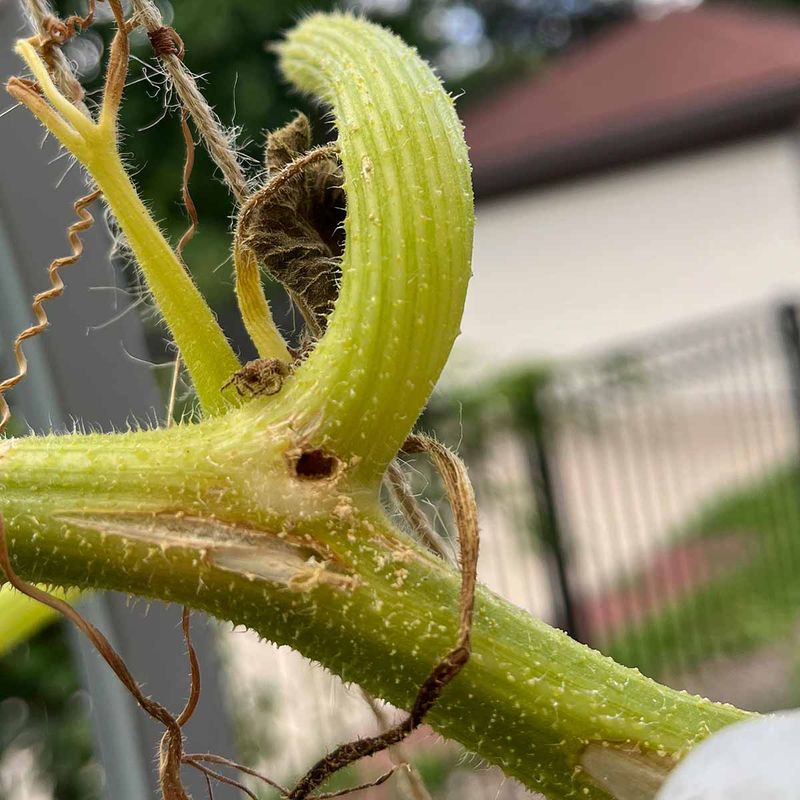
Check the lower stems, close to the soil. You may find small entry holes and a greenish or yellowish, sawdust-like material called frass.
Part the leaves and run your eyes along the base of each vine, including runners.
Finding frass usually means a larva has already entered the stem. That matters because the signs can show up after the damage has started, and it can progress quickly.
Regular scouting can help you notice symptoms and respond promptly, but it cannot promise you will catch a problem early.
The NC State Extension guide to cucurbit pests and local Pamlico County guidance both point to wilting, holes, and frass as the clues to watch for.
These signs point to an infestation, but they do not prove the whole plant is lost. A single runner may be affected while the rest keeps growing.
Note which vines show symptoms, because that tells you where to act next.
Respond differently after a larva enters the stem
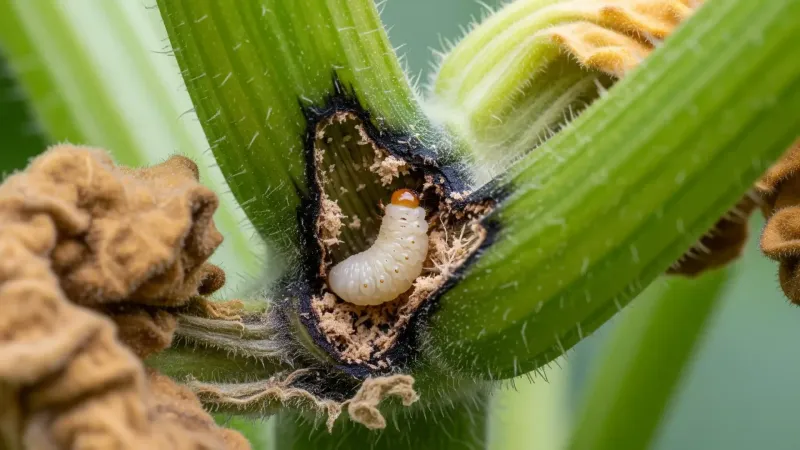
Once a larva is tunneling inside a stem, sprays generally cannot reach it. As University of Minnesota Extension explains, larvae inside stems are protected from most foliar sprays.
Prevention and treatment are separate stages, and a product that works before entry will not fix this.
A practical option for home gardens is surgery. Find the spot where the frass or hole is, and use a clean, sharp knife to make a short slit along the length of the stem.
Look for the fat, whitish larva, then remove and kill it.
Keep the cut shallow and as small as you can manage. After removing the larva, cover the wounded section with moist soil.
NC State Extension, in its cucurbit pest guide, notes that supplemental roots along vines can help a plant withstand an attack.
This may help the plant survive, but it does not guarantee recovery. Stems can be too damaged, or more than one larva may be present.
If the plant keeps wilting, check other stems for fresh frass.
An affected runner does not always mean the whole plant is gone. Plants that root along the vine have a better chance of carrying on.
Prevent egg-laying before larvae bore into stems
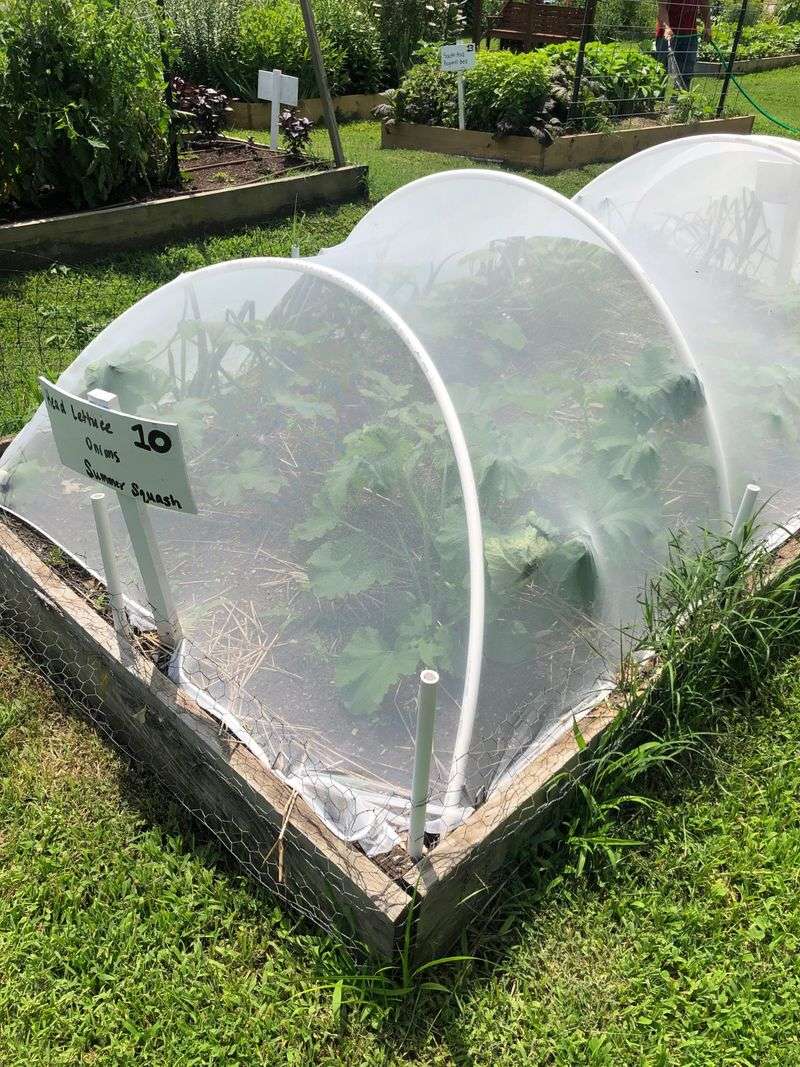
Prevention works only before larvae are inside. Adults lay eggs near the base of the plant, so any control has to act at that stage.
None of these tools cures a larva already in the stem.
Insecticides are a preventive option only where appropriate and labeled for squash. The product must contact the relevant stem area before larvae bore in.
Pamlico County Extension stresses reading the label for squash directions and the harvest interval.
Pollinators matter too. Squash depends on bees, and NC State’s cucurbit insect management page includes cautions about bees.
Do not spray routinely, and do not spray open flowers unless the label supports it.
Row covers can keep egg-laying adults off young plants. You must remove them when plants flower so pollinators can reach the blooms.
University of Minnesota Extension also notes covers may be unsuitable where borers overwintered in the same soil, since emerging adults could be trapped underneath.
Other ideas, like foil collars, are listed by University of Maryland Extension as one way to help prevent egg-laying. Eggs can still turn up on other parts of the plant, so a collar is no guarantee.
Bt is not a fix for larvae inside stems.
Think of each method as a way to lower risk, and check your local Extension office for timing in your area.
After vines finish, reduce risk for the next crop
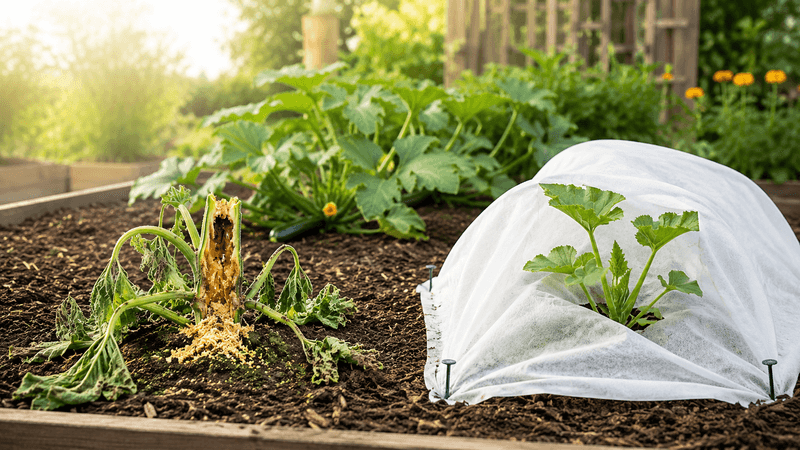
Late October is a good time for cleanup if your vines have finished. Pull out the spent squash plants and destroy them rather than leaving them in the bed.
Do not add them to a compost pile that may not get hot enough to kill pests.
The NC State Extension guide recommends removing and destroying vines after harvest. Doing so may reduce chances that borers finish developing or persist near next year’s crop.
Next, think about layout. If you can, plant squash in a different spot next year instead of the same bed.
Rotation may lower risk, since borers that overwintered in the soil will emerge farther from the new plants.
Small gardens make this harder, and that is fine. Even moving the crop a few beds over is a reasonable step.
Jot down where this year’s squash grew so you do not forget.
These steps cannot guarantee a pest-free garden. Adults can fly in from elsewhere, and timing varies across the state.
Still, a clean bed and a fresh planting spot give next year’s zucchini a better starting point.
Choose a response by stage, not by a promise of certainty
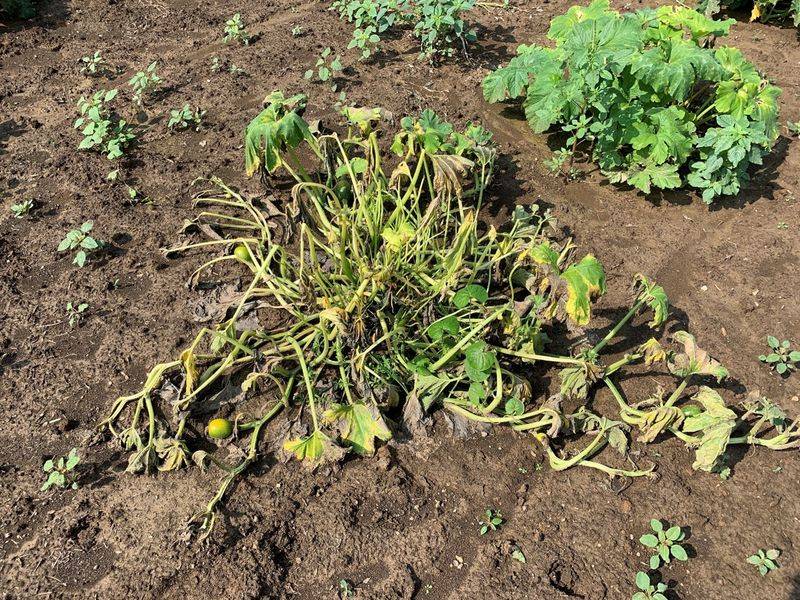
Squash vine borers are best handled one stage at a time. Use local Extension timing to guide scouting and prevention in the growing season.
Before larvae enter, prevention is the goal, and after entry, careful removal is the response.
Both NC State and Pamlico County Extension describe options rather than a sure thing. When vines finish, clear them out.
Nothing here guarantees a harvest, but each step can tilt the odds. A zucchini patch is easier to protect when you know which stage you are in.