
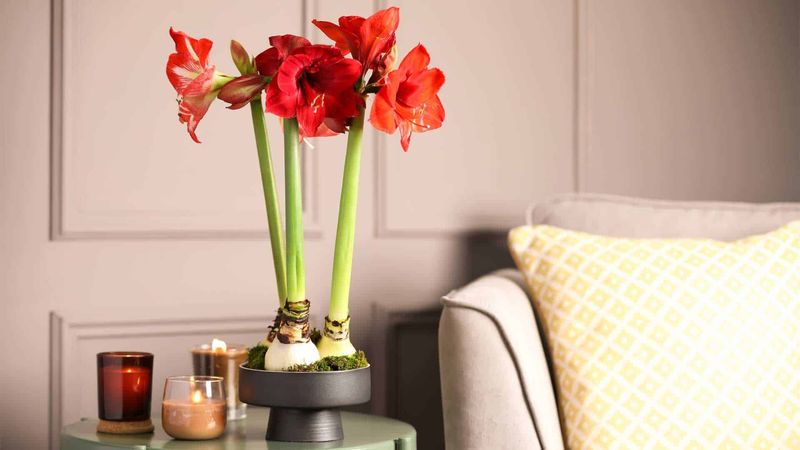
A fat amaryllis bulb looks tough, but its roots can struggle when they sit in soggy mix. Many Southern gardeners start bulbs indoors for winter color, and a few simple potting habits make a big difference.
You do not need to measure cups of water or follow a strict calendar. Here is how to pot, water, and check your bulb so it has its best shot at blooming.
Why a waterlogged pot puts the bulb at risk
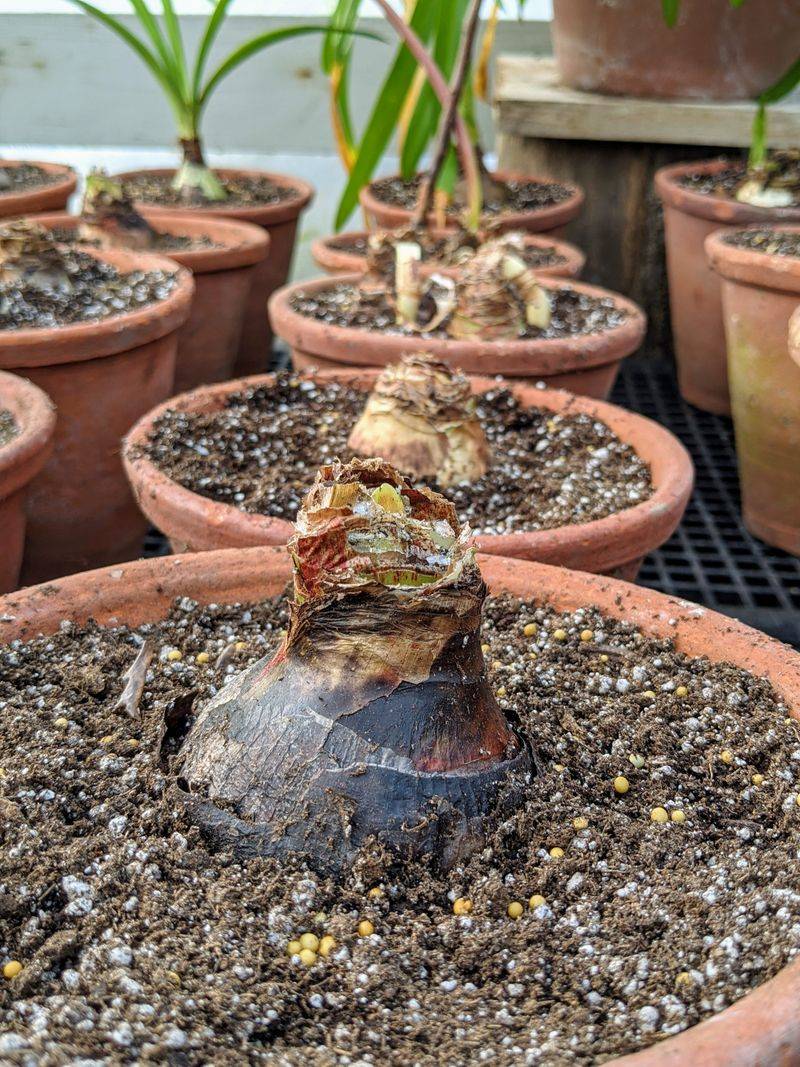
Bulbs store food and moisture, so they do not need constant soaking. When the mix stays wet and drains poorly, roots can lose the air they need, and University of Minnesota Extension notes that wet, poorly drained conditions can promote bulb or root rot.
Water is not the only way a bulb goes bad. Texas A&M AgriLife Extension documents fungal bulb rots, and bulbs can carry problems before you ever buy them.
So a soggy pot is a risk you can control, not the sole or certain cause of trouble.
It also helps to know that a bulb that fails to flower is not automatically rotten. UF/IFAS Extension lists several reasons for poor flowering that have nothing to do with rot.
The plan in this guide is simple: give the bulb a pot that drains and let the mix, not a rigid routine, tell you when to water.
Start with a healthy bulb and a pot that drains
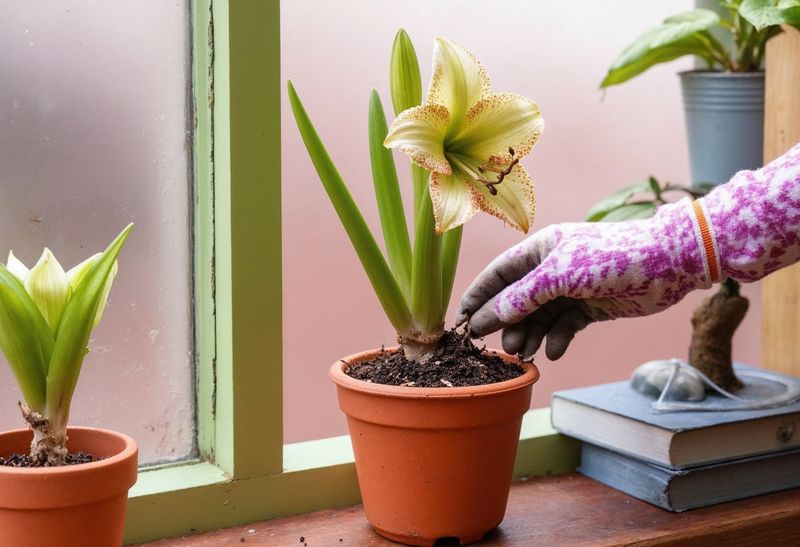
Good results begin at the garden center. Squeeze the bulb gently and pick one that feels firm, with no visible mold, decay, or injury.
Skip any bulb that is soft or shows signs of rot, since Texas A&M AgriLife Extension describes fungal rots that can affect bulbs.
Next, choose a container with drainage holes. A pot only slightly wider than the bulb works well for many growers.
Fill it with a well-drained potting mix, not heavy garden soil that holds water, as University of Illinois Extension advises for amaryllis care.
Set the bulb so roughly the top third to half stays above the mix. Burying it deep keeps the neck damp, and University of Minnesota Extension also stresses well-drained conditions.
Keep the pot indoors in a bright, warm spot while the bulb wakes up.
Water thoroughly at planting, then let the pot drain
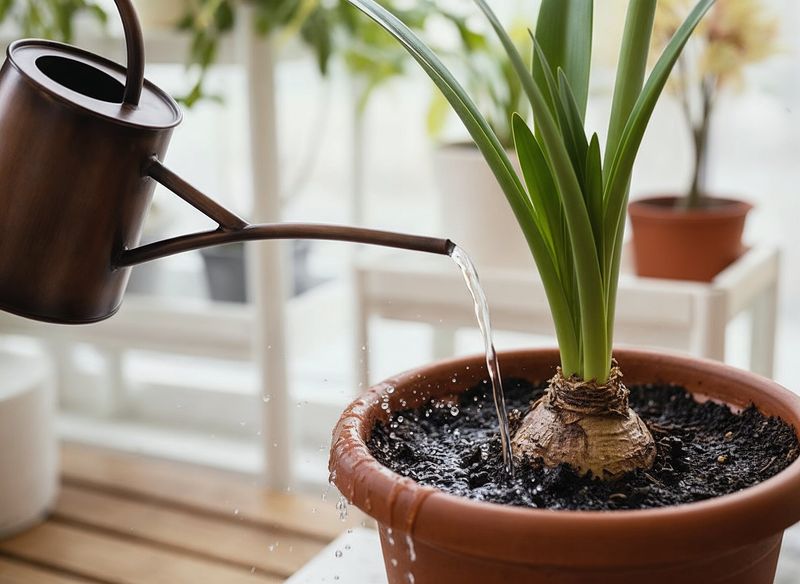
Planting day is the one time a generous drink makes sense. Iowa State Extension recommends watering well after potting, which settles the mix around the roots.
The key is what happens next. Let the pot sit in the sink or outdoors until the extra water stops dripping from the holes.
Then empty the saucer so the pot is never standing in water, a point echoed by University of Minnesota Extension.
A thorough first watering does not mean keeping the mix saturated. Think of it as one good soak followed by a pause.
University of Illinois Extension describes cutting back after that first watering, which gives the roots time to take in air. If you are using a decorative cachepot, lift the pot out to drain it each time.
Use the mix and growth stage to guide later watering
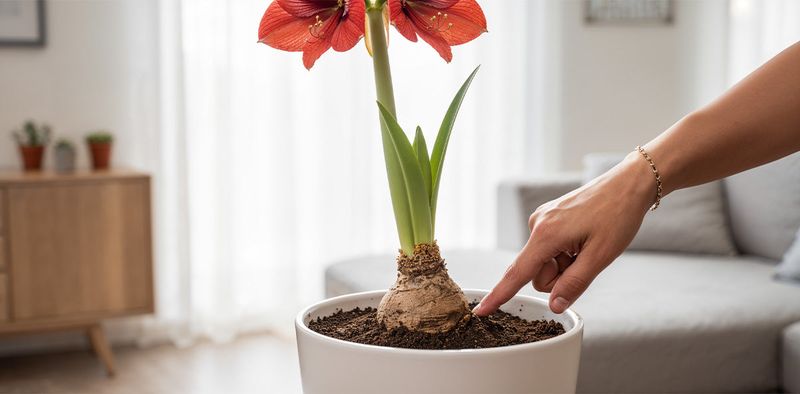
After that first soak, skip the fixed schedule. Pot size, mix, room warmth, and growth stage all change how fast the mix dries, so no single amount fits every pot.
Universities describe a few different ways to check instead.
Illinois Extension and Minnesota Extension both advise watering when the top 2 inches of mix feel dry. You can test with a finger or a pencil.
You can read the Illinois guidance and the Minnesota guidance side by side.
Iowa State takes a slightly different approach, advising that you keep the mix barely moist after the first watering, as shown in its amaryllis guide. UF/IFAS says another watering may not be needed until the bulb sprouts, according to its amaryllis publication.
These are source-specific tips, not one universal rule. The common thread is to check the mix first and avoid waterlogged conditions.
Once leaves and a flower stalk grow, the plant usually drinks more, so check more often.
A missed bloom does not prove the bulb rotted
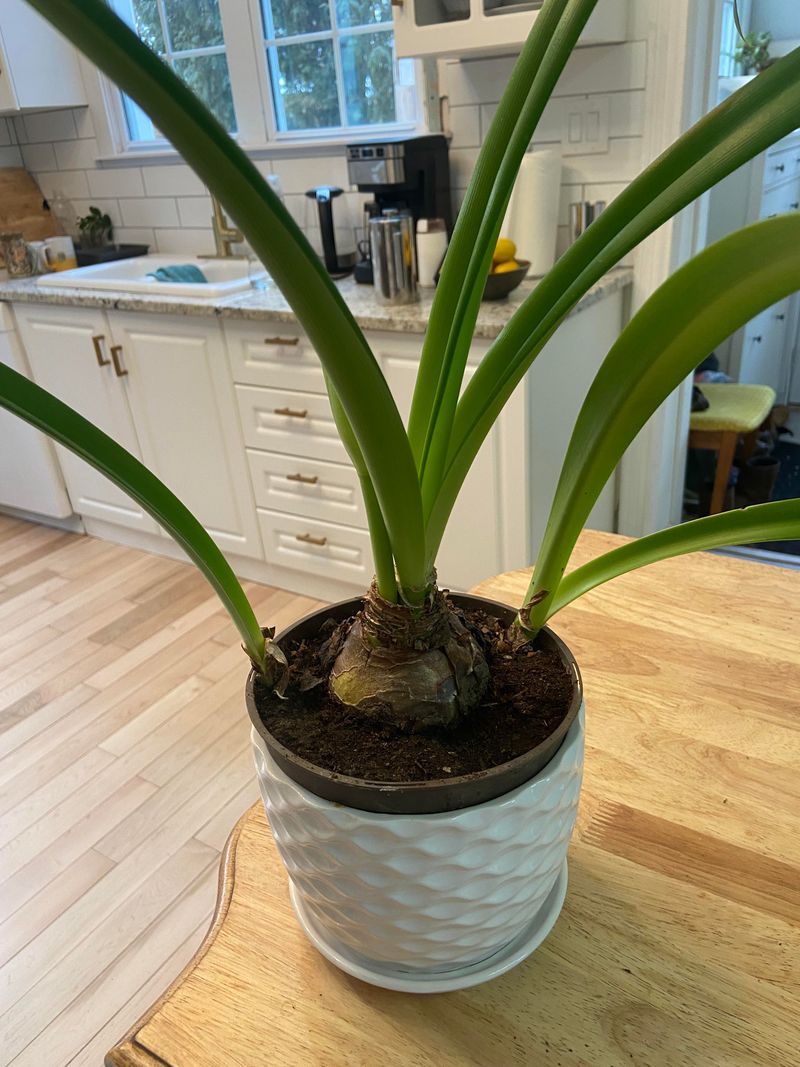
Leafy growth with no flowers can feel like a sign you drowned the bulb. Usually it is not that simple.
A firm bulb with healthy green leaves is alive, and something else may be holding back the blooms.
UF/IFAS Extension lists too much shade, excess nitrogen, overly rich soil, and excess water as possible reasons a plant grows foliage at the expense of flowers. Also, red marks on leaves or bulbs do not always mean disease, since injury can cause red pigment.
Iowa State Extension adds two more possibilities: limited stored food reserves in the bulb, and not enough exposure to cool temperatures.
Good watering handles one risk, but it cannot guarantee flowers. If a bulb is soft, mushy, or smells bad, rot is likely.
If it is firm, look at light, feeding, and the bulb’s history before blaming the watering can.
Christmas bloom timing depends on the bulb
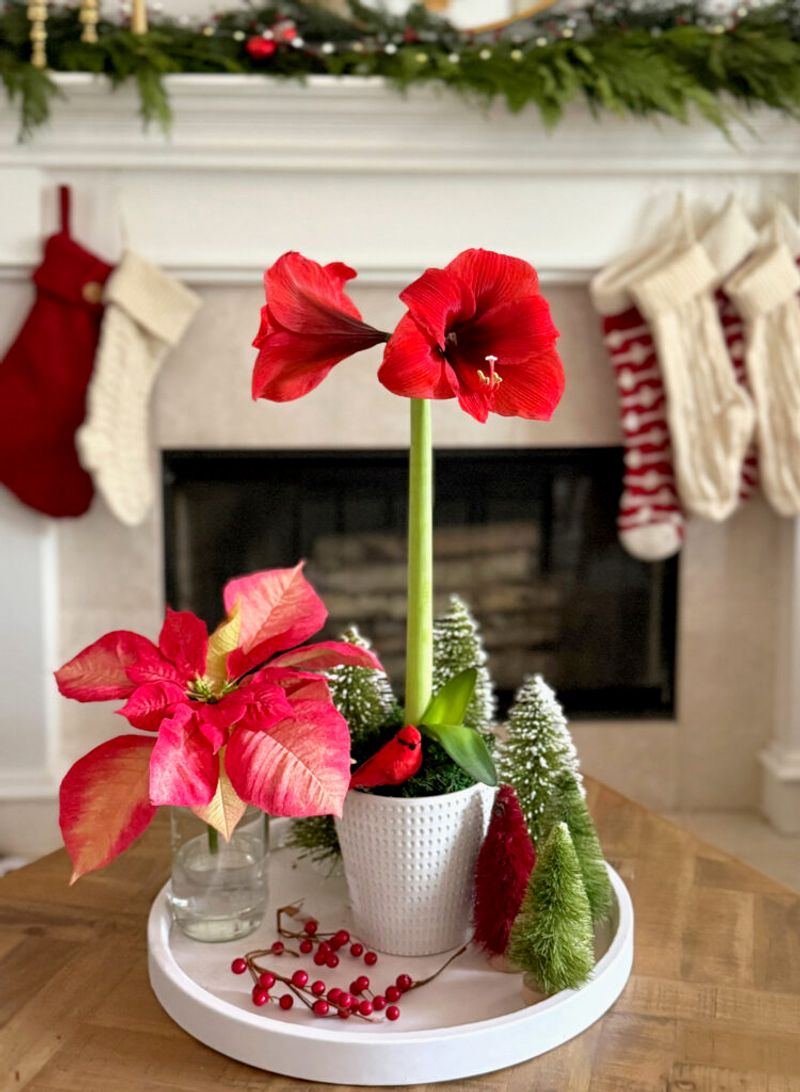
A holiday bloom is a nice goal, but your watering routine cannot promise it. For indoor forcing, Iowa State Extension recommends potting in early to mid-November for Christmas bloom.
Timing also depends on where the bulb was grown. Iowa State gives about 3 to 5 weeks to bloom for South African-grown bulbs and about 6 to 8 weeks for Dutch-grown bulbs.
Check the label or ask the seller, then count backward from your target date.
That also means late October is a bit early for a Christmas bloom, so you can wait for the right window. Bulbs potted at other times may simply flower on a different schedule.
Florida readers should keep two things separate. UF/IFAS Extension describes amaryllis as suitable for outdoor growing in many parts of the state, where watering depends on soil, season, and weather.
That is different from forcing a bulb in a pot indoors.
Drain first, then check before watering again
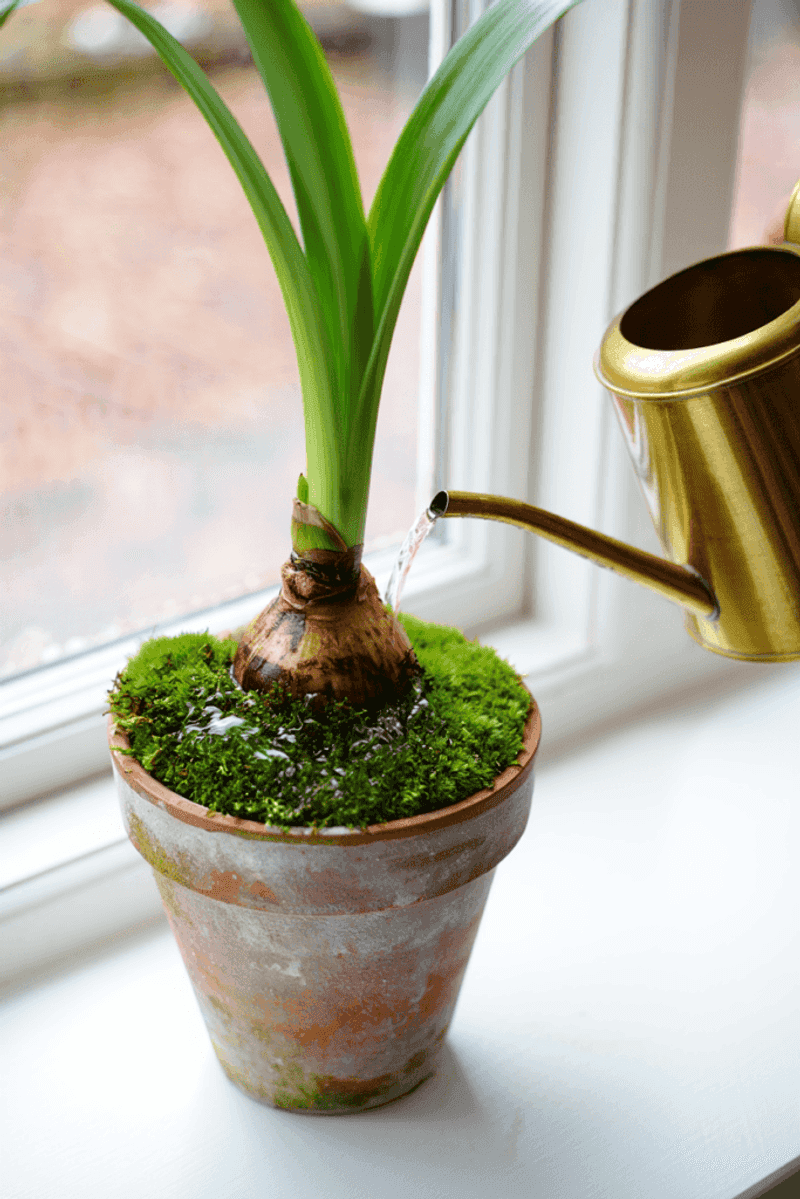
Start with a firm, clean bulb and a pot with drainage holes. Water well once, let the extra escape, and empty the saucer.
After that, check the mix and the plant’s growth stage before adding more, using guidance like the Illinois Extension top-2-inches check as one option.
There is no cup measurement that guarantees success. A small pot on a warm Texas windowsill dries faster than a large one in a cool room, so your own pot should set the pace.
Careful watering lowers a preventable risk, but it does not promise a bloom, and Minnesota Extension also ties success to well-drained conditions.
Pet owners should keep bulbs and plants out of reach, since amaryllis is toxic to dogs and cats. A finger in the mix is the cheapest tool you will use all season.