
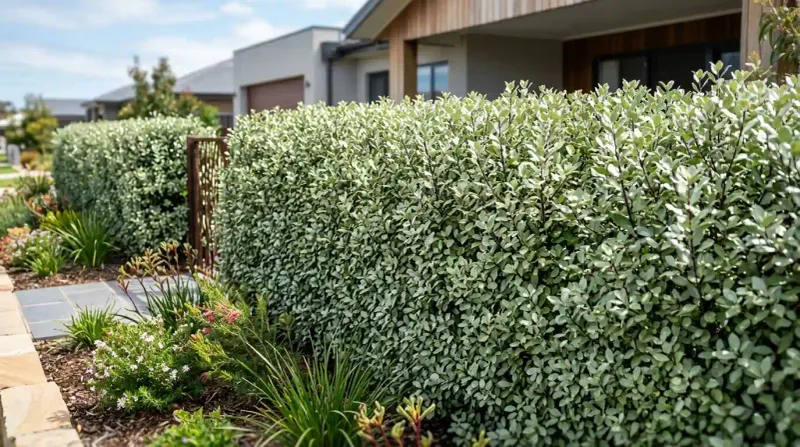
A small California yard can feel like a fishbowl when the neighbor’s kitchen window looks right at your patio chairs. The usual fix, a giant hedge, often eats half your outdoor space and drinks more water than you want to give it.
The good news is that plenty of flowering shrubs stay narrow, handle long dry summers, and feed bees and hummingbirds while they block the view. Here are ten that earn their spot in a tight yard.
1. Pacific Wax Myrtle (Compact Forms)
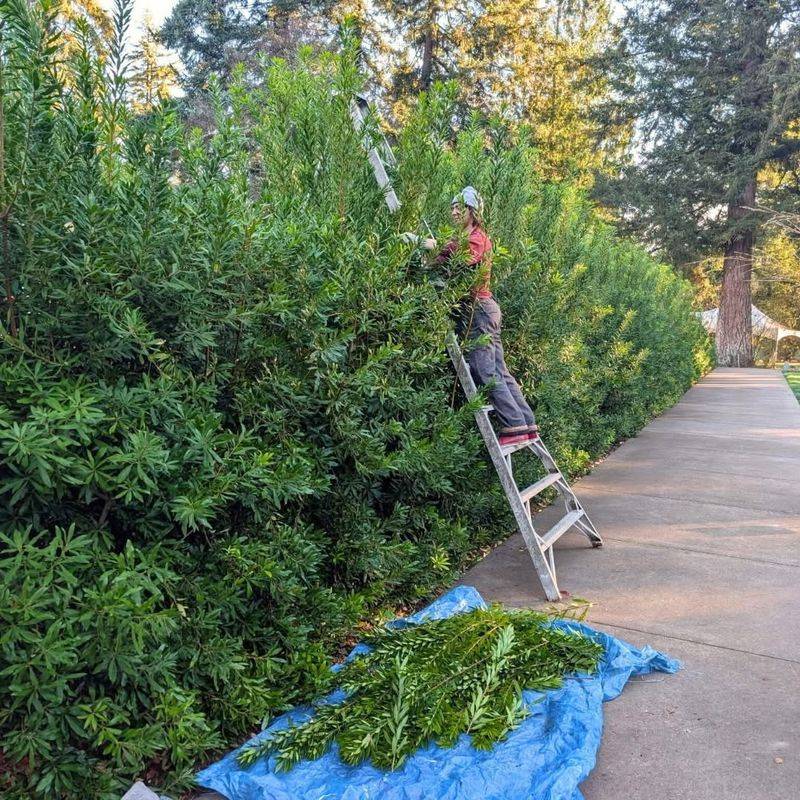
Ask a coastal landscaper for an evergreen screen that looks tidy all year, and Pacific wax myrtle is often the first name you hear. Native to the California coast, it grows thick from the ground up, so there are no bare legs at patio eye level.
The flowers are tiny and easy to miss, but the small purple berries that follow can feed birds like yellow-rumped warblers through winter. Glossy leaves give off a light spicy scent when you brush past them.
Wild plants can reach 20 feet, so look for compact selections or plan to shear lightly once or twice a year. Kept at 6 to 8 feet tall and about 4 feet wide, it works nicely along a side fence.
Once established, it usually needs only occasional deep watering in inland areas.
2. Ceanothus ‘Ray Hartman’
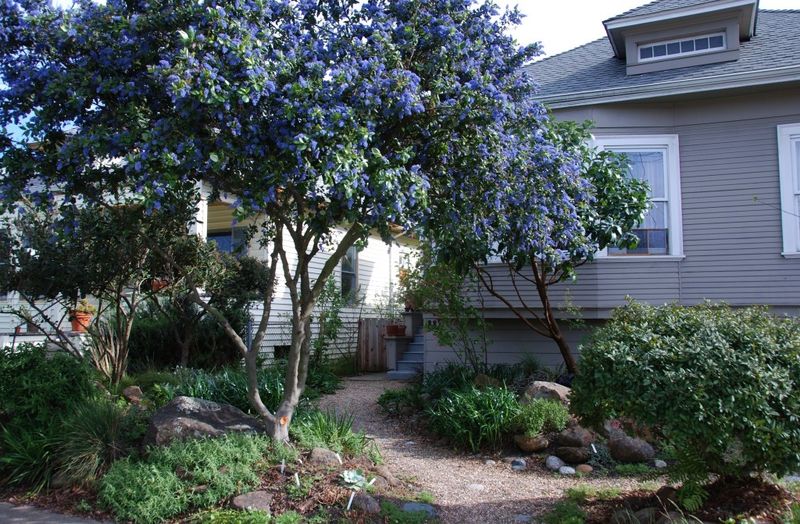
Picture a cloud of sky-blue blossoms buzzing so loudly with bees you can hear it from the back door. That is California lilac in early spring, and ‘Ray Hartman’ is one of the sturdiest forms for home gardens.
It can be trained as a large shrub or limbed up into a small multi-trunk tree. Limbing it up leaves room for pots or a bench underneath while the canopy still blocks a second-story window.
The catch? Ceanothus hates summer water once it settles in, and overwatering is a common way homeowners accidentally kill it.
Plant in fall, water through the first dry season, then mostly let it be. Good drainage matters more than rich soil.
3. Toyon
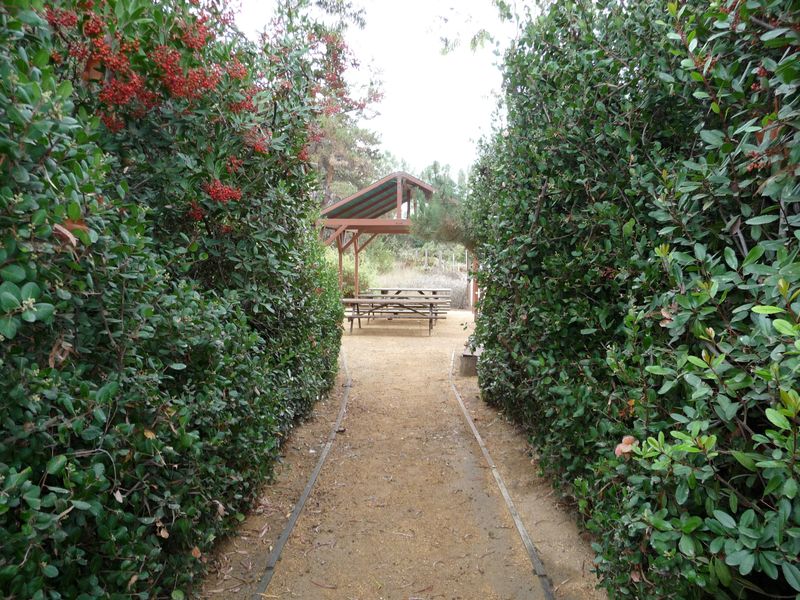
Hollywood is reportedly named after this plant, sometimes called California holly. Toyon is a tough native that flowers white in early summer and turns bright red with berries around the holidays.
Those berries can pull in robins, cedar waxwings, and mockingbirds, so your privacy screen doubles as a bird feeder. Summer blooms also draw native bees when little else is flowering.
Toyon grows slowly at first, which actually helps in small spaces. You can prune it into a narrow hedge about 4 to 5 feet deep.
It handles heat, clay, and drought, and it is one of the more fire-resilient choices when kept well watered and pruned of dead wood.
4. Grevillea ‘Long John’
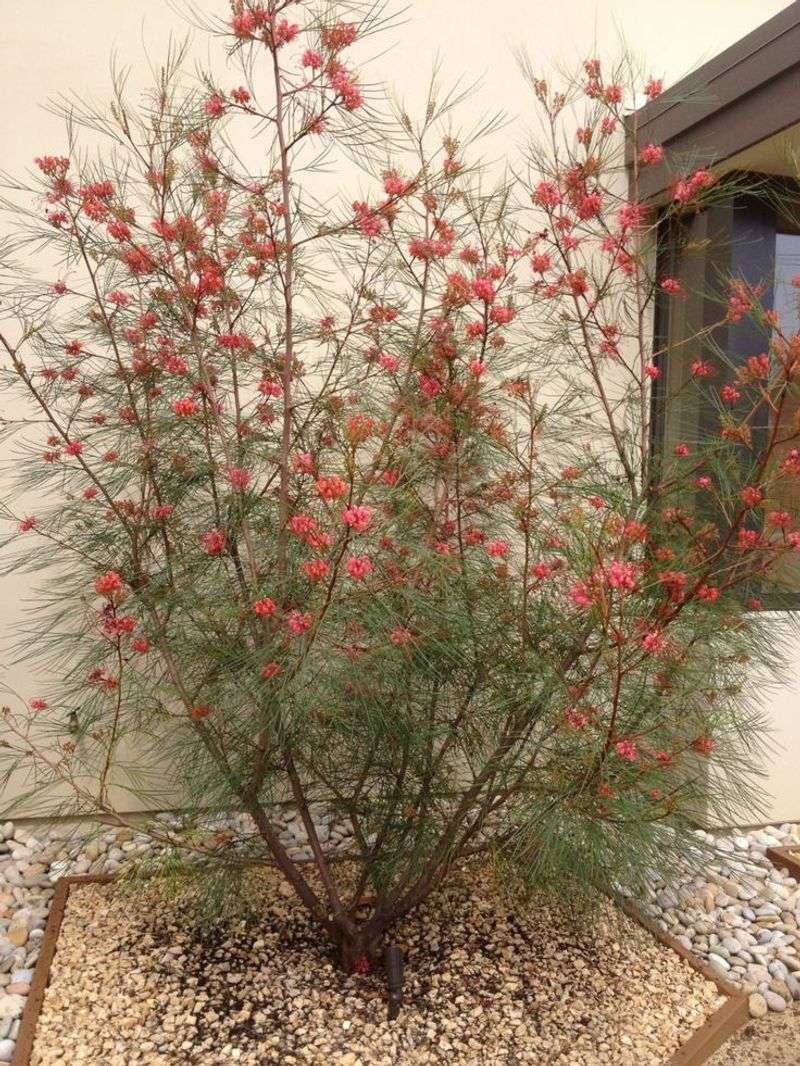
Hummingbird fans, pay attention. Grevillea ‘Long John’ blooms on and off for much of the year with pinkish-red spidery flowers that hummingbirds visit like a favorite diner.
Its needle-like foliage is soft and airy, so the screen feels light rather than heavy against a small patio. It grows tall, often 8 to 10 feet, but stays around 6 feet wide and takes trimming well.
This Australian plant matches California’s dry summers and does best in fast-draining soil. Skip phosphorus-heavy fertilizers, which can harm it.
Coastal and mild inland gardens suit it best, since hard frosts can damage it.
5. Westringia ‘Wynyabbie Gem’
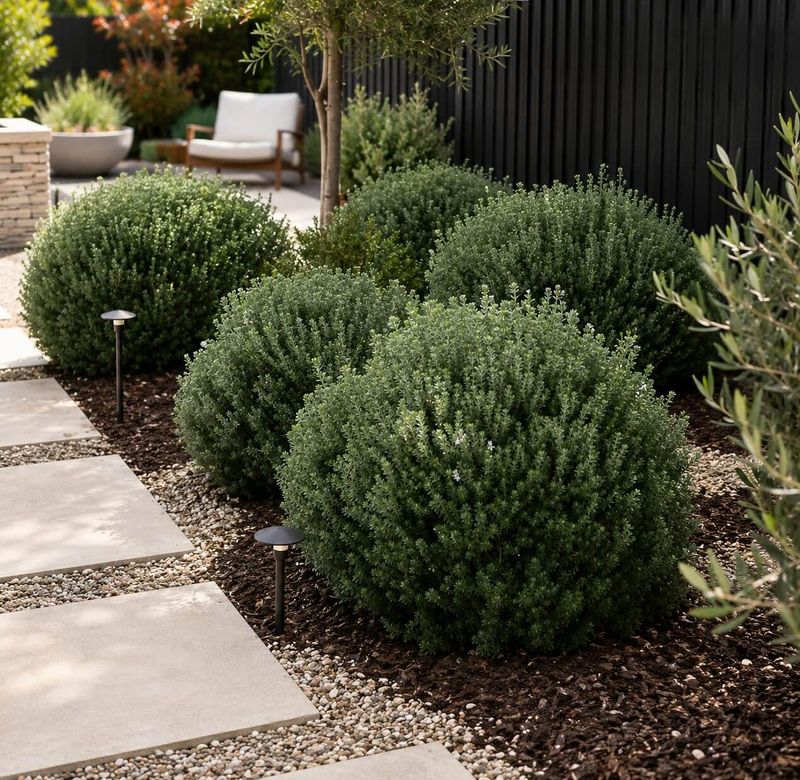
Sometimes the best plant is the one you forget to worry about. Coastal rosemary, or Westringia, shrugs off wind, salt spray, and poor soil, and ‘Wynyabbie Gem’ adds small lavender flowers most of the year.
It reaches roughly 5 to 6 feet tall and wide, making it a good fit for screening seated eye level around a patio. The gray-green color looks cool and calm during a hot August afternoon.
Watering every week or two in summer is usually plenty once it is rooted. A light shear in spring keeps it dense.
Unlike true rosemary, it is not for cooking, but bees do not seem to mind.
6. Pittosporum ‘Silver Sheen’
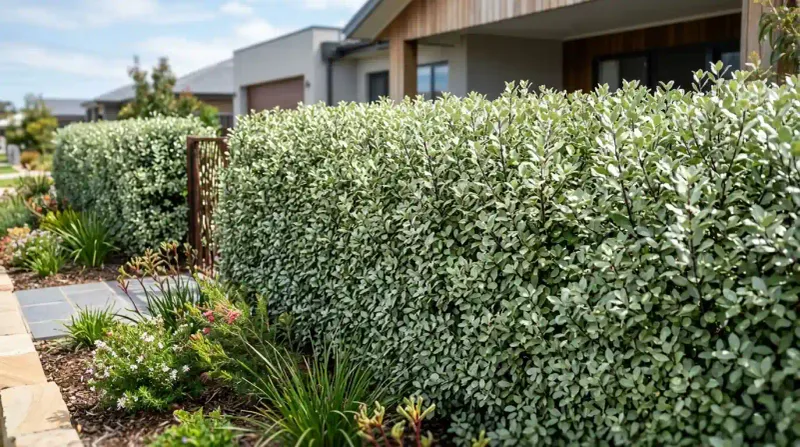
Narrow is the magic word here. Pittosporum tenuifolium ‘Silver Sheen’ grows tall and upright with dark stems and small silvery leaves that shimmer in a breeze.
Spaced 3 feet apart, a row can form a screen while taking up only about 3 to 4 feet of depth. In spring, tiny dark maroon flowers release a honey-like scent in the evening.
It prefers some summer water, so group it with other moderate-water plants on drip irrigation. Afternoon shade helps in hot inland valleys.
Prune the top if you want to stop it around 10 feet.
7. Bush Anemone
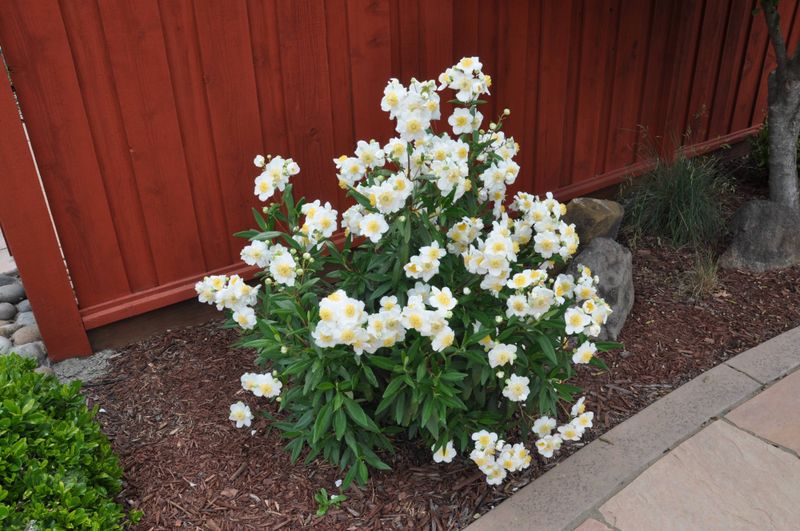
Got a shady corner where nothing seems happy? Bush anemone, a rare native found wild only in the Sierra foothills near Fresno, thrives in part shade and fills out to about 6 feet.
Its big white flowers with golden centers look almost like single roses in late spring. Native bees and other pollinators visit them often.
Leaves can look a bit tired by late summer, which is normal. Give it occasional water and some afternoon shade inland.
Planting it is a small way to keep a special California species alive in home gardens.
8. Coffeeberry ‘Eve Case’
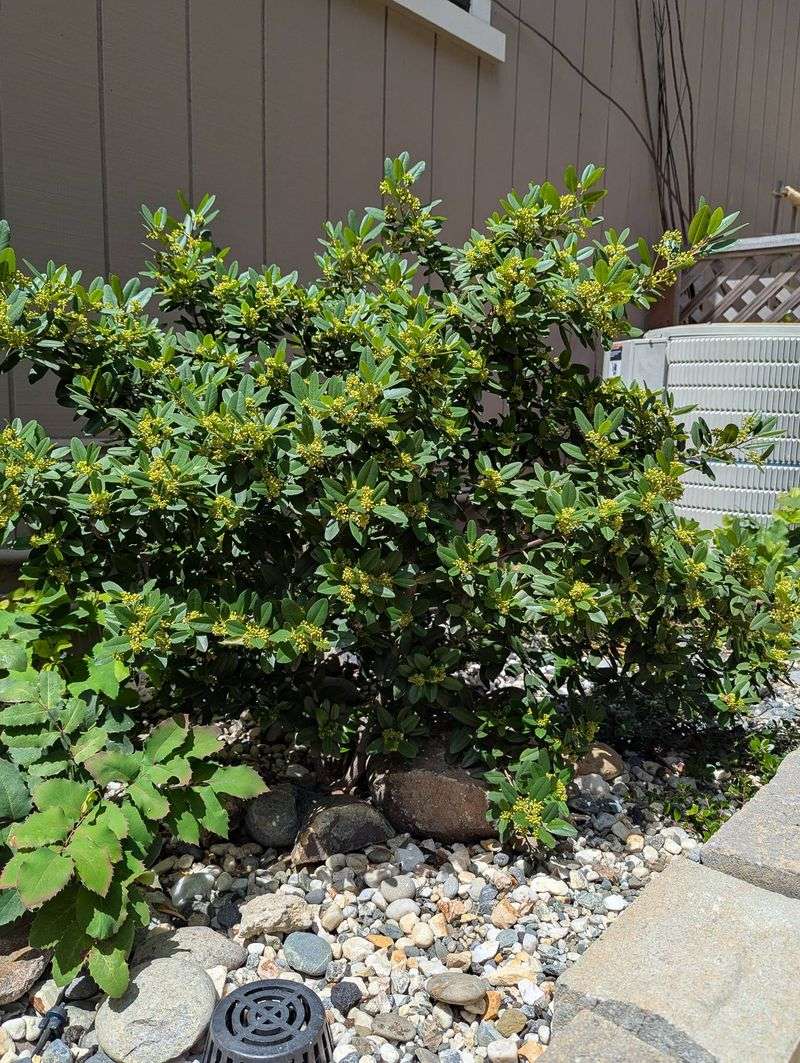
Gardeners who want a native hedge that does not look wild usually land on ‘Eve Case’ coffeeberry. It grows dense and rounded, about 6 to 8 feet tall and wide, with handsome deep green leaves.
Its small flowers are humble, but they support bees and can host native butterflies like the pale swallowtail. Berries ripen from green to red to black, and birds tend to strip them quickly.
Coffeeberry handles sun or part shade and needs little water once settled. Shape it with hand pruners rather than heavy shears for a natural look that still blocks the view.
9. Dwarf Strawberry Tree
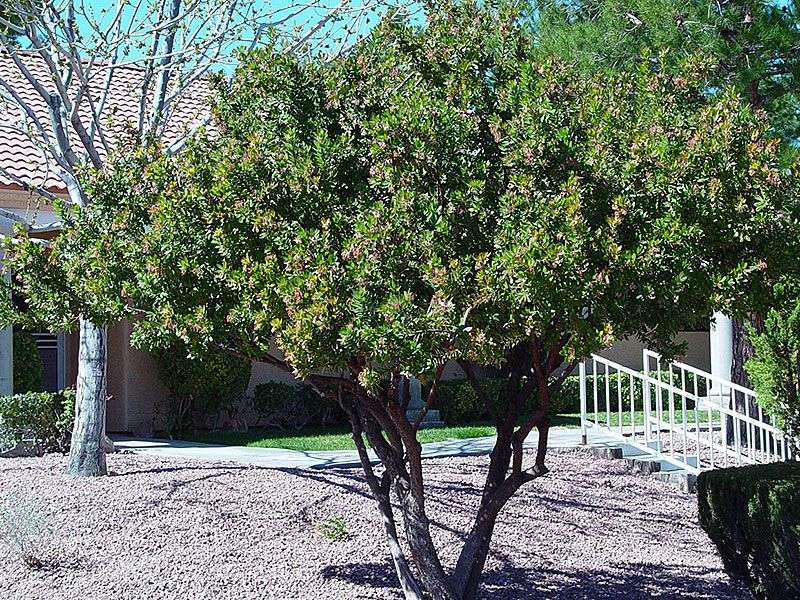
Few shrubs flower and fruit at the same time, but the dwarf strawberry tree does just that in fall. White bell-shaped blooms hang beside round red fruits, and hummingbirds and bees love the flowers.
The ‘Compacta’ form usually stays around 6 to 10 feet, so it can screen a corner without blocking the whole sky. Reddish bark adds interest year round.
It tolerates drought, heat, and many soils once established. One honest heads-up: dropped fruit can stain pavers, so plant it a few feet back from the patio edge.
10. Cleveland Sage ‘Winnifred Gilman’
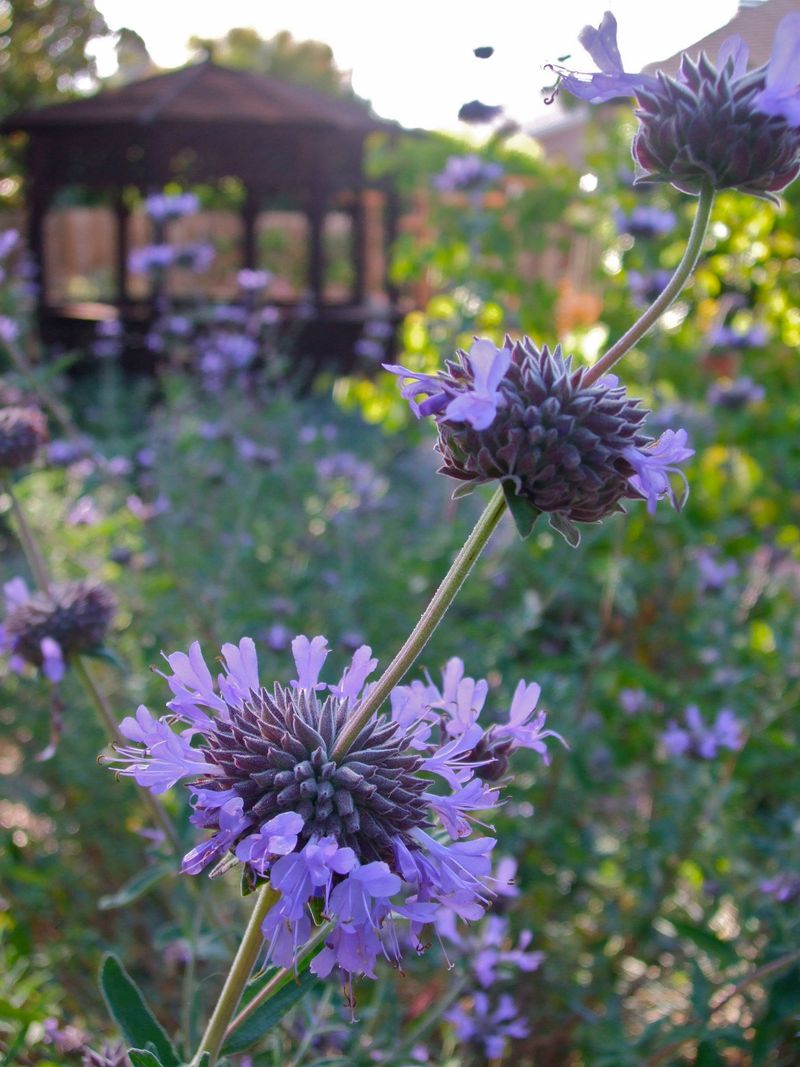
Brush past it on a warm evening and your whole patio smells like a hillside in Southern California. Cleveland sage is a native with gray leaves and stacked violet flower whorls in late spring.
At 4 to 5 feet, it will not hide a two-story window, but it creates a soft screen around a seating area. Hummingbirds, native bees, and butterflies swarm the blooms, and goldfinches may eat the seeds.
Treat it tough: full sun, lean soil, and almost no summer water after year one. Too much irrigation and rich soil are the main reasons it can fail.
Cut back lightly after flowering to keep it full.