
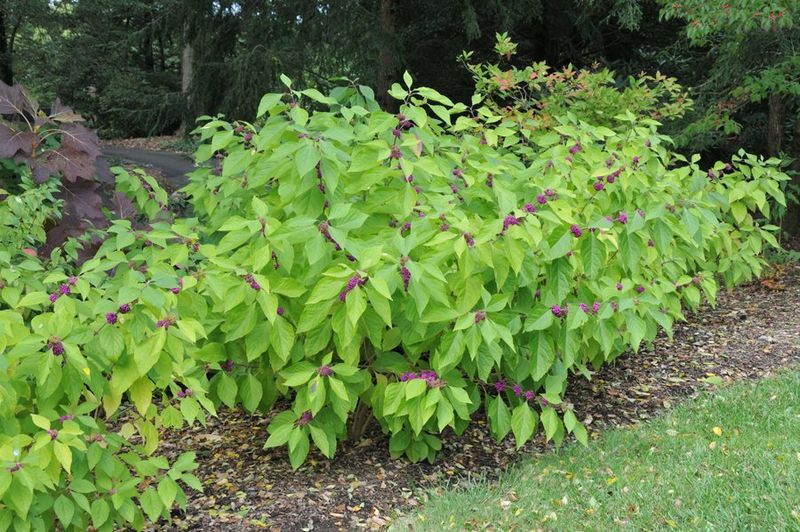
American beautyberry is a Florida native shrub with bright purple berries that birds love. Scientists also found compounds in its leaves that kept mosquitoes from biting in lab tests.
That has led to big claims online, and many of them go too far. Here is what the research really showed, how the plant fits a Florida yard, and what works to cut down on mosquitoes.
Beautyberry in a Florida yard
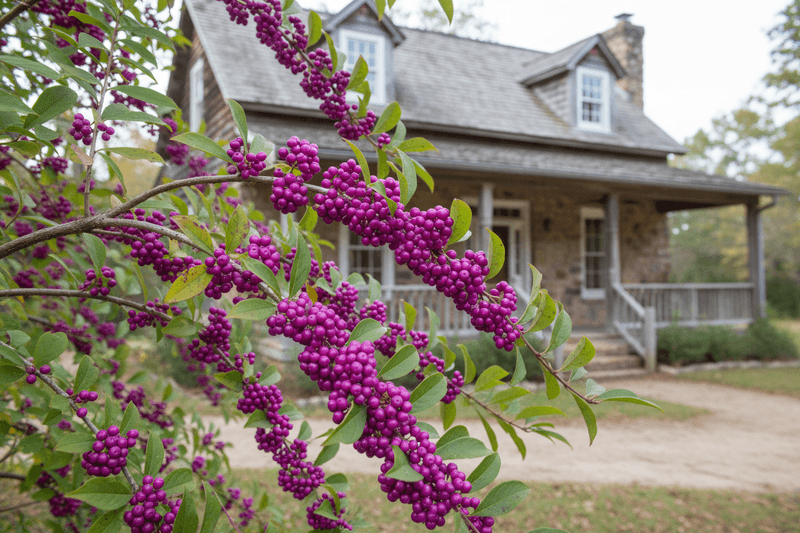
Picture a shrub that looks plain all spring, then lights up in late summer and fall with tight clusters of glossy purple berries. That is American beautyberry (Callicarpa americana), a plant native to Florida.
According to UF/IFAS, it is a deciduous shrub that usually grows 3 to 8 feet tall and 4 to 8 feet wide.
It is also easygoing about where it lives. UF/IFAS describes it as suited to full sun or partial shade and a range of soil types, which is good news if your yard has sandy, fast-draining ground.
Gardeners use it in borders, foundation plantings, and naturalized areas where it can spread out a bit.
The berries are the real show. They attract birds and other wildlife, so a beautyberry can turn a quiet corner into a busy feeding spot.
Because the shrub is arching and loose, give it room instead of squeezing it next to a walkway.
Those are all good reasons to plant one. They are landscape reasons, though, and not proof of anything about mosquitoes.
The mosquito story comes from lab work on the leaves, which the next sections cover.
What researchers tested in beautyberry leaves
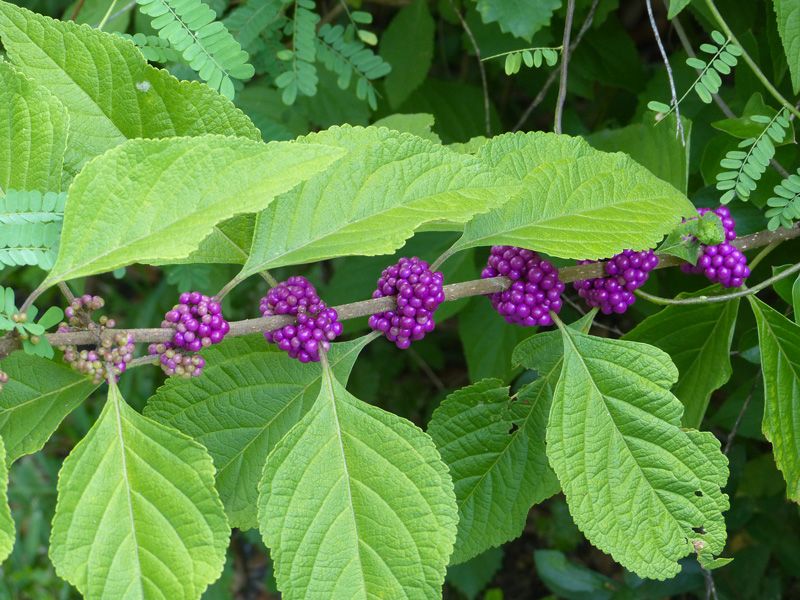
The research did not involve a bush on a patio. Scientists took leaves from American beautyberry, pulled out individual chemical compounds, and tested them in the lab.
In the published study, three compounds called callicarpenal, intermedeol, and spathulenol showed repellent activity in bite-deterrence testing.
Those tests used two mosquito species, Aedes aegypti and Anopheles stephensi. That is a small slice of the many mosquito species buzzing around Florida, so the results cannot be stretched to all of them.
The USDA also reported on the work. In its account, isolated callicarpenal performed about as well as a known repellent in a laboratory assay.
Notice the word isolated. That was a purified compound, not crushed leaves and not a living plant.
The same report said toxicity trials would be needed before any testing on people. So the science is interesting and still early.
It tells researchers where to look for new repellents, and it does not give gardeners a ready-made product.
The research does not prove patio protection
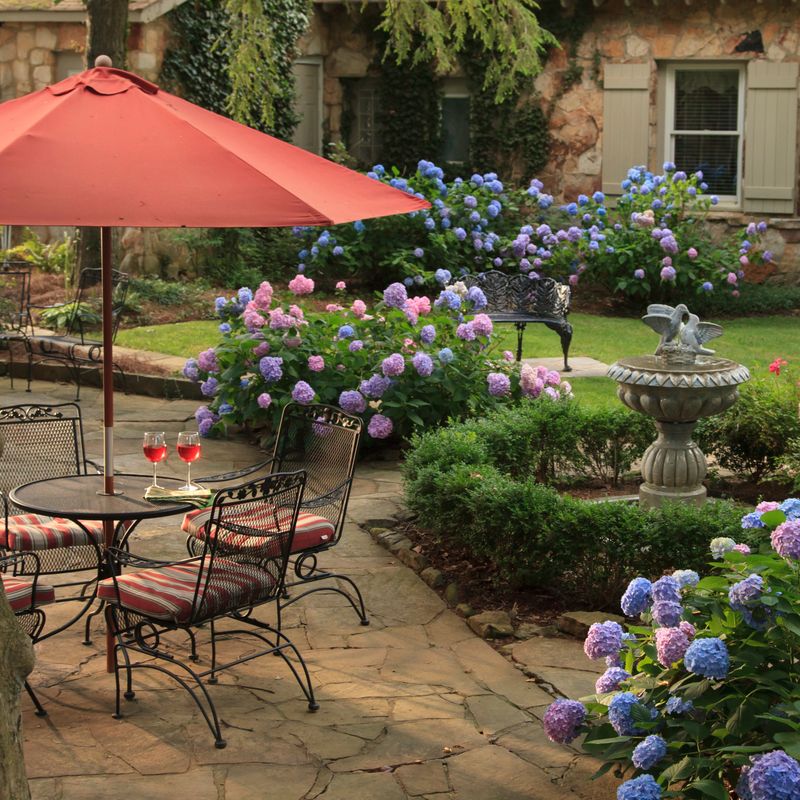
A compound that works in a lab dish is a long way from a shrub that works in your backyard. Extracting a chemical from leaves and testing it on its own is very different from planting a bush ten feet from your chairs.
The study of beautyberry leaf compounds did the first thing and never tried the second.
Nothing in the published research or the USDA summary measured bites around a planted beautyberry. Nobody tested a protective zone around the shrub, either.
The work also did not take place in Florida yards with real heat, humidity, wind, and many mosquito species.
There was no matched comparison with citronella plants or citronella products, so any claim that beautyberry beats citronella has nothing behind it. The same goes for claims about disease protection.
None of this makes the research a dead end. Finding compounds that deter bites is useful science.
It just means the effect of a living beautyberry on mosquitoes around your patio is unproven.
Citronella plants and candles are different
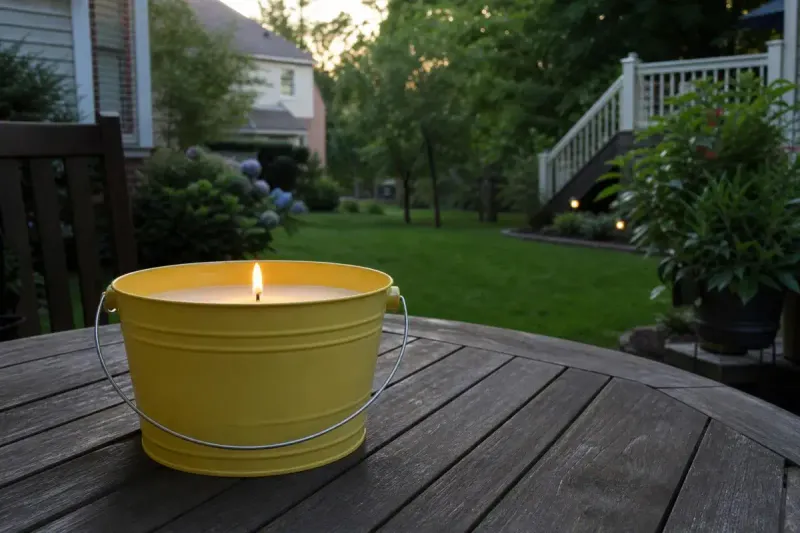
Walk through a garden center and you will see pots labeled as mosquito plants. Colorado State University Extension explains in its guidance on repellent plants that simply planting them does not repel mosquitoes in the surrounding yard.
Their aroma compounds have to be released, for example by crushing or processing the plant.
That is why a potted citronella plant sitting on a table is not the same as a citronella candle. A candle burns the oil and puts it into the air.
A plant just sits there.
Candles have some evidence behind them, though it is modest. In a field study of Aedes mosquitoes, 3% citronella candles cut bites by about 42% compared with no candle.
The incense tested in the same study reduced bites by about 24%.
That does not mean citronella does nothing. It also does not mean a candle gives dependable protection in every setting, since wind, location, and mosquito type all matter.
Treat candles as a small helper at best, and never as a stand-in for a plant.
Do not use crushed leaves as a skin repellent
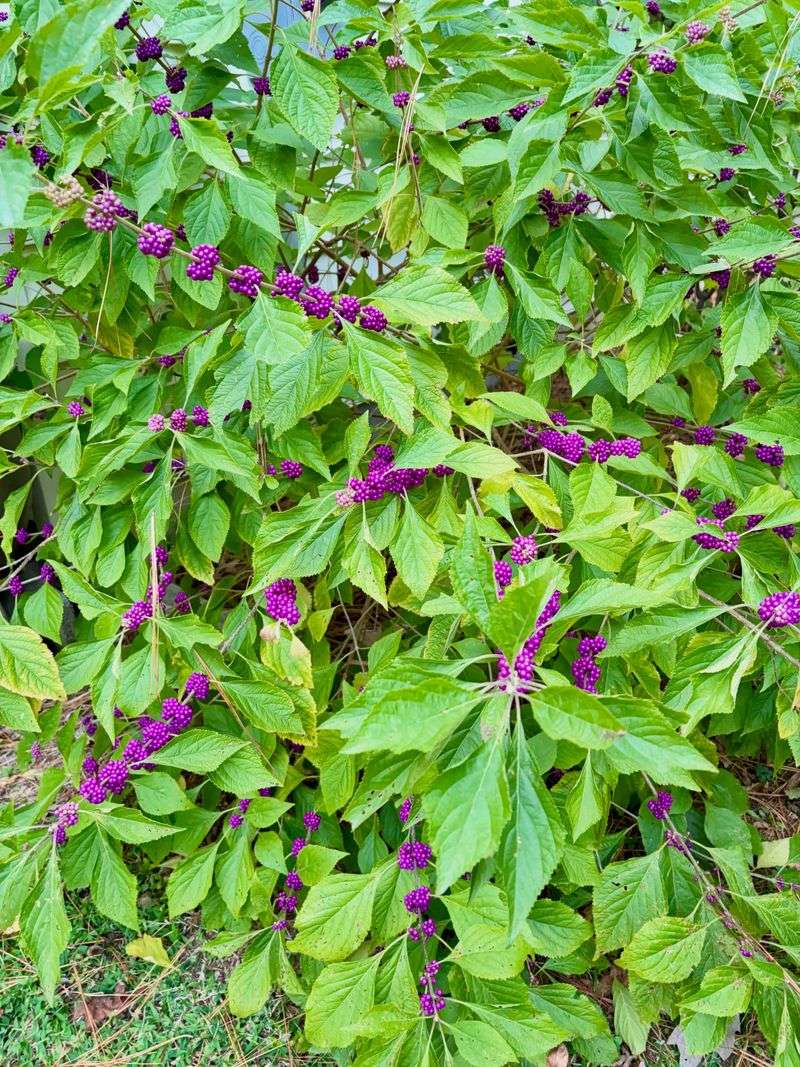
After reading about the research, you may be tempted to grab a handful of leaves, crush them, and rub them on your arms. Please skip that idea.
A UF/IFAS Extension newsletter states that using beautyberry leaves for insect control is not a University of Florida recommendation.
The newsletter points to possible allergies or sensitivities. Skin can react to plant material in ways you cannot predict, and a rash is a poor trade for a few mosquito bites.
Remember also what the lab work tested. It looked at isolated compounds under controlled conditions, not a handful of leaves picked from the yard.
Crushed leaves are a different thing entirely, with unknown strength and unknown effects.
This article will not give a preparation method or a way to test leaves on your skin, because no safe, proven one exists. Enjoy the shrub for the birds and berries, and keep it off your arms.
Manage standing water and use registered repellents
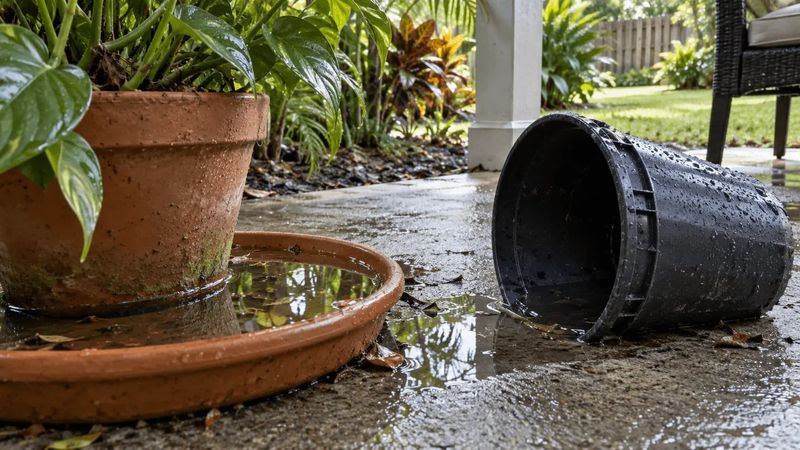
Mosquitoes breed in standing water, so the most useful work happens around the house. The Florida Department of Agriculture and Consumer Services recommends removing or cleaning water-holding items such as buckets, toys, gutters, and birdbaths.
After a summer storm, walk the yard and tip out anything that caught rain.
The CDC gives a similar routine in its home mosquito control guidance. Each week, empty, scrub, cover, turn over, or throw out items that hold water.
Scrubbing matters because eggs can stick to container walls.
Plant saucers, flowerpot trays, tarps, and clogged gutters are easy to miss. Put a weekly reminder on your phone and do a quick lap with a bucket in hand.
When you are outside, protect yourself directly. Florida guidance advises using an EPA-registered repellent and wearing protective clothing, such as long sleeves and pants in light colors.
Read the product label and follow it. A landscape plant is not a substitute for these steps.
Plant beautyberry for the garden, not mosquito control
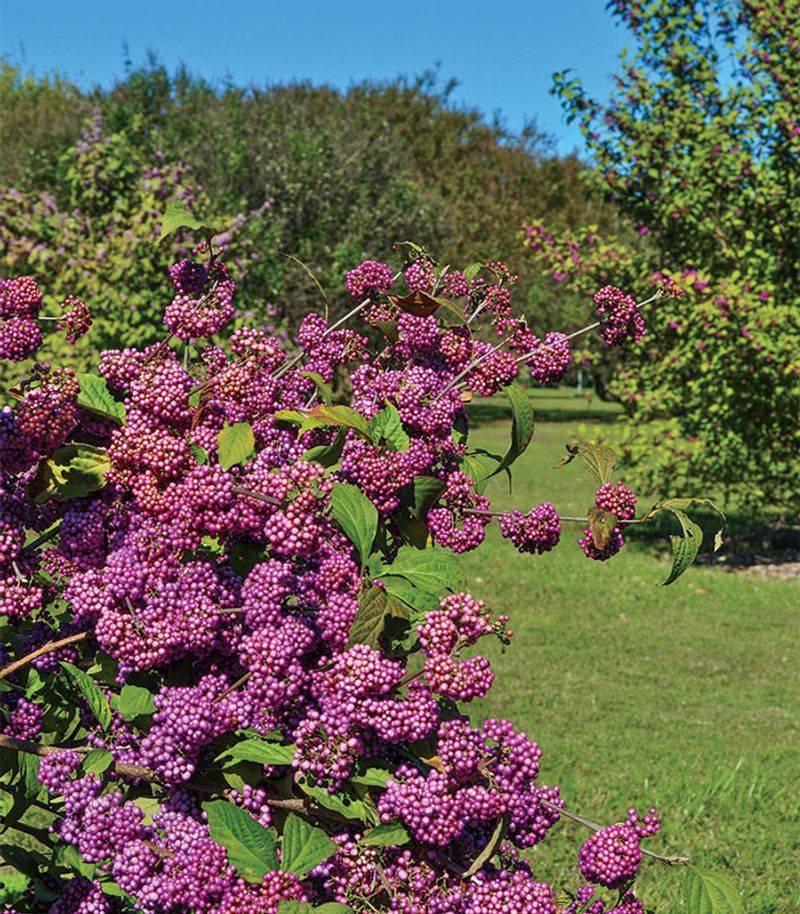
Give each tool its own job. Plant beautyberry because UF/IFAS describes a tough Florida native with showy berries that feed wildlife.
Do not count on it to guard your patio or to replace citronella.
For fewer bites, dump standing water and use the steps from Florida’s mosquito guidance, along with a registered repellent. The shrub brings the birds, and the bucket-tipping keeps the mosquitoes down.