
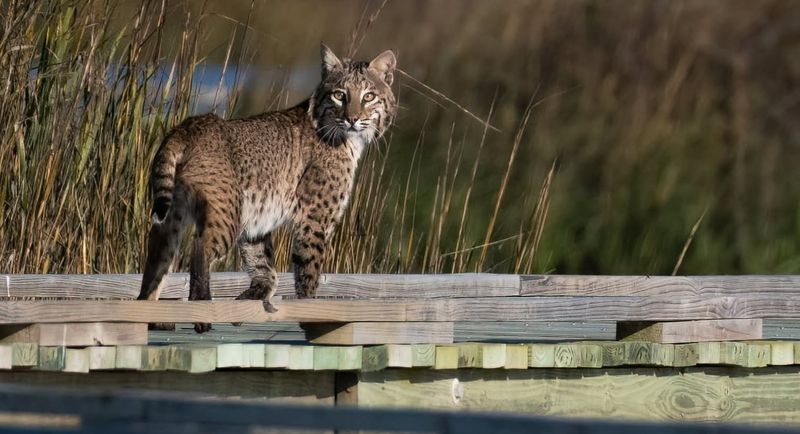
A flash of a short tail and tufted ears at the edge of your porch light can stop you in your tracks. Bobcats really do eat rabbits, and rabbits really do chew on garden greens.
But seeing one pass through tells you less about your garden than you might hope. Here is what a sighting means, and what actually protects your beds.
Bobcats are natural nighttime visitors in Texas
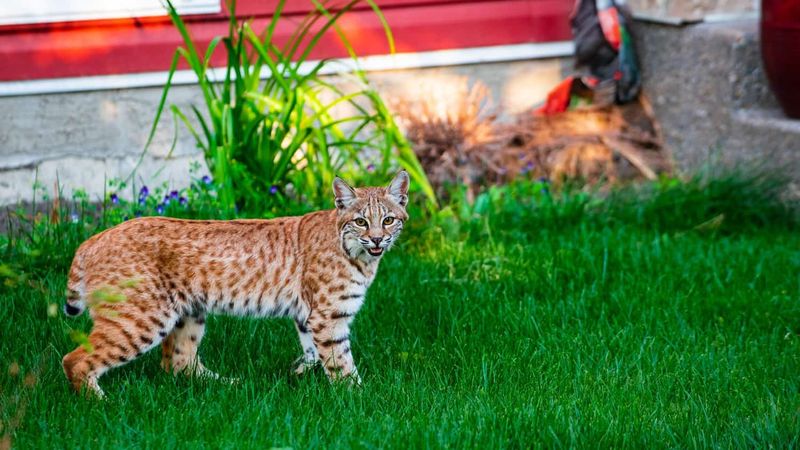
Bobcats live throughout Texas, so a visit to a Central Texas yard is not as strange as it feels. According to Texas Parks and Wildlife, these cats are active mostly at night, though they may start hunting before the sun goes down.
That means the glimpse you caught after dark fits normal bobcat behavior.
Yards with brush, creek corridors, wood piles, or green belts nearby make easy travel routes. A bobcat may simply be crossing from one patch of cover to another.
Fences, trails, and the quiet edges of neighborhoods all work like roads for a wild animal on the move.
A sighting alone does not tell you why the cat came through. It does not show that the animal was hunting in your yard, that it is sick, or that it poses a danger.
Nighttime activity by itself is not a warning sign, and a calm cat that keeps walking is usually just doing what bobcats do.
The city of The Colony, Texas, says in its local bobcat guidance that sightings do not necessarily signal a safety concern. That is a useful starting point for any Texas homeowner.
Take a moment to enjoy the view from a window, note the time and place, and then go back to thinking about what you can control in your yard.
A good habit is to jot down when and where you saw the animal. Over a few weeks, that small log shows whether it was a one-time pass or a regular route.
Rabbits can damage winter greens
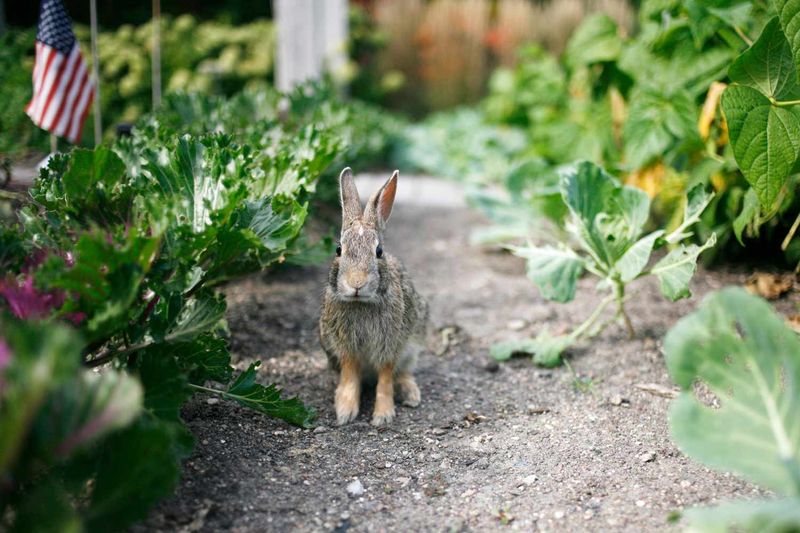
Rabbits can do real harm to a vegetable patch. University of California integrated pest management guidance lists lettuce, broccoli, beans, and peas among the crops they eat, and notes that the damage often shows up close to the ground.
Clean, angled cuts on young stems and missing leaves on low plants are common clues.
Timing matters in Central Texas, where the cool season is prime growing time. Texas A&M AgriLife guidance on greens places planting for many greens in September through November, with harvest from November into January.
Some other greens can go in during January and February. Exact dates shift with the crop and with the weather that year.
That calendar simply tells you when tender plants are in the ground and exposed. Planting greens does not draw rabbits to a yard, and not every garden has a rabbit problem.
Still, young seedlings and fresh spring growth are the most vulnerable stages if rabbits are already around.
Texas-specific advice is also available. Texas A&M AgriLife publishes guidance on controlling cottontail and jackrabbit damage, which is a good companion read if you see repeated nibbling.
Check your beds early in the morning, since rabbits tend to feed around dawn and dusk. Look low on the plants first.
A bobcat sighting does not prove rabbit numbers fell
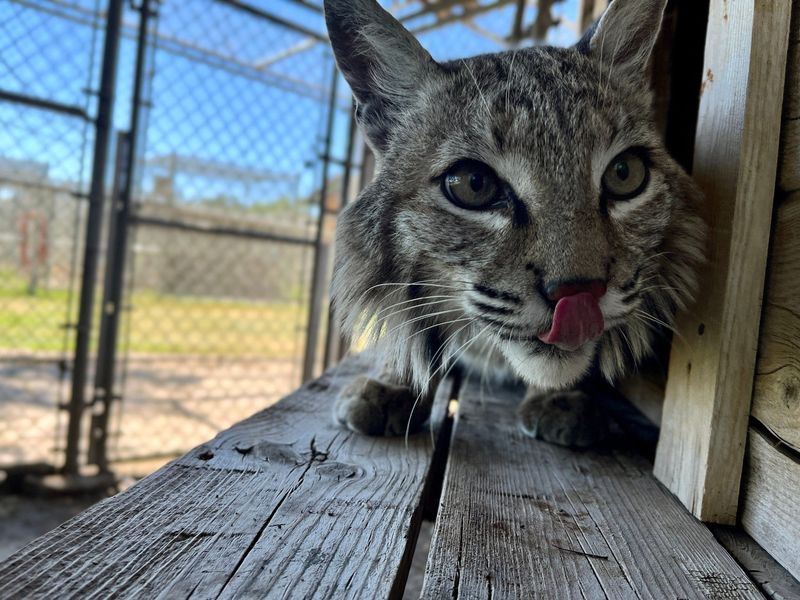
Bobcats do eat rabbits. Texas Parks and Wildlife lists rabbits, wood rats, ground squirrels, and mice among their main mammal foods, and they also take birds.
So the idea behind the headline has a real root.
The leap comes after that. Seeing a bobcat tells you the animal was present.
It does not tell you what it hunted that night, whether it caught anything, or whether rabbits nearby are fewer now.
Think of it like spotting a delivery truck on your street. You know it drove by, but you do not know which house got a package.
A bobcat that walks past could be heading to a woodlot, a creek, or a field where wood rats are plentiful.
Because the diet is so varied, a bobcat is not a rabbit specialist. It cannot be counted on to target the rabbits in your particular garden, and its visits are not a schedule you can plan around.
Calling it free pest control promises more than anyone can know.
None of this makes the sighting less interesting. It just means the garden question needs a different answer, one that works whether a bobcat ever returns or not.
Use a barrier to protect vulnerable beds

A physical barrier is the more dependable way to limit rabbit damage. University of California integrated pest management guidance recommends wire mesh with openings no larger than 1 inch.
It describes options such as panels 24 to 30 inches tall, or taller fencing with the bottom buried 6 to 10 inches.
The same guidance says cottontails and brush rabbits generally will not jump a 2-foot fence. Jackrabbits are larger and, in some situations, may need a taller one.
Check which animal you are dealing with, since the long ears and legs of a jackrabbit look different from a cottontail.
Keep in mind that this is general extension advice, not the result of a Central Texas trial. Local soil, slopes, and rabbit pressure can change what works.
No fence height is a guarantee against every bit of damage.
Gaps cause most failures, so walk the line after you build it. Press the mesh tight to the ground, secure corners, and close spaces under gates.
For small beds, a cage or hoop cover over seedlings is another simple option.
For more Texas-specific ideas, the Texas A&M AgriLife publication on cottontail and jackrabbit control covers other methods you can pair with fencing.
Install protection before you set out transplants or sow seed, so the first tender leaves are covered from day one.
Give a passing bobcat space
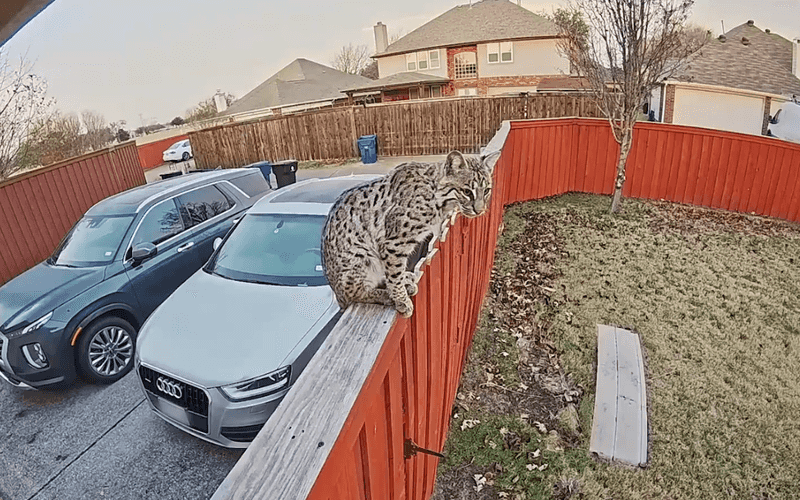
If a bobcat crosses your yard, the best response is to let it go on its way. Do not approach it, follow it, corner it, feed it, or try to handle it.
Staying back gives the animal room to leave, which it will usually do on its own.
Pets deserve some planning. The Colony, Texas, offers practical bobcat guidance that includes securing small pets and supervising them outdoors.
A leash, a covered run, or a quick trip outside with a flashlight before bedtime all help.
Attractants are worth a look too. Pet food left on the patio, fallen bird seed under a feeder, and open trash can draw small animals, and those animals can draw bigger visitors.
Bringing bowls in at night and sweeping up seed takes only a minute.
An ordinary sighting is not an emergency. A bobcat out at night, or even at dusk, is behaving normally for its species.
If an animal seems unusually bold or behaves oddly, contact your local animal control or a wildlife official for advice rather than trying to deal with it yourself.
Clear brush piles close to the house if you want fewer hiding spots, and keep outdoor lights on a timer for easier evening checks.
Treat the sighting as a clue, not a promise
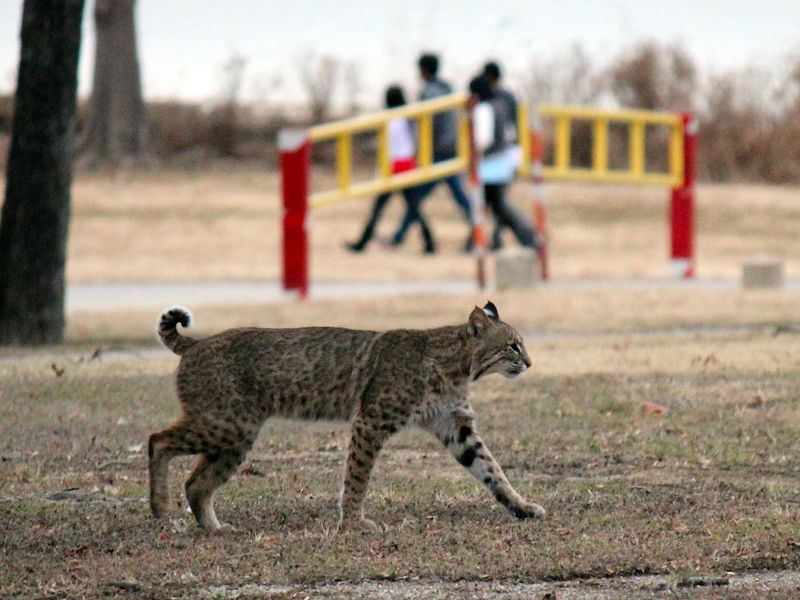
A bobcat in your yard shows that wild neighbors share your space. It does not show that rabbits are fewer or that your greens are safer, since bobcats eat many kinds of prey.
Put your effort into tight mesh and a fence you can count on, and follow local advice on giving the cat space.
Enjoy the glimpse, then guard the lettuce yourself.