
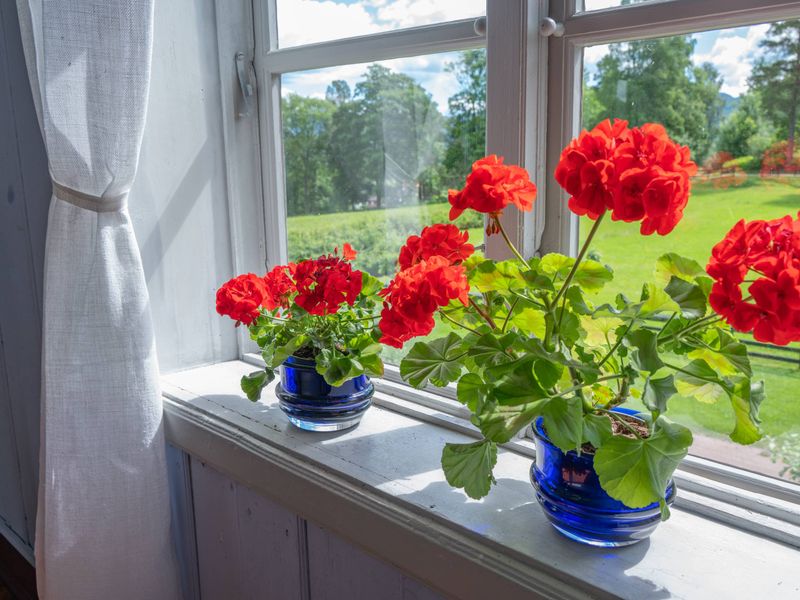
Your geraniums came inside before frost, and now you are wondering whether to feed them. The answer depends less on the calendar and more on what the plant is doing right now.
Fertilizer given at the wrong time can stress a resting plant, while a growing plant may need a light meal. Here is how to tell the difference and what to do next.
The geranium in your house is probably a Pelargonium
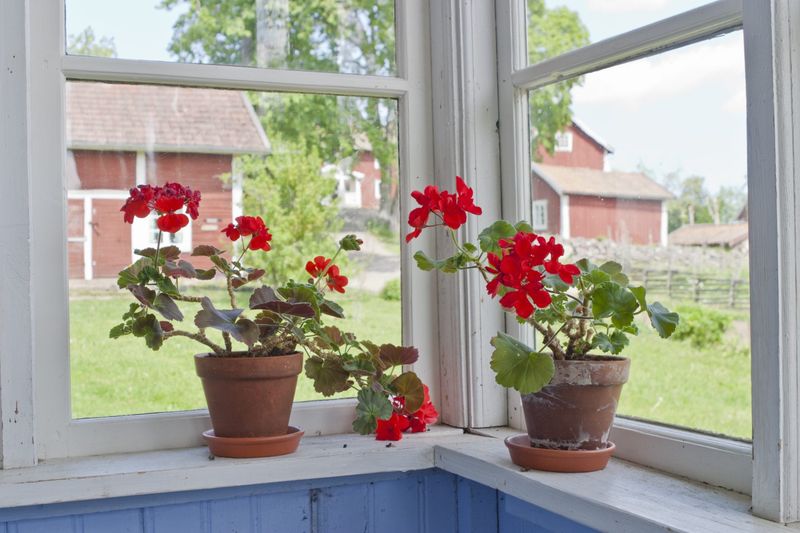
Most of the geraniums people haul indoors each fall are not true geraniums at all. The tender plant sold as an annual geranium is a Pelargonium, and it is a different plant from the hardy perennial Geranium, also called cranesbill, that stays in the ground year after year.
This guide covers only the tender Pelargonium.
Overwintering can mean three different things. You might keep a leafy potted plant growing in a bright room, let a potted plant rest with little or no growth, or store a bare-root plant with the soil shaken off.
Illinois Extension describes bare-root storage as its own method, with its own needs.
Fertilizer advice changes with each method and with the plant’s growth state. Figure out which situation you have first, and the feeding question gets much easier to answer.
Let new growth—not the calendar—set the feeding decision
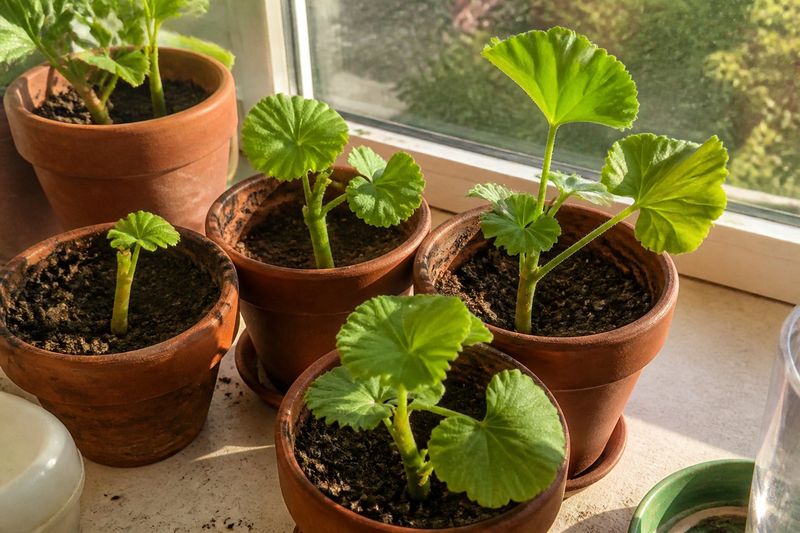
Before you reach for the fertilizer, take a close look at the plant. Fresh leaves unfurling, stems getting longer, or new flower buds forming all tell you the geranium is actively growing.
Those are the signs University of Minnesota Extension points to when it advises feeding indoor geraniums only during active growth.
Winter does not automatically rule out fertilizer. A well-lit plant that keeps pushing out new growth in January is in a different spot than one sitting still with the same old leaves.
If you see little or no new growth, skip routine feeding. Growth state is the one rule to carry through the whole season: growing plants may get a light feeding, and resting plants wait.
Feed an actively growing plant at half strength
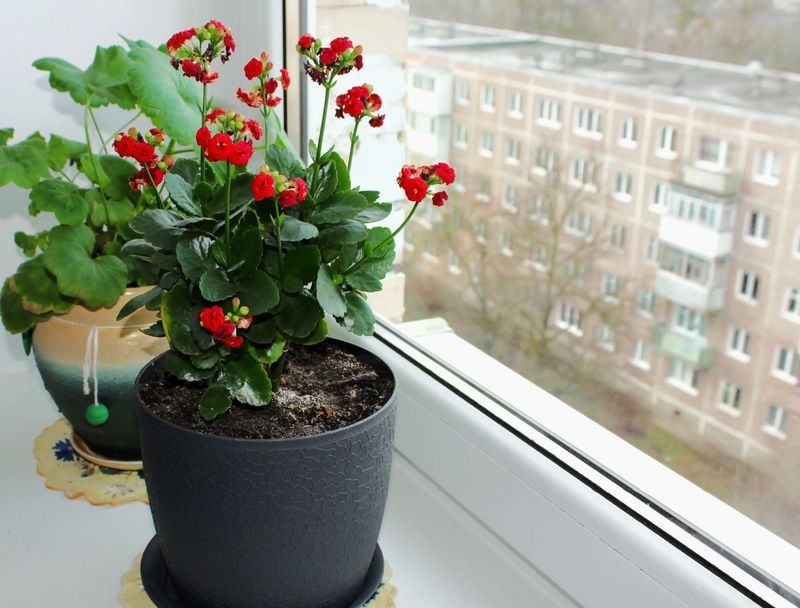
For a potted Pelargonium that is actively growing, University of Minnesota Extension recommends a water-soluble, all-purpose fertilizer mixed at half the strength listed on the label. Apply it about every three weeks.
Always follow the product label for mixing directions.
Check the soil first. A dry or wilted plant should never get liquid fertilizer, so water it with plain water, let it perk up, and feed another day.
Notice that this schedule has conditions attached: a potted plant, indoors, with visible new growth. It is not a universal calendar for every geranium in every season.
Summer container feeding outdoors follows different advice, so keep the two separate in your mind.
A bigger dose or a bloom-booster formula is not a shortcut. Geraniums do not need many nutrients, and overfeeding may reduce blooming.
A resting potted plant can wait until growth returns
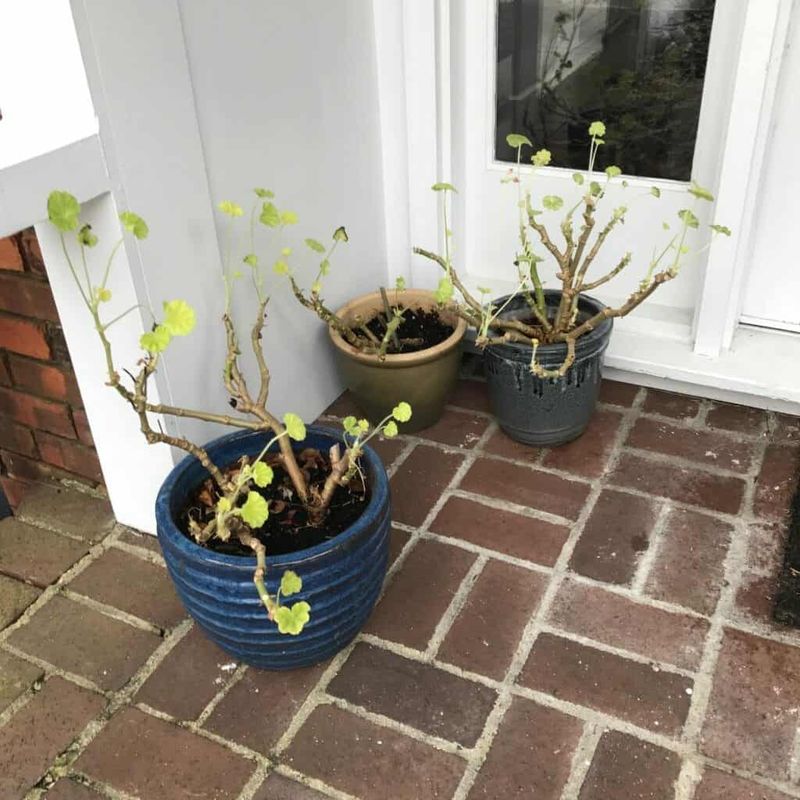
Some potted geraniums slow down or stop for the winter, and that is fine. A plant with no fresh growth is not asking for food.
Iowa State Extension advises against fertilizing houseplants that are not growing, since the nutrients go unused.
Extra fertilizer in a small pot can also build up around restricted roots. Fertilizer will not fix poor growing conditions either, so a sluggish plant needs a look at light and watering rather than a dose of plant food.
The geranium-specific advice from University of Minnesota Extension fits this: wait until new growth appears in early spring, then resume feeding. When you spot those first fresh leaves, you have your signal.
Until then, water lightly when the soil feels dry and leave the fertilizer on the shelf.
Bare-root geraniums need storage care, not fertilizer
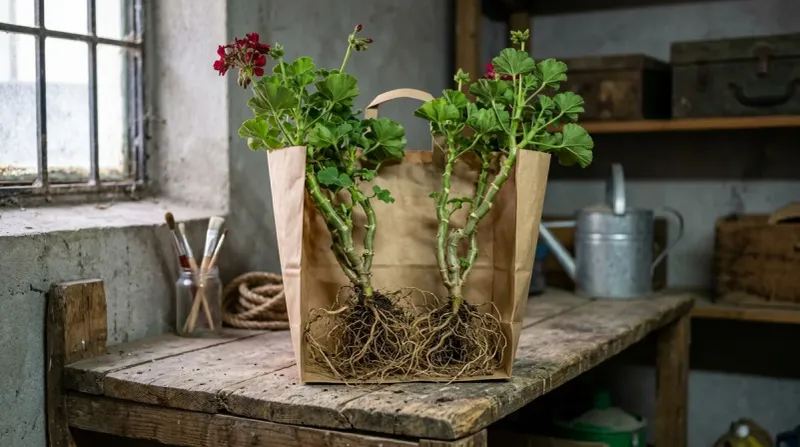
Plants stored bare-root are on a completely different track. With the soil removed and the plant dormant, there are no active roots to take up food, so the potted-plant feeding schedule does not apply.
Winter care here means storage. Illinois Extension recommends a cool, dry location around 45 to 50 degrees F.
Do not panic if leaves shrivel and drop, because that can happen with stored plants.
The switch back to active care comes in spring. Pot the plant up, set it in bright light, and treat it like a houseplant again.
Once it pushes new growth, the same growth-based rule used for other potted plants can guide any feeding.
Check light and growing conditions before adding fertilizer
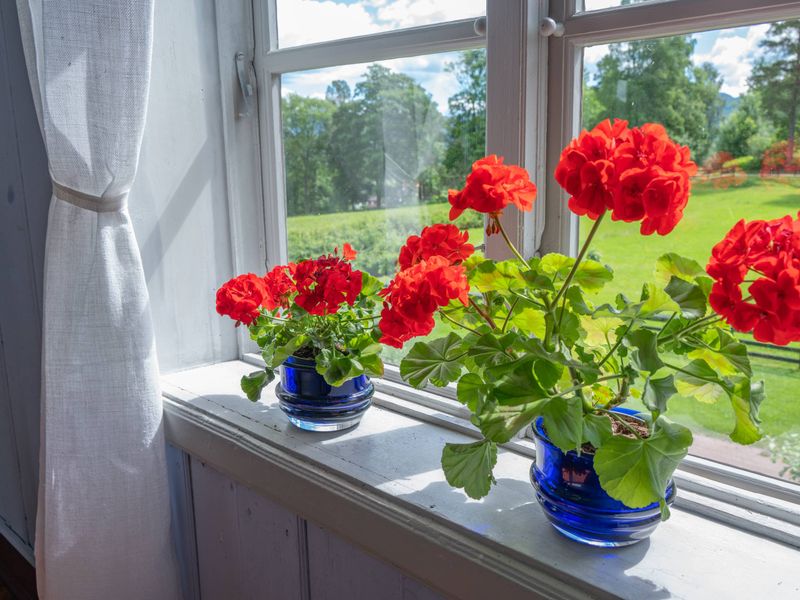
A geranium with long, stretched stems and few flowers is often telling you about light, not hunger. Bright light encourages flowering, and University of Minnesota Extension recommends a bright, sunny window or supplemental light for plants kept growing indoors.
The same guidance suggests cooler indoor conditions, about 60 to 65 degrees F, and watering when the soil feels dry. These conditions support healthy growth, though they cannot promise a particular result.
Poor flowering can come from weak light, temperature, or other environmental problems. Iowa State Extension’s houseplant diagnosis guide makes this point for houseplants generally.
So before adding more plant food, move the pot closer to the glass, check the room temperature, and feel the soil. Fixing the conditions often does more than fixing the fertilizer.
Spring flowers depend on more than winter feeding
Here is the correction to the idea that winter fertilizer alone decides whether you get a few flowers or a full show. The extension guidance reviewed does not show that.
What it does show is that matching feeding to growth avoids stressing the plant, which is a different promise from a guaranteed display.
Later care counts too. Iowa State Extension notes that geraniums flower less with insufficient sun and recommends deadheading spent flowers to encourage continued bloom.
Good light, as noted by University of Minnesota Extension, matters indoors and out.
Once the plants move outside and are growing in containers, summer feeding follows its own advice, separate from the winter rules here.
Feed what is growing, rest what is resting, and give every plant plenty of sun. The flowers will take it from there.