
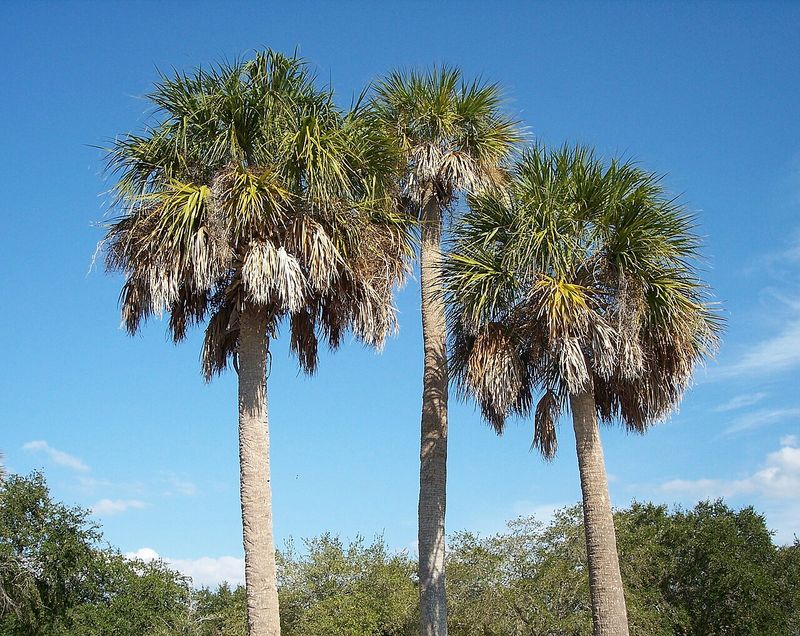
Walk past a cabbage palm and you will see a trunk covered in rough, crisscrossed stubs. Those stubs are called boots, and plenty of Florida homeowners wonder if they should cut them off.
The answer depends on what the boots are, which palm you have, and what is actually bothering you. Here is how to tell a normal trunk feature from a real maintenance job.
What palm boots are—and what they are not
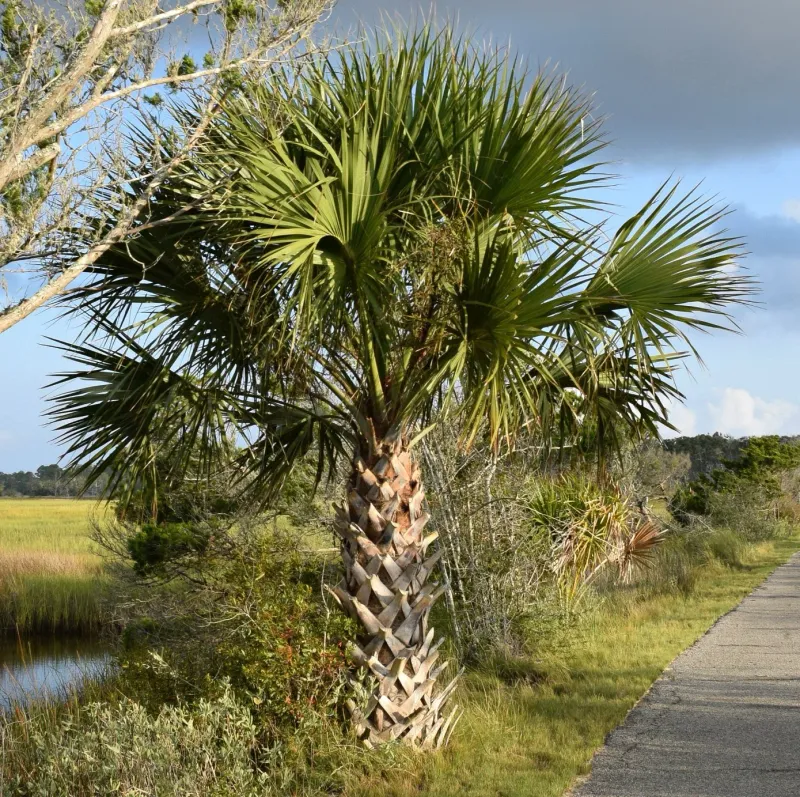
A boot is the base of an old frond that stays attached to a palm trunk after the leafy part is gone. Picture the stubby, woven pattern on a cabbage palm and you have the idea.
UF/IFAS documents boots on sabal, Washingtonia, and Phoenix palms, so they are a normal feature on several kinds of palms you see around Florida.
Boots are not the same thing as a skirt. A skirt is a hanging curtain of dead fronds that droop down the trunk, the way some Mexican fan palms look when nobody prunes them.
The leaves in a skirt are still dangling from the tree, while boots are firmly attached stubs that stay put.
That difference matters because the two structures raise different questions. A hanging skirt can bring up maintenance and wildlife concerns that we will cover later.
A set of tight, firmly attached boots is mostly a look on the trunk, and it has only a few specific effects that are worth knowing about.
So before you grab a saw or a ladder, take a close look at what you actually have. Run your eyes up the trunk and ask whether the old material is stubs fixed to the trunk or whole dead fronds hanging loose.
Your answer points to very different next steps, and sorting this out first keeps you from treating a normal trunk feature like a problem.
Why do some Florida palms keep their boots?
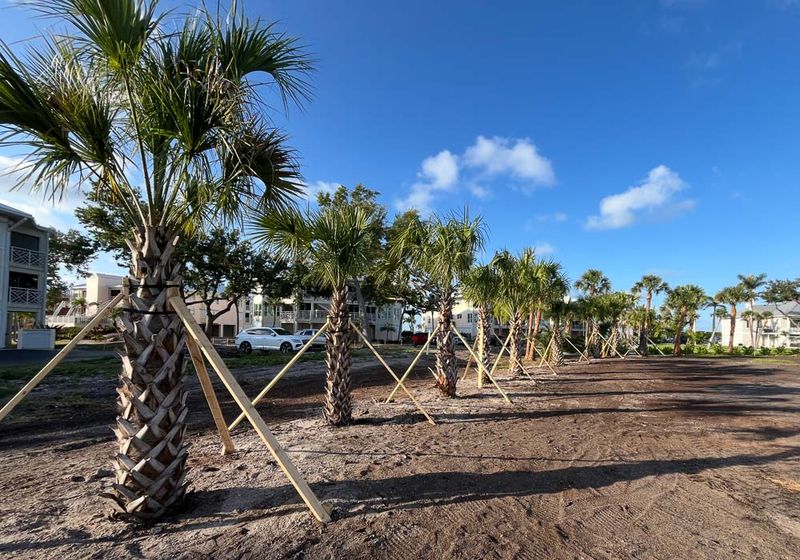
Drive around Florida and you will notice that sabal palms do not all look alike. Some keep their boots for decades, while others drop them after only a few years.
UF/IFAS describes this variation in sabal palm, so two cabbage palms in the same neighborhood can have very different trunks.
Why the difference? Genetics may be part of the answer, but UF/IFAS says that has not been studied.
In other words, nobody can tell you for sure why one palm hangs on to its boots and the neighbor’s palm lets go.
A smooth trunk is not always natural, either. Sometimes a sabal has a clean trunk because the boots were cut off before the palm was installed in the landscape.
If you bought a mature palm that looks tidy, that may be the reason, and it says little about the tree’s health.
Keep in mind that these observations are about sabal palms. Palms like Washingtonia and Phoenix can have boots too, and UF/IFAS lists them among the palms that show this feature.
Still, what holds true for a cabbage palm does not automatically apply to every palm species in your yard. Check which palm you have before you decide that its trunk looks wrong.
Boots have specific effects, not universal benefits

It is tempting to say boots protect palms, but the real picture is narrower. UF/IFAS notes that leaf bases can reduce water loss when a sabal palm is regenerating after transplanting.
That is a benefit tied to a stressed, newly moved tree, not proof that every established palm needs its boots to stay healthy.
Boots also have a downside in one case. Palmetto weevils burrow into sabal leaf bases to lay eggs, especially in stressed and transplanted palms, according to UF/IFAS sabal palm information.
That tells you where the pest can show up, which is useful when you are watching a newly planted palm.
It does not tell you that stripping boots will control weevils. Cutting away trunk material is not a proven pest strategy, and it can wound the tree.
If you see signs of trouble on a transplanted palm, a palm-care professional is a better first call than a saw.
So boots are best treated as a plain trunk feature with a couple of narrow effects. They may help a transplant hold moisture, and they can offer a spot for one pest to lay eggs.
Neither point makes them essential, and neither makes them a threat to remove on sight.
Should you remove firmly attached boots?
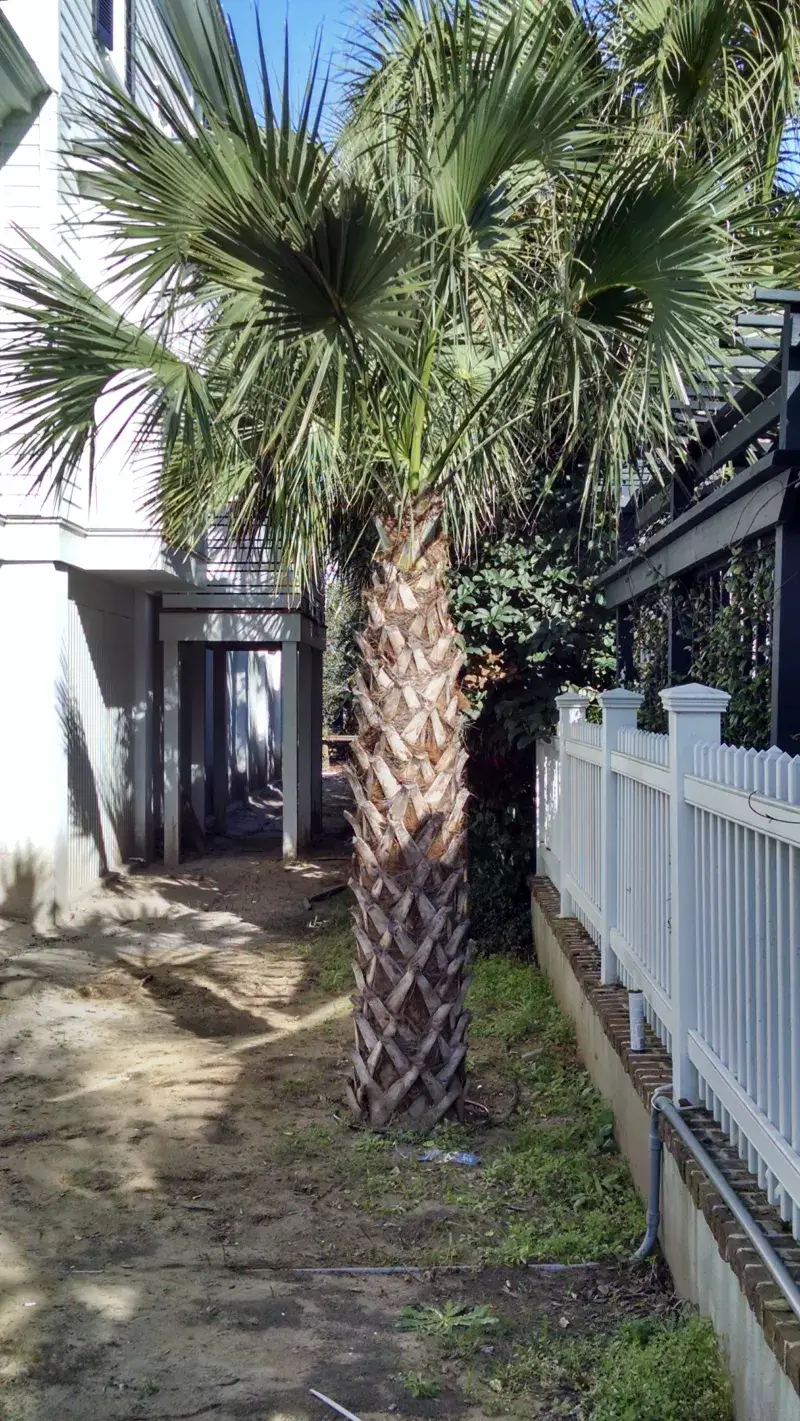
For most homeowners the rule is simple: leave firmly attached boots alone unless you have a specific reason to take them off. Tight boots are part of the trunk’s surface, and pulling or chopping at them tends to cause more trouble than it solves.
The reason is damage. UF/IFAS warns that removing boots can scar the trunk, and wounds can make a palm more open to disease.
Palms do not heal wounds the way many trees do, so a scar tends to stay for the life of the trunk.
That does not mean boots are magic. They are not a shield every mature palm must have, and they are not useless junk either.
They are simply a normal feature, and the safest default is to leave them be.
What counts as a specific reason? A boot that is already loose, cracked, or falling off can be a different case from one that is solidly attached.
A palm that has to be worked on for a real hazard is another case. If you are unsure, ask a qualified palm-care professional to look at the trunk before you cut.
A bit of rough texture on a trunk is far easier to live with than a permanent wound.
A hanging skirt can create a different maintenance concern
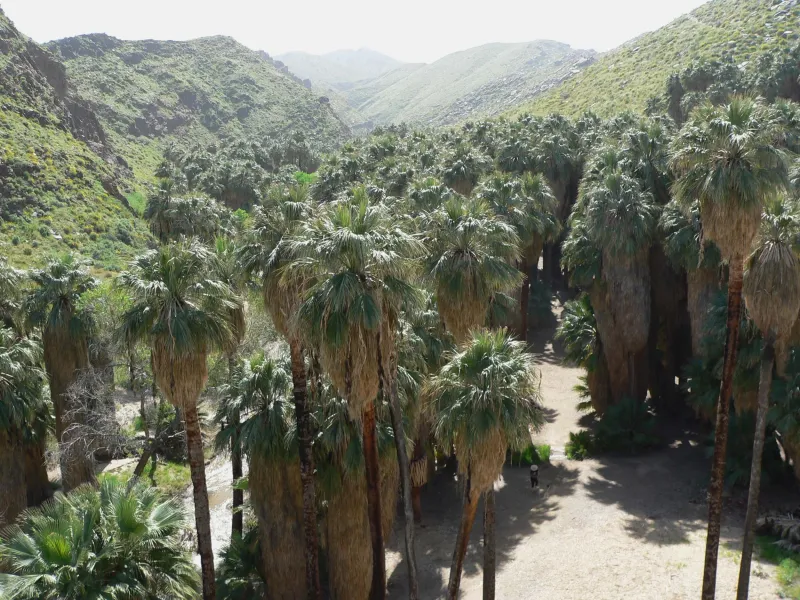
Now picture a Mexican fan palm with a thick curtain of dead leaves hanging down the trunk. That is a skirt, and it is a different structure from the stubs we have been talking about.
UF/IFAS says that hanging skirt of old leaves can hide rats, snakes, scorpions, and other wildlife, some of it welcome and some not.
The concern gets sharper near buildings. UF/IFAS recommends removing dead fronds close to a house, because a skirt can give rodents shelter right next to your walls and roof.
If you have a fan palm beside the house, this is a job worth putting on your list.
Notice how targeted that advice is. It is about dead fronds that hang from the tree, not about attached boots.
Nothing here shows that boots are a general wildlife problem, so there is no good reason to strip them off in the name of rodent control.
A handy check: stand back and look. If the old material hangs loose like a shaggy skirt, treat it as a pruning question.
If it is stubby and fixed to the trunk, leave it as a boot. Work on tall palms is best handled by a professional.
Prune dead fronds without stripping the trunk

Pruning the crown and removing boots are two separate jobs. For sabal palms, UF/IFAS says completely dead leaves can be cut several inches from the trunk, leaving the split leaf bases behind.
Those left-behind pieces are the boots, and they stay.
Do not cut a leaf just because it looks tired. A frond that is not fully dead may still be feeding the palm, and potassium-deficient leaves can keep supplying potassium.
Wait until a frond is completely brown before it goes.
For living fronds, UF/IFAS pruning guidance uses the 9-to-3-o’clock rule. Picture a clock face over the canopy and do not remove healthy fronds whose tips sit above the horizontal line.
That rule is about fronds in the canopy, not about the boots on the trunk below.
Finally, skip the climbing spikes. The International Society of Arboriculture says spikes permanently wound palm trunks, and they are also a fall risk for you.
If the work needs climbing or specialized equipment, hire a qualified palm-care professional, and keep your own pruning to what you can reach safely from the ground.
Leave attached boots; assess hanging fronds separately
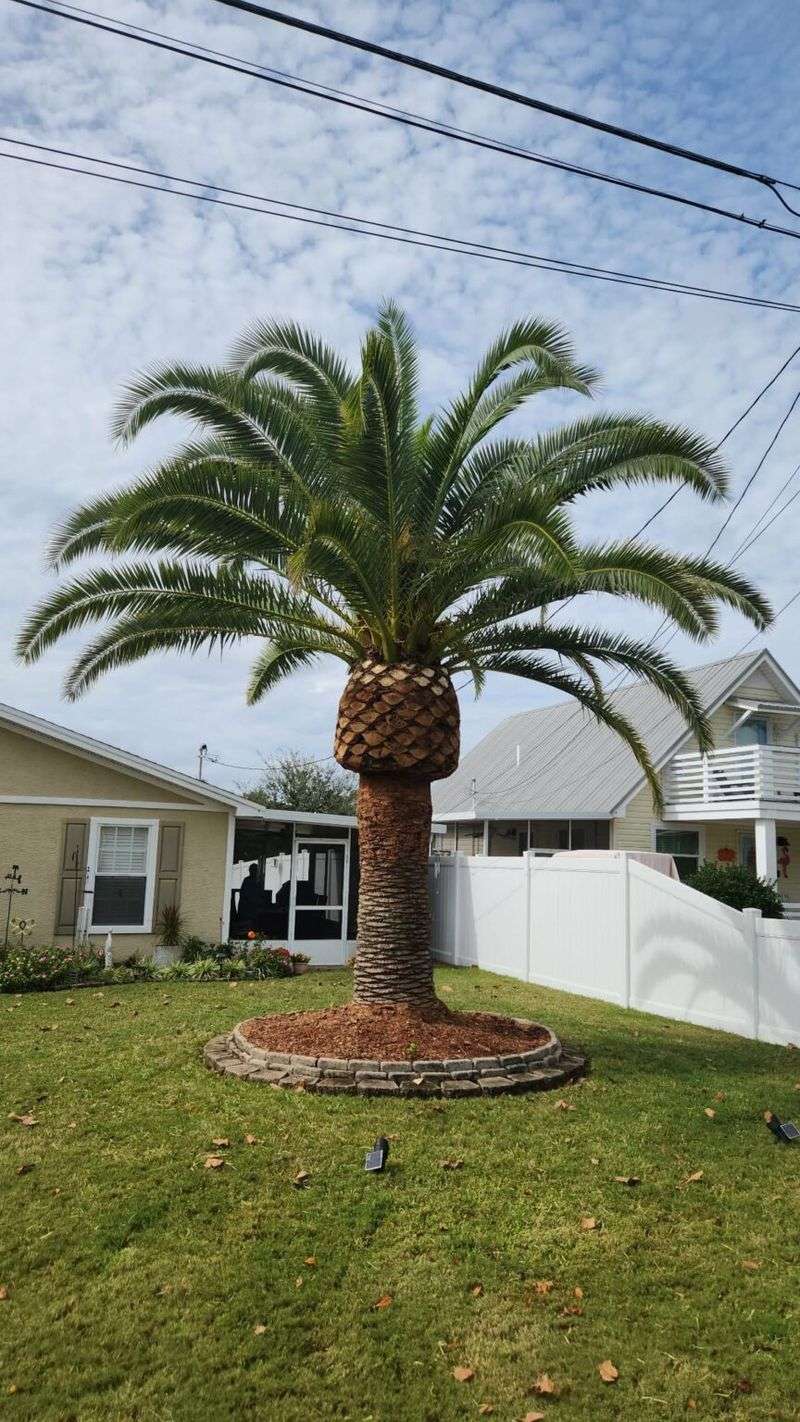
Keep firmly attached trunk bases unless a specific need says otherwise, as UF/IFAS advises. Judge dead or hazardous hanging fronds on their own, using the pruning guidance for the crown.
Treat the trunk and the canopy as two separate checklists. A rough trunk is just a palm being a palm.